Published: March 8, 2026 | Last Updated: March 8, 2026 | Read Time: 12 minutes
I’ll never forget when Mrs. Patterson brought her tabby cat, Oscar, to my clinic after weeks of digestive problems. Oscar would eat his dry kibble, then throw up within an hour. She’d tried three different brands, spent hundreds on vet visits, and was completely frustrated. “Doc,” she said, “maybe he just can’t eat dry food at all.” That’s when I suggested something simple: add water to his kibble.
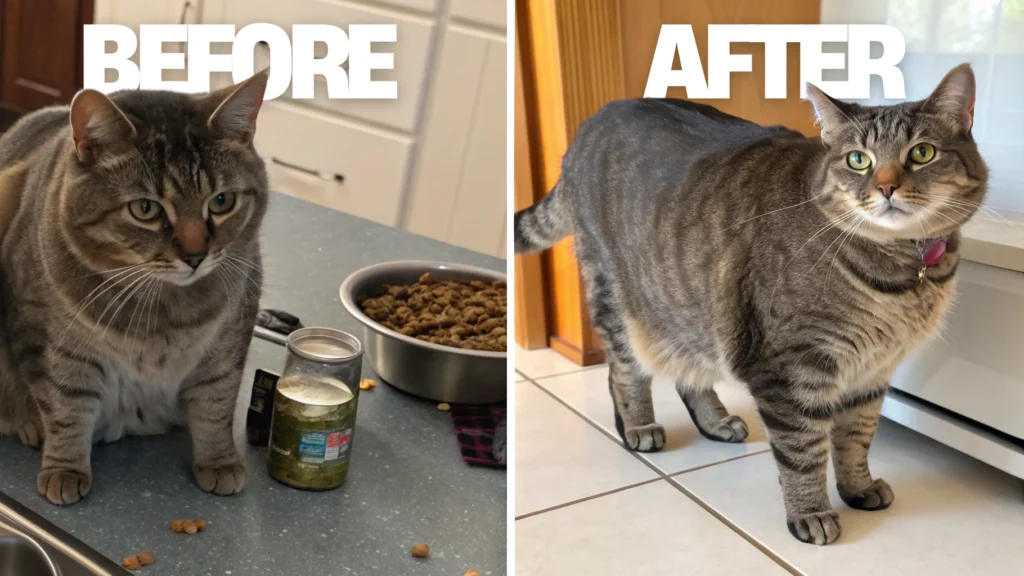
That’s when I taught her exactly how much water to rehydrate dried cat food — a technique that transformed Oscar’s life within days. Two weeks later, Oscar was thriving—no more vomiting, better digestion, happier energy. Mrs. Patterson was amazed that something so simple could make such a difference.
That’s the power of understanding how much water to rehydrate dried cat food. For cats with sensitive stomachs, digestive issues, or those who struggle with dry kibble, rehydrating their food can be transformative. In my years of veterinary practice, I’ve seen this simple technique solve more feeding problems than almost any other approach—and it costs virtually nothing.
If you’re wondering how much water to add to your cat’s dry food, whether rehydration is right for your pet, or how to do it properly, this guide covers everything. Let’s dive in.
Quick Answer: The Water Ratio & Portions
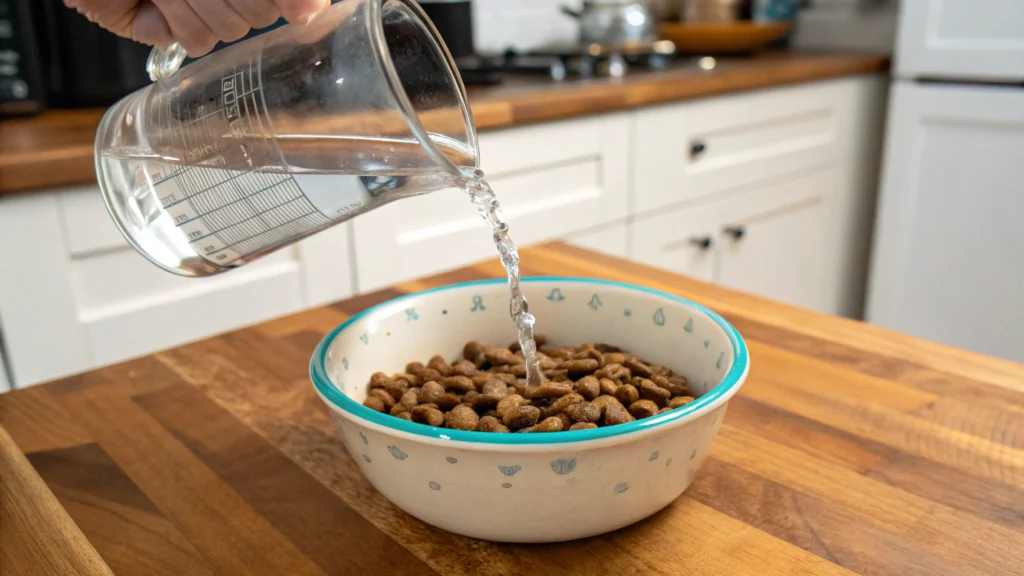
The simple answer to how much water to rehydrate dried cat food is this: use a 1:1 ratio. For every 1/4 cup of dry food, add 1/4 cup of water (or 60 ml food to 60 ml water for metric users).
How much dry cat food per day? For most adult cats, feed 1/2 to 3/4 cup of dry food daily, split into 2 meals. This equals about 200-250 calories per day for an average 10-pound cat.
When rehydrating, the ratio stays the same: how much dry cat food per day determines your water amount. If your cat eats 1/3 cup daily, rehydrate 1/3 cup dry food with 1/3 cup water.
However, flexibility is key. Some cats prefer their food wetter (1:1.5 ratio—more water), while others like it just softened (1:0.75 ratio—less water). Start with equal parts and adjust based on your cat’s preference and needs. For cats with sensitive stomachs, this rehydration method dramatically improves digestibility compared to dry kibble alone. If you’re also struggling with portion sizes, our guide on how much wet food to feed a cat covers similar feeding principles.
Why Rehydrate Dry Cat Food?
Before we talk about how much water to rehydrate dried cat food, it’s important to understand why this matters so much.
Dry kibble is, by definition, dehydrated. The moisture content of typical dry cat food is only about 10%, whereas a cat’s natural prey (and wet food) contains 60-75% moisture. This moisture difference affects digestion significantly.
When your cat eats dry kibble without water, their digestive system has to work harder to break it down. The stomach acid needs to penetrate hard, dense kibble pieces. This creates stress on the digestive tract—especially for cats with sensitive stomachs or digestive issues.
According to the American Veterinary Medical Association (AVMA), proper moisture content in feline diets is crucial for digestive health and overall wellness.
When you add water, several positive changes happen:
Easier Digestion — Soft, moistened food requires less stomach acid and enzymatic work. Nutrients are absorbed more efficiently.
Better Hydration — Many cats don’t drink enough water naturally. Rehydrated food increases their moisture intake, supporting kidney health and urinary tract function.
Reduced Vomiting — Cats with sensitive stomachs often vomit on dry food because it’s difficult to digest. Moistened kibble moves through the digestive tract more smoothly.
Improved Nutrient Absorption — When food is easier to digest, your cat’s body absorbs more of the valuable nutrients.
Gentler on Sensitive Stomachs — If your cat has a sensitive stomach, rehydration can make the difference between vomiting and thriving.
This is especially true for cats dealing with digestive sensitivities, inflammatory bowel issues, or those transitioning from wet to dry food (or vice versa). If your cat is already vomiting, read our detailed guide on why is my cat throwing up to understand if rehydration alone will help or if other interventions are needed.
The Rehydration Guide: Step-by-Step
Here’s exactly how to do it right:
Step 1: Measure the Food
Use a standard measuring cup or kitchen scale. For most adult cats, start with 1/4 to 1/3 cup of dry food per meal (about 50-65 grams). If you have a large or small breed, adjust accordingly. This is similar to calculating how much dry food to feed a cat—portion control matters.
Step 2: Calculate Water Amount
For the standard 1:1 ratio, measure out an equal amount of water. So if you use 1/4 cup food, add 1/4 cup water. This works in any measurement system—1 part food, 1 part water.
Step 3: Choose Your Water (Temperature Matters)
Warm Water (Recommended): Use lukewarm water, not hot. Warm water softens kibble faster (within 2-3 minutes) and aids digestion by warming the food close to your cat’s body temperature.
Room Temperature Water: Safe and effective. Takes slightly longer to soften kibble (5-10 minutes) but works fine.
Cold Water: Avoid. It doesn’t soften food as quickly and can actually slow digestion since your cat’s digestive system has to warm it.
Step 4: Mix & Wait
Pour the water over the dry food and stir gently. Let it sit for 2-5 minutes, depending on water temperature and kibble size. The goal is for the kibble to soften completely without becoming mushy soup.
Step 5: Check Consistency
The final texture should resemble a chunky stew—soft food with a gravy-like liquid. Your cat should be able to easily chew and swallow it. If it’s too dry, add a bit more water. If it’s too soupy, add a bit more food.
Water Ratios Explained
The 1:1 ratio is a starting point, but here’s how to adjust:
| Ratio | Consistency | Best For |
|---|---|---|
| 1:0.75 | Lightly softened, still chunky | Cats who prefer dry food but need slight softening |
| 1:1 | Chunky stew (STANDARD) | Most cats, especially sensitive stomachs |
| 1:1.5 | Soupy, mostly liquid | Senior cats, cats with swallowing issues, very sensitive stomachs |
| 1:2 | Very soupy gravy | Cats with severe digestive issues or those refusing food |
The key to how to soften dry cat food is finding your cat’s preference. Some cats love it soupy; others prefer it just barely softened. Experiment for 3-4 days to find the sweet spot.
Pro tip: If your cat refuses one ratio, try another. Sometimes it’s just a texture preference, not a food issue.
Temperature & Timing Tips
Temperature Benefits:
- Warm rehydrated food smells stronger (more appetizing)
- Easier to digest (mimics natural prey temperature)
- Softens kibble faster
- Feels more like “real food” to finicky cats
Best Practice: Always let warm food cool for 1-2 minutes before serving so it’s not uncomfortably hot.
Timing:
- Best time to rehydrate: 5-15 minutes before feeding. This ensures the food is fresh and hasn’t sat too long.
- How long to soften: 2-5 minutes with warm water; 5-10 minutes with room temperature water.
- Don’t rehydrate in advance. Pre-softened food sitting in the fridge for hours loses nutritional value and can develop bacteria.
Mixing Dry & Wet: A Smart Strategy
Many cat owners ask: can I mix dry and wet cat food? The answer is absolutely yes—especially when rehydrated dry food is involved.
Smart Mixing Strategy:
- 50% rehydrated dry food + 50% high-quality canned food
- This gives you nutrient benefits of both while reducing feeding costs
- Cats with sensitive stomachs often thrive on this combination
- The moisture content is excellent (you get extra hydration)
Feeding Schedule:
- Morning: 1/4 cup rehydrated dry food
- Evening: 1/4 can of wet food
Or reverse it. The combination keeps meals interesting and provides dietary variety—cats benefit from some nutritional diversity just like we do. For more guidance on wet food portions, check out our complete guide on wet cat food for sensitive stomach.
Transition Tip: If you’re moving from 100% dry food to this mixed approach, transition gradually over 7-10 days to avoid stomach upset.
Special Considerations for Different Cats
Not all cats are the same, and rehydration benefits vary:
Sensitive Stomach Cats: Rehydration is often a game-changer. The increased moisture and easier digestibility mean fewer digestive problems. If your cat vomits after eating dry food, this technique frequently solves it.
Senior Cats: Older cats often have weaker teeth and slower digestion. Rehydrated food is perfect for senior cats—easier to chew, easier to digest, better hydration overall.
Kittens: Young kittens (8-16 weeks) still transitioning from mother’s milk often do better with softened food. Rehydration can help with this transition.
Diabetic Cats: Some diabetic cats respond well to increased moisture intake. Always discuss dietary changes with your vet for diabetic cats.
Picky Eaters: Cats refusing dry food often accept it when rehydrated. The softer texture and stronger aroma make it more appealing.
How much dry food to feed a cat varies by age, size, and health, but the rehydration principle stays the same regardless of portion size. Understanding how much dry cat food per day your cat needs helps you calculate the right amount of water to add. Remember: rehydration doesn’t change portion recommendations—it just makes the food easier to digest.
Storage & Safety: After Rehydration
Once you’ve rehydrated the food, here are critical safety guidelines:
How Long Can It Sit Out?
- Room temperature: 30-60 minutes maximum
- In warm weather: 15-30 minutes maximum
- In the fridge: 24 hours maximum
- Freezer: Up to 2 weeks (thaw in fridge before serving)
Why These Guidelines? Rehydrated food with added moisture is more prone to bacterial growth than dry kibble. The moist environment accelerates spoilage.
Can dry cat food spoil? Yes, once rehydrated. Watch for:
- Sour smell
- Visible mold or discoloration
- Slimy texture
- Any unusual appearance
According to Cornell Feline Health Center, proper food storage and handling prevents foodborne illness in cats.
Best Practice: Rehydrate only what your cat will eat in one sitting. It takes 2 minutes to prepare, so freshly rehydrated food is always an option.
Rehydrated vs. Wet vs. Dry: The Comparison
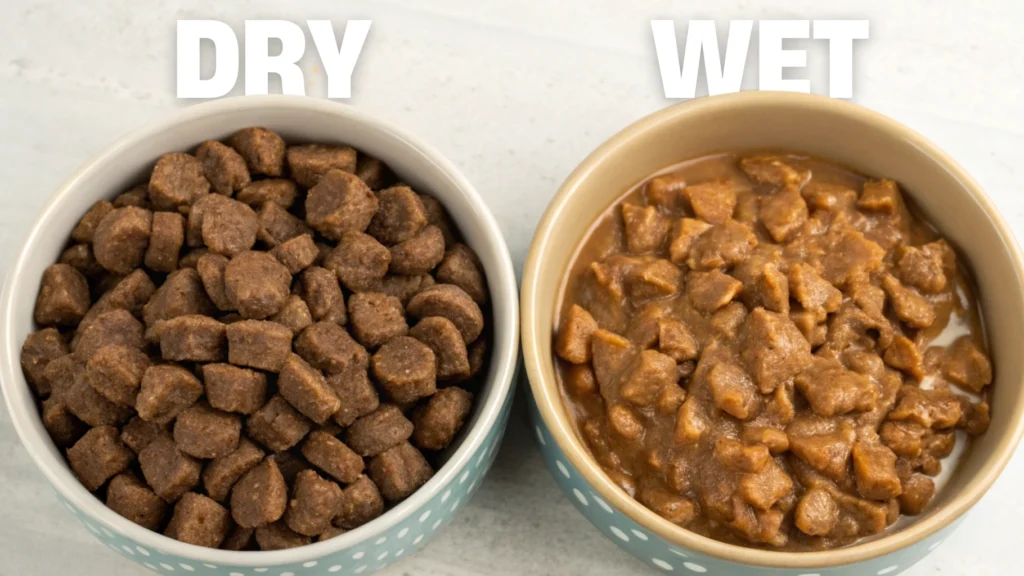
Confused about which is best? Let’s compare:
| Factor | Rehydrated Dry | Canned Wet | Dry Kibble |
|---|---|---|---|
| Cost | Lowest | Mid-range | Low-mid |
| Moisture Content | 50-60% | 75-80% | 10% |
| Digestibility | Excellent | Excellent | Good-Fair |
| Convenience | 2-5 min prep | Open & serve | Pour & serve |
| Shelf Life (unopened) | Months | 2-3 years | 1-2 years |
| Shelf Life (opened/rehydrated) | 24 hours | 48 hours | 4-6 weeks |
| Best for Sensitive Stomachs | Yes | Yes | Often problematic |
| Cost per meal | $0.50-1.00 | $1.50-3.00 | $0.30-0.75 |
Bottom line: Is wet food better than dry food for cats? For sensitive stomachs, yes. But rehydrated dry food gets you 80% of the benefits at 30% of the cost.
For most cat owners, a combination approach (some rehydrated dry, some wet) provides the best balance of nutrition, cost, and cat satisfaction.
Should Cats Eat Wet or Dry Food?
This is one of the most common questions I get asked: “Should cats eat wet or dry food?” The honest answer is: it depends on your cat.
The truth is, the best food is the one your cat thrives on. For some cats, dry kibble works perfectly fine. For others—especially those with sensitive stomachs—wet or rehydrated food makes all the difference.
When deciding should cats eat wet or dry food, consider:
Choose DRY food if:
- Your cat has no digestive issues
- They prefer crunchy kibble texture
- You want convenience and lower cost
- Their teeth are healthy and strong
Choose WET or REHYDRATED food if:
- Your cat has a sensitive stomach
- They frequently vomit on dry food
- They have low water intake (kidney concerns)
- They’re a senior cat with weak teeth
- They refuse to eat dry kibble
The best approach? Many vets (myself included) recommend a combination: some rehydrated dry food mixed with high-quality wet food. This gives you the benefits of both while answering the question should cats eat wet or dry food with a practical solution that works for most cats.
Tips for Picky Eaters
Not every cat immediately embraces rehydrated food. Here’s how to get my cat to eat dry food when it’s rehydrated:
1. Temperature Trick Start with warm water. The aroma is more enticing, and cats find warm food more appetizing.
2. Adjust Texture Try the soupy ratio (1:1.5) first. Some cats prefer more liquid initially. Gradually reduce water as they get used to it.
3. Gradual Introduction If your cat has eaten only dry kibble, transition over 7-10 days:
- Days 1-3: 75% dry, 25% rehydrated
- Days 4-6: 50% dry, 50% rehydrated
- Days 7+: 100% rehydrated (or your preferred ratio)
4. Safe Flavor Additions A tiny bit of bone broth or tuna juice (sodium-free) can make rehydrated food more appealing. Use sparingly—you’re just adding aroma, not changing the food.
5. Fresh Ingredients Some vets recommend adding a tiny amount of cooked chicken or turkey. Always check with your vet first about what’s safe for your specific cat.
6. Patience It sometimes takes 7-10 days for cats to accept dietary changes. Stick with it.
According to PetMD’s nutritional guidance, gradual dietary transitions help prevent digestive upset and increase acceptance rates in picky eaters.
FAQs: Your Rehydration Questions Answered
Q: Can I use bone broth or chicken broth instead of water?
A: Yes, but with caution. Use low-sodium versions only (regular broth has too much salt). Add just a small amount for flavor—mostly water is still best. Sodium-free bone broth is a great occasional treat but shouldn’t replace water as the primary rehydration liquid.
Q: What if my cat completely refuses rehydrated food?
A: Some cats are stubborn! Try different water temperatures, ratios, and introduction speeds. If your cat refuses after 14 days, consult your vet about other strategies. Some cats do fine on dry food—not all need rehydration.
Q: Is rehydrated dry food as good as canned wet food?
A: Nearly. Rehydrated dry food has similar moisture content and digestibility. The main difference is canned food sometimes has different recipes. For nutrition, both are excellent for sensitive stomachs.
Q: How much do I rehydrate for different cat sizes?
A: Follow the 1:1 ratio regardless of size. Portion sizes vary (a 6-lb cat eats less than a 12-lb cat), but the water-to-food ratio stays the same.
Q: Can I rehydrate freeze-dried food differently?
A: Freeze-dried food rehydrates faster (1-2 minutes) and often needs less water. Follow package instructions, then adjust. Freeze-dried food is super-concentrated, so portions are tiny.
Q: What’s the difference between rehydrating and adding water?
A: Technically, rehydrating means adding water to restore moisture. When vets talk about adding water to dry food, they mean the same thing. Terms are interchangeable.
Q: Why does my cat vomit after eating dry food?
A: Several reasons—dry kibble is hard to digest, insufficient stomach acid, food sensitivities, or eating too fast. Rehydration addresses the digestibility issue. For a deeper dive into vomiting causes, check our guide on why is my cat throwing up which covers multiple triggers and solutions.
Q: Is dry cat food good for cats?
A: It can be—if your cat tolerates it well. For cats without digestive issues, quality dry food is convenient and nutritionally complete. For sensitive-stomach cats, it’s often problematic. The best food is one your cat eats well and stays healthy on.
The Bottom Line
I think back to Oscar and how learning how much water to rehydrate dried cat food transformed his life completely. His owner didn’t need expensive prescription food or endless vet visits. She just needed to understand this simple technique.
Here’s what we’ve covered:
- The standard ratio is 1:1 (equal parts food and water)
- Adjust based on your cat’s preference and needs
- Use warm water for faster softening and better digestion
- Never rehydrate more than 24 hours in advance
- It’s an excellent option for cats with sensitive stomachs
- You can mix rehydrated dry food with canned food for optimal nutrition
If your cat struggles with dry food, vomits, has digestive issues, or refuses to eat, knowing how much water to rehydrate dried cat food might be the simple solution you’re looking for. It costs almost nothing, takes just minutes, and can make a real difference in your cat’s health and happiness.
Start with the 1:1 ratio, adjust for your cat’s preference, and give it 7-10 days. Most cats show improvement within a week.
Your cat deserves food they can actually digest comfortably. Sometimes that means understanding how much water to rehydrate dried cat food is all they need to thrive.
Disclaimer: This information is educational only. Always consult with your veterinarian before making significant dietary changes, especially if your cat has diagnosed digestive conditions, is on medication, or has other health concerns.