Can cats eat rice? Yes — plain cooked rice is safe for cats in small amounts, but it should never replace their regular food, and certain types of rice are off-limits entirely.
I have mixed plain rice into my cats’ food during mild stomach upsets, and it helped settle things down. But there are real limits to how much, how often, and which type of rice you should offer.
Plain cooked white rice is safe for cats as an occasional treat or stomach settler. It should make up no more than 10% of their daily food intake. Never feed raw, uncooked, seasoned, or fried rice. Rice has no essential nutritional value for cats — they are obligate carnivores and need animal protein, not grains.
Is Cooked Rice Safe for Cats?
Plain cooked rice is non-toxic to cats. (Food allergies to grains are possible but uncommon.) Cats are obligate carnivores, meaning their bodies are designed to process animal protein, not grains. Rice provides carbohydrates and very little of what cats actually need nutritionally.
That said, a small amount of plain cooked rice is perfectly safe as an occasional addition. Many veterinarians recommend plain rice as a temporary bland diet ingredient for cats with mild digestive upset. The key word is temporary — rice is a supplement, never a replacement for proper cat food.
| Type of Rice | Safe? | Notes |
|---|---|---|
| Plain cooked white rice | ✅ Yes | Easiest to digest, best option |
| Plain cooked brown rice | ✅ Yes | Harder to digest, smaller portions |
| Raw or uncooked rice | ❌ No | Indigestible, causes bloating and pain |
| Fried rice | ❌ No | Contains oil, garlic, onion — all toxic |
| Seasoned or flavored rice | ❌ No | Salt, spices, sauces harmful to cats |
| Rice with butter or oil | ❌ No | Too much fat, causes digestive issues |
White Rice vs Brown Rice — Which Is Better for Cats
White rice is the better option for cats. It is easier to digest because the outer bran layer has been removed during processing. Brown rice retains that bran layer — it is more nutritious for humans but harder for a cat’s shorter digestive tract to break down.
If you are feeding rice to help settle a stomach issue, always choose white rice. Brown rice can actually worsen digestive discomfort in some cats because of the extra fiber content. If your cat is healthy and you want to offer rice as an occasional treat, either type works — but white rice is gentler.
Can Cats Eat Rice Raw or Uncooked?
No. Raw uncooked rice is not safe for cats. Uncooked rice grains are extremely hard and difficult for cats to chew and digest. They can cause bloating, abdominal pain, and gas as they absorb water and expand inside the digestive tract.
There is no benefit to feeding uncooked rice — it must always be fully cooked and served plain.
How Much Rice Can You Give a Cat?
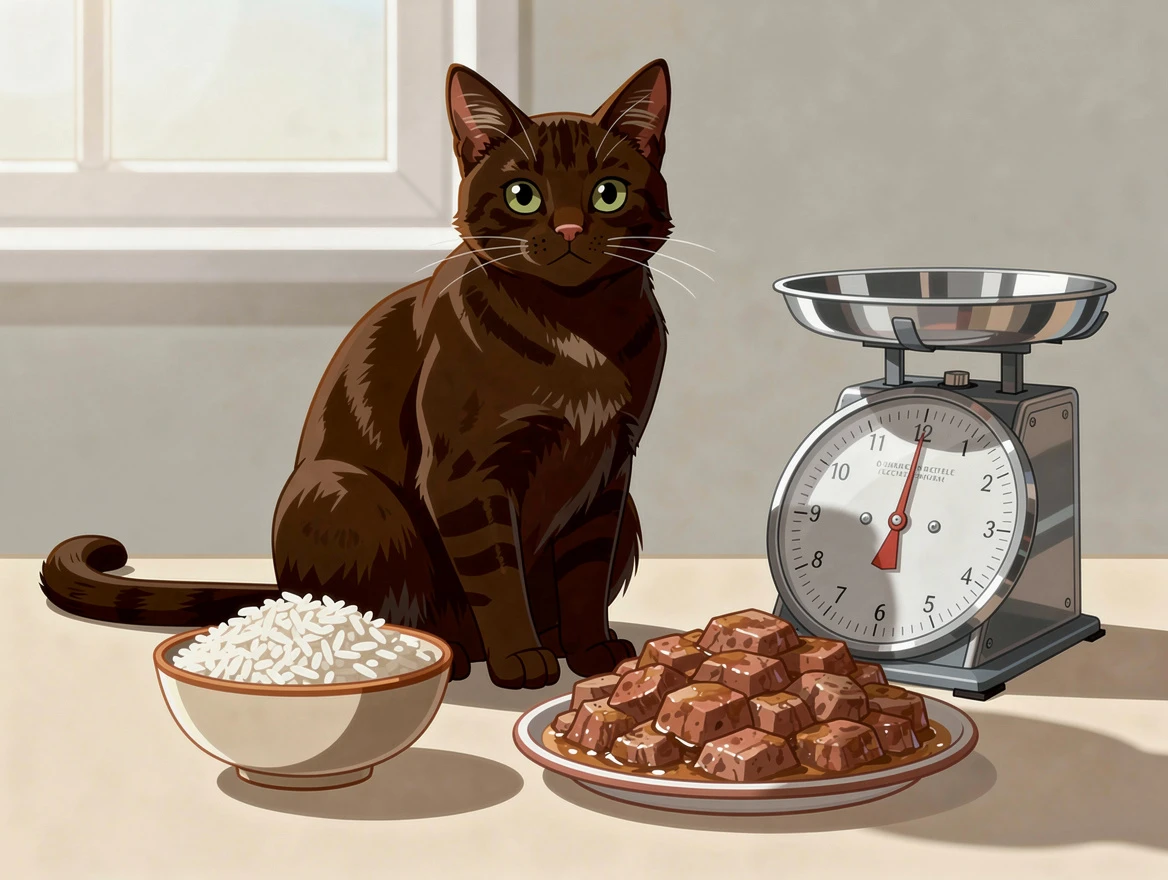
Rice should make up no more than 10% of your cat’s total daily calorie intake. For an average adult cat, that means roughly one to two tablespoons of cooked rice per day at most.
Cats need animal-based protein as the foundation of every meal. Too much rice displaces the protein and nutrients they actually need — leading to nutritional deficiency over time if rice becomes a regular large portion of their diet. Think of rice as a small side addition, never the main course. For full feeding guidelines, see: How Much Wet Food to Feed a Cat — understanding daily calorie needs helps you know how much room there is for extras like rice.
Can Cats Eat Rice Everyday?
No — rice should not be part of your cat’s daily diet. While it is not toxic, feeding rice every day means your cat is consistently getting calories from a source that provides no essential feline nutrition. Over weeks and months, this can contribute to weight gain and nutritional gaps.
The exception is a temporary bland diet prescribed by your vet during a digestive issue — in that case, rice and boiled chicken for 2–3 days is common veterinary advice. But once the stomach settles, return to regular cat food immediately.
Can Cats Eat Rice and Chicken?
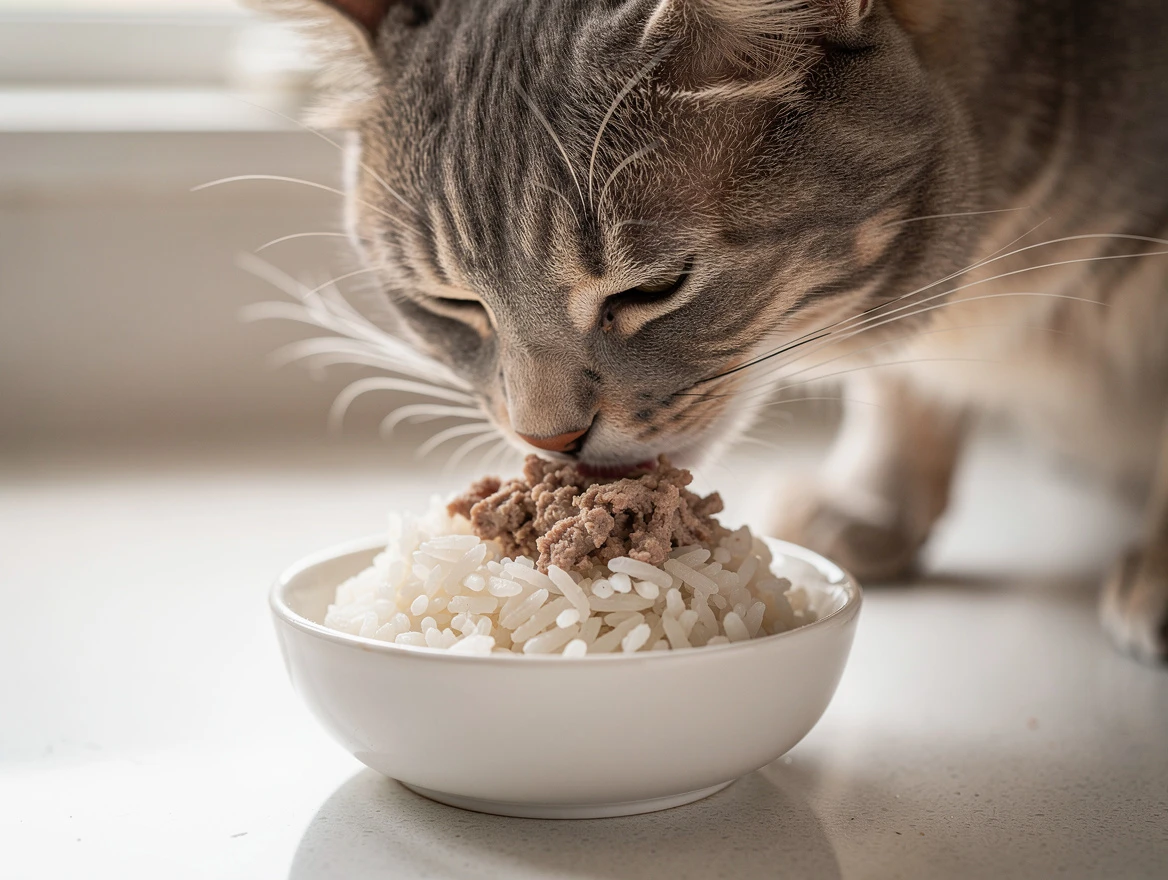
Yes — plain boiled chicken and plain cooked white rice is one of the most commonly recommended bland diets for cats with mild digestive upset. The chicken provides easily digestible protein and the rice provides binding carbohydrates that help firm up loose stools.
The chicken must be plain — no seasoning, no skin, no bones, no butter or oil. Boiled or baked, shredded into small pieces, mixed with a small amount of rice. This combination is a short-term solution for 2–3 days, not a permanent diet. It lacks the complete vitamins, minerals, and taurine cats need long-term. For more on home-prepared meals, see: Home Cooked Cat Food Recipes.
Can Cats Eat Rice Mixed With Cat Food?
Yes — mixing a small amount of plain cooked rice into your cat’s regular wet food is the safest way to offer it. The cat food provides the nutritional base and the rice is just a small addition. Start with half a tablespoon mixed in and see how your cat responds.
Some cats accept the texture change easily. Others will pick around the rice grains or refuse the food entirely. If your cat rejects it, do not force it — cats are notoriously particular about food texture changes. Related: How to Get Cat to Eat Wet Food — tips for cats that resist food changes.
Can Cats Eat Rice and Milk?
No. While rice itself is safe, milk is a problem for most adult cats. The majority of adult cats are lactose intolerant — they lack the enzyme needed to properly digest lactose in cow’s milk. Combining rice with milk creates a double digestive challenge that often results in diarrhea, gas, and stomach cramps.
If you want to add moisture to rice, use plain water or a small amount of low-sodium chicken broth (with no onion or garlic) instead of milk.
Can Cats Eat Fried Rice?
Absolutely not. Fried rice contains ingredients that are harmful or outright toxic to cats. Most fried rice recipes include garlic, onion, soy sauce, oil, and various seasonings — garlic and onion are toxic to cats even in small amounts, and the high sodium and fat content causes digestive distress and can contribute to pancreatitis.
This applies to all restaurant or takeout rice dishes — any rice that has been prepared with seasonings, sauces, butter, or oils should never be offered to a cat. Only plain, boiled or steamed rice with absolutely nothing added is safe.
- Garlic and onion — toxic to cats, even in powder form
- Soy sauce — extremely high sodium, dangerous for cats
- Fried or oily rice — causes pancreatitis risk
- Rice with butter — too much fat for feline digestion
- Flavored rice mixes — contain preservatives and seasonings
Is Rice Good for Cats With Diarrhea?
Plain cooked white rice is a common veterinary recommendation for mild diarrhea in cats. Rice acts as a binding agent — it absorbs excess water in the digestive tract and helps firm up loose stools. Combined with plain boiled chicken, it forms a gentle bland diet that gives the digestive system time to recover.
However, rice only helps with mild, short-term diarrhea. If your cat has diarrhea lasting more than 48 hours, bloody stools, or is also vomiting or lethargic — skip the rice and see the vet. Prolonged diarrhea causes dehydration quickly in cats. If your cat is also refusing food and water alongside digestive issues, see: My Cat Is Not Eating or Drinking and Very Weak.
Can Kittens Eat Rice?
Kittens under 12 weeks should not eat rice at all. Their digestive systems are still developing and they need calorie-dense, protein-rich food — every calorie matters for growth. Rice fills them up without providing the nutrients a growing kitten needs.
Older kittens (3–6 months) can tolerate a very small amount of plain cooked rice if recommended by a vet for a digestive issue, but it should be even less than what you would give an adult cat — no more than one teaspoon mixed into their food.
Rice vs Cat Food — Nutritional Comparison
| Nutrient (per 100g) | Cooked White Rice | Average Wet Cat Food |
|---|---|---|
| Calories | 130 kcal | 70–100 kcal |
| Protein | 2.7 g | 8–12 g |
| Fat | 0.3 g | 4–6 g |
| Carbohydrates | 28 g | 2–5 g |
| Taurine | 0 mg | Present (essential) |
| Fiber | 0.4 g | 0.5–1 g |
This table shows why rice can never replace cat food — it has almost no protein, zero taurine, and far too many carbohydrates for an obligate carnivore. Rice is filler, not nutrition.
When to Avoid Rice Completely
- Diabetic cats — rice spikes blood sugar rapidly due to its high carbohydrate content. Do not feed rice to a diabetic cat unless your vet specifically approves it. Related: Cat Diabetes Symptoms.
- Kidney disease — cats with chronic kidney disease need carefully managed diets, typically controlled for protein and phosphorus. Rice offers no nutritional benefit toward that management, so check with your vet before adding it rather than assuming it’s a safe filler.
- Cat refuses or vomits after eating rice — stop immediately. Not every cat tolerates rice well.
- Kittens under 12 weeks — they need every calorie to be protein-rich for growth.
Rice Trick — Hiding Medication in Food
One useful trick — a small amount of sticky cooked rice can help hide a pill or crushed medication inside your cat’s wet food. The rice texture masks the medication better than wet food alone. This is not a replacement for proper pill-giving technique, but it works in a pinch with cats that refuse pills outright. For the full method, see: How to Give a Cat a Pill.

Frequently Asked Questions
Some vegetables are safe for cats in small amounts — plain steamed carrots or peas mixed with rice is acceptable. But many common vegetables provide little benefit to cats, and some (onion, garlic, chives) are toxic. Keep it simple — plain rice with plain chicken is the safest combination.
Yes — plain cooked meat (chicken, turkey, or lean beef) mixed with plain rice is safe. The meat must be unseasoned, boneless, and cooked thoroughly. This is essentially the standard bland diet recommended by vets.
The Bottom Line
Rice can be a safe occasional addition to your cat’s diet when it’s plain, cooked, and kept to small amounts as a treat or short-term stomach settler. White rice is easier to digest than brown. Never feed raw, fried, or seasoned rice. Keep portions to one or two tablespoons maximum, and always make sure protein-rich cat food remains the foundation of every meal. Related: Can Cats Eat Dog Food — another common “can cats eat” question with an important answer.