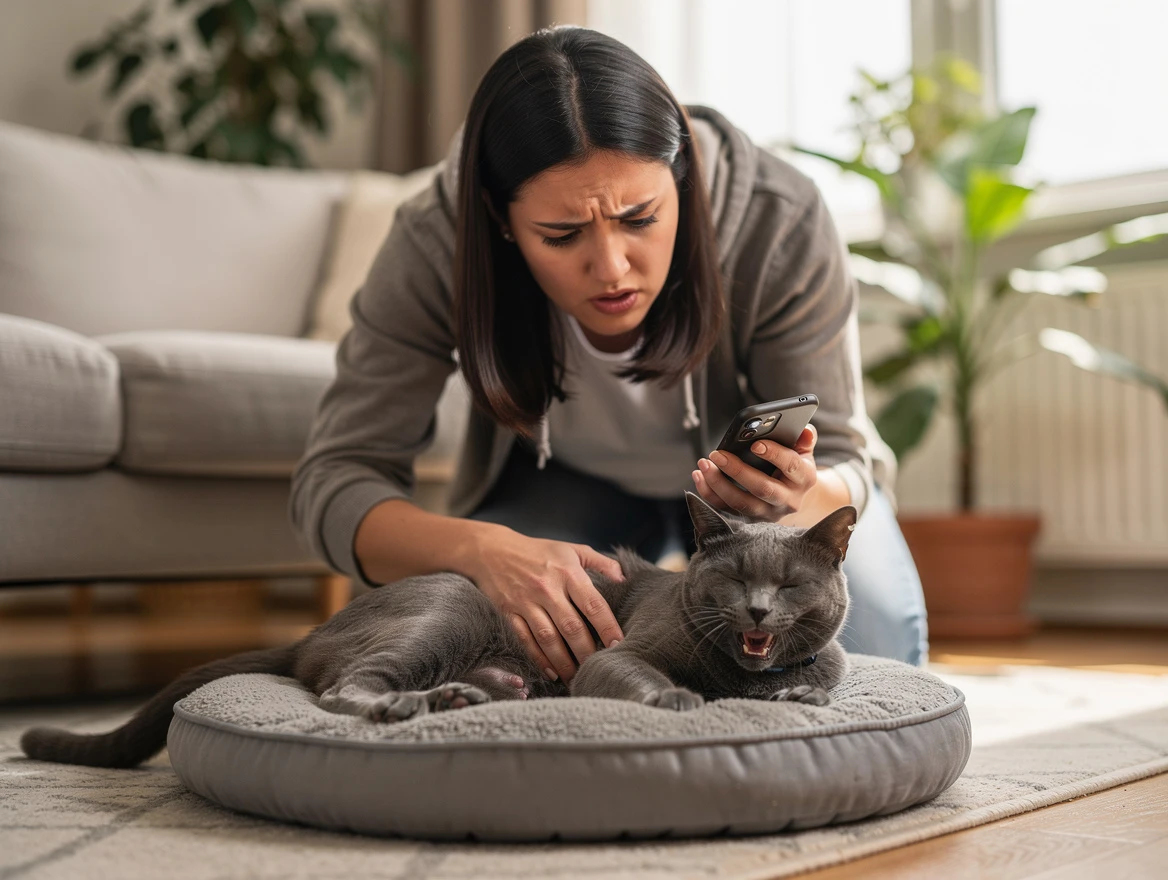
My cats meow is weak and raspy — that’s usually the first worried thought when your cat opens their mouth to meow and only a hoarse, quiet sound comes out. It can be alarming, especially when it happens suddenly or the voice sounds squeaky or almost silent.
Most of the time it is not an emergency. But it is always worth understanding why it is happening and what to watch for.
The most common causes are laryngitis, an upper respiratory infection, voice overuse, or allergies. Most mild cases — where the cat is otherwise acting normal — resolve in 3–7 days with rest and hydration. If unchanged after 5–7 days or other symptoms appear, see the vet.
- Open-mouth breathing or visible effort when breathing
- Blue or pale gums — this is an emergency
- Complete voice loss lasting more than 2–3 days
- Drooling, gagging, or struggling to swallow
- Not eating, lethargic, or running a fever
- Persistent coughing alongside the voice change
9 Causes When My Cats Meow Is Weak and Raspy
| Cause | Symptoms | Serious? |
|---|---|---|
| Cat laryngitis | Hoarse meow, often no other signs | Mild |
| Upper respiratory infection | Sneezing, watery eyes, congestion | Moderate |
| Voice overuse | Raspy meow only, resolves fast | Mild |
| Allergies | Seasonal sneezing, watery eyes | Mild |
| Throat trauma or injury | Pain when swallowing, neck sensitivity | Serious |
| Foreign body in throat | Gagging, pawing at mouth | Serious — urgent |
| Nasopharyngeal polyps | Chronic voice change, snoring | Serious |
| Hyperthyroidism | Weight loss, increased appetite | Serious |
| Laryngeal paralysis | Noisy breathing, exercise fatigue | Serious — urgent |
1. Cat Laryngitis
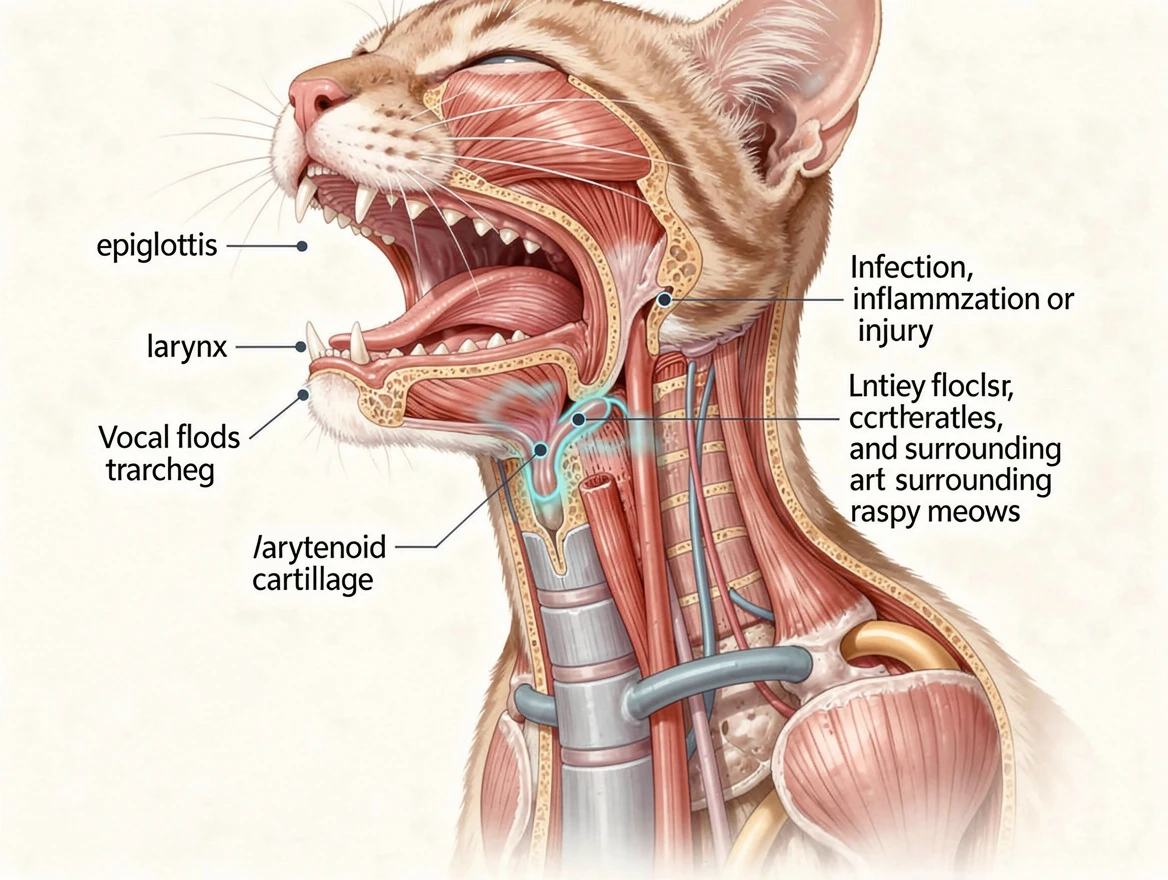
The most common cause. Inflammation of the voice box from a viral infection, smoke, dust, or excessive meowing. The cat meow sounds hoarse or almost silent. Resolves in 3–7 days with rest.
2. Upper Respiratory Infection
Feline herpesvirus or calicivirus affects the voice alongside sneezing, congestion, and eye discharge. Upper respiratory infection in cats is the most common medical cause of a hoarse or raspy meow. Related: My Cat Sounds Congested When Breathing.
3. Voice Overuse
Excessive meowing strains the vocal cords. The cat meow is weak and quiet for 24–48 hours then returns completely with rest.
4. Allergies
Pollen, dust, smoke, or cleaning products irritate the throat. Cat raspy meow from allergies is often seasonal. Remove irritants and monitor. Ask your vet about allergy testing if it recurs.
5. Throat Trauma or Injury
A fight, fall, or collar catch can damage the vocal cord area. Signs include pain when swallowing and neck sensitivity. See the vet same day.
6. Foreign Body in the Throat
Grass, bone fragments, or small objects cause sudden cat sore throat symptoms — voice change plus gagging or pawing at the mouth. This is urgent. Call your vet immediately.
7. Nasopharyngeal Polyps
Benign growths in younger cats. The cat voice sounds different progressively over weeks — often with snoring. Requires surgical removal.
8. Hyperthyroidism
In cats over 8 years old, an overactive thyroid causes voice changes alongside weight loss and restlessness. Ask your vet for a thyroid blood panel. Related: Signs of Kidney Failure in Cats.
9. Laryngeal Paralysis
The larynx muscles stop working properly. Voice weakens gradually alongside noisy breathing during exercise. Requires veterinary diagnosis under sedation.
Cat Raspy Meow But Acting Normal
This is the most searched situation — why is my cat meowing silently or hoarsely but acting completely fine otherwise?
When the cat is eating, active, and showing no other symptoms — the cause is almost always laryngitis or voice strain. The vocal cords are inflamed or tired. The rest of the cat is healthy.
Monitor for 3–5 days. If the cat meow sounds different but improves daily — no action needed. If unchanged after 5 days — see the vet to rule out polyps.
My Cats Meow Is Raspy All of a Sudden
Sudden onset — fine yesterday, raspy or silent today — points to laryngitis, voice overuse, or a foreign body.
Check for sneezing, discharge, or difficulty swallowing. If the cat is otherwise normal — give it 48 hours before making any decisions.
How Long Does a Raspy Cat Meow Last
📅 Recovery Timeline
- After excessive meowing — 24–48 hours
- Mild laryngitis or irritation — 1–3 days
- Upper respiratory infection — 5–10 days
- Allergies (with trigger removed) — 3–7 days
- Chronic hoarseness (polyps, paralysis) — vet needed, will not resolve alone
Can I Treat It at Home
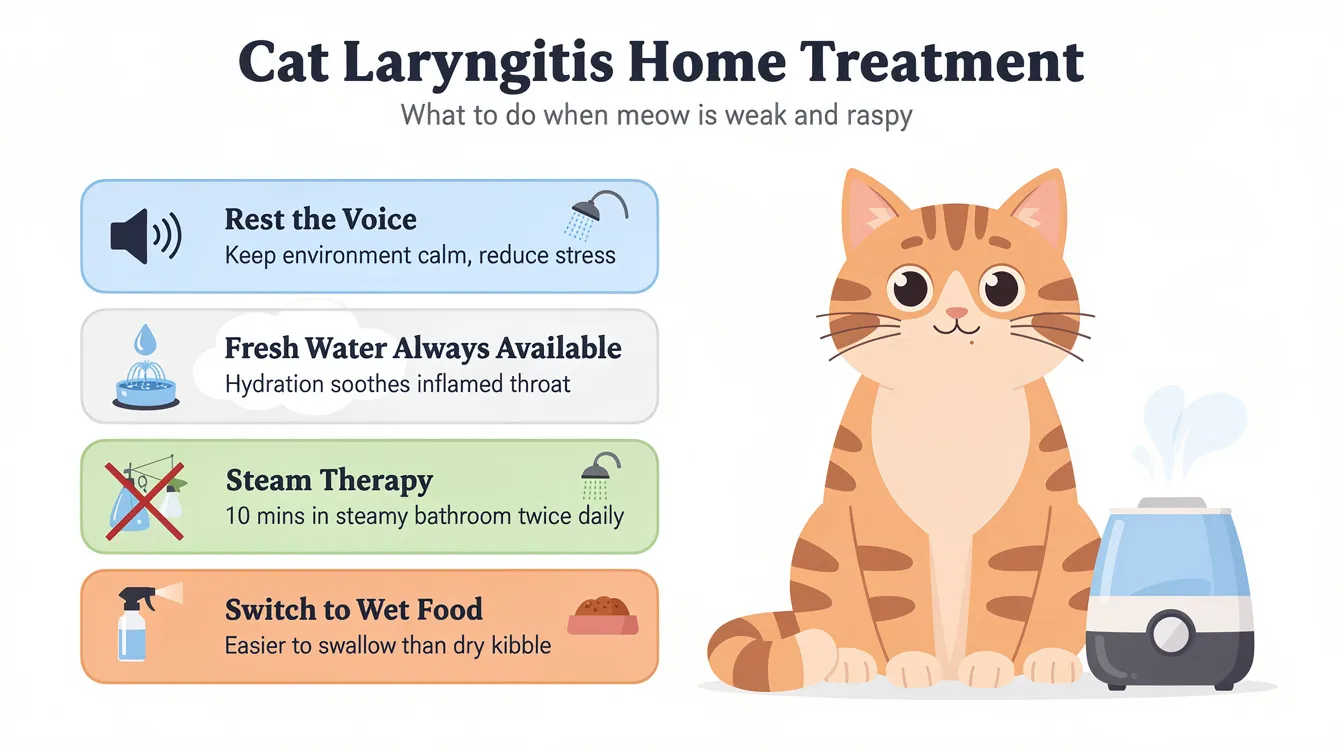 For mild cases with no other symptoms — yes. Home care focuses on rest and support:
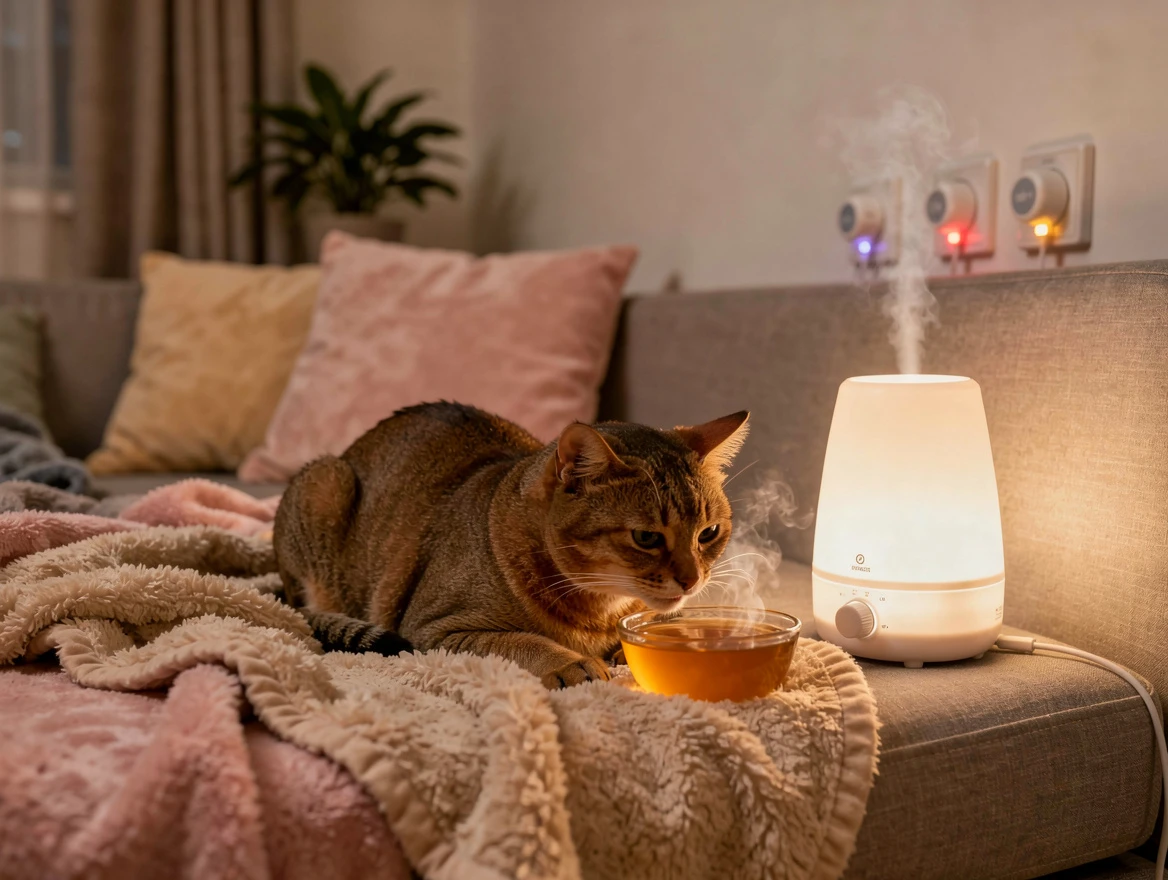
- Humidifier — adds moisture to the air and soothes inflamed throat tissue
- Hydration — fresh water always available, cat water fountain encourages drinking
- Wet food — easier to swallow than dry kibble during throat inflammation
- Reduce stress — keep the environment calm to reduce vocalizing
- Monitor breathing — check daily that breathing is normal and easy
- Remove irritants — no candles, air fresheners, or strong cleaning products
URI vs Laryngitis — Key Differences
| Feature | URI | Laryngitis |
|---|---|---|
| Cause | Viral or bacterial | Strain or irritation |
| Other symptoms | Sneezing, discharge, cough | Usually none |
| Duration | 5–10 days | 1–7 days |
| Treatment | Antibiotics or antivirals | Rest and hydration |
| Contagious to other cats | Yes — isolate the cat | No |
My Cat Lost His Voice
Why is my cat meowing silently — opening their mouth but producing no sound at all? This is worth taking more seriously than a raspy meow.
Most likely still laryngitis — but complete voice loss is also associated with polyps, laryngeal paralysis, and neurological issues. If the voice does not return within 2–3 days, see the vet.
If voice loss appears alongside physical symptoms like limping or weakness: My Cat Is Limping But Still Jumping and Running.
🩺 When to See a Vet
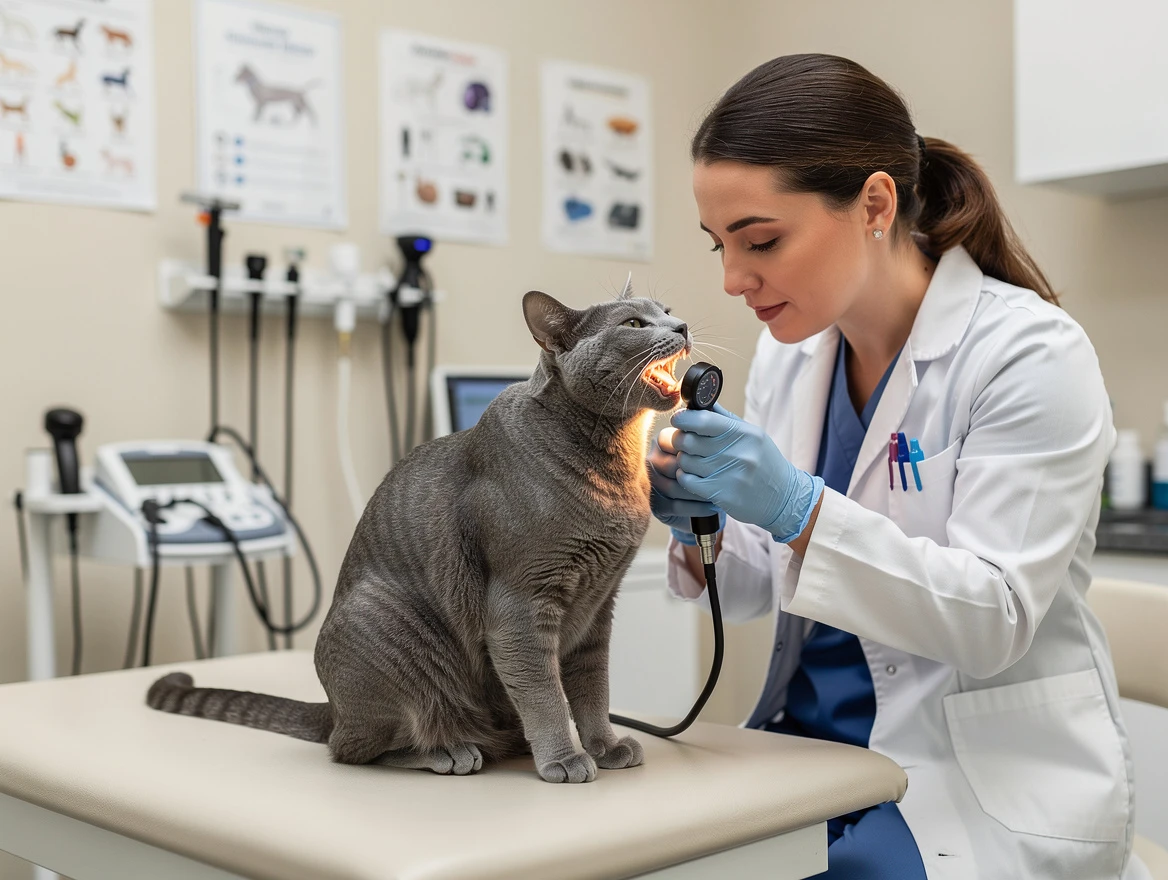
- Voice not improving after 5–7 days of rest
- Complete voice loss lasting more than 2–3 days
- Difficulty swallowing, gagging, or pawing at mouth
- Cat meow sounds different and progressively worse over weeks
- Cat over 8 years old — thyroid check recommended
- Combined with lethargy, fever, or not eating
Frequently Asked Questions
Not immediately if no other symptoms are present. Monitor for 3–5 days. See the vet if no improvement after 5–7 days or if other symptoms develop.
Laryngitis or voice strain is the most likely cause. The vocal cords are inflamed or tired. The rest of the cat is healthy. Rest and hydration usually resolve it within a few days.
If caused by a URI — yes. Keep a cat with sneezing or discharge separated from other household cats until symptoms clear.
Not immediately for a mild case with no other symptoms. Monitor for 5 days. Yes if unchanged or worsening, in a cat over 8 years old, or with any breathing difficulty.
Humidifier, fresh water, wet food, reduced stress, and removing environmental irritants. No human medications — most are toxic to cats. See the vet if no improvement in 5 days.
The Bottom Line
Look at the whole picture, not just the voice. A raspy or hoarse meow with no other symptoms in a healthy cat is almost always minor and temporary.
It becomes serious when it is progressive, appears in an older cat, or comes with breathing or swallowing difficulty. When in doubt — rest, hydrate, and monitor. If unchanged after 5 days — call the vet.