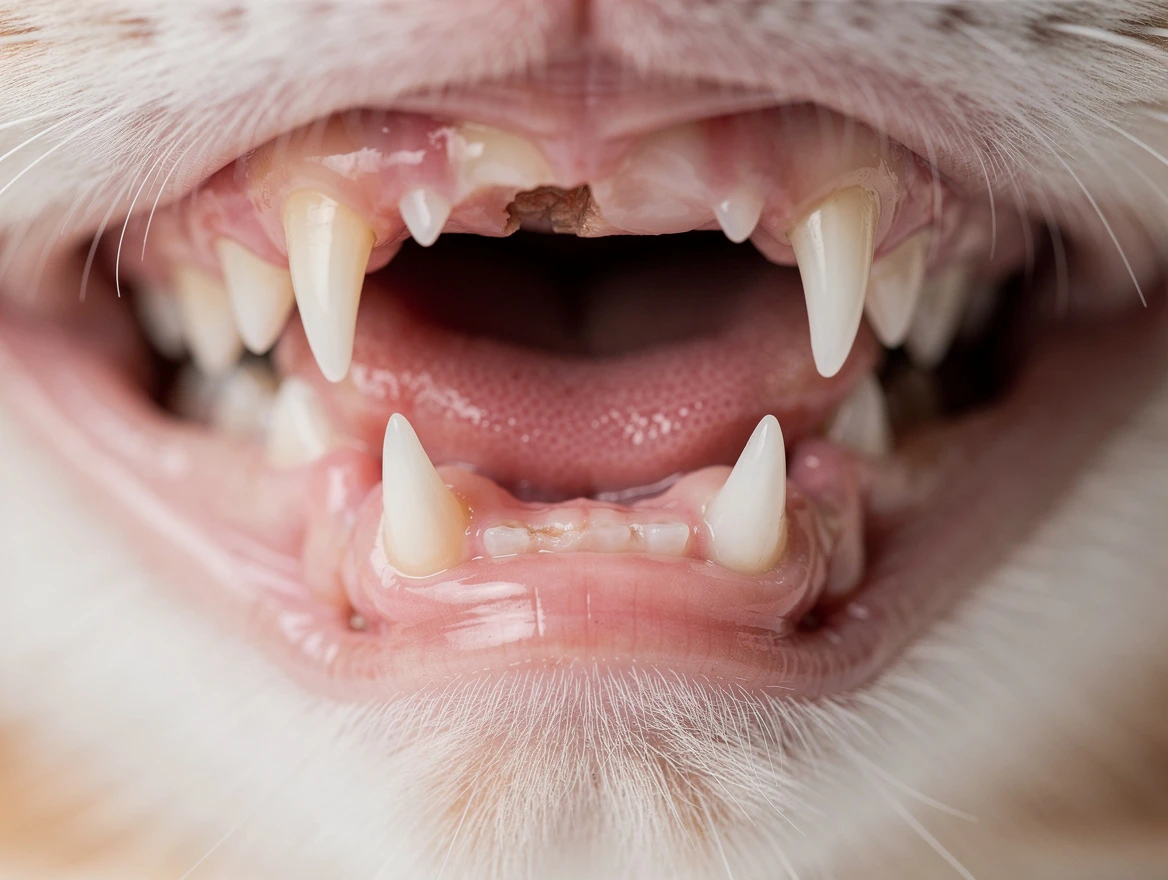
My cat lost a fang tooth — and those long pointed canines look too important to just fall out. Whether you should worry depends entirely on your cat’s age and why it happened.
In kittens under 6 months this is normal baby tooth loss. In adult cats it almost always points to periodontal disease, tooth resorption, or trauma. Any adult cat that loses a permanent fang needs a vet visit within a few days, even if the cat seems fine.
- Active bleeding from the socket that will not slow down
- Visible root still in the gum — partial fracture
- Gum swelling, redness, or pus around the socket
- Cat pawing at mouth, drooling, or refusing all food
- Tooth lost after a fall or fight — jaw damage possible
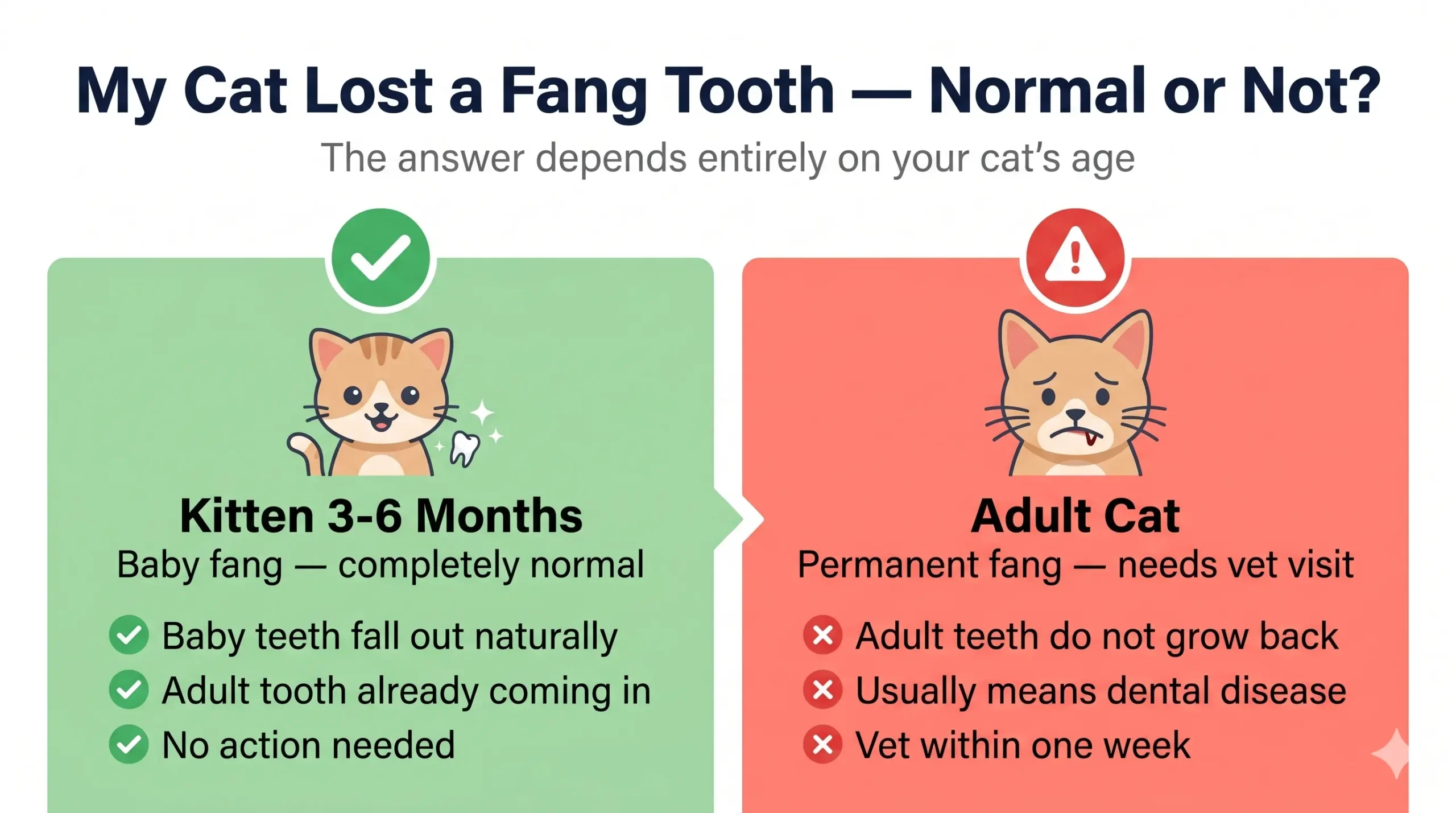
My Cat Lost a Fang Tooth — Normal or Not?
| Age | Tooth Type | Normal? | Action |
|---|---|---|---|
| Kitten 3–6 months | Baby canine | ✅ Normal | Monitor — adult tooth coming in |
| Adult cat under 5 years | Permanent fang | ❌ Not normal | Vet within a few days |
| Senior cat over 7 years | Permanent fang | ❌ Not normal | Vet as soon as possible |
5 Reasons a Cat Loses a Fang Tooth
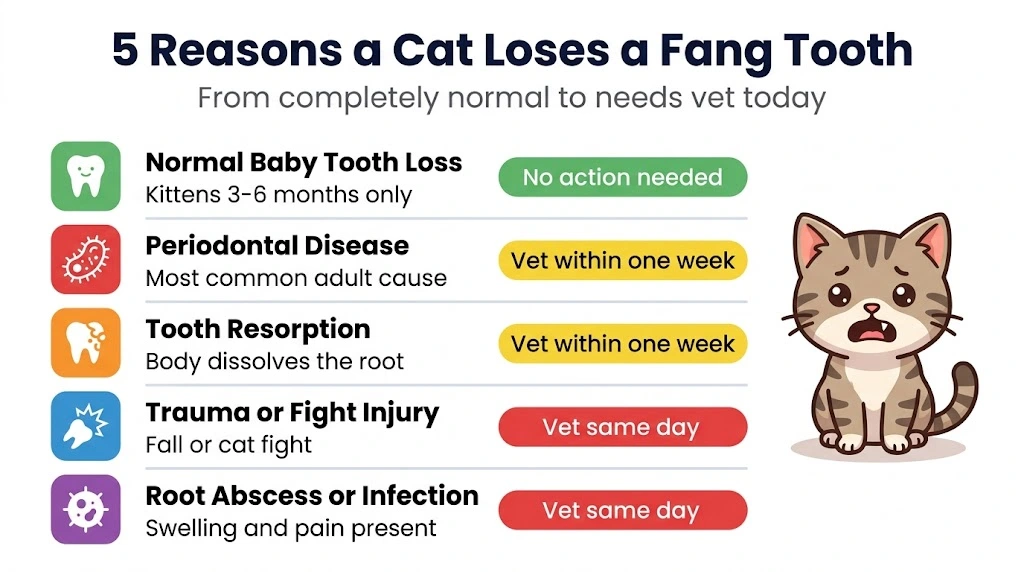
1. Periodontal Disease
The most common cause of adult cat tooth loss, including fang teeth. Bacteria destroy the bone and tissue holding the tooth in place over months or years. By the time the canine tooth falls out, dental disease is usually advanced. Bad breath, sometimes described as a rotten smell, red gums, and reluctance to eat hard food are the early warning signs most owners miss.
2. Tooth Resorption
The body destroys the tooth from the inside out — the root dissolves and the broken canine crown eventually falls off. It’s common in cats over 5, with prevalence estimates varying widely depending on how it’s diagnosed. Root material often remains in the socket after the visible tooth is gone and needs veterinary removal to prevent infection.
3. Trauma or Injury
A fall, impact, or fight can fracture or knock out a fang tooth. If a cat tooth is missing after any injury, see the vet same day. Related: My Cat Has an Abscess That Popped — bite wounds from fights cause infections alongside tooth damage.
4. Oral Abscess or Infection
A tooth root abscess destroys supporting bone and loosens the fang. Signs include a swollen face, pawing at a bleeding mouth, and eating on one side only. Needs antibiotics and likely extraction. If your cat also has bad breath that smells foul alongside tooth loss, this is almost certainly the cause. Related: Cat Drooling — 7 Essential Facts — excessive drooling is a common sign of oral infection.
5. Normal Kitten Tooth Loss
Kittens lose their baby teeth between 3–6 months, including the four baby fangs. Baby fangs are often swallowed or found on the floor. Completely normal — no action needed unless the adult tooth doesn’t appear within a few weeks.
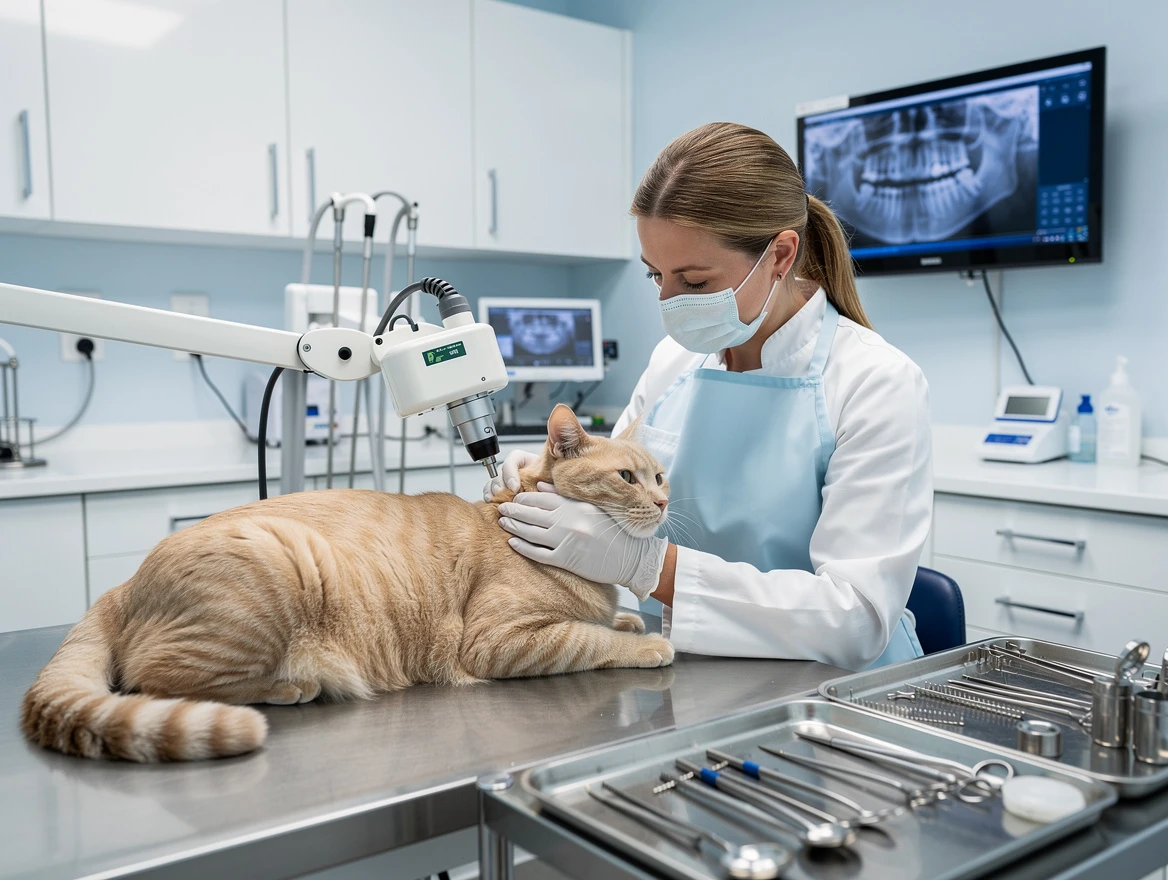
But Seems Fine — Still Need the Vet?
Cats hide dental pain exceptionally well. A cat that seems fine may have been managing discomfort for months before the tooth finally came out.
A vet dental exam with X-rays is still needed, not as an emergency, but within a week. X-rays show root fragments, other affected teeth, and infection below the gum line where you can’t see it.
Normal vs Emergency — How to Tell the Difference
| Normal ✅ | Emergency ❌ |
|---|---|
| Kitten losing a baby fang tooth | Adult cat with bleeding gums |
| No pain signs, eating normally | Refusing all food or water |
| Playful, acting as usual | Swollen face or jaw |
| Clean socket, no smell | Bad smell or pus from socket |
| Lost tooth found whole on floor | Broken canine with root still in gum |
| Mild pink gum at socket | Bleeding mouth that will not stop |
The Tooth Fell Out — What Do I Do
- Check the socket for bleeding, swelling, or visible root material
- Watch for pain signs — pawing at mouth, drooling, changed voice. Related: My Cat’s Meow Is Weak and Raspy — dental pain sometimes changes a cat’s voice
- If your cat is refusing food after losing a tooth: My Cat Won’t Eat — here’s what to do
- Keep the tooth if you find it — bring it to the vet
- Switch to wet food — easier on a sore mouth
- Book a vet appointment — same day if pain signs, within a week if comfortable
Tooth Is Loose — Can I Pull It Out
No. Cat tooth roots are long and curved. Home extraction is painful, risks fracturing the root, and can leave infection behind. Vets extract teeth under anesthesia with instruments designed to remove the entire root cleanly.
Will a Cat’s Fang Grow Back
No. Adult cat teeth don’t grow back. Once a permanent fang is lost, that space remains empty permanently. This is why preventing dental disease matters — lost teeth cannot be replaced.
Can Cats Live With One Fang
Yes. Cats adapt well to missing teeth including fangs. They continue eating, grooming, and living normally on wet food. The fang is used primarily for catching prey — domestic cats manage comfortably without it.
Senior Cat Tooth Fell Out
Older cats are more prone to periodontal disease, tooth resorption, and oral tumors. A senior cat that lost a tooth needs a full dental exam and general health check — dental disease in older cats is linked to kidney and heart health. Related: Signs of Kidney Failure in Cats.
Lost a Tooth in a Fight
Fight-related tooth loss carries extra risk — the same bite that knocked the tooth out likely left puncture wounds that can abscess rapidly. Check the head and neck carefully for hidden wounds. See the vet same day for both.
How to Prevent More Tooth Loss

- Annual dental exams — catches problems before teeth become loose
- Brush teeth 2–3 times weekly — reduces plaque significantly
- Dental chews and toys — natural scrubbing between brushes
- Watch for early signs — bad breath, red gums, pawing at mouth
If your cat has been diagnosed with stomatitis, a severe oral inflammation condition, tooth loss is a common consequence. Read: 7 Critical Facts About Stomatitis in Cats.
🩺 When to See a Vet
- Any adult cat that lost a permanent fang — within a week
- Bleeding that does not slow within 10 minutes — same day
- Swelling, pus, or bad smell from socket — same day
- Pawing at mouth, drooling, or not eating — same day
- Tooth loss after fight or fall — same day
- Senior cat with any tooth loss — within a few days
Frequently Asked Questions
In an adult cat, yes, a vet visit is needed. Not an emergency if the cat is comfortable with no bleeding or swelling, but the cause needs investigation. In a kitten under 6 months, this is normal baby tooth loss.
The Bottom Line
My cat lost a fang tooth — a kitten under 6 months losing a baby fang is completely normal. An adult cat losing a permanent fang needs a vet visit to find and treat the cause.
The cat seeming fine is not a reason to wait. Cats hide dental pain exceptionally well. A dental X-ray takes 15 minutes and tells you everything happening below the gum line.