My cat jumps out of sleep scared — if you’ve seen this happen, you know how alarming it looks. One moment your cat is sleeping peacefully. The next, they launch off the bed or couch like something invisible just attacked them. Ears back, wide eyes, claws out, sometimes hissing — then standing a few feet away looking confused.
I’ve seen two of my four cats do this. The first time it happened, I genuinely thought something was wrong. After researching it and talking to my vet, I learned that in most cases it’s completely harmless — but there are specific situations where it does need veterinary attention.
This is usually caused by a hypnic jerk, a vivid dream, or a sudden noise that startled your cat during light sleep. It’s the same involuntary muscle spasm that makes humans jolt awake sometimes. In most cases it’s completely normal and harmless. See a vet only if it happens multiple times daily, involves stiffness or loss of balance, or your cat seems disoriented afterward.
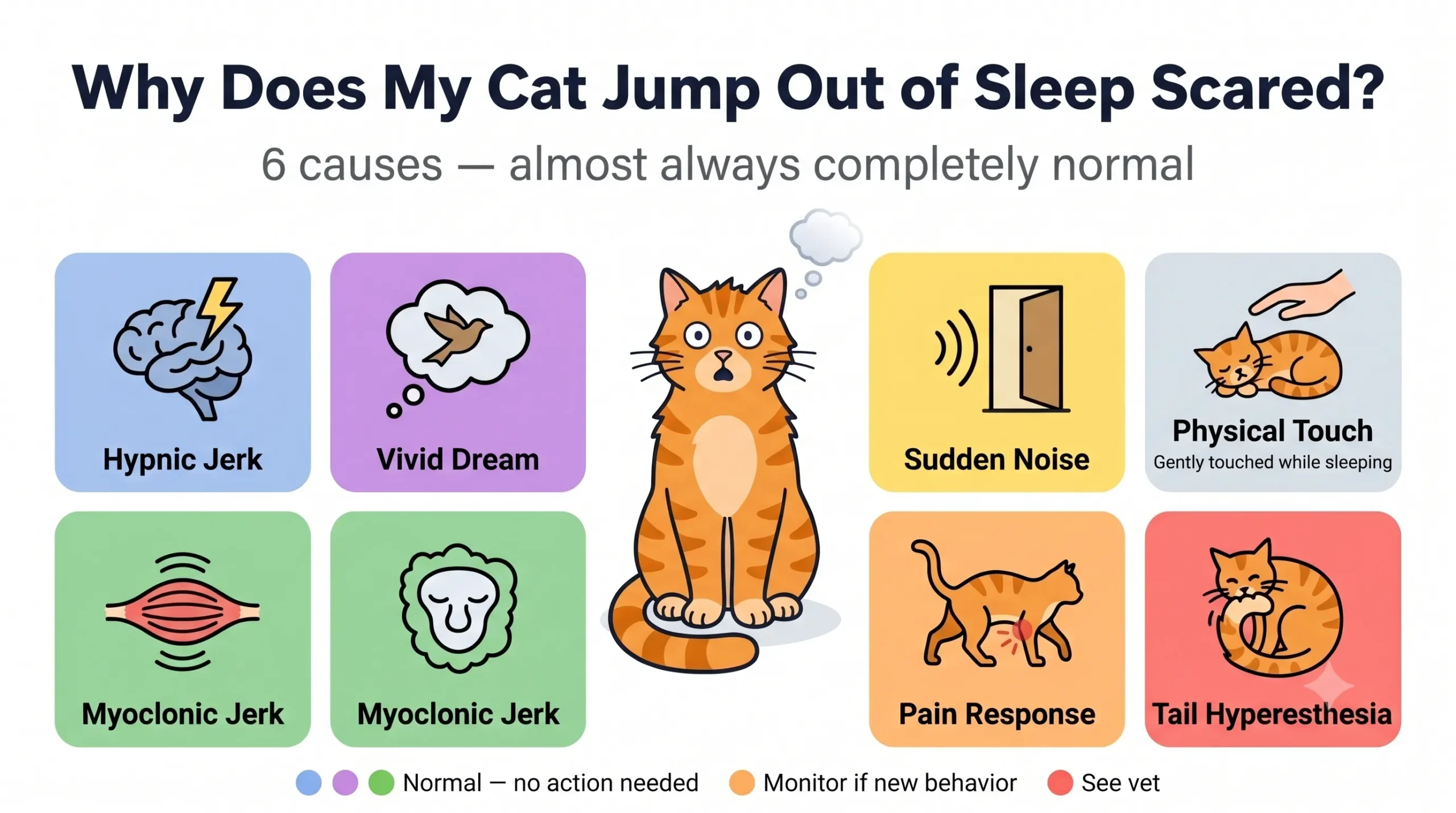
6 Reasons Your Cat Jumps Out of Sleep Scared
1. Hypnic Jerk — The Most Common Cause
A hypnic jerk is an involuntary muscle spasm that happens during the transition from wakefulness to sleep. Humans experience this too — that sudden feeling of falling just as you drift off. In cats, a hypnic jerk can be strong enough to launch them off the surface they were sleeping on. It looks dramatic but is completely harmless. It happens because the brain sends a sudden burst of activity to the muscles as the nervous system shifts into sleep mode.
2. Vivid Dream During REM Sleep
Cats experience REM sleep just like humans — the deep sleep phase where dreaming happens. During an intense dream, the brain can trigger a physical response strong enough to wake the cat abruptly. The cat wakes up still in “dream mode” — disoriented, startled, and ready to flee from whatever they were dreaming about. The dream felt real, which explains the confused stare that follows a few seconds later. Related: Why Does My Cat Twitch in His Sleep — twitching during sleep is the milder version of the same REM activity.
3. Sudden Noise or Environmental Startle
Cats have hearing far more sensitive than humans. A sound you barely notice — a door closing in another room, a car horn outside, a phone vibrating — can wake a sleeping cat violently. Cats in light sleep (NREM sleep) are particularly reactive to sudden sounds. NREM sleep startles in cats are common and completely normal. The cat isn’t jumping because of an internal problem — they heard something that triggered their instinctive startle response.
4. Myoclonic Jerks
Myoclonic hypnagogic jerks are involuntary muscle contractions that happen during the transition between sleep stages. They’re closely related to hypnic jerks but can occur deeper into the sleep cycle. Myoclonic jerks in cats look like sudden full-body twitches or jumps. They’re a normal neurological phenomenon, not a seizure. The key difference is that myoclonic jerks are brief, isolated events, while seizures involve sustained rhythmic movements.
5. Pain or Physical Discomfort
A cat that’s in pain may jump from sleep when they shift into a position that puts pressure on a sore area. Arthritis, dental pain, internal discomfort, or a healing injury can all cause sudden painful wakeups. If this behavior is new — especially in an older cat — pain is worth investigating. Related: My Cat Is Limping But Still Jumping and Running — limping alongside sleep disturbance may point to joint pain.
6. Feline Hyperesthesia Syndrome
In rare cases, a cat that repeatedly leaps from sleep with extreme agitation — hissing, biting at their own tail or flanks, skin rippling along the back — may have feline hyperesthesia syndrome. This is a neurological condition where the cat’s skin becomes hypersensitive, triggering sudden episodes of frantic behavior. Hyperesthesia episodes can happen during sleep and look very different from a normal startle — the cat appears genuinely distressed and may attack themselves. This requires veterinary evaluation.
What Is a Cat Hypnic Jerk
A hypnic jerk is a sudden involuntary muscle contraction that happens as the brain transitions from wakefulness to sleep. The scientific name is a “sleep start.” It occurs because during the transition to sleep, the brainstem begins shutting down motor control — but occasionally sends one last burst of activity to the muscles before fully relaxing. In cats, this burst can be strong enough to make them leap into the air.
Cat hypnic jerks are completely normal, happen in all mammals, and require no treatment. They’re more common in cats that are overtired, overstimulated before sleep, or sleeping in an unfamiliar environment.
Normal vs Concerning — When to Worry
| Normal (No Concern) | Concerning (See Vet) |
|---|---|
| Happens occasionally — once or twice a month | Happens multiple times per day or is increasing |
| Cat recovers within seconds and acts normal | Cat seems disoriented, wobbly, or confused for minutes |
| Single jump or startle, then calm | Sustained jerking, stiffness, or paddling movements |
| No other symptoms when awake | Appetite changes, lethargy, hiding, or limping when awake |
| Cat goes back to sleep or resumes normal activity | Cat appears distressed, hisses at itself, or attacks own body |
| Happens after a busy or stimulating day | Happens regardless of activity level or environment |
Why It Happens More at Night
Cats are crepuscular — most active at dawn and dusk. Their deepest sleep often happens during the middle of the night when the house is quiet. During deep sleep, REM activity is highest and hypnic jerks are most likely to occur. Additionally, nighttime sounds that you sleep through — heating systems clicking, wildlife outside, appliances cycling — can startle a sleeping cat.
At night specifically, the most likely explanation is a combination of deep REM sleep and a sudden environmental sound. This is the most common scenario and the least concerning.
What Do Cats Dream About
Research suggests cats dream about their daily experiences — hunting, playing, exploring, and interacting with their environment. During REM sleep, the brain replays and consolidates these memories. A cat chasing prey in a dream may twitch their paws. A cat startled by something in a dream may jolt awake in a fear response — which is exactly what the sudden sleep-jump looks like from the outside.
Cats that had particularly stimulating or stressful days tend to have more active dream states, and more dramatic sleep startles. A quiet, routine day usually means calmer sleep. Related: Is My Cat Depressed — chronic stress affects both waking behavior and sleep quality.
How to Help Your Cat Sleep More Calmly
- Consistent sleep location — a dedicated bed in a quiet, low-traffic area reduces environmental startles
- Reduce stimulation before bed — avoid intense play in the hour before your cat’s usual sleep time
- Minimize sudden noises — white noise or soft music masks startling sounds
- Comfortable temperature — cats sleep most deeply in warm, draft-free spots
- Never wake or punish — if your cat startles awake, let them recover on their own. Reaching for a startled cat can result in a reflexive bite or scratch
- Adequate daytime exercise — a well-exercised cat sleeps more deeply and calmly
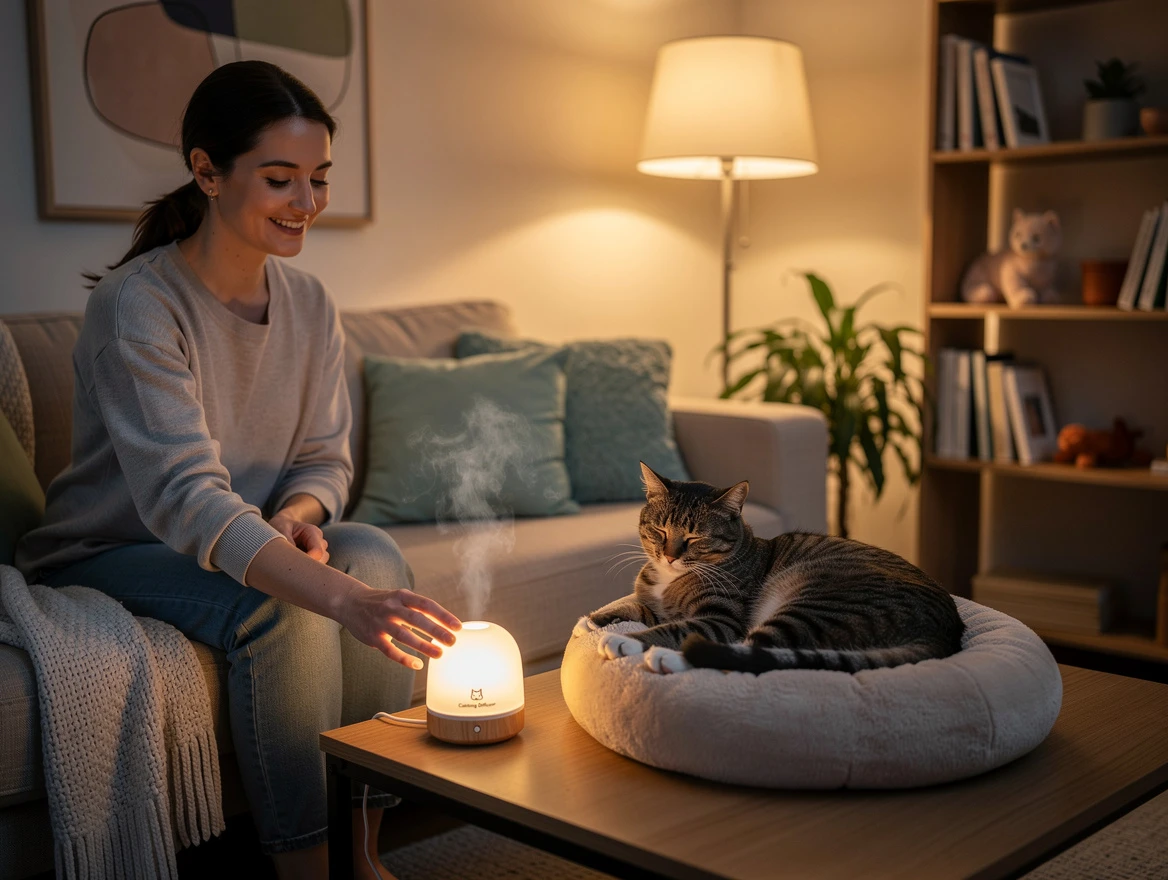
- Pheromone diffusers — products like Feliway release calming pheromones that reduce anxiety-related sleep disturbances. Especially helpful after environmental changes like moving, new pets, or renovation
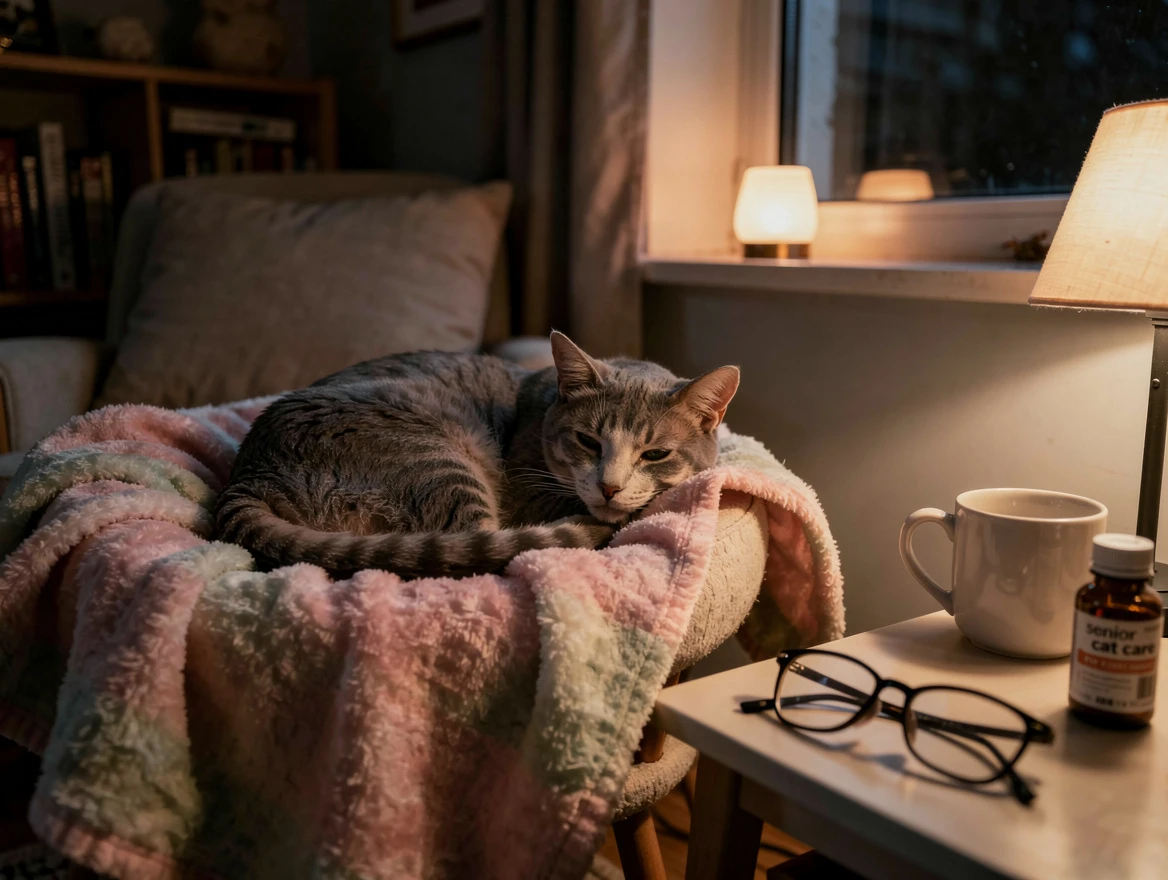
- Senior cat support — older cats may experience cognitive dysfunction that causes confused or startled wakeups. A nightlight near their bed and a consistent sleeping location help disoriented senior cats feel safer
When to See the Vet
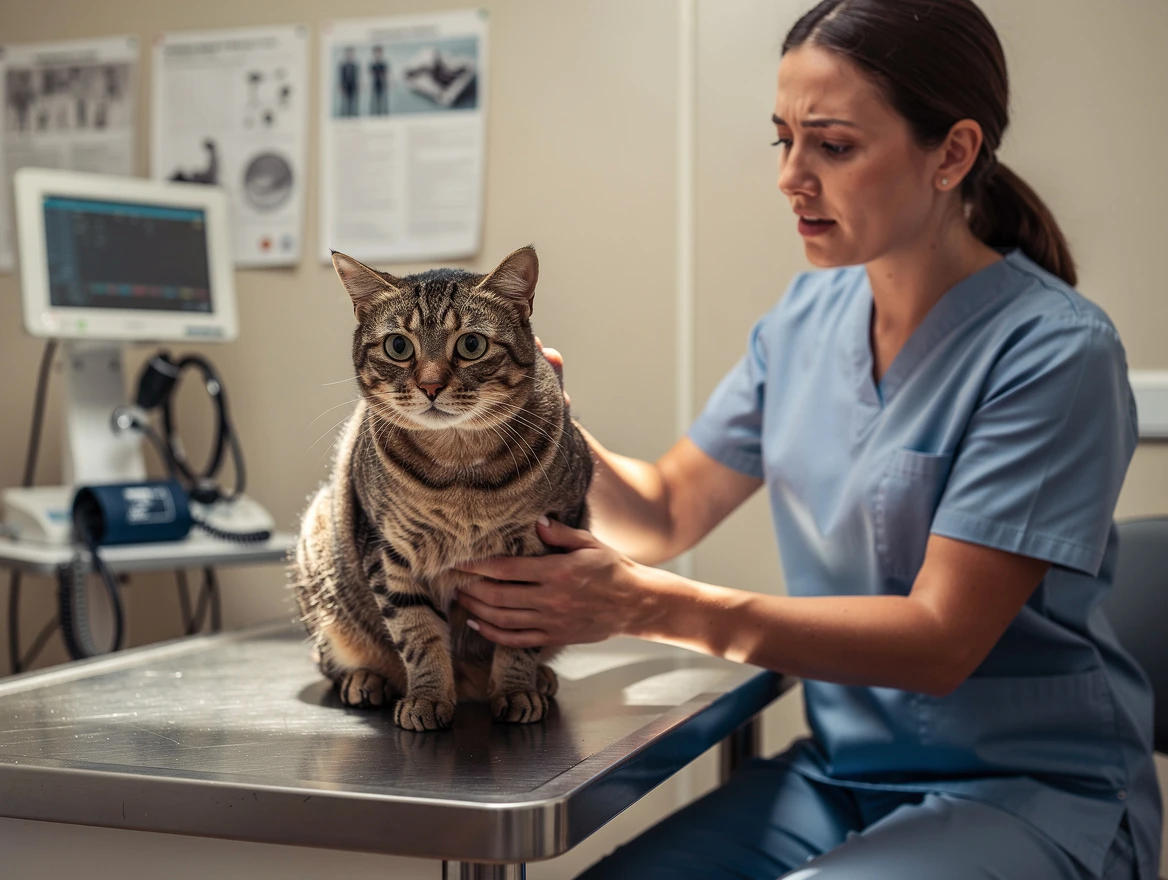
🩺 See Your Vet If:
- Sleep jumping happens multiple times daily and is increasing in frequency
- Your cat seems disoriented, wobbly, or confused for more than a few seconds after waking
- Episodes involve stiffness, sustained jerking, paddling, or loss of balance
- Your cat attacks its own body — biting flanks, tail, or hissing at itself (possible hyperesthesia)
- The behavior is new in an older cat — pain or neurological changes may be the cause
- Sleep changes are accompanied by appetite loss, hiding, or behavioral changes when awake
- You can’t tell the difference between a sleep jerk and a seizure — your vet can
If your cat is also showing other unusual symptoms alongside sleep disturbance, see: My Cats Ears Are Hot — fever or infection can disrupt sleep patterns.
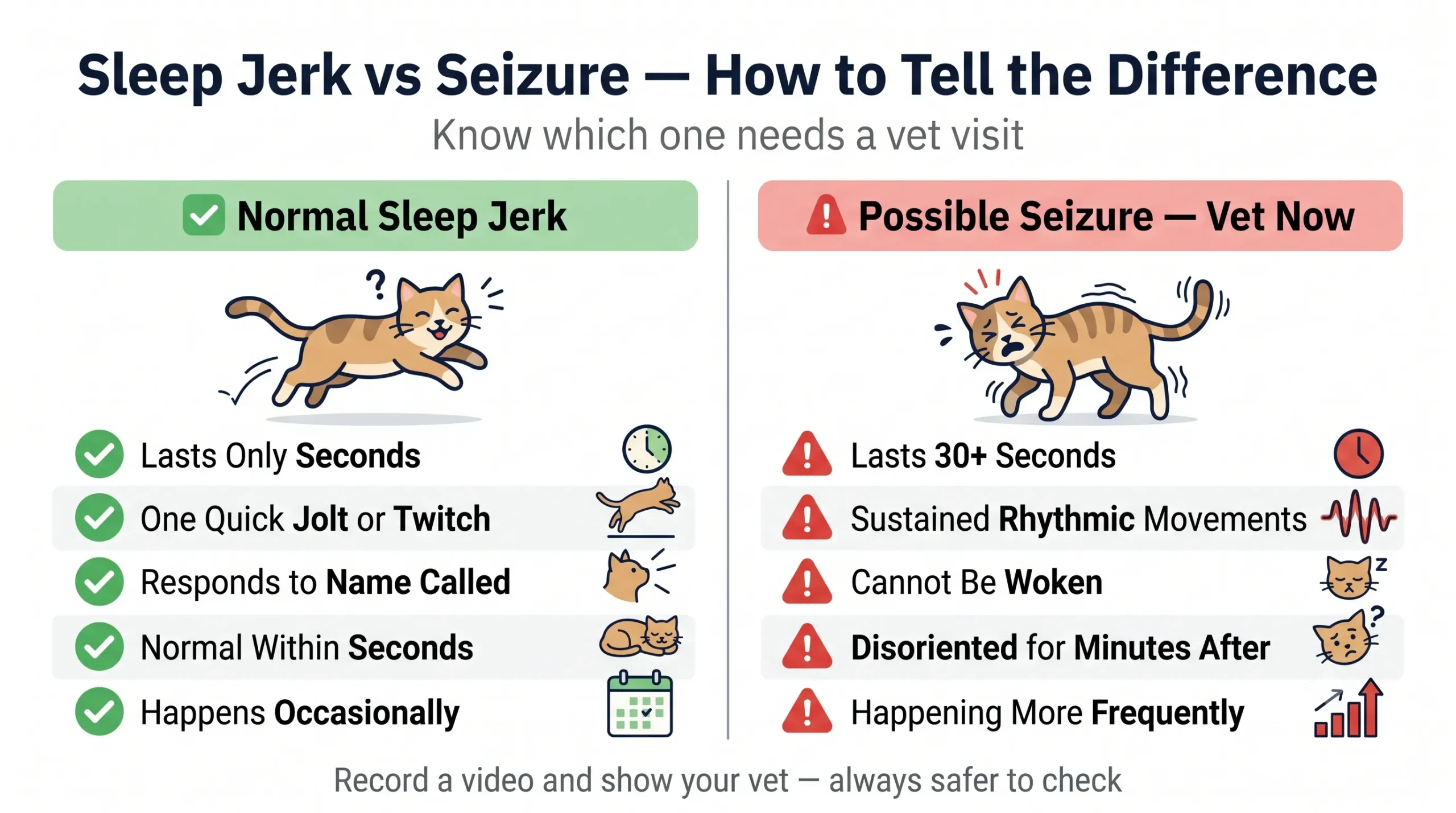
Sleep Twitching vs Seizure — How to Tell the Difference
| Feature | Normal Sleep Twitch/Jerk | Seizure (See Vet) |
|---|---|---|
| Duration | Seconds — one quick jolt | 30 seconds to several minutes |
| Movement type | Single jump or twitch | Sustained rhythmic jerking or stiffness |
| Can you wake the cat | Yes — responds to name or touch | No — unresponsive during episode |
| After the episode | Normal within seconds | Confused, wobbly, drooling for minutes |
| Bladder/bowel control | Normal | May lose control |
| Frequency | Occasional | Increasing over time |
Frequently Asked Questions
Yes — in most cases this is a normal hypnic jerk or dream startle. It’s the same involuntary muscle spasm that makes humans jolt awake. It’s harmless as long as your cat recovers within seconds and shows no other symptoms.
This is a different question from sleep-startling. If it happens while awake, your cat may have heard or seen something you didn’t notice, or in rare cases may have feline hyperesthesia syndrome. If it happens frequently while awake, see your vet.
No — let them recover on their own. They’ll reorient within seconds. Reaching for a startled cat can result in a reflexive scratch or bite. If you want to comfort them, speak softly from a distance and let them come to you.
Cats enter their deepest sleep at night when the house is quiet. Deep REM sleep produces the most vivid dreams and the strongest hypnic jerks. Nighttime sounds you don’t notice — heating systems, wildlife, appliances — can also startle a deeply sleeping cat.
The Bottom Line
My cat jumps out of sleep scared — in most cases this is a completely normal hypnic jerk or dream startle that happens in all mammals. Your cat’s brain sent an involuntary muscle signal during the transition between sleep stages, or they woke abruptly from a vivid dream. As long as they recover within seconds and show no other symptoms, there’s nothing to worry about. See the vet only if it happens multiple times daily, involves sustained jerking or stiffness, or your cat seems genuinely disoriented or distressed afterward.
Related: Why Does My Cat Sleep on Me — understanding your cat’s sleep behavior strengthens your bond.
Related Articles
Why Does My Cat Twitch in His Sleep
Twitching is the milder version of the same REM activity.
My Cat Is Limping But Still Jumping and Running
Pain during sleep can cause startled wakeups.