Published: 2026-10-04| Last Updated: 2026-10-04 | Read Time: 12 minutes
Cat drooling is something many cat owners notice at some point, but understanding why it happens can be confusing. This article covers what normal and abnormal drooling means, when to worry, and what you can do to keep your feline friend happy and healthy.
Quick Answer: Cat drooling can be normal when your cat is relaxed or purring, but sudden or excessive drooling often signals pain, dental issues, nausea, or toxins. If your cat starts drooling unexpectedly or drools heavily, you should consult your veterinarian promptly to rule out serious conditions.
Table of Contents
Emergency Warning: When Cat Drooling Means a Vet Visit Now
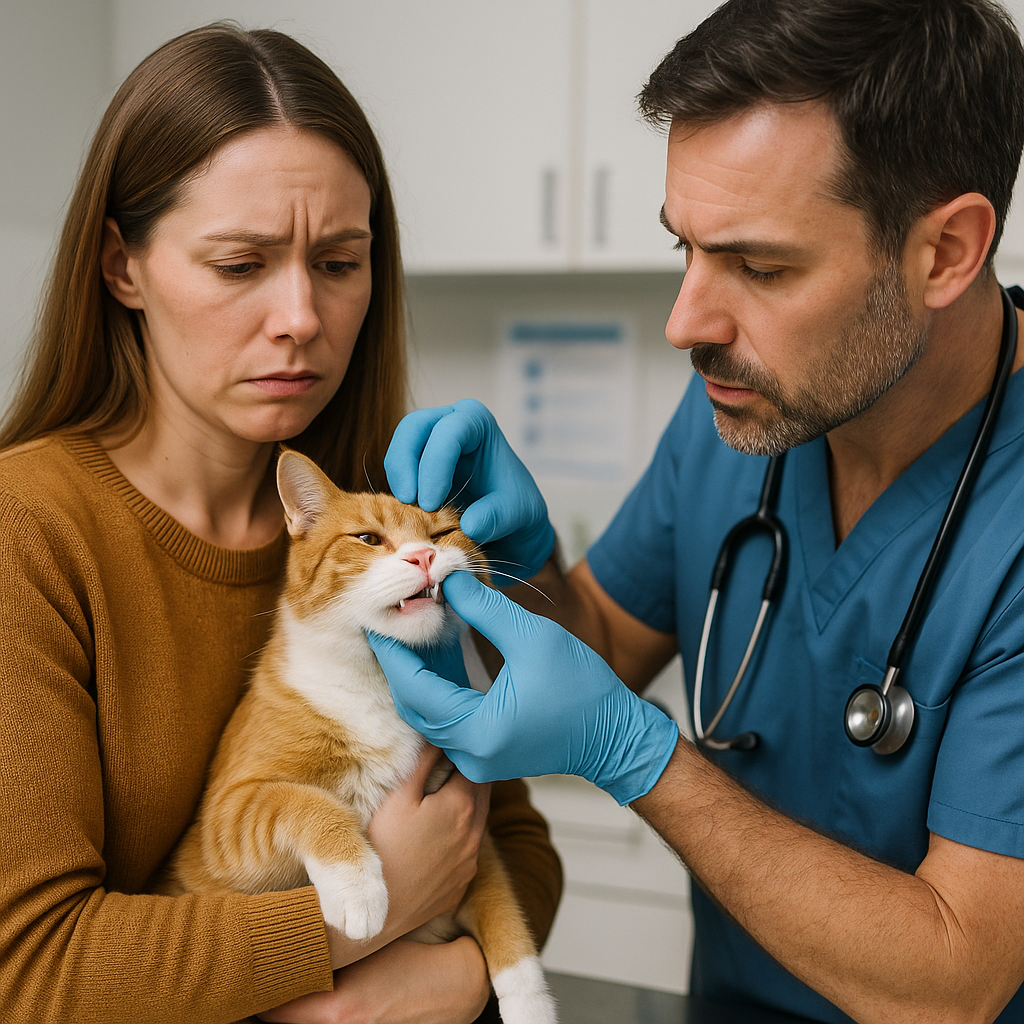
Alright, time for some “don’t-ignore-this” signs. If your cat drooling pairs up with anything from the list below, grab the phone and call your vet faster than you can say “furball”:
- Difficulty breathing or swallowing
- Severe lethargy or collapse (and no, just being lazy doesn’t count)
- Vomiting blood or continuous vomiting—talk about dramatic, right?
- Seizures or tremors (definitely not the kind of dance party you want)
- Signs of poisoning or toxin ingestion
Cat drooling mixed with these symptoms can mean serious emergencies like poisoning or dental infections that need immediate action—think of it as your cat’s version of an emergency fire drill (source: GSVS Emergency Guidelines).
Cat Drooling at a Glance: Key Points to Know
| Aspect | Details |
|---|---|
| Normal Causes | Contentment, purring, anticipation of food |
| Common Medical Causes | Dental disease, nausea, oral foreign bodies, toxins |
| Rare Causes | Neurological disorders, kidney disease |
| When to See a Vet | Sudden onset, excessive drooling, accompanied symptoms |
| Treatment Options | Dental cleaning, toxin removal, medication |
If this table were a movie trailer, it would be: “Happy drooling, mysterious pawing, and the quest for a vet visit!”
What Does Cat Drooling Mean? Definition and Overview
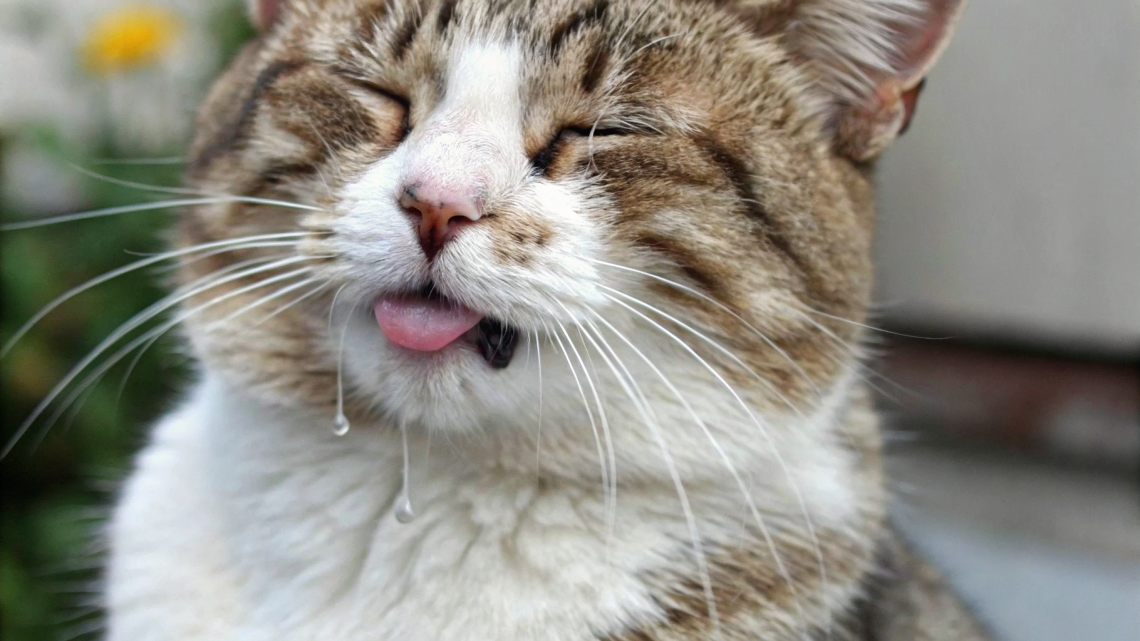
Let’s decode the drool. Cat drooling is basically saliva escaping from the mouth like an overenthusiastic puppy… except cats usually keep it classy and dry. Unless they’re seriously chill or, well, something’s up.
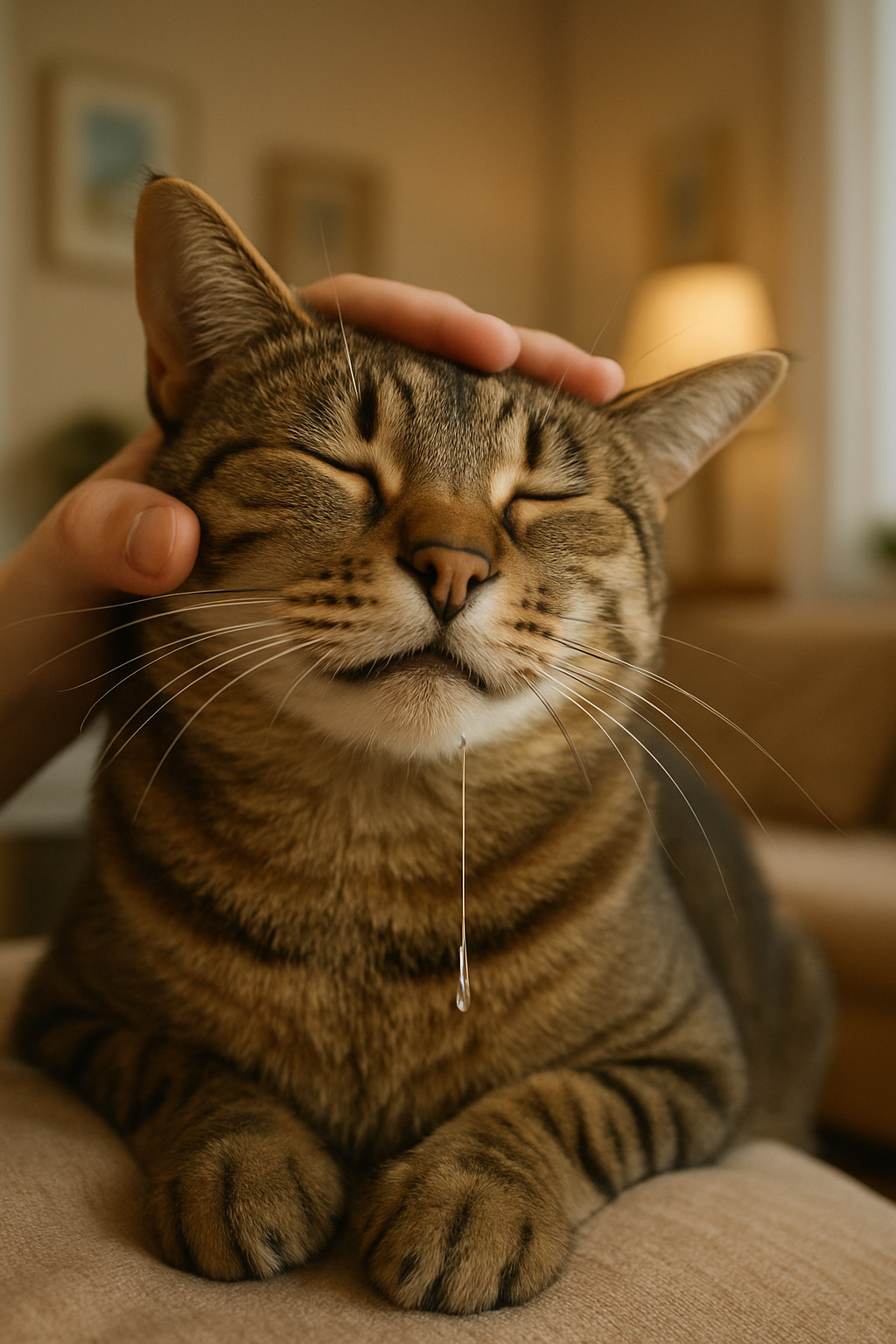
Now, take my big Maine Coon, Jasper, who drools like the king of contentment whenever he’s getting a belly rub. That wetness pooling at his mouth? That’s “happy drooling” — the feline equivalent of a spa day. But if your cat’s slobber session goes from occasional to “oh no,” it means something else is brewing (source: PetMD).
Main Causes of Cat Drooling: What You Need to Watch For
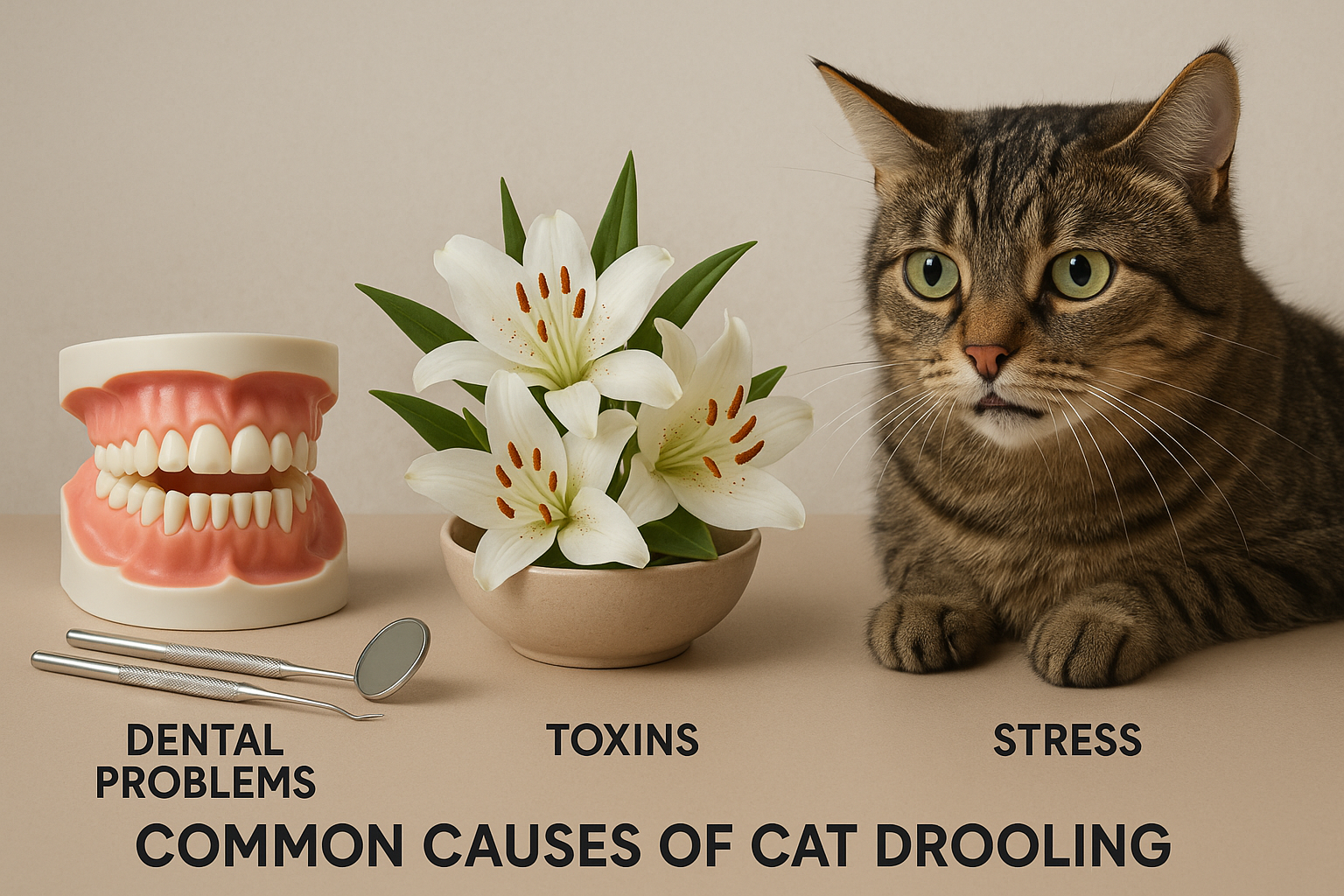
1. Dental Problems and Mouth Pain
If your cat suddenly starts drooling, think “ouch” first. Dental diseases like gingivitis, tooth resorption, or gnarly ulcers love to crash the party. Cats are secretive about pain—I learned that the hard way when Fifi started drooling and pawing at her mouth like she was auditioning for a soap opera. Thankfully, a vet visit and dental cleaning saved the day.
2. Nausea and Gastrointestinal Issues
Is your cat throwing up or looking queasy? Drooling could be their not-so-subtle way of saying “I feel awful.” Motion sickness, dodgy treats, or toxins might be triggers. Luna, my picky eater, once drooled after sampling some “exotic” treats that her stomach rejected faster than I could say “nope.” Lesson learned: new foods are like surprise guests—invite gradually.
3. Exposure to Toxins or Irritants
Imagine your cat nibbling on a lily or, gasp, antifreeze. Yikes. Drooling here is like an SOS flare, warning you that poison’s in town. Time to summon the vet ASAP because this is no time for heroics (source: ASPCA poison control).
4. Stress or Anxiety
Sometimes, your cat’s drooling is less about illness and more about nerves. Vet visits, car rides, or unexpected thunderstorms can turn mild stress into a waterworks malfunction. Thankfully, this drooling is usually temporary unless your cat is secretly auditioning for a melodramatic role.
5. Oral Foreign Bodies or Mouth Injuries
Every cat owner dreads the “string incident.” Our beloved Whiskers once showed us how a rogue piece of string can turn a calm cat into a drool factory until we fished it out. Splinters, bones, or any mouth mishap can start the drooling drama.
| Cause | Symptoms | Typical Treatment |
|---|---|---|
| Dental disease | Bad breath, bleeding, drooling | Veterinary dental cleaning |
| Nausea | Drooling, vomiting, poor appetite | Diet changes, anti-nausea meds |
| Toxins | Drooling, seizures, lethargy | Emergency detoxification |
| Stress | Mild drooling, pacing | Calm environment, pheromones |
| Foreign body/injury | Pawing mouth, drooling | Foreign body removal |
When Should You See a Vet for Cat Drooling?
Here’s the million-dollar question: when is cat drooling just part of the charm, and when is it a giveaway that something’s wrong? Spoiler alert: sudden or heavy drooling that sticks around is usually bad news.
I remember during the pandemic, quarantine life with four cats felt like a full-time job. When our shy tabby, Milo, drooled after chewing on a houseplant, I wasn’t sure if I was overreacting or not. But then he got lethargic too—and yep, vet call time. Early action was a game-changer.
See a vet if you notice:
- Sudden drooling with no obvious reason
- Excessive drooling causing soaked fur or irritation
- Bad breath, swollen gums, or pawing at the mouth
- Drooling after potential toxin exposure
- Drooling lasting more than 24 hours
Basically, if your cat’s dribbling more than drooling for bliss, don’t hesitate.
How to Manage and Prevent Cat Drooling at Home
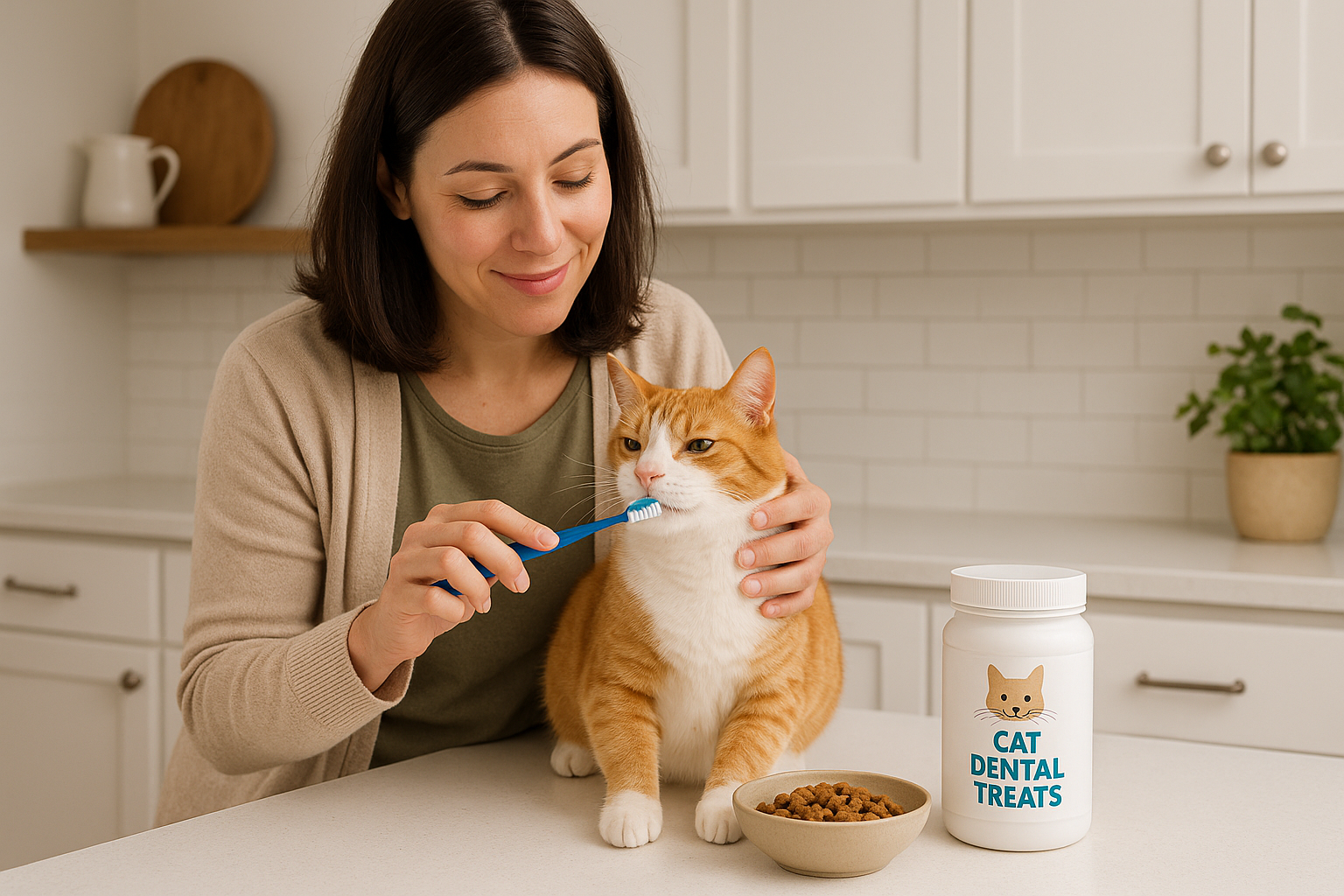
- Maintain Regular Dental Care: Brush those pearly whites or toss them dental treats. Plaque is the enemy here.
- Avoid Toxic Plants and Chemicals: Think of lilies and antifreeze as the villains of your cat’s story.
- Monitor Diet: New foods should be introduced slower than your cat on a Monday morning.
- Provide Stress Relief: Calming pheromones and steady routines work better than catnip hangovers.
- Check for Oral Injuries: Give your cat’s mouth a quick once-over now and then, especially after they’ve been busy chewing anything mysterious.
In my case, upgrading to a dental diet recommended by our vet helped cut down drooling related to gingivitis in two of my furballs. Score!
Common Mistakes Cat Owners Make Regarding Drooling
Let me spare you some headaches with these classic slip-ups:
- Ignoring sudden drooling like it’s just “one of those things”
- Waiting too long to handle dental disease—trust me, it only gets worse
- Accidentally feeding your cat toxic food or letting them snack on forbidden plants
- Mixing up “happy drool” with drool that screams illness
- Passing on a vet visit when drooling meets other weird symptoms
The biggest lesson from living with four cats? Never assume drooling is harmless. Acting sooner rather than later saved my cats from multiple avoidable emergencies.
Frequently Asked Questions About Cat Drooling
Q1: Is some drooling normal in cats?
Yes, slight drooling can happen when your cat is very relaxed or purring, often called happy drooling.
Q2: Can stress cause cats to drool?
Yes, stress or anxiety can lead to mild drooling, especially during car rides or vet visits.
Q3: Can cats die from drooling caused by poisoning?
Yes, toxin ingestion causing drooling is a serious emergency requiring immediate vet care.
Q4: How is cat drooling treated medically?
Treatment depends on the cause, such as dental cleaning for dental disease or medications for nausea and infections.
Q5: Are certain breeds more drooly?
No breed is specifically prone to drooling, but cats with flat faces (like Persians) may have more saliva buildup.
Q6: Could drooling be a sign of kidney disease?
Yes, drooling can accompany kidney disease along with symptoms like increased thirst and lethargy.
Q7: When should I worry about my cat’s bad breath and drooling?
Persistent bad breath with drooling often signals dental or systemic issues and should prompt a vet visit.
Bottom Line
Cat drooling can be completely normal or a sign of serious health problems. Given my experience with four cats, I always recommend carefully observing your cat’s behavior, noting any sudden or excessive drooling, and consulting your vet promptly. Your cat’s oral and overall health depends on early detection and proper care. A simple dental check or timely treatment could save your furry friend’s life.
Related Articles
- How to Give a Cat a Pill – Tips to medicate your cat easily.
- Why Is My Cat Limping? – Understand common causes of limping.
- Cat Vomiting White Foam – Possible reasons and what to do.
- Wet Cat Food for Sensitive Stomach – Best options for cats with delicate digestion.
- Signs Your Cat Loves You – Decode your cat’s affection.
Sources:
PetMD – Why Is My Cat Drooling?
GSVS – Cat Drooling Emergency
ASPCA Poison Control
WellPets – When to Worry About Cat Drooling
Cane Bay Vet Clinic – Cat Drooling Causes and Solutions
There you have it: a drool-worthy guide—without the slobber mess—to help decode cat drooling with four cats worth of firsthand experience (and enough clean-up ops to last a lifetime). Still reading? Wow. You’re officially my favorite.