⚠️ When to Go to the Emergency Vet RIGHT NOW Take your cat to an emergency vet immediately if you see ANY of these:
- Breathing rate above 40 breaths per minute at rest
- Open-mouth breathing or panting
- Blue, grey, or pale gums
- Neck extended forward, elbows out
- Gasping or wheezing sounds
- Collapsing or extreme weakness
How to count at home: Watch your cat’s chest rise and fall for 30 seconds while they’re resting. Count each rise as one breath. Multiply by 2. Normal = 20–30 breaths per minute.
You notice your cat’s chest moving faster than usual. But they’re eating, playing, purring — acting completely normal. So should you worry? If you’re asking yourself why is my cat breathing fast while everything else seems fine, you’re not alone — it’s one of the most common cat health questions vets receive.
The answer isn’t always simple. A cat breathing fast but otherwise normal can be completely harmless — or it can be the earliest sign of a serious condition that has no other obvious symptoms yet. Knowing the difference could save your cat’s life.
What Does “Breathing Fast But Normal” Actually Mean?
A healthy resting cat takes 20–30 breaths per minute with minimal visible effort. “Cat breathing fast but otherwise normal” means the breathing rate is elevated — typically 30–40+ breaths per minute — but the cat is eating, drinking, behaving, and moving without any obvious signs of distress. This can reflect temporary causes like heat or stress, but when it happens consistently at rest, it warrants a veterinary evaluation to rule out early cardiac or respiratory disease.
Is 40 Breaths Per Minute Normal for a Cat?
No — 40 breaths per minute at rest is above the normal range and should not be dismissed, even if your cat seems fine otherwise.
Here’s what the numbers actually mean:
| Breathing Rate (at rest) | What It Means |
|---|---|
| 20–30 breaths/min | ✅ Normal |
| 30–40 breaths/min | ⚠️ Monitor closely — recount in 1 hour |
| 40+ breaths/min | 🚨 Call your vet today |
| Cat breathing shallow and fast | 🚨 Urgent — call vet same day |
| Open-mouth breathing | 🚨 Emergency — go now |
The tricky part: some cats naturally sit at the higher end of normal. What matters more than a single reading is consistency. If your cat is consistently above 30 at rest — day after day — that’s worth investigating.
According to Cornell Feline Health Center, resting respiratory rates above 30 breaths per minute can be an early clinical sign of heart failure in cats, often appearing before any other symptoms.
7 Reasons Your Cat Is Breathing Fast But Acting Normal
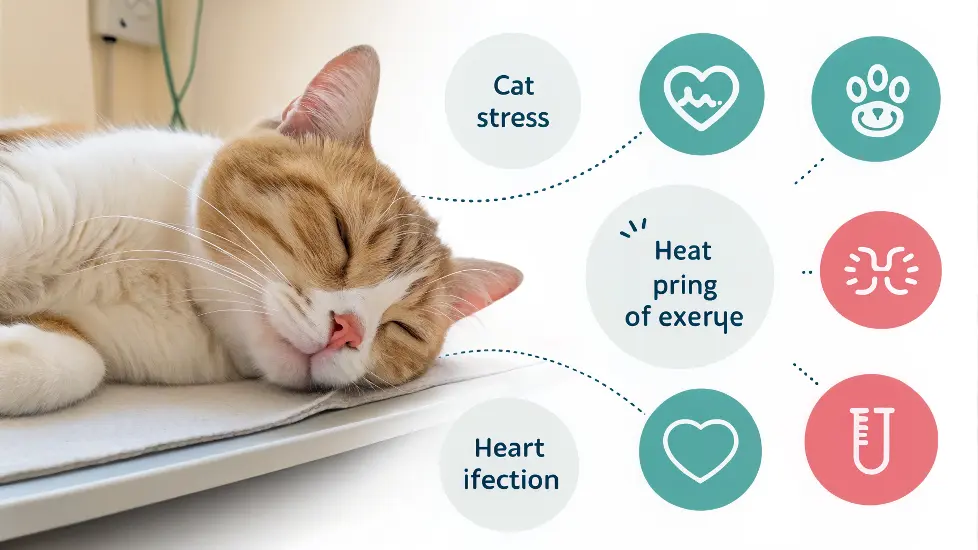
1. Stress or Anxiety
This is the most common and benign cause. Cats breathe faster when anxious — during car rides, vet visits, new environments, or after a conflict with another pet. The breathing typically returns to normal within 10–15 minutes once the stressor is removed.
What to watch: If the fast breathing only happens in stressful situations and resolves quickly, it’s almost certainly stress. If it happens while your cat is quietly napping — that’s a different story.
2. Heat or Overheating
Cats don’t sweat efficiently. In warm weather or a hot room, they breathe faster to regulate body temperature. Unlike dogs, cats rarely pant — so any open-mouth breathing in heat is a red flag.
What to do: Move your cat to a cool, shaded area. Offer fresh water. If breathing doesn’t normalize within 10 minutes, call your vet.
3. Post-Exercise Recovery
After a play session — especially in younger cats — elevated breathing for a few minutes is completely normal. Think of it like a human catching their breath after running.
Key distinction: Should fully resolve within 5–10 minutes of rest. If it lingers longer, monitor carefully.
4. Purring-Related Breathing Changes
Cats use their diaphragm to purr, which can make their breathing appear faster or more visible. Many owners notice this and panic unnecessarily. If the fast breathing only happens while purring and the cat is otherwise relaxed, it’s typically harmless.
5. Early Heart Disease (The Silent Danger)
This is the one that keeps vets up at night — and the reason you can’t ignore persistent fast breathing in an otherwise normal cat.
Hypertrophic Cardiomyopathy (HCM) is the most common heart disease in cats, affecting an estimated 15% of the general cat population according to research published by the American College of Veterinary Internal Medicine. The cruel reality of HCM: cats hide symptoms brilliantly. By the time obvious signs appear, the disease is often advanced.
Elevated resting respiratory rate is frequently the first and only sign for months.
Breeds at higher risk: Maine Coon, Ragdoll, British Shorthair, Persian, and Sphynx.
💡 This is exactly why pet insurance matters. An echocardiogram to diagnose HCM costs $300–600. Monthly cardiac medications can run $100–300. If your cat is diagnosed with HCM, having insurance in place before the diagnosis means those costs are covered. Lemonade Pet Insurance and Pumpkin Pet Insurance are two solid options worth comparing — payouts for signing up through affiliate links help support this blog at no extra cost to you.
📌 Disclosure: Some product links in this article are affiliate links. I earn a small commission if you buy through them at no extra cost to you. This doesn’t influence my recommendations.
6. Early Respiratory Infection
Upper respiratory infections in cats can start subtly — slightly faster breathing before the sneezing and discharge begin. If you have multiple cats, watch for this especially, as URIs spread quickly between cats.
Coming signs to watch for: sneezing, eye discharge, reduced appetite, lethargy appearing in the days after fast breathing starts. If your cat is also not eating, that combination needs same-day veterinary attention. It can also be worth reading our guide on why your cat is throwing up, as vomiting alongside breathing changes can point to systemic illness.
7. Pain Hidden Beneath Normal Behavior
Cats are masters at masking pain — it’s a survival instinct. A cat with dental disease, arthritis, or an internal injury may breathe faster due to pain while otherwise appearing completely normal behaviorally.
The tell: Pain-related fast breathing tends to be consistent, doesn’t resolve with rest, and often gets slightly worse over time. Your cat may also become subtly less active or playful over weeks without you noticing the gradual change.
Why Is My Cat Breathing Fast But No Other Symptoms?
Because cats evolved as both predators and prey, they instinctively hide weakness. By the time symptoms are obvious — lethargy, appetite loss, labored breathing — many conditions are already significantly progressed.
Fast breathing with no other symptoms is often the body’s first detectable signal that something is changing internally. The absence of other symptoms doesn’t mean the absence of disease. It often means you caught it early — which is the best possible scenario.
The right move: If you’re wondering why is my cat breathing fast while resting, count their respiratory rate three times over 24 hours (morning, afternoon, night). If it’s consistently above 30, call your vet for an evaluation.
What Is the Silent Killer of Cats?
Hypertrophic Cardiomyopathy (HCM) is widely considered the silent killer of cats. It’s a thickening of the heart muscle walls that reduces the heart’s ability to pump blood effectively. Most cats with HCM show no symptoms until the disease is advanced — and the most common early sign is an elevated resting respiratory rate.
According to North Carolina State University College of Veterinary Medicine, sudden cardiac death in apparently healthy cats is most often linked to undetected HCM.
Pet insurance note: HCM is a pre-existing condition exclusion on most policies. This means your cat must be insured before any diagnosis or symptoms are noted. Waiting until something is wrong makes insurance far less valuable. Compare Lemonade vs Pumpkin — both cover cardiac conditions when enrolled early.
| Provider | Monthly Cost (avg) | Cardiac Coverage | Exam Fees |
|---|---|---|---|
| Lemonade Pet | $15–30 | ✅ Yes (if enrolled before diagnosis) | ✅ Add-on available |
| Pumpkin | $20–40 | ✅ Yes (if enrolled before diagnosis) | ✅ Included in some plans |
| Nationwide | $35–60 | ✅ Yes | ❌ Not standard |
How to Count Your Cat’s Breathing Rate at Home
You don’t need any equipment — just a timer and a calm cat.
Step-by-step:
- Wait until your cat is completely relaxed and asleep or resting (not purring)
- Watch their chest or belly
- Count each rise as one breath
- Count for 30 seconds
- Multiply by 2 = breaths per minute
- Record the number and the time of day
- Repeat 2–3 times over 24 hours
Pro tip: The Merck Veterinary Manual recommends recording video of the breathing to show your vet — it can be difficult to recreate the exact breathing pattern in a clinic setting where your cat is stressed.
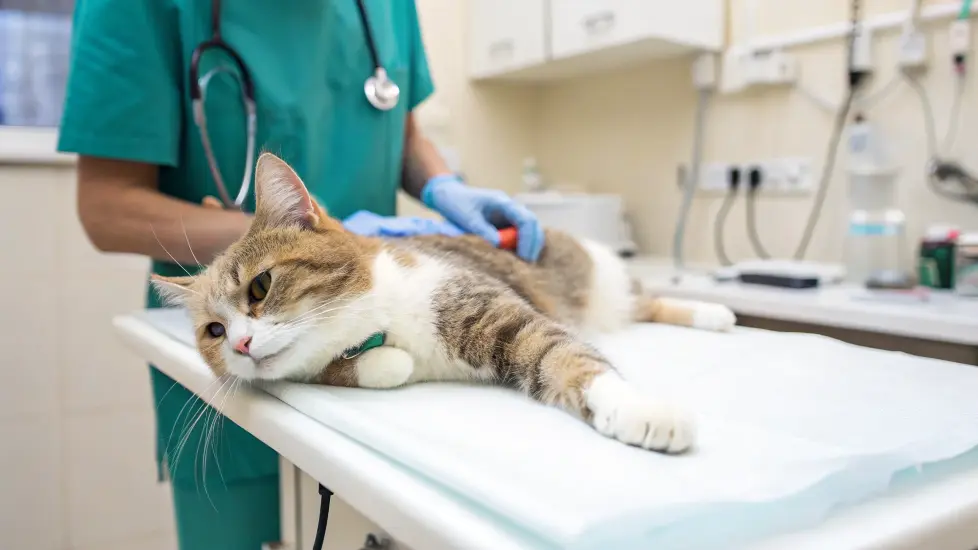
Cost Breakdown — What to Expect at the Vet
One of the most common reasons owners delay vet visits is not knowing what they’ll cost. Here’s an honest breakdown:
| Service | Typical Cost |
|---|---|
| Physical exam + consultation | $50–100 |
| Chest X-ray | $150–300 |
| Blood panel | $100–200 |
| Echocardiogram (heart ultrasound) | $300–600 |
| Oxygen therapy (if needed) | $100–200/day |
| Cardiac medication (if HCM) | $50–300/month ongoing |
| Emergency vet visit | $150–300 exam fee + treatments |
A basic workup for fast breathing (exam + X-ray + bloodwork) typically runs $300–600 total. If HCM is found and requires an echocardiogram, add another $300–600. This is exactly why insurance enrolled before any symptoms appear can save thousands.
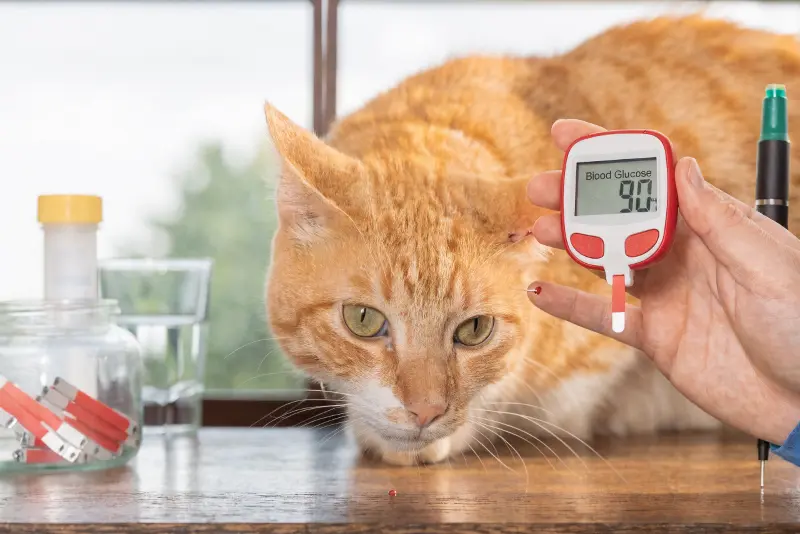
If your cat has other health concerns alongside the breathing changes — for instance, you’ve noticed signs that could indicate diabetes — our guide on 7 diabetic cat signs can help you understand what to mention to your vet during the same visit.
When to See a Veterinarian
Call your vet today (non-emergency) if:
- Resting respiratory rate is consistently 30–40 breaths/min over 24 hours
- Fast breathing appears during rest without an obvious cause (no heat, no stress, no recent exercise)
- You notice any subtle behavioral changes alongside the breathing — slightly less active, eating less
- Your cat is a higher-risk breed (Maine Coon, Ragdoll, British Shorthair)
Go to emergency immediately if:
- Breathing rate exceeds 40 breaths/min
- Open-mouth breathing or panting at rest
- Blue, white, or grey gums
- Extreme lethargy or collapse
- Labored breathing with visible effort
What are the first signs of heart failure in cats?
According to Cornell Feline Health Center, early signs of heart failure in cats include elevated resting respiratory rate, reduced activity, reluctance to jump, and occasional coughing. By the time fluid accumulates in the lungs (causing obvious breathing difficulty), the disease is typically in an advanced stage. This is why monitoring resting respiratory rate at home is so valuable — it’s the earliest warning sign most owners can detect.
Frequently Asked Questions
Why is my cat breathing fast but no other symptoms? Fast breathing with no other visible symptoms is common in early-stage conditions like HCM, mild respiratory infections, or chronic pain — all of which cats hide effectively. It can also be stress or heat-related. Monitor resting respiratory rate over 24 hours. If it’s consistently above 30 breaths/minute, schedule a vet evaluation.
Is 40 breaths per minute normal for a cat? No. Normal resting respiratory rate is 20–30 breaths per minute. Forty or above warrants same-day veterinary contact, even if your cat seems otherwise fine.
What is the silent killer of cats? Hypertrophic Cardiomyopathy (HCM) — a heart muscle disease that often shows no symptoms until advanced. Elevated resting respiratory rate is frequently the first detectable sign. It’s the most common heart disease in cats, affecting roughly 15% of the general cat population.
What are the first signs of heart failure in cats? Elevated resting respiratory rate, reduced activity level, reluctance to jump to high places, and occasional coughing or open-mouth breathing episodes. Many cats show no obvious signs until fluid builds up around the lungs, which is why tracking respiratory rate at home is valuable.
Is it normal for a cat to breathe fast while sleeping? Mild variation during REM sleep (dreaming) is normal. However, a cat breathing fast while sleeping consistently — above 30 breaths/minute — is not normal and should be evaluated by a vet. Sleeping respiratory rate is actually one of the most accurate measurements because the cat is fully relaxed.
My cat breathes fast when I pet them — why? Often this is a combination of purring (which changes diaphragm movement) and mild excitement or pleasure. If it only happens when being petted and resolves quickly, it’s usually benign. If it happens consistently regardless of activity, have it checked.
Bottom Line
A cat breathing fast but otherwise normal is never something to ignore — but it’s also not always a crisis. The key is knowing the difference. Count your cat’s resting respiratory rate today: 20–30 is normal, 30–40 warrants monitoring, 40+ means call your vet. If your cat is in a higher-risk breed or is middle-aged or older, consider getting a baseline echocardiogram — and make sure they’re covered by pet insurance before any diagnosis is ever made.
This article is for informational purposes only and does not constitute veterinary medical advice. Always consult a licensed veterinarian for diagnosis and treatment of your pet’s health conditions.