Why does my cat’s breath smell so bad? The most common cause is dental disease, specifically plaque and tartar buildup that breeds foul-smelling bacteria under the gumline.
But the type of smell matters more than most owners realize. A fishy smell points to one problem. An ammonia smell points to something far more serious.
I noticed one of my cats had breath that smelled like rotting fish about a year ago. I assumed it was the wet food.
It wasn’t. The vet found two infected teeth with advanced gingivitis.
After a dental cleaning and one extraction, the smell disappeared within a week. I now check my cats’ mouths monthly, something I never thought to do before that scare.
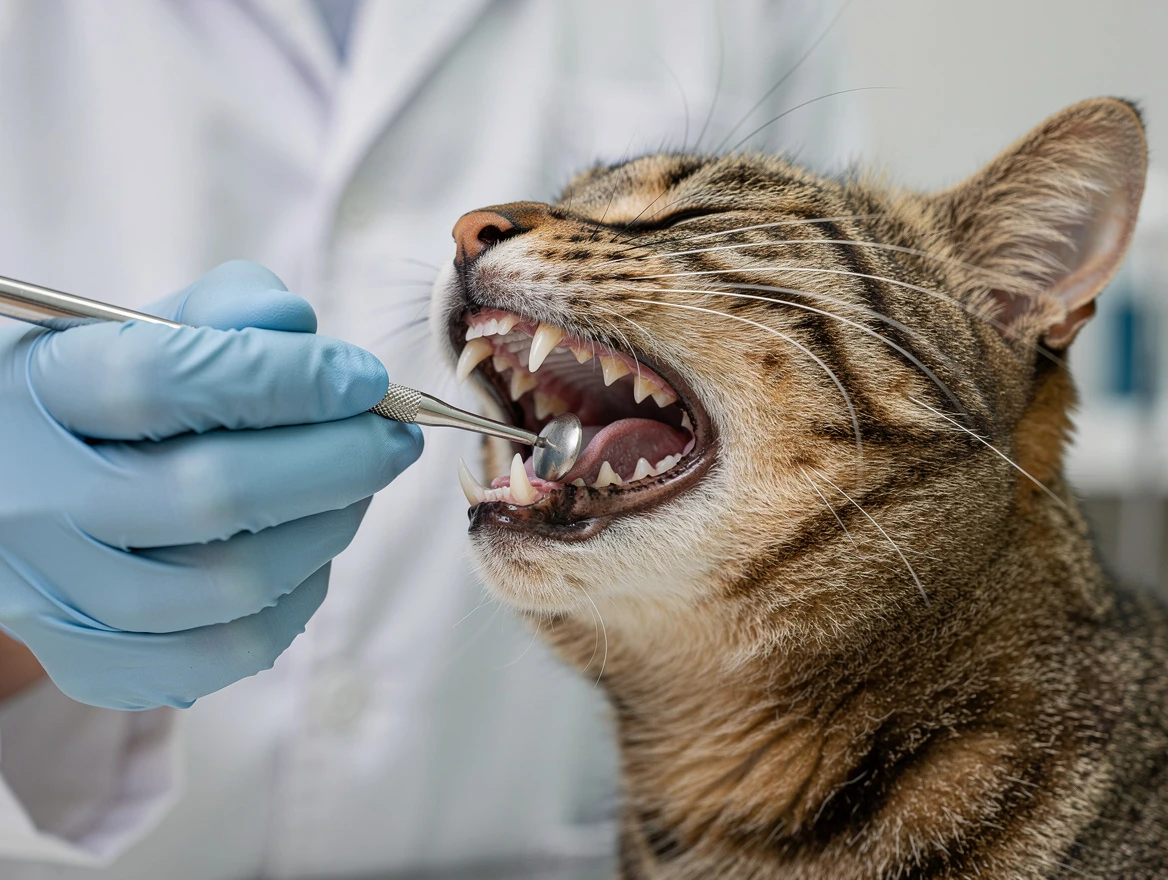
The smell type tells you the most: fishy usually means dental infection, ammonia can mean kidney disease, sweet can mean diabetes.
Any persistent bad breath warrants a vet visit. Mild food odor after eating is normal. Constant bad breath is not.
What the Smell Type Tells You
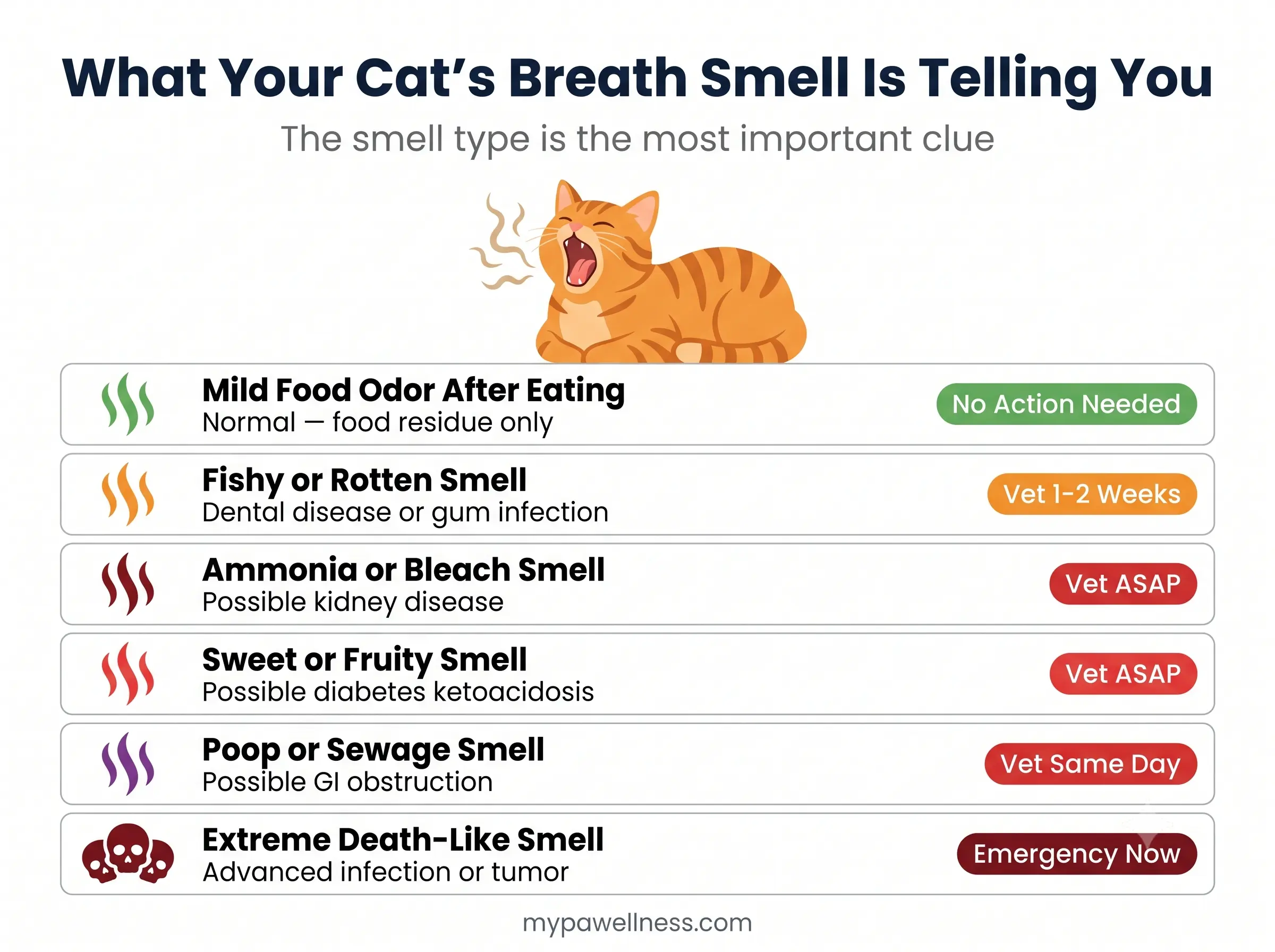
This is the most important section in this article. The smell is the clue, and it’s what vets use to narrow down the cause before running tests.
| Breath Smell | What It Usually Means | Urgency |
|---|---|---|
| Fishy or rotten | Dental disease, gum infection, or tooth abscess | Vet within 1–2 weeks |
| Ammonia or bleach-like | Kidney disease — waste building up in blood | 🚨 Vet ASAP |
| Sweet or fruity | Diabetes — ketone buildup (diabetic ketoacidosis) | 🚨 Vet ASAP |
| Poop or sewage | GI obstruction, severe constipation, or coprophagia | Vet same day |
| Extreme rotting / “death” | Advanced dental abscess, oral tumor, or necrotic tissue | 🚨 Vet immediately |
| Slightly stinky after eating | Normal food odor from wet or fish-based diet | Normal — fades within an hour |
| Metallic or blood-like | Bleeding gums, oral injury, or stomatitis | Vet within a few days |
7 Causes
1. Dental Disease — The #1 Cause
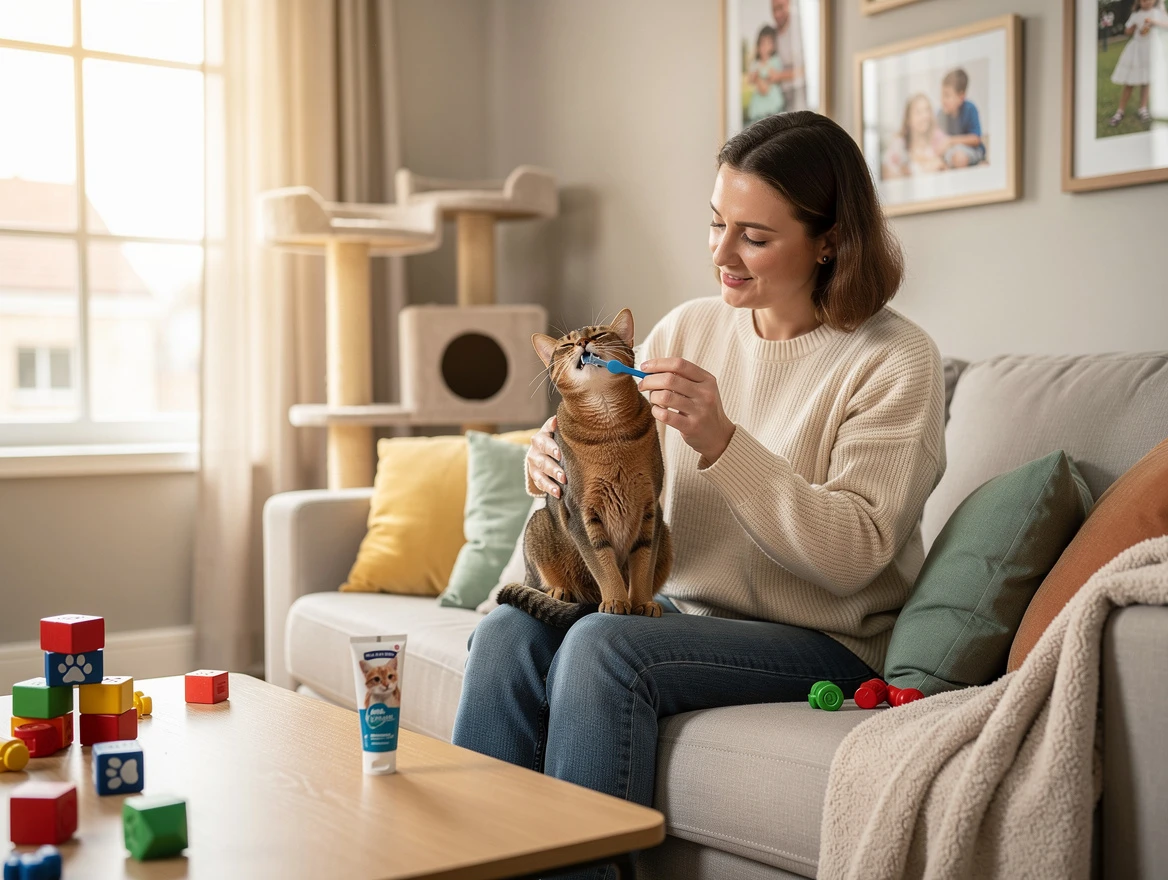
Dental disease affects a majority of cats by age 3. Plaque hardens into tartar, bacteria breed under the gumline, and the result is breath that smells like rotting fish.
Gingivitis, periodontitis, and tooth resorption are the most common forms. Related: 7 Critical Facts Stomatitis in Cats.
2. Tooth Abscess or Infected Tooth
A cracked or deeply decayed tooth can develop an abscess, a bacterial infection that produces an extreme foul smell. This is often what’s behind the “smells like death” description owners use.
Watch for dropping food, eating on one side, or pawing at the mouth. Related: My Cat’s Tooth Is Loose Can I Pull It Out.
3. Kidney Disease
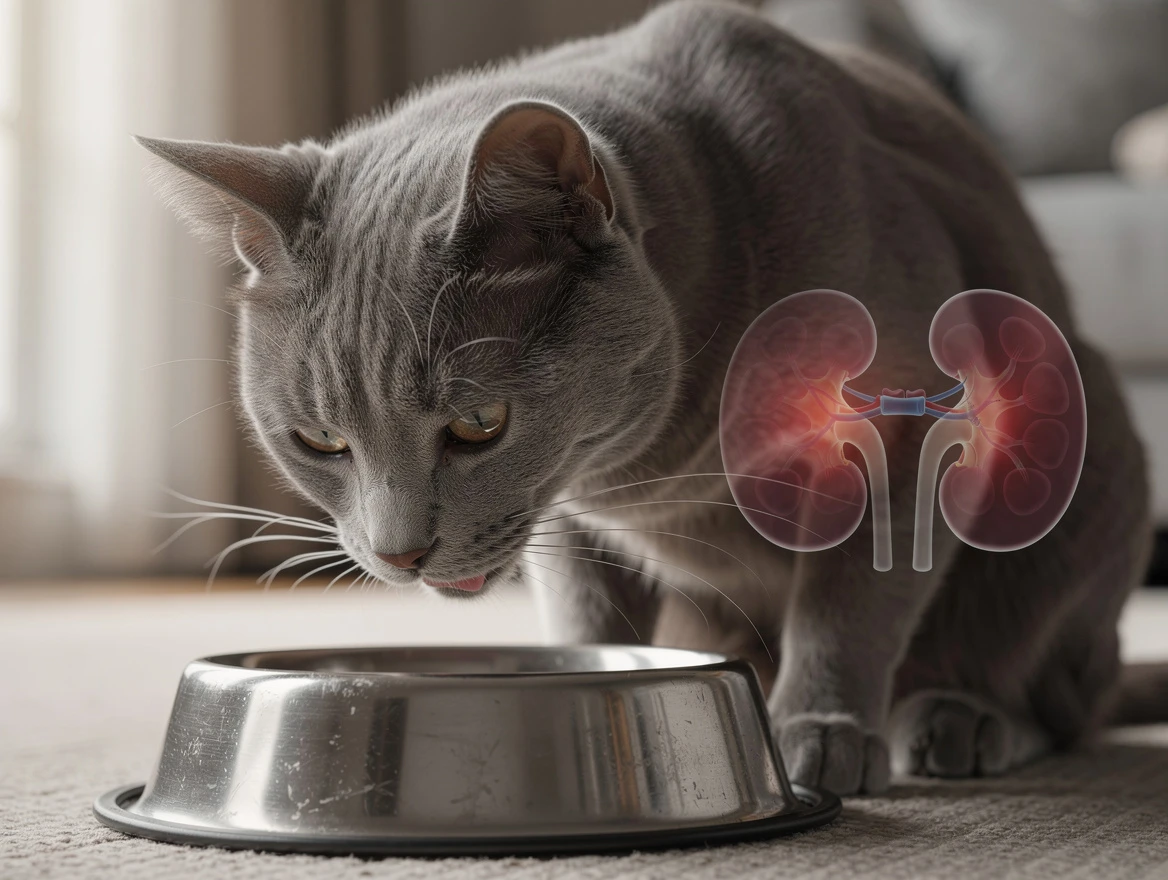
When kidneys stop filtering waste, urea builds up in the bloodstream and is released through breath, producing a distinctive ammonia or bleach-like smell.
In cats over 7, kidney disease should be the first concern when you notice this odor. Related: Signs of Kidney Failure in Cats.
4. Diabetes
Diabetic cats that develop ketoacidosis produce a sweet or fruity breath odor from ketone buildup. This is a medical emergency. Sweet breath alongside increased thirst, frequent urination, and weight loss means see a vet immediately. Related: Cat Diabetes Symptoms.
5. Gastrointestinal Issues
Poop-smelling breath usually points to GI problems. A blockage, constipation, or inflammatory bowel disease can cause foul gas to travel upward from the stomach.
When both breath and stool smell unusually bad together, the GI tract is almost certainly involved. Related: What Can I Give My Cat for Constipation.
6. Oral Tumors
In older cats, a mass in the mouth can become necrotic and produce an extreme rotting smell. This is uncommon but serious, especially when paired with difficulty eating, drooling, or visible mouth swelling.
7. Something Stuck in the Teeth
A piece of food, hair, or bone fragment trapped under the gumline rots and produces a sudden terrible smell overnight. A vet dental exam often resolves this quickly.
Why Does My Cat’s Breath Smell So Bad All of a Sudden
If breath was fine last week and now smells terrible, something acute happened.
- Something stuck in teeth — food or debris trapped and rotting overnight
- Tooth broke or cracked — exposed root becomes infected fast
- Abscess forming — rapid bacterial buildup from an existing infected tooth
- Ate something foul — garbage, a dead insect, or another animal’s food
- Metabolic condition developing — kidney or liver waste suddenly appearing in breath
A sudden smell change that lasts more than 48 hours needs a vet visit, don’t wait to see if it resolves on its own.
By Age — Kitten, Young, Senior
| Age | Common Causes | Notes |
|---|---|---|
| Kitten (under 1 year) | Teething, food residue, mild gingivitis | Usually resolves — monitor and start dental care early |
| Young adult (1–6 years) | Early dental disease, trapped food, diet | Annual cleanings now prevent serious disease later |
| Senior (7+ years) | Advanced dental disease, kidney disease, diabetes, tumors | Any breath change needs bloodwork, not just a dental check |
Sex doesn’t change which causes are likely — male and female cats develop the same range of dental and metabolic conditions behind bad breath.
Senior cats face significantly higher risk of kidney disease, diabetes, and oral tumors. Any breath change in a cat over 7 deserves bloodwork alongside the dental exam.
Is It Normal?
Mild food odor immediately after eating is completely normal, especially with fish-based wet food. That smell should fade within an hour or two.
Persistent bad breath that’s always present, regardless of when your cat last ate, is not normal. It almost always indicates dental disease, infection, or an underlying health condition.
A cat with a healthy mouth should have breath that’s neutral or barely noticeable. If your cat’s breath consistently smells foul, that’s not something to dismiss.
Home Remedies
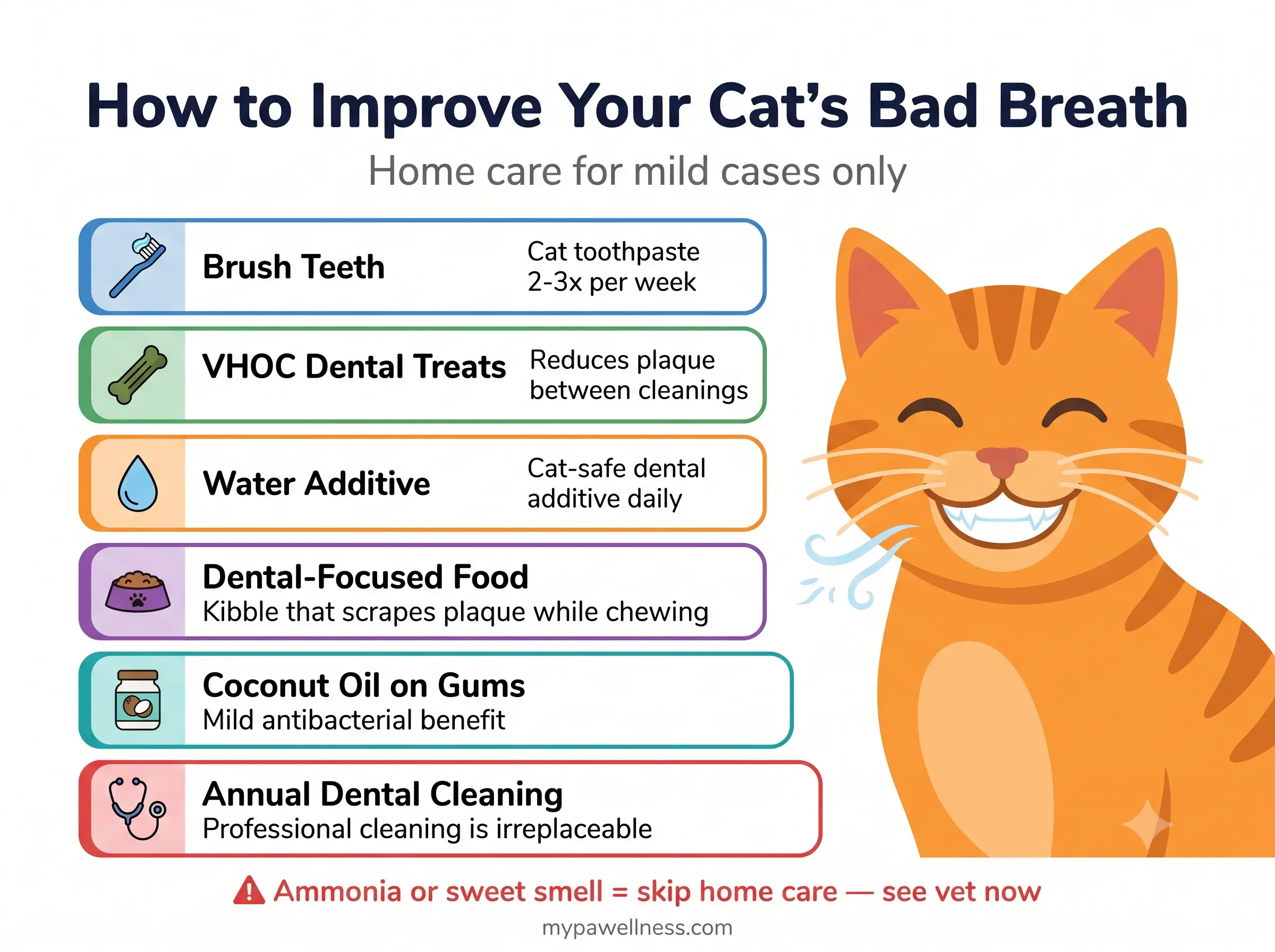
Home remedies help with mild cases, but they can’t fix dental disease, kidney disease, or infections. Think of home care as prevention, not treatment.
- Brush your cat’s teeth — use a cat-specific toothbrush and enzymatic toothpaste (never human toothpaste). Even 2–3 times per week makes a measurable difference.
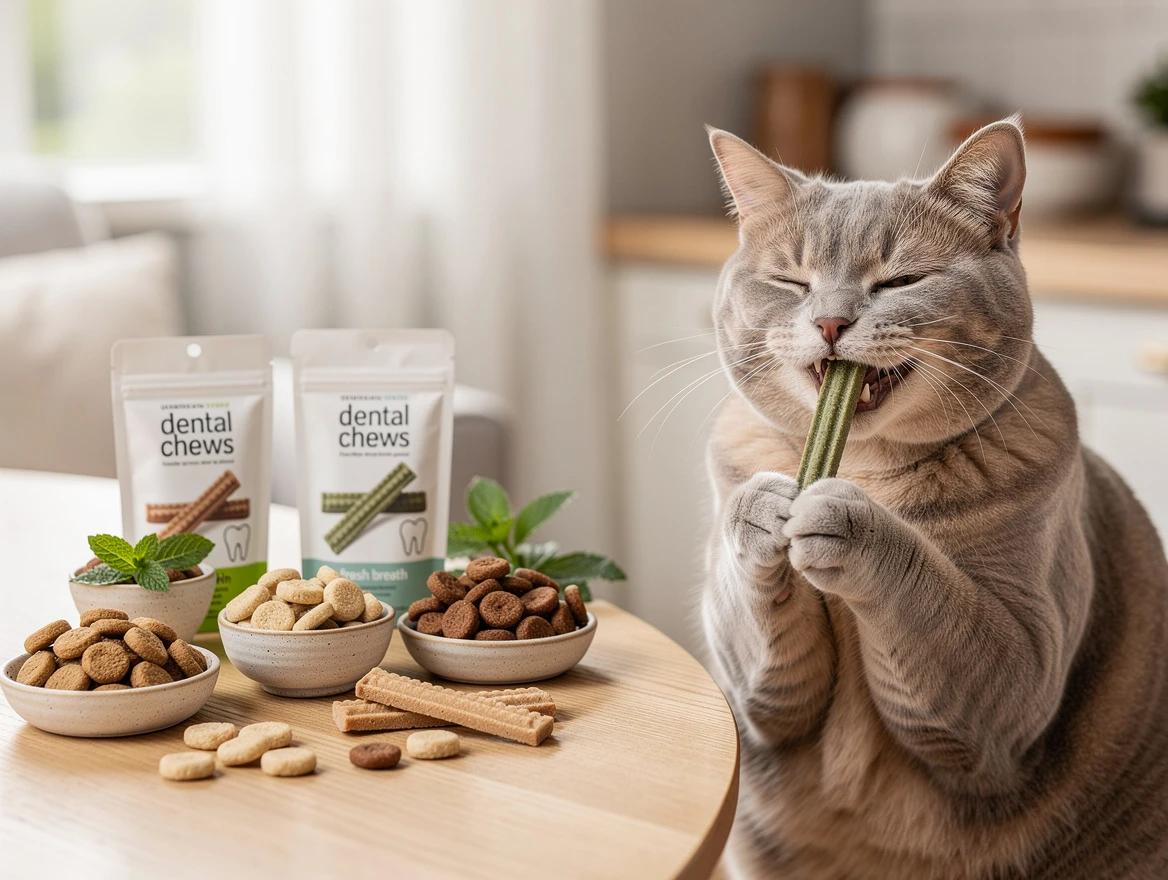
- Dental treats (VOHC-approved) — treats approved by the Veterinary Oral Health Council help reduce plaque between professional cleanings
- Dental water additives — cat-safe additives reduce bacterial buildup daily
- Dental-focused food — some kibble is specifically designed to scrape plaque during chewing
When to See the Vet
| Not Worrying ✅ | See the Vet ⚠️ |
|---|---|
| Mild fishy smell right after eating wet food | Fishy smell that never goes away |
| Slight odor that fades within an hour | Smell always present regardless of eating |
| Kitten breath during teething | Kitten breath smelling like ammonia or rotting |
| Brief bad breath after eating something smelly | Sudden extreme smell that lasts 48+ hours |
| No other symptoms — eating and playing normally | Bad breath + drooling, hiding, weight loss, lethargy |
🩺 Go to the Vet If You Notice:
- Persistent bad breath always present, not just after eating
- Breath smells like ammonia or bleach — possible kidney disease
- Breath smells sweet or fruity — possible diabetes
- Extreme rotting smell — possible advanced abscess or oral tumor
- Breath smells like poop — possible GI obstruction
- Drooling, dropping food, or eating on one side. Related: Cat Drooling 7 Essential Facts
- Visible red, bleeding, or swollen gums
- Loose or broken teeth. Related: My Cat Lost a Fang Tooth
- Bad breath alongside weight loss, increased thirst, or lethargy. Related: My Cat Is Not Eating or Drinking and Very Weak
Frequently Asked Questions
An extreme rotting smell usually indicates an advanced dental abscess, necrotic tissue in the mouth, or an oral tumor. This needs immediate veterinary attention regardless of the cause.
When both breath and stool smell unusually foul at the same time, the GI tract is likely involved. Possible causes include inflammatory bowel disease, food intolerance, infection, or parasites. A vet exam with fecal testing identifies the cause.
The Bottom Line
Why does my cat’s breath smell so bad? In most cases, dental disease is the answer. But the smell type matters: fishy points to dental or GI infection, ammonia points to kidney disease, sweet points to diabetes, and extreme rotting points to an abscess or tumor.
Mild food breath after eating is normal. Persistent bad breath is never normal and always deserves investigation. Start with home dental care, brushing, dental treats, water additives, and schedule a professional cleaning with your vet.
Related: My Cat’s Meow Is Weak and Raspy — oral problems can change your cat’s voice. Also: My Cat Is Not Eating or Drinking and Very Weak — severe dental pain causes appetite loss.