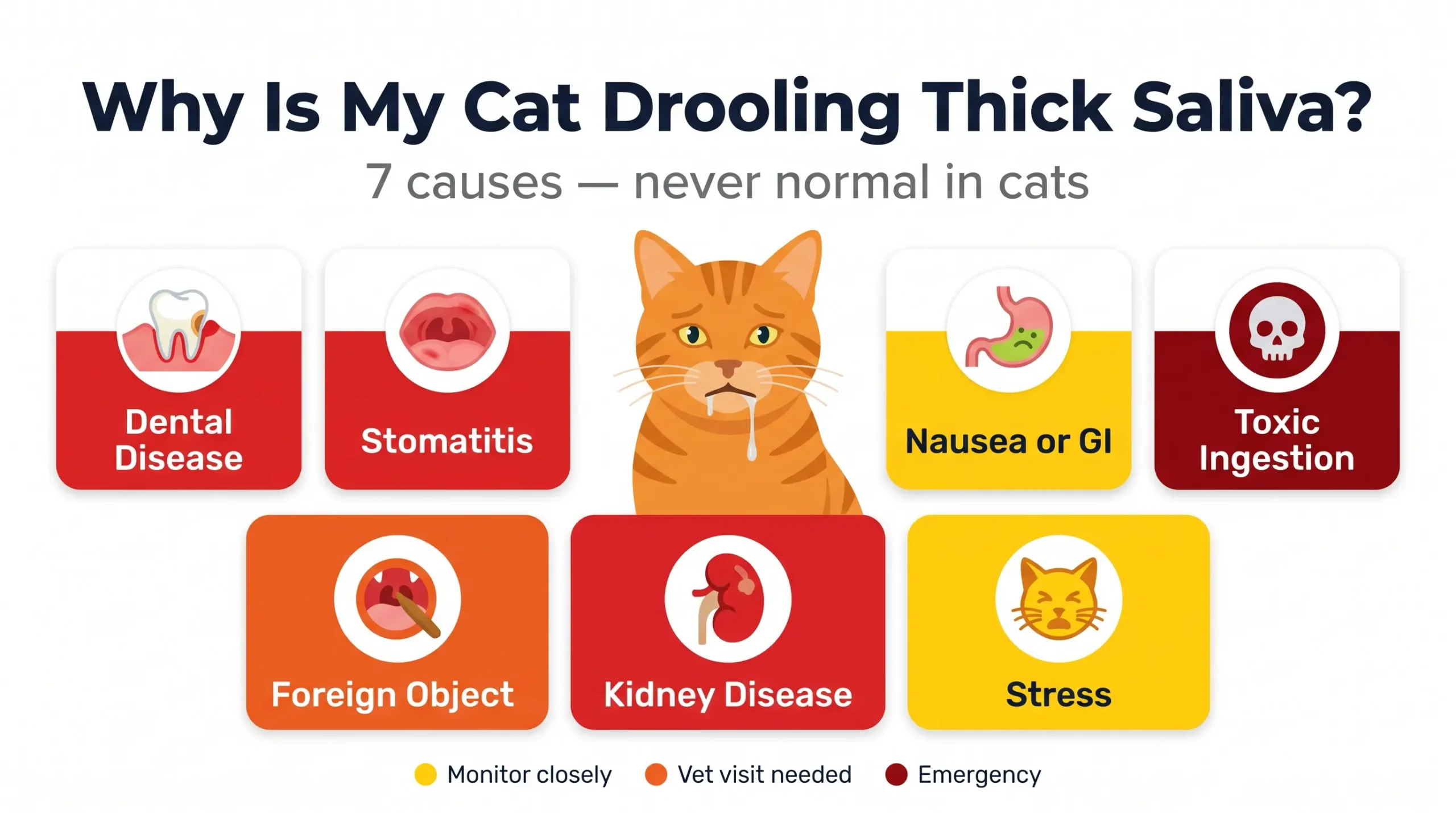
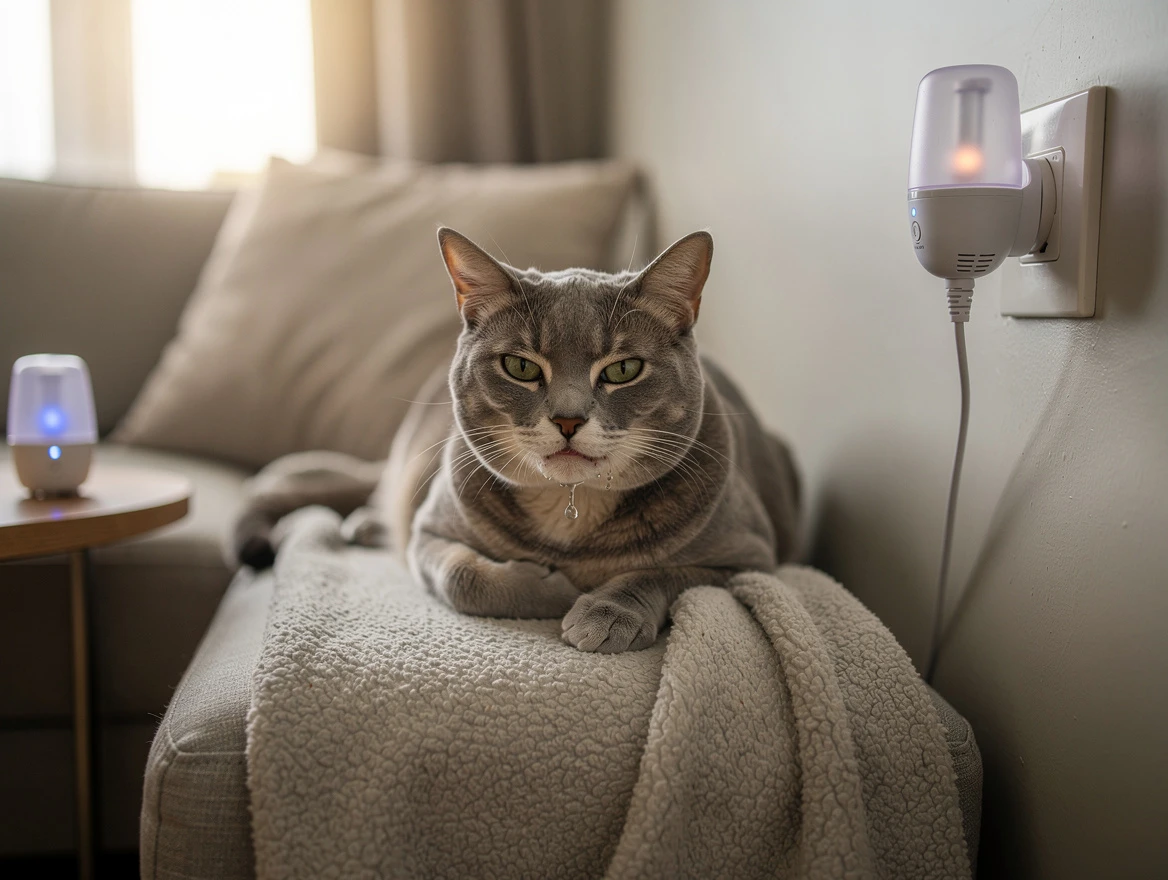
Why is my cat drooling thick saliva? Thick, stringy, or persistent drool in cats almost always means something is wrong. Normal cat saliva is thin and barely noticeable. When it turns thick, it usually means there’s extra saliva being produced, your cat is having trouble swallowing, or their mouth is painful.
One of my cats started drooling thick saliva out of nowhere last year. He was eating fine, playing normally, but the drool was thick and stringy hanging from his chin. The vet found a tooth abscess hiding under the gumline that was invisible from the outside. That experience taught me: thick saliva is never just a quirk.
The most common cause is dental disease (gum inflammation, tooth decay, or abscess). Other causes include oral infections, nausea, toxic ingestion, foreign objects stuck in the mouth, kidney disease, and stress. If thick drooling lasts more than 24 hours or comes with appetite loss, bad breath, or lethargy, see your vet.
- Thick drooling with difficulty breathing or swallowing
- Seizures or collapse alongside drooling
- Suspected poisoning (plants, chemicals, medications)
- Bleeding from the mouth
- Complete refusal to eat or drink for more than 24 hours
Why Is My Cat Drooling Thick Saliva? 7 Causes
1. Dental Disease — The #1 Cause
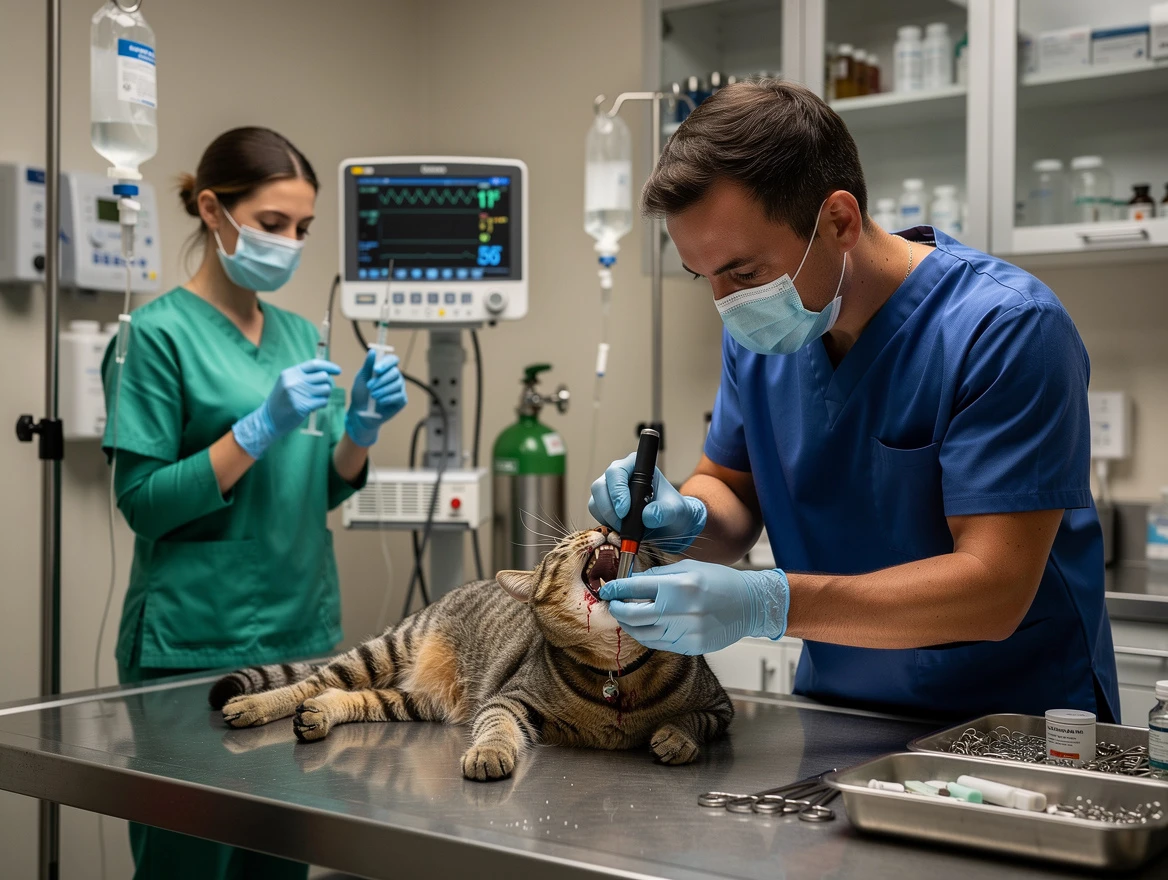
Gingivitis, periodontal disease, tooth decay, and tooth resorption are the leading reasons for thick drooling. Infected gums and decaying teeth cause pain that triggers excess saliva production. The saliva thickens because inflammation changes its consistency.
Signs: bad breath, red or swollen gums, pawing at the mouth, eating less or dropping food. Related: My Cat’s Tooth Is Loose Can I Pull It Out.
2. Stomatitis — Severe Oral Inflammation
Stomatitis causes intense inflammation of the soft mouth tissues. Cats with stomatitis drool thick, stringy saliva and often stop eating entirely due to extreme mouth pain. Causes include feline calicivirus, immune dysfunction, or chronic infection.
Related: 7 Critical Facts Stomatitis in Cats — detailed guide on diagnosis and treatment.
3. Nausea and Gastrointestinal Problems
Nausea increases saliva production, often thick, as the body prepares for vomiting. Causes include hairballs, dietary changes, GI infections, liver disease, or kidney disease. If your cat is drooling thick saliva and also vomiting, nausea is the likely cause. Related: Cat Vomiting White Foam — vomiting with drooling often indicates the same underlying issue.
4. Toxic Ingestion
Poisonous plants (lilies, azaleas), household chemicals, and certain medications cause immediate thick drooling as the mouth tries to flush out the irritant. This is always an emergency, if you suspect your cat ingested something toxic, go to the vet immediately.
Related: My Cat Licked Toilet Cleaner — common household toxins and what to do.
5. Foreign Object in Mouth or Throat
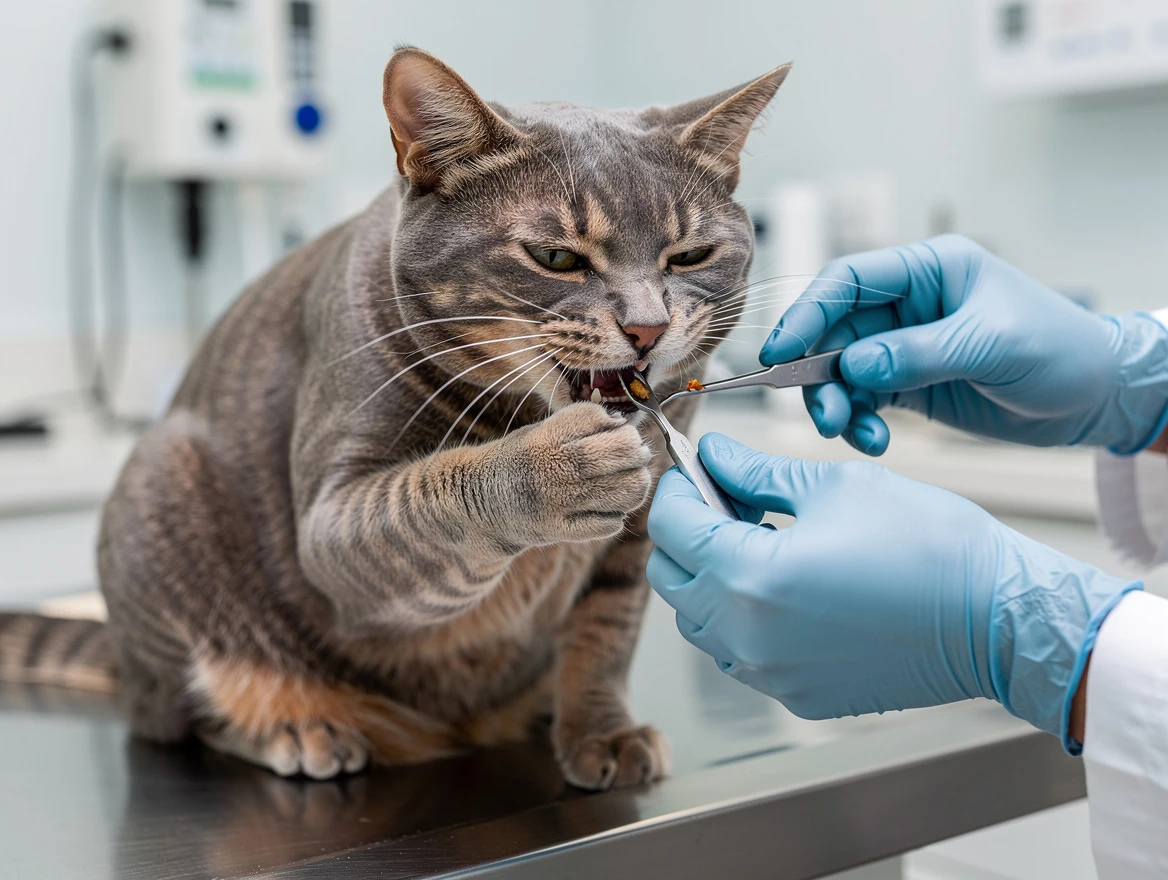
String, grass, splinters, bone fragments, or small toys stuck in the mouth or throat cause immediate thick drooling. You may notice your cat pawing at their mouth, shaking their head, or gagging. Do not attempt to pull anything from the throat, let the vet handle it.
6. Kidney Disease
Kidney disease is one of the most serious causes of excessive drooling. As kidney function declines, toxins build up in the blood causing nausea and mouth ulcers, both of which produce thick, excess saliva. Watch for increased thirst, increased urination, and weight loss alongside the drooling.
7. Stress or Anxiety
Vet visits, car rides, new people, or environmental changes can trigger temporary drooling. Stress-related drool is usually thinner but can appear thick when mixed with mucus. If drooling only happens during stressful events and resolves quickly afterward, stress is the likely cause.
Drooling Thick Saliva but Acting Normal
This is one of the most common questions owners ask. Your cat is eating, playing, and behaving normally, but you notice thick saliva hanging from their mouth or collecting on their chin.
The most likely causes when behavior seems fine:
- Early-stage dental disease — infection is building but hasn’t caused enough pain to change behavior yet
- Minor mouth irritation — a scratch, rough food, or mild irritant that triggered temporary excess saliva
- Mild nausea — a hairball or slight stomach upset that resolved itself
- Taste reaction — licking something bitter (a bug, a plant leaf, cleaning residue) can trigger thick drooling that resolves within hours
4 Signs Your Cat Is Suffering
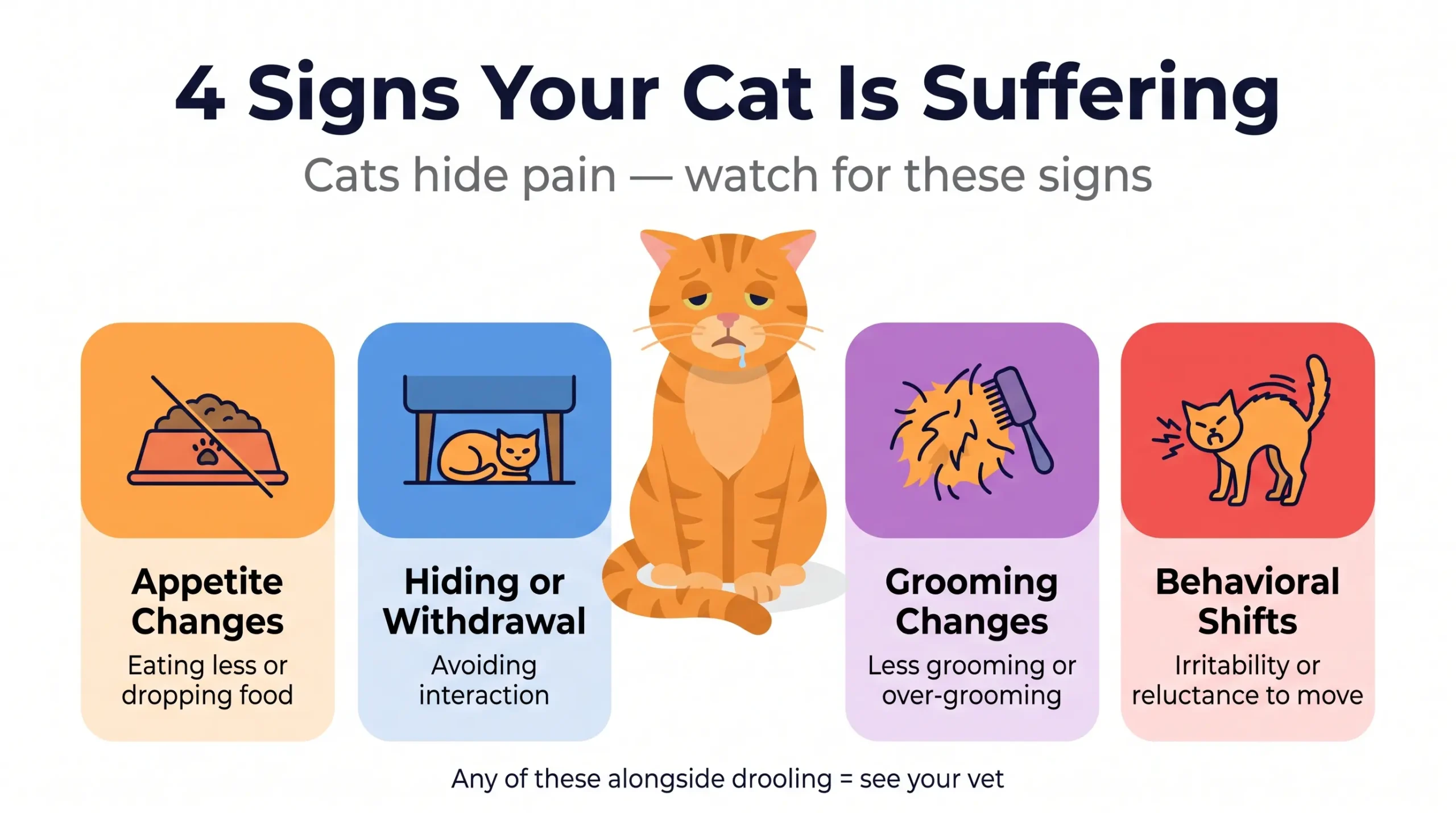 Cats hide pain extremely well. If your cat is drooling thick saliva, watch for these four signs that indicate they’re actually suffering:
| Sign | What It Looks Like | What It Means |
|---|---|---|
| Appetite changes | Eating less, dropping food, turning away from meals | Mouth pain — likely dental disease or stomatitis |
| Hiding or withdrawal | Sleeping in unusual spots, avoiding interaction | Pain or illness — cats hide when they feel vulnerable |
| Grooming changes | Grooming less (matted coat) or over-grooming one area | Pain, discomfort, or skin/oral irritation |
| Behavioral shifts | Irritability, hissing when touched, reluctance to jump | Pain — possibly dental, joint, or internal |
If thick drooling appears alongside any of these signs, your cat needs a vet visit. Related: My Cat Is Not Eating or Drinking and Very Weak — when appetite loss becomes urgent.
What to Do at Home
- Check the mouth — look for red gums, swelling, bleeding, or anything stuck. Use a flashlight if needed.
- Offer fresh water — dehydration worsens drooling. Ensure clean water is always available.
- Switch to wet food — if your cat is struggling to eat dry food, wet food is easier on a sore mouth. Related: Wet Cat Food for Sensitive Stomach.
- Remove potential toxins — check for chewed plants, spilled chemicals, or accessible medications.
- Monitor for 24 hours — track eating, drinking, drooling frequency, and energy level.
- Do NOT give human medication — no aspirin, no ibuprofen, no hydrogen peroxide. All are toxic to cats.
When to Worry
🩺 See Your Vet If:
- Thick drooling lasts more than 24 hours
- Cat stops eating or drinking
- Bad breath — indicates dental infection or kidney disease
- Pawing at the mouth repeatedly
- Bleeding or swelling inside the mouth
- Vomiting alongside drooling. Related: Why Is My Cat Throwing Up
- Drooling with lethargy or hiding
- Difficulty breathing or swallowing — emergency
- Any suspected poisoning — emergency
Common Mistakes
- Ignoring thick drool because the cat seems fine — early dental disease causes drooling before pain changes behavior
- Waiting for it to resolve on its own — dental infections worsen without treatment
- Trying to remove a foreign object yourself — throat objects can cause more damage if pulled incorrectly
- Giving human medication — aspirin and ibuprofen are toxic to cats
- Skipping dental care — regular vet dental checkups prevent the most common cause of thick drooling
Frequently Asked Questions
Mucus-like drool suggests oral infection, upper respiratory infection, or stomatitis. The mucus is produced by inflamed tissues in the mouth or throat. A vet exam is needed to identify and treat the underlying cause.
Yes, this is one genuinely benign exception. Some cats drool thin saliva when deeply content, often while kneading or being petted, as a leftover kitten nursing reflex. This drool is thin and watery, not thick or stringy, and stops as soon as the cat calms down. It’s completely different from the thick, persistent drooling covered in this article.
Not quite, they usually point to different things. Foamy drool is more associated with nausea or an empty stomach right before vomiting, while thick, stringy saliva points more toward dental disease, oral infection, or something stuck in the mouth. If you see foam specifically, treat it as a possible vomiting precursor rather than a dental sign.
The Bottom Line
Why is my cat drooling thick saliva? Dental disease is the most common cause, followed by stomatitis, nausea, toxic ingestion, foreign objects, kidney disease, and stress. Thick drool is never normal in cats.
If it lasts more than 24 hours, recurs, or comes with appetite loss, bad breath, or behavioral changes, see your vet. Early dental care prevents the most common cause entirely.
Related: Cat Drooling 7 Essential Facts — your complete guide to all types of cat drooling.
Related Articles
My Cat’s Tooth Is Loose Can I Pull It Out
Dental problems are the #1 cause of thick drool.