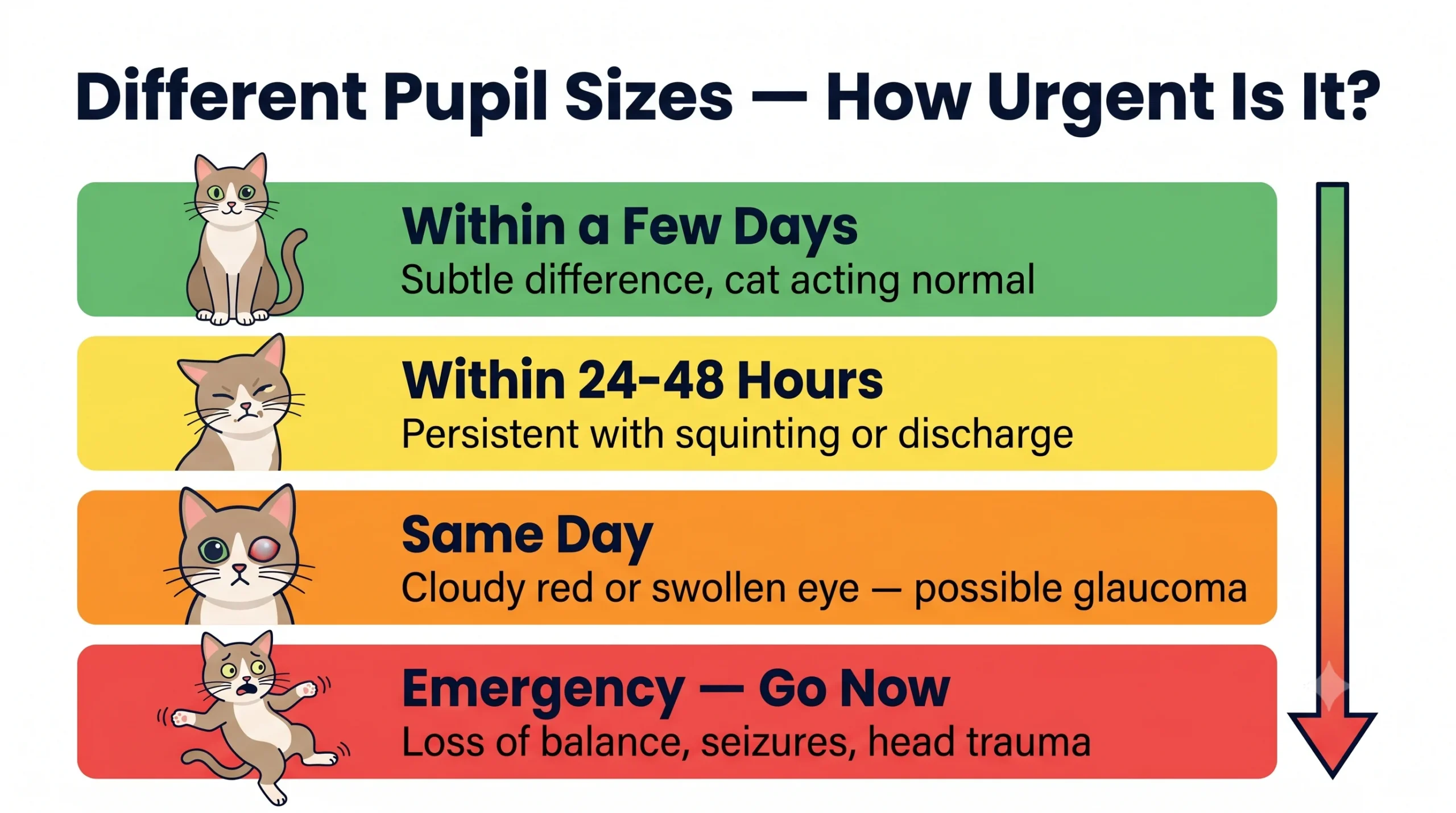
When my cat’s pupils are different sizes, it’s never something to ignore. One pupil larger than the other is called anisocoria, and it can mean anything from a harmless temporary reflex to a neurological emergency. The cause determines the urgency.
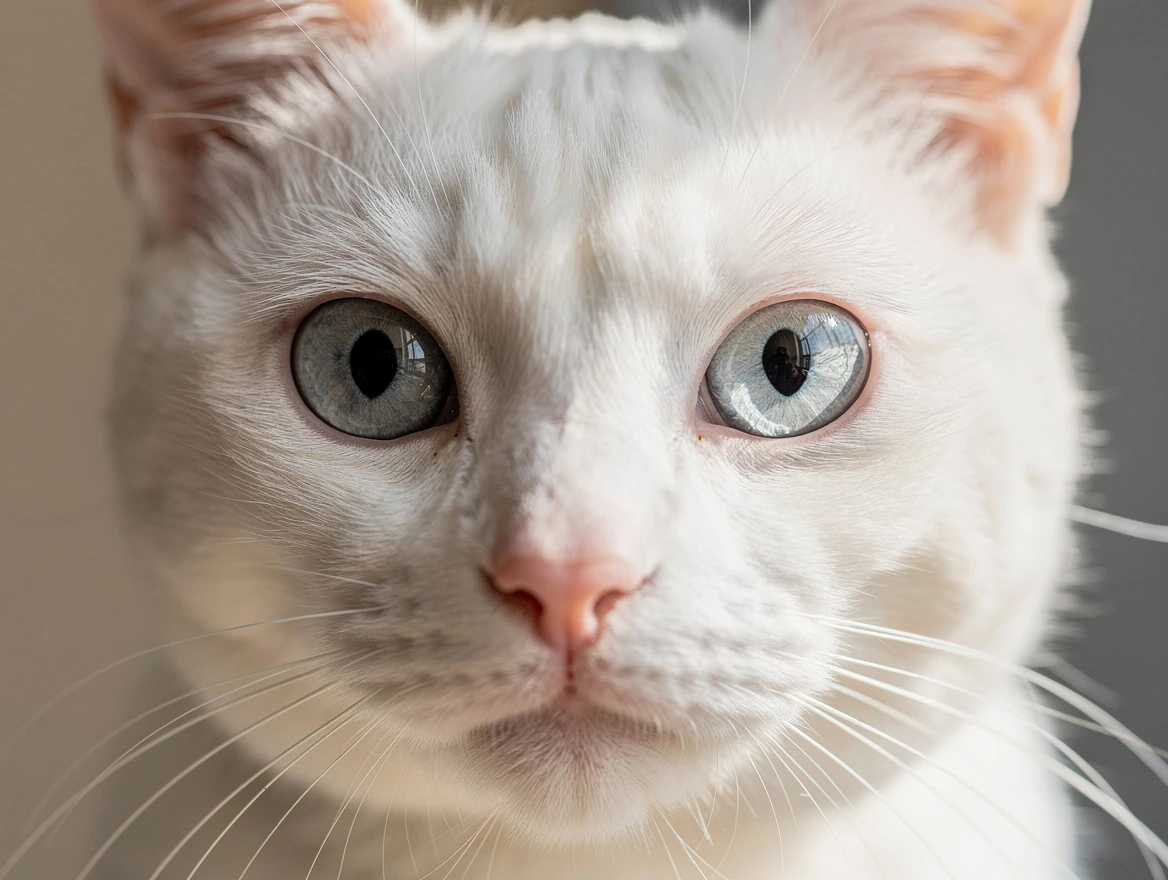
This is called anisocoria. It can be caused by uveitis, glaucoma, corneal ulcer, retinal disease, Horner’s syndrome, or neurological conditions. Some causes are harmless and self-resolving; others can cause permanent blindness within hours. Any sudden or persistent pupil size difference should be evaluated by a vet.
- Loss of balance, circling, head tilt, or seizures
- Recent head trauma or fall
- Cloudy, red, or swollen eye alongside the pupil change
- Sudden vision loss — bumping into things, missing jumps
- Extreme lethargy or disorientation
What Is Anisocoria in Cats
Anisocoria is the medical term for unequal pupil sizes. In a healthy cat, both pupils dilate equally in dim light and constrict equally in bright light. When one pupil stays larger or smaller than the other, something is interfering with the muscles or nerves that control it.
The problem can be inside the eye (injury, inflammation, glaucoma, retinal disease) or in the nerve pathways from the brain (Horner’s syndrome, neurological conditions). Identifying which system is affected is what determines how serious it is.
| What You See | Possible Meaning | Urgency |
|---|---|---|
| Slight difference, comes and goes | Temporary light reflex | Mention at next vet visit |
| One pupil fixed large or small | Eye injury, inflammation, or nerve damage | Vet within 24 hours |
| Unequal pupils + cloudy or red eye | Glaucoma, uveitis, or infection | Same day |
| Unequal pupils + balance loss | Neurological emergency | Emergency vet now |
| Unequal pupils + drooping eyelid | Horner’s syndrome | Vet within 24 hours |
8 Causes
If your cat’s pupils are different sizes, one of these eight conditions is most likely responsible. They range from benign to sight-threatening.
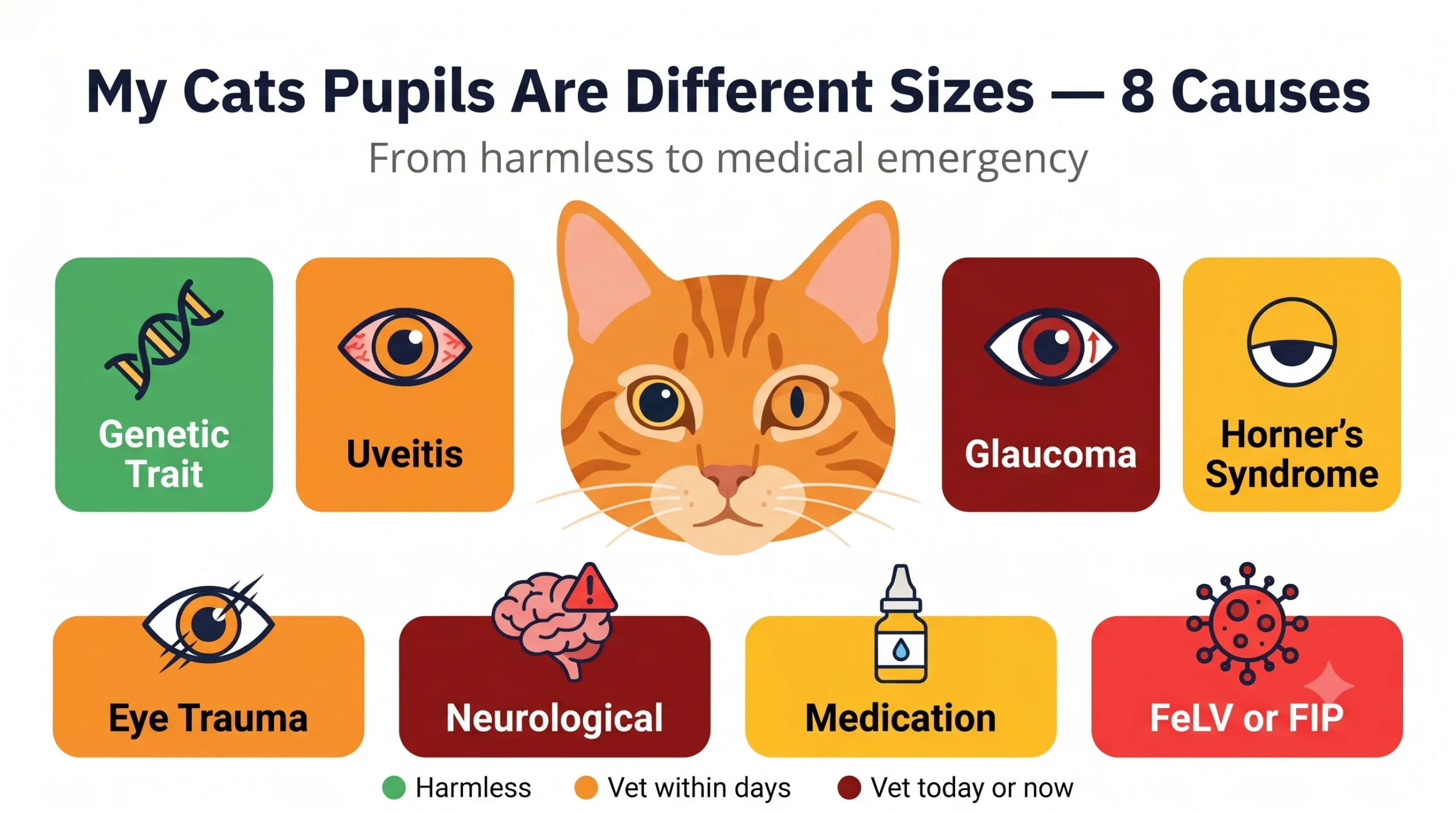
1. Uveitis — Eye Inflammation
Inflammation inside the eye causes the pupil to constrict due to iris muscle spasm. It’s the most common cause of anisocoria in cats and can result from herpesvirus, FIV, FIP, or trauma. Untreated uveitis leads to permanent vision loss. Related: Cat Eye Infection Facts.
2. Glaucoma
High intraocular pressure forces the affected pupil to remain dilated while the healthy eye constricts normally. The eye often looks cloudy, red, or swollen. Glaucoma is painful and can cause permanent blindness within hours, it’s a same-day emergency. Related: Why Is My Cat’s Eye Swollen.
3. Corneal Ulcer
A scratch or wound on the cornea causes pain-reflex constriction in the affected eye. Signs include squinting, pawing at the eye, and cloudiness on the corneal surface. Same-day vet care is essential, deep ulcers can perforate the eye.
4. Retinal Disease
Retinal detachment or degeneration impairs the signal that tells the pupil to constrict, leaving it dilated even in bright light. High blood pressure is a leading cause in older cats and requires urgent treatment to preserve remaining vision.
5. Horner’s Syndrome
Disruption to the sympathetic nerve pathway produces a smaller pupil, drooping upper eyelid, and a visible third eyelid, all on the same side. Common causes include ear infection, trauma, or a spinal/neck lesion. Related: My Cat’s Ears Are Hot.
6. Neurological Conditions
Brain tumors, strokes, or nerve damage can cause one pupil to stop responding. This is the most serious cause and is usually accompanied by balance loss, circling, or seizures. Any neurological symptom alongside a pupil change is an emergency.
7. Eye Trauma or Injury
A fight, fall, or blow to the head can damage the eye or the nerves that control it. If your cat was recently injured and now has unequal pupils, trauma is the most likely cause. Related: My Cat Is Limping But Still Jumping.
8. Congenital or Medication-Related
Some cats are born with slightly unequal pupils, a harmless lifelong trait that needs no treatment. Certain eye drops (atropine), some flea and tick products, and certain houseplants can also temporarily affect pupil size. If the difference has always been there and your cat is completely normal, this is the most likely explanation.
But Acting Normal
This is the most common scenario owners Google. Your cat seems fine, eating, playing, no squinting, but one pupil is slightly bigger than the other.
Early-stage uveitis, mild Horner’s syndrome, and early retinal disease all look identical to harmless anisocoria before other symptoms appear. A vet exam is the only way to tell the difference.
How Vets Diagnose It
Diagnosing anisocoria in cats requires more than a visual check. Your vet will typically use several of these tests:
| Test | What It Checks |
|---|---|
| Tonometry | Measures intraocular pressure — rules glaucoma in or out |
| Ophthalmoscope exam | Examines the retina, optic nerve, and interior of the eye |
| Fluorescein stain | Reveals corneal ulcers invisible in normal light |
| Pupillary light reflex (PLR) | Tests whether the problem is in the eye or in the brain’s nerve pathways |
| Blood pressure | Identifies hypertension as a cause of retinal damage |
| Blood tests (FeLV/FIV/FIP) | Rules out systemic viral infections driving uveitis |
| MRI / CT | Identifies brain tumors, strokes, or nerve lesions if a neurological cause is suspected |
Treatment Options
Treatment for anisocoria in cats always targets the underlying cause, not just the pupil difference itself.
Topical corticosteroid or NSAID eye drops. Atropine to prevent pupil adhesion. Duration: 2–6 weeks.
Pressure-reducing eye drops (prostaglandins, beta-blockers). Surgery in severe cases. Time-critical.
Antibiotic eye drops and e-collar. Most heal in 5–14 days. Deep ulcers may need surgery.
Amlodipine to lower blood pressure. Treatment of root cause (kidney disease, hyperthyroidism).
Treat the cause — antibiotics for ear infection, surgery for tumors. Idiopathic cases often resolve on their own.
Specialist referral, MRI/CT, steroids or antivirals. FIP now has effective antiviral treatments available.
Can It Go Away
It depends entirely on the cause. Temporary anisocoria from a lighting response resolves in minutes. Anisocoria from uveitis or Horner’s syndrome resolves with treatment in 1–4 weeks. Anisocoria from glaucoma, retinal damage, or neurological conditions may be permanent even with treatment.
The earlier the cause is found, the better the outcome. That’s why unequal pupils, even in a cat acting normal, always deserve a vet check.
Frequently Asked Questions
It depends. A subtle difference in an otherwise normal cat is likely harmless but still worth a vet check within a few days. An obvious, persistent difference, especially with squinting, cloudiness, or balance issues, needs same-day or emergency veterinary evaluation.
It depends on the cause, not the pupil difference itself. Glaucoma and corneal ulcers are genuinely painful conditions. Horner’s syndrome and congenital anisocoria typically cause no pain at all. The pupil size difference is a symptom, not the source of any discomfort, so pain level is really a clue about which underlying cause you’re dealing with.
Yes, in some cases. A small number of cats are simply born with naturally unequal pupils as a lifelong, harmless trait unrelated to any disease. This is relatively rare, though, so it shouldn’t be your default assumption, especially if the difference is new. It’s really only a safe explanation if a vet has confirmed the eyes are otherwise completely healthy and the difference has been present since kittenhood.
The Bottom Line
When my cat’s pupils are different sizes, the cause can range from a harmless temporary reflex to a condition like glaucoma or retinal disease that causes permanent blindness within hours without treatment. Never ignore it, even a subtle difference in a normal-acting cat deserves a vet check within a few days.
The earlier the cause is found, the better the outcome, and for most causes, it’s genuinely worth catching early.
Related Articles
Multiple symptoms together need urgent vet care.