My cat is not eating or drinking and very weak, this combination is always a medical emergency, not a “wait and see” situation. Cats have a unique vulnerability: going without food for even 48 hours can trigger hepatic lipidosis, a life-threatening liver condition that develops much faster in cats than in most other animals.
I learned this the hard way. One of my cats stopped eating after a stressful vet visit. I assumed she was just upset and would eat when hungry enough. By day two she was weak and wobbly. My vet told me I had waited far too long, cats cannot “tough it out” the way dogs sometimes can. She needed IV fluids and appetite stimulants to recover.
- No food or water for more than 24 hours combined with weakness
- Cat is too weak to stand or walk normally
- Vomiting or diarrhea alongside not eating
- Gums are pale, white, or yellow (jaundice)
- Breathing is labored or rapid
- Cat is unresponsive or barely conscious
Do not try to force water into a lethargic cat’s mouth, this can cause aspiration into the lungs. Get to a vet immediately.
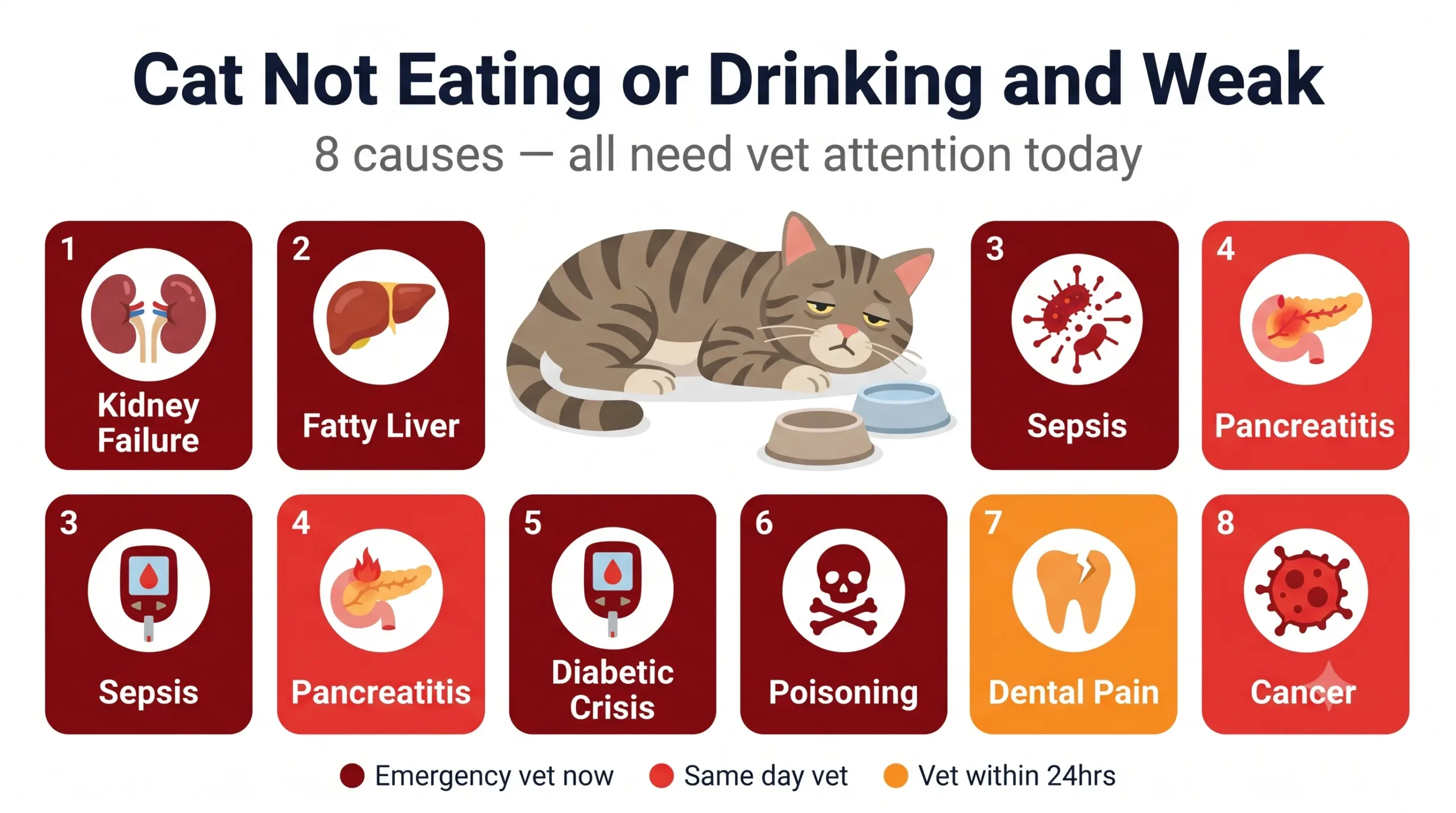
This requires immediate veterinary attention, not home remedies. Extended food refusal triggers hepatic lipidosis (fatty liver disease), which can be fatal without treatment. Common causes include kidney disease, dental pain, gastrointestinal illness, infection, or poisoning. Do not wait more than 24 hours to seek care once weakness appears alongside not eating.
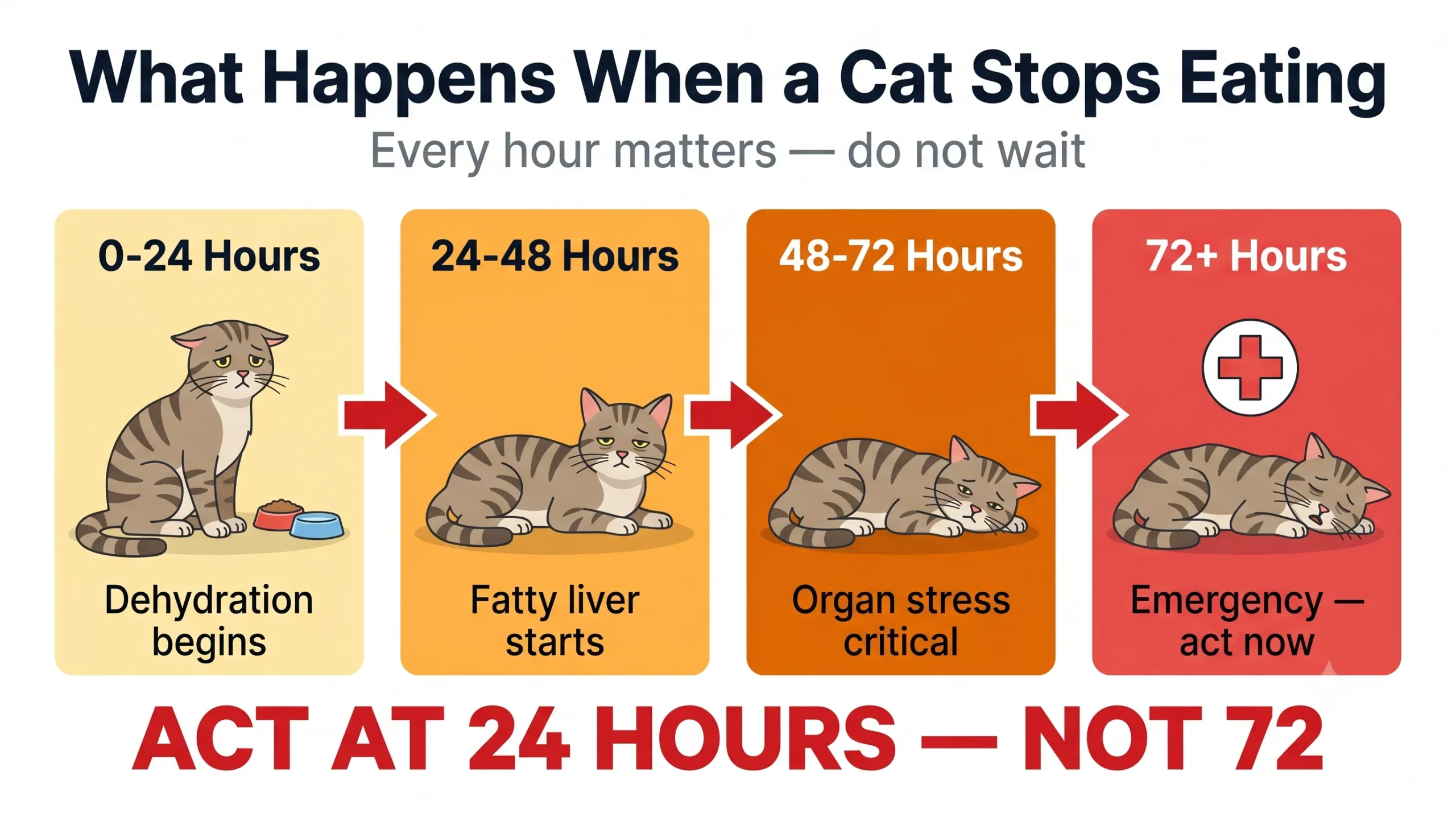
How Long Before It Becomes Critical
The timeline matters enormously:
| Duration Without Food | What Happens | Urgency |
|---|---|---|
| 0–24 hours | Usually tolerable if drinking water and otherwise normal | Monitor closely |
| 24–48 hours | Liver begins mobilizing fat stores — early hepatic lipidosis risk starts | Vet visit needed |
| 48–72 hours | Hepatic lipidosis risk becomes significant | Urgent vet care |
| 72+ hours | Liver damage may be occurring, jaundice can develop | Emergency vet immediately |
| Combined with no water | Dehydration accelerates all above timelines dramatically | Emergency regardless of duration |
9 Causes
1. Kidney Disease
Common in senior cats, kidney disease causes nausea, appetite loss, and progressive weakness. Related: Signs of Kidney Failure in Cats.
2. Dental Pain
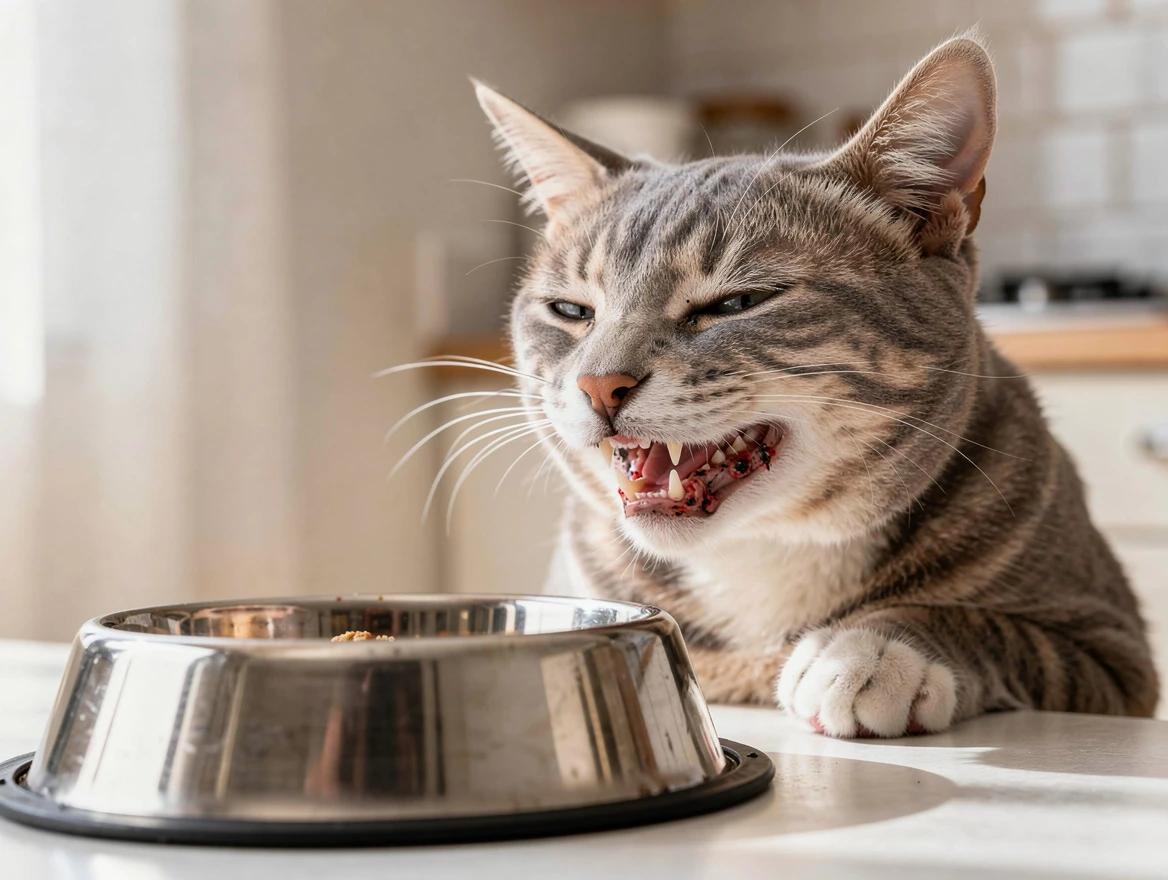
Severe dental disease, abscesses, or a broken tooth make eating physically painful, causing cats to avoid food entirely. Related: Why Does My Cat’s Breath Smell So Bad.
3. Gastrointestinal Illness
IBD, pancreatitis, blockages, or infections cause nausea that suppresses appetite. Related: Cat Vomiting White Foam.
4. Urinary Blockage
Especially in male cats, a blocked urethra causes severe pain, weakness, and appetite loss. This is a life-threatening emergency. Related: Why Is My Cat Peeing Everywhere — urinary problems and not eating often occur together.
5. Infection
Systemic bacterial or viral infections cause fever, lethargy, and appetite suppression. Untreated infections can spread and worsen rapidly.
6. Diabetes
Uncontrolled diabetes causes weakness, dehydration, and eventually appetite loss as the condition progresses. Related: Cat Diabetes Symptoms.
7. Poisoning or Toxin Exposure
Household toxins, toxic plants, or spoiled food cause acute illness with vomiting, weakness, and appetite refusal. Spoiled food is one preventable cause, see how long wet food can safely sit out: How Long Can Wet Cat Food Sit Out.
8. Stress or Environmental Change
Moving, new pets, or major household disruption can cause temporary appetite loss. Without weakness, up to 48 hours of monitoring can be reasonable. With weakness present, the calculation changes, treat it as medical and act now rather than waiting it out. Related: Is My Cat Depressed.
9. Cancer
Tumors, especially in the GI tract or affecting overall metabolism, cause progressive weight loss, weakness, and appetite decline. More common in senior cats.
Not Eating But Acting Normal
This is deceptive because cats hide illness exceptionally well. Normal energy and behavior alongside appetite loss can still indicate early kidney disease, dental pain, or mild GI upset. Assuming that otherwise-normal behavior rules out a problem is a common but risky mistake, weakness combined with any appetite change always warrants investigation, regardless of overall demeanor.
Not Eating and Vomiting Too
This combination significantly raises urgency. Vomiting causes rapid dehydration on top of appetite loss, accelerating the path to hepatic lipidosis and electrolyte imbalance. This combination should be treated as an emergency regardless of how long it has been occurring.
Not Eating and Sleeping a Lot
Excessive sleep combined with appetite loss indicates the body is conserving energy due to illness. A cat that won’t eat or drink and just sleeps is describing a lethargic state that needs prompt veterinary evaluation. This is different from normal cat sleep patterns, a sick cat sleeping excessively is unresponsive and difficult to rouse, not simply resting.
Signs a Cat Is About to Pass Away
This question often arises alongside concerns about severe weakness. Signs that a cat may be nearing end of life include:
- Complete refusal of food and water for 48+ hours
- Extreme lethargy — unable or unwilling to lift the head
- Labored, slow, or irregular breathing
- Body temperature dropping — cool paws and ears
- Withdrawal to a hidden, quiet space
- Loss of bladder or bowel control
- Pale, white, or blue-tinged gums
If your cat shows several of these signs, contact your vet immediately, they can help you understand what’s happening and guide the most compassionate next steps.
Home Care — Do’s and Don’ts
| Do | Don’t |
|---|---|
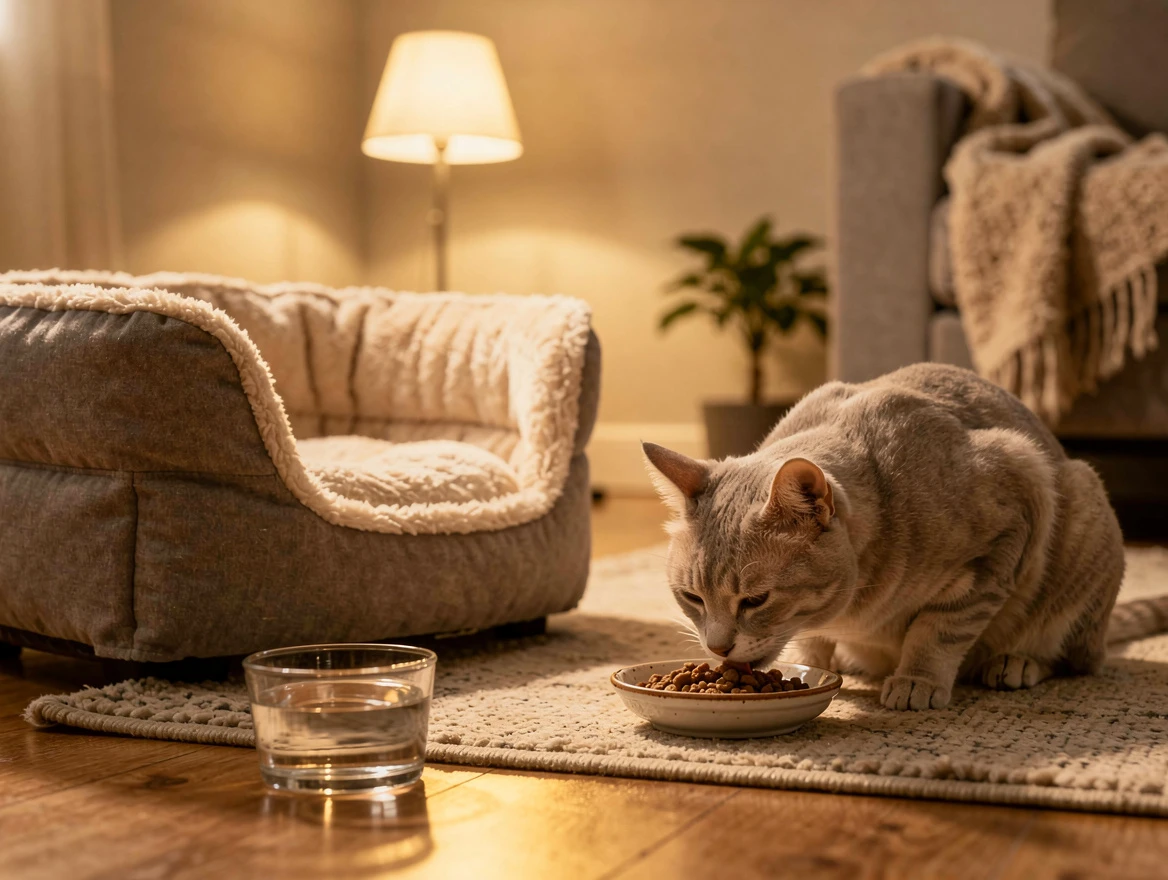
| Offer strong-smelling wet food warmed slightly | Force food or water into a lethargic cat’s mouth |
| Try a small amount of tuna in water to tempt appetite — Related: Can Cats Eat Tuna | Wait more than 24 hours hoping it resolves on its own |
| Keep the cat warm and in a quiet space | Give any human medication without vet approval |
| Monitor and note any other symptoms (vomiting, diarrhea, breathing) | Assume normal-seeming energy rules out a medical problem |
| Call your vet as soon as weakness appears | Delay care because the cat “seems okay otherwise” |
What to Feed a Sick Cat
Options to try while arranging veterinary care:
- Strong-smelling wet food — warmed slightly to release aroma
- Baby food (meat-based, no onion or garlic) — often appealing to sick cats due to smooth texture and mild flavor
- Tuna in water — the strong smell can stimulate interest
- Bone broth (no onion/garlic) — provides hydration and mild flavor
- Prescription recovery food — your vet may prescribe a highly palatable critical care formula
When to See the Vet
🩺 See Your Vet If:
- Not eating or drinking combined with any weakness — do not wait 24 hours
- Vomiting or diarrhea present alongside appetite loss
- Not eating or drinking for 3 days regardless of other symptoms
- Pale, white, or yellow gums
- Difficulty breathing
- Known or suspected toxin exposure
- Senior cat with any sudden appetite change
- Male cat straining to urinate alongside not eating — possible blockage
Frequently Asked Questions
Sudden onset suggests an acute cause, infection, toxin exposure, urinary blockage, or acute GI illness, rather than a slow-developing condition. This distinction matters: sudden onset requires same-day veterinary evaluation rather than home monitoring, since acute causes tend to escalate faster than the gradual conditions on the causes list above.
Cats can survive roughly 1–2 weeks without food in ideal conditions, but hepatic lipidosis often becomes fatal well before that theoretical limit if untreated. The real danger window starts at 48–72 hours, don’t wait for the outer survival estimate as your action threshold.
If your cat is weak on top of not eating or drinking, no, this combination doesn’t wait for business hours. Locate the nearest 24-hour emergency vet clinic now rather than waiting. If weakness isn’t present yet and it’s only been a few hours of appetite loss, monitoring until a regular vet opens is more reasonable, but weakness changes that calculation entirely.
The Bottom Line
My cat is not eating or drinking and very weak, treat this as an emergency, not a wait-and-see situation. Cats develop hepatic lipidosis far faster than most owners realize, and the earlier treatment begins, the better the outcome. Call your vet today rather than trying home remedies first when weakness is present.
Related: Signs of Kidney Failure in Cats — a leading cause of appetite loss in senior cats. Also: Cat Vomiting White Foam — when vomiting accompanies not eating.