If you’re wondering how to make my cat an emotional support animal, the answer is simpler than most websites make it seem, and doesn’t require any registration, vest, certificate, or official database.
What it requires is one thing: a legitimate ESA letter from a licensed mental health professional. Here’s exactly how the process works, what your rights are, and what to watch out for.

You need a licensed mental health professional to confirm you have a qualifying condition and write an ESA letter. No special training, registration, certification, or vest is required. Any cat of any age or breed qualifies.
- ESA registries, ID cards, and certificates have no legal standing, they aren’t required and mean nothing legally
- Online “instant ESA letters” without a real consultation are fraudulent
- Paying for an ESA vest or badge does not make your cat an emotional support animal
- There is no official government database or registry for ESAs
What Is a Cat Emotional Support Animal
An emotional support animal is a pet that provides comfort, companionship, and emotional stability to someone with a recognized mental health condition, anxiety, depression, PTSD, panic disorder, and others. Unlike service animals, ESAs don’t perform specific trained tasks. Their therapeutic value comes from their presence alone.
Cats are particularly effective ESAs. Their purring has been shown to reduce stress hormones. Their calm, consistent presence helps regulate anxiety. One of my cats has an instinct for sitting on my lap exactly when my stress levels peak, I didn’t train her to do it. She just does it.
ESA vs Service Animal — Key Difference
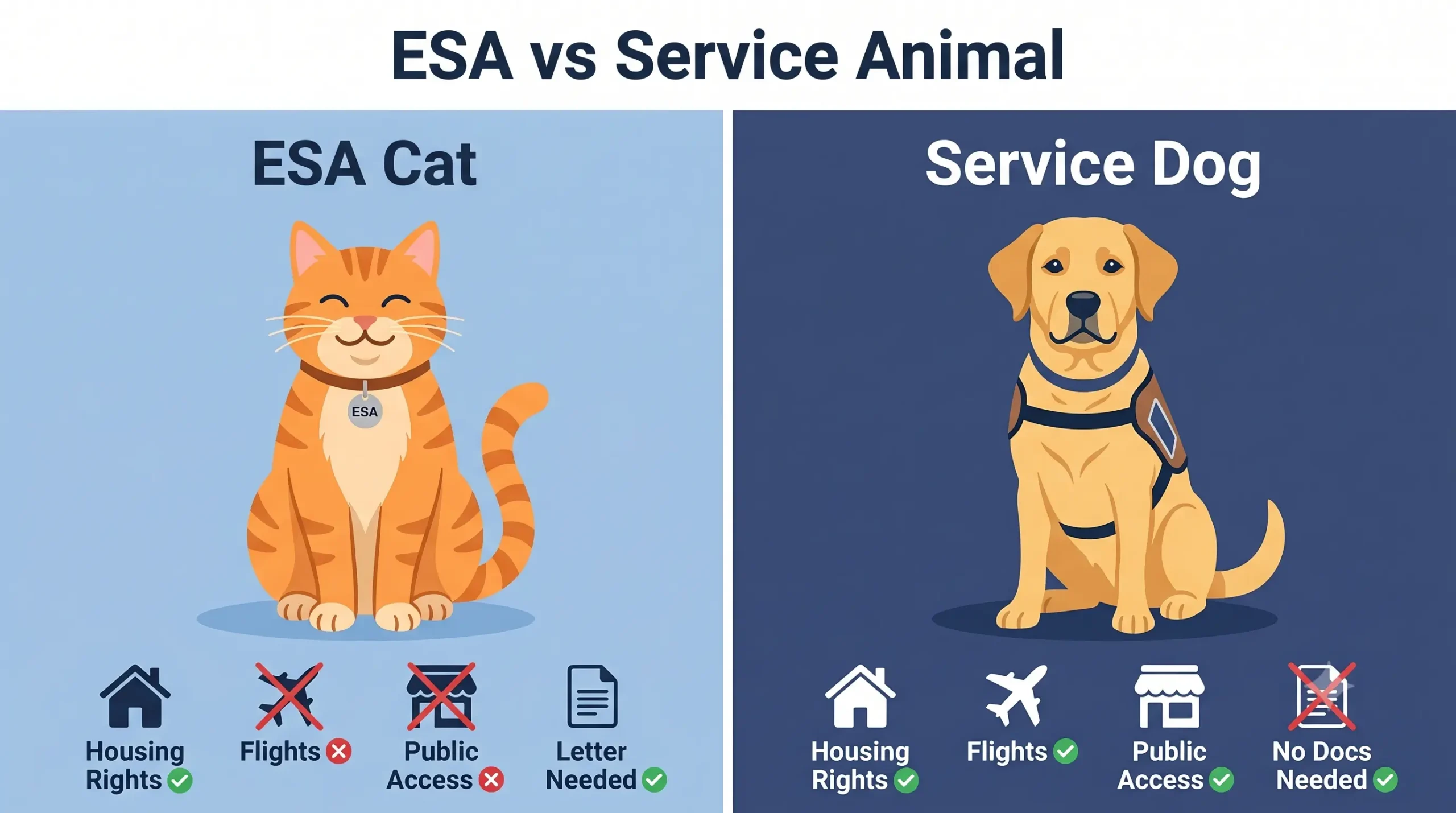
| Emotional Support Animal | Service Animal | |
|---|---|---|
| Training required | None | Yes — specific task training |
| Documentation | ESA letter from licensed MHP | None legally required |
| Housing rights | ✅ Fair Housing Act | ✅ Yes |
| Airline cabin access | ❌ Not guaranteed post-2021 | ✅ Yes |
| Public access rights | ❌ No — shops, restaurants | ✅ Yes |
| Species allowed | Any — cats, dogs, rabbits, birds | Dogs only (ADA) |
The Real Process — There Is No Registration
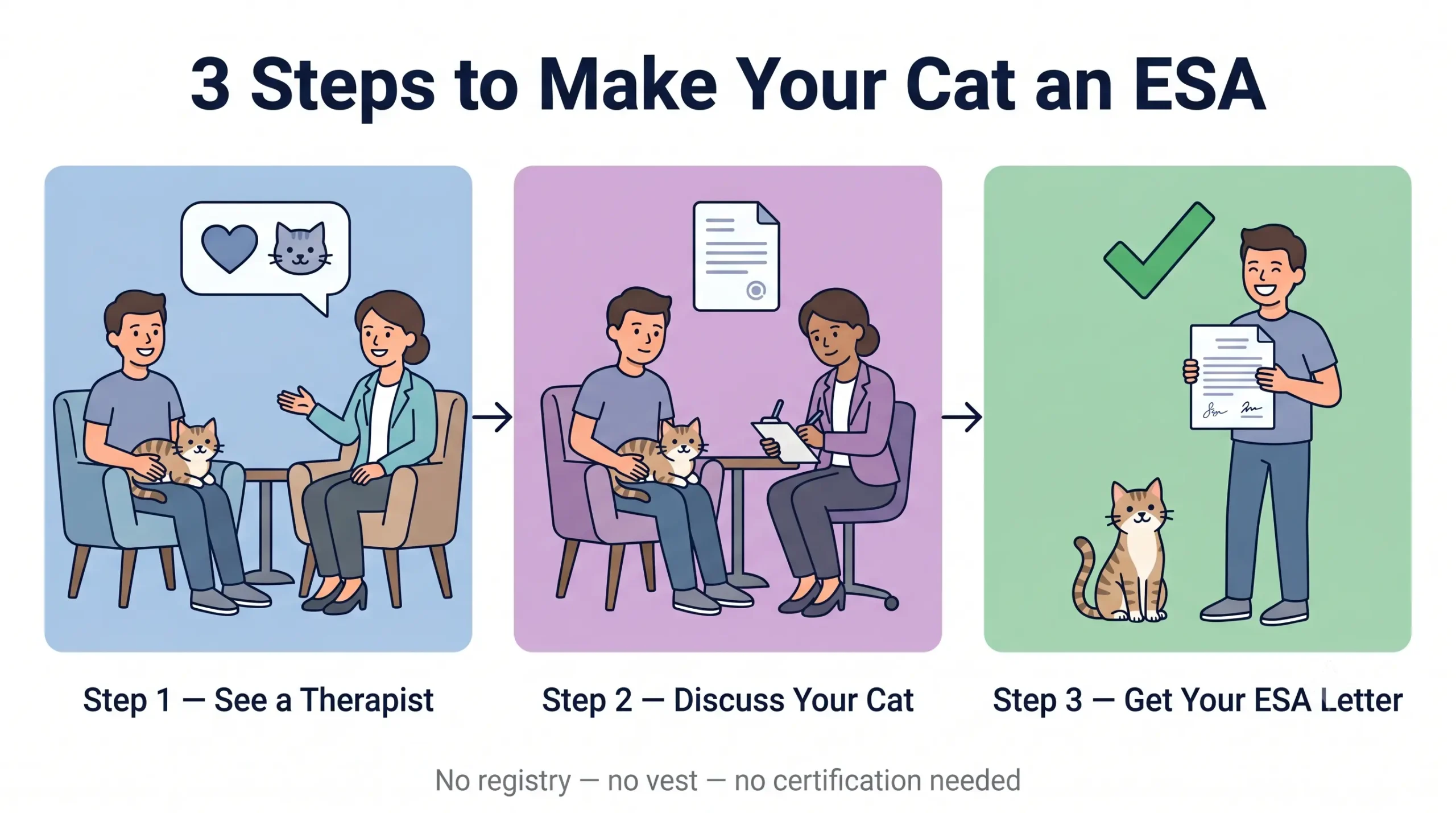
There is no registration. The correct process is obtaining an ESA letter from a licensed mental health professional. Here are the three steps:
Step 1 — Establish Care With a Licensed Mental Health Professional
You need to be under the care of a licensed therapist, psychologist, psychiatrist, or licensed clinical social worker (LCSW). You must have at least one real session, in person or telehealth. The provider must be licensed in your state.
Step 2 — Discuss Your Need for an Emotional Support Animal
During your session, explain how your cat helps manage your condition. The provider assesses whether an ESA is a reasonable part of your treatment plan. Anxiety, depression, PTSD, panic disorder, and other recognized conditions all qualify.
Step 3 — Receive Your ESA Letter
If your provider agrees, they write an ESA letter on official letterhead. This is the only document you need. If your regular therapist writes it as part of ongoing care, there’s usually no additional charge.
The ESA Letter
A valid ESA letter must include:
- Provider’s name, license type, license number, and state
- Provider’s signature and date
- Confirmation you are under their care
- Statement that you have a recognized mental or emotional disability
- Statement that the ESA is necessary as part of your treatment
- Your name and the species of animal (cat)
Getting an ESA Letter Online
Legitimate online ESA letters are available through telehealth platforms. You have a video or phone session with a licensed mental health professional in your state, they issue the letter if you qualify. Look for platforms that connect you with a real, state-licensed provider for an actual clinical conversation, not just a form to fill out.
Doing This for Free
If your existing therapist writes the letter as part of your ongoing care, it costs nothing extra. There’s no registration fee, no database to join, and no certificate to purchase. Any website charging a “registration fee” is selling something with zero legal value.
If you don’t have a current mental health provider, some telehealth services accept health insurance. Community mental health centers often offer sliding scale fees.
Preparing Your Cat for ESA Life
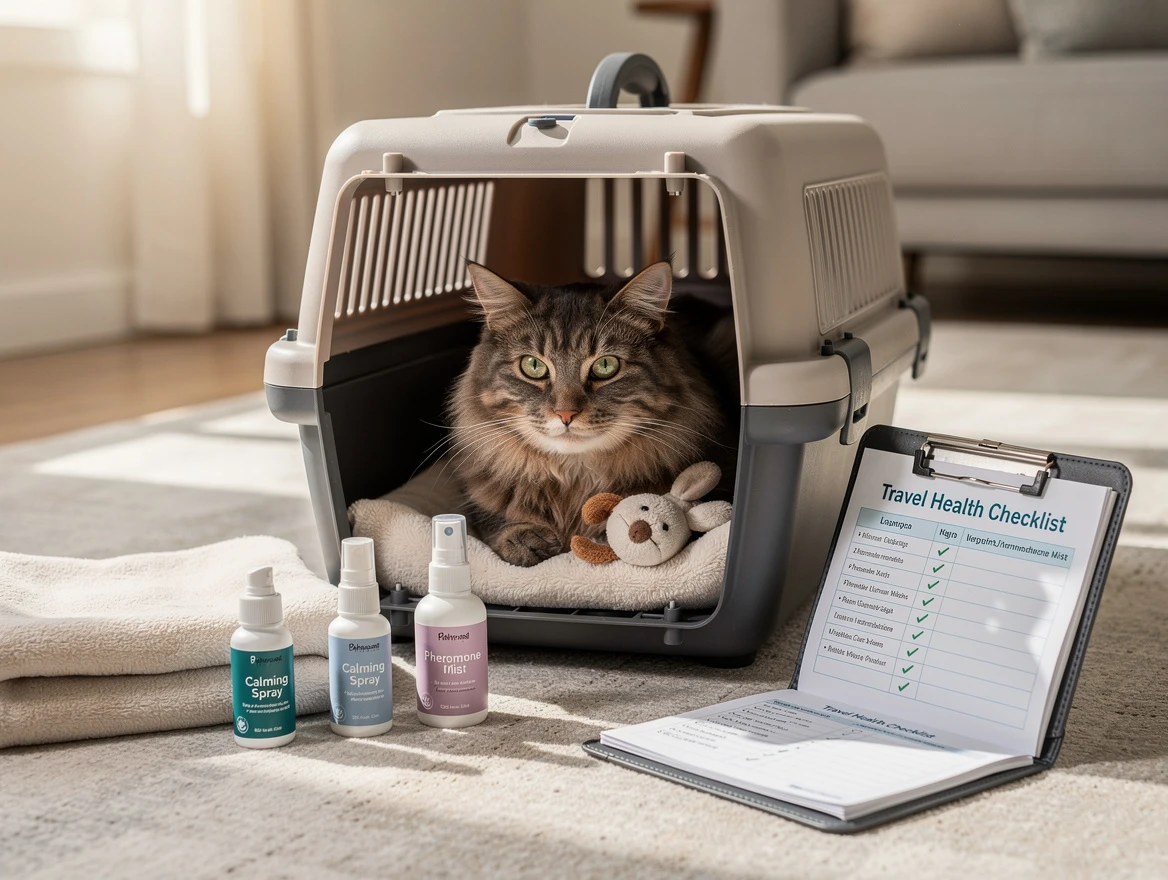
Your cat doesn’t need training to be an ESA, but preparation helps both of you:
- Full veterinary check-up — up to date vaccinations, dental health, general wellness check
- Calming aids for travel — pheromone spray or diffuser reduces travel anxiety significantly
- Carrier training — gradually acclimatize your cat to their carrier before any travel
- Socialization — a well-adjusted cat is more effective as an ESA and less likely to cause issues in housing situations
⚖️ Your Legal Rights With a Cat ESA
- Fair Housing Act — landlords must allow ESAs as reasonable accommodations, including in no-pet buildings. They cannot charge a pet deposit for an ESA.
- Air travel — since January 2021, airlines are no longer required to allow ESAs in the cabin. Most treat ESAs as regular pets with standard in-cabin fees.
- Workplaces — no federal law requires employers to allow ESAs at work, but some may accommodate as part of a disability request.
- Public places — ESAs do not have public access rights. Only trained service animals have access rights under the ADA.
ESA Cat Housing Rights

The Fair Housing Act is the most important legal protection for ESA cat owners. Housing providers, landlords, HOAs, and property managers, must allow emotional support animals even in no-pet buildings.
What landlords can ask:
- Verification you have a disability (your ESA letter covers this)
- Verification the animal provides emotional support related to your disability
What landlords cannot ask:
- Details about your specific diagnosis
- Proof of training or certification
- Pet deposit (though they can charge for actual damage caused)
What Is the 3-3-3 Rule for Cats
The 3-3-3 rule describes the typical adjustment period for a newly adopted cat, 3 days to decompress, 3 weeks to learn the household routine, and 3 months to fully feel at home. If you’re getting a new cat specifically as an ESA, allow this adjustment period before expecting the full benefit. Related: My Cat Won’t Eat — new cats often stop eating during the first few days of adjustment.
Frequently Asked Questions
See a licensed mental health professional, discuss your need for an ESA, and receive an official ESA letter. No training, registration, or certification is required.
Most providers and housing authorities recommend renewing annually. Some landlords may request a letter dated within the past year, so check with your specific housing provider for their exact requirements before you need it.
You can’t, cats aren’t eligible under the ADA, which recognizes only dogs and miniature horses as service animals. A cat can be an ESA with housing protections, but not a service animal with full public access rights, regardless of training.
Present your ESA letter and cite the Fair Housing Act. If the landlord continues to refuse, you can file a complaint with HUD at hud.gov or seek local legal assistance. Landlords who deny valid ESA accommodation requests can face federal penalties.
These are three different things. An ESA provides comfort to its own owner and has housing rights but no public access rights. A service animal (dogs and miniature horses only, under the ADA) is trained to perform specific tasks and has full public access rights. A therapy cat is a third category entirely, it’s trained and temperament-certified, usually through an organization like Pet Partners, to visit hospitals, nursing homes, or schools and comfort other people, not just its owner. Therapy animals don’t carry personal legal rights the way ESAs and service animals do, since the certification is about the visiting program, not about accommodations for the handler.
The Bottom Line
How to make my cat an emotional support animal comes down to three steps: see a licensed mental health professional, discuss your need, receive your ESA letter. No registry, no vest, no certification.
Your ESA letter gives you real legal protection in housing. Know your rights under the Fair Housing Act, keep your letter current, and ignore any website trying to charge you for a registration that doesn’t exist.
Related Articles
A vet check is step one of ESA prep, as this article covers.