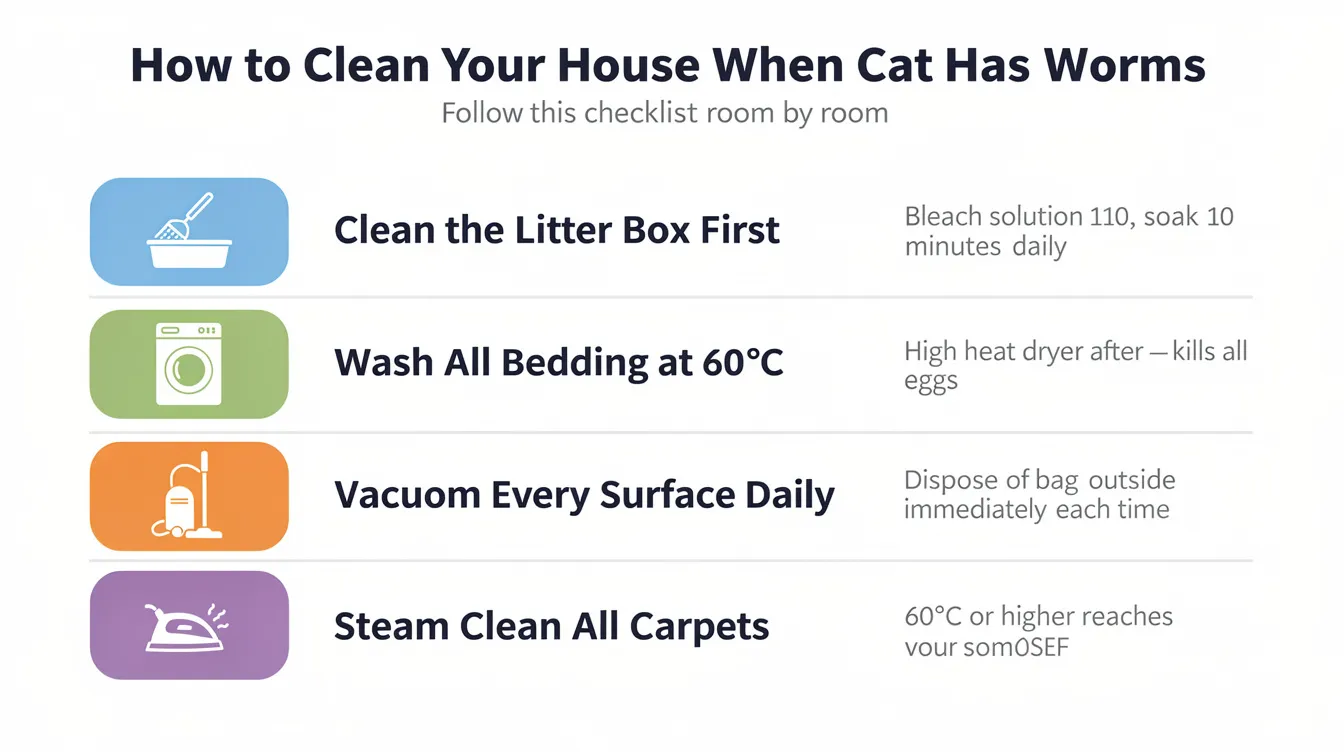
“My cat has worms, how do I clean my house?” If you’re asking that today, the answer matters fast. Worm eggs and larvae survive on surfaces, in bedding, and in carpet for weeks to months. Simply deworming your cat is not enough, the environment needs to be cleaned at the same time or reinfection happens almost immediately.
Here is the complete room-by-room cleaning guide, what products actually kill worm eggs, and how to protect yourself and your family.
Deworm all pets first, then wash all bedding at 60°C or higher and steam clean carpets, heat is what actually kills worm eggs. Bleach the litter box and hard surfaces to sanitize and help strip eggs loose, but don’t rely on it to kill them outright. Vacuum every surface daily and dispose of the bag each time, and keep the cat confined to one area during treatment. Cleaning and treatment must happen at the same time.
What to Do First
Before cleaning anything, deworm your cat. Cleaning the house while the cat is still shedding eggs is a losing battle. Get a vet-prescribed dewormer and treat every cat and dog in the household at the same time, even if the others show no symptoms. Most worm infestations spread between pets silently.
At a Glance: 7 Step Cleaning Checklist
| Step | What to Do | Why It Matters |
|---|---|---|
| 1. Protect yourself | Wear gloves, wash hands after every contact | Prevents human transmission |
| 2. Clean litter box | Bleach and boiling water daily | Highest concentration of eggs |
| 3. Wash all fabric | 60°C minimum wash and high heat dry | Kills eggs embedded in fibers |
| 4. Vacuum everything | Daily, dispose of bag outside immediately | Removes eggs from carpet and furniture |
| 5. Disinfect surfaces | Bleach solution on hard floors and surfaces | Sanitizes and strips egg coating for easier removal |
| 6. Steam clean carpets | 60°C or higher throughout | Heat is what actually kills the eggs |
| 7. Confine cat | One easy-to-clean room during treatment | Limits spread to rest of house |
Step 1 — Clean the Litter Box: The Most Critical Step
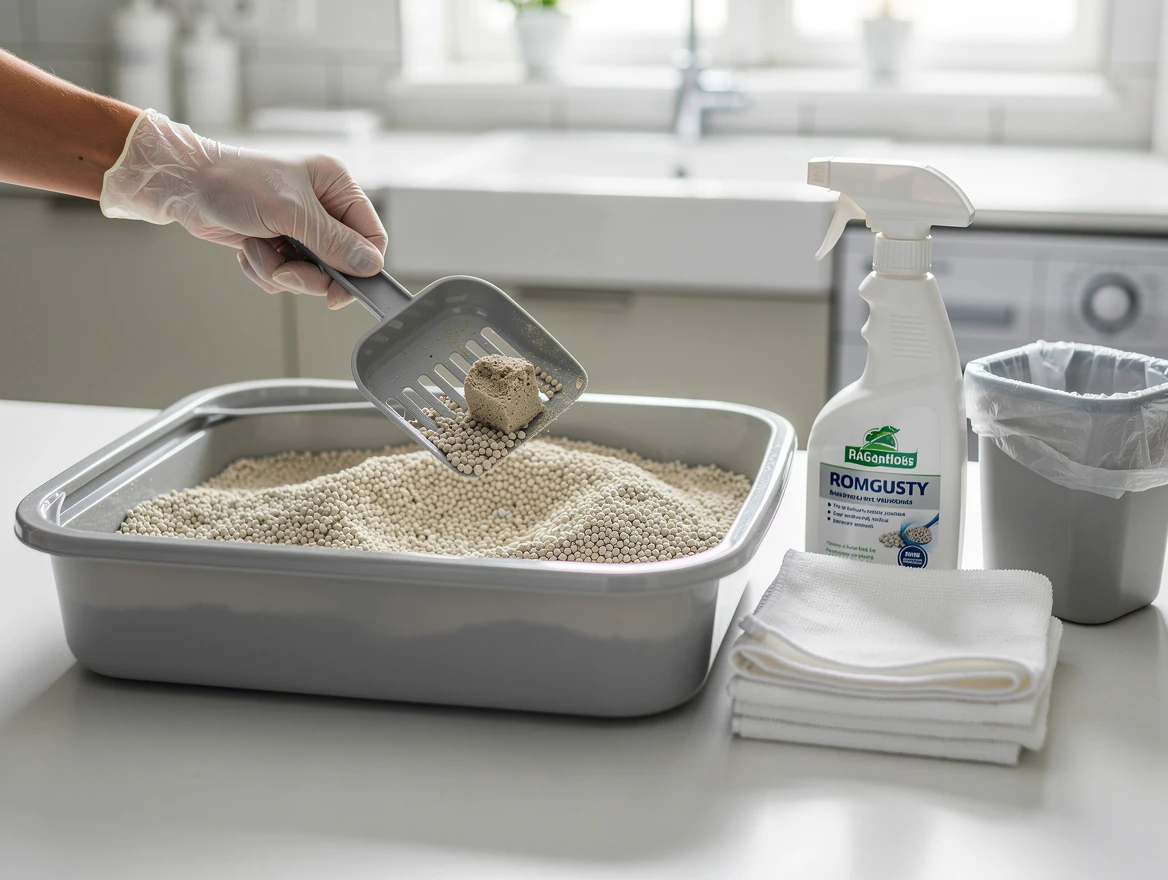
This is where the process always starts. The litter box is where worm eggs concentrate the most and where reinfection risk is highest. Bleach here disinfects and helps strip eggs loose from surfaces, but boiling water is doing the real work of destroying them.
- ✅ Empty completely and seal all litter in a bag, dispose of it outside immediately
- ✅ Scrub with boiling water and a 1:10 bleach solution, let it soak for 10 minutes
- ✅ Rinse thoroughly and dry completely before adding fresh litter
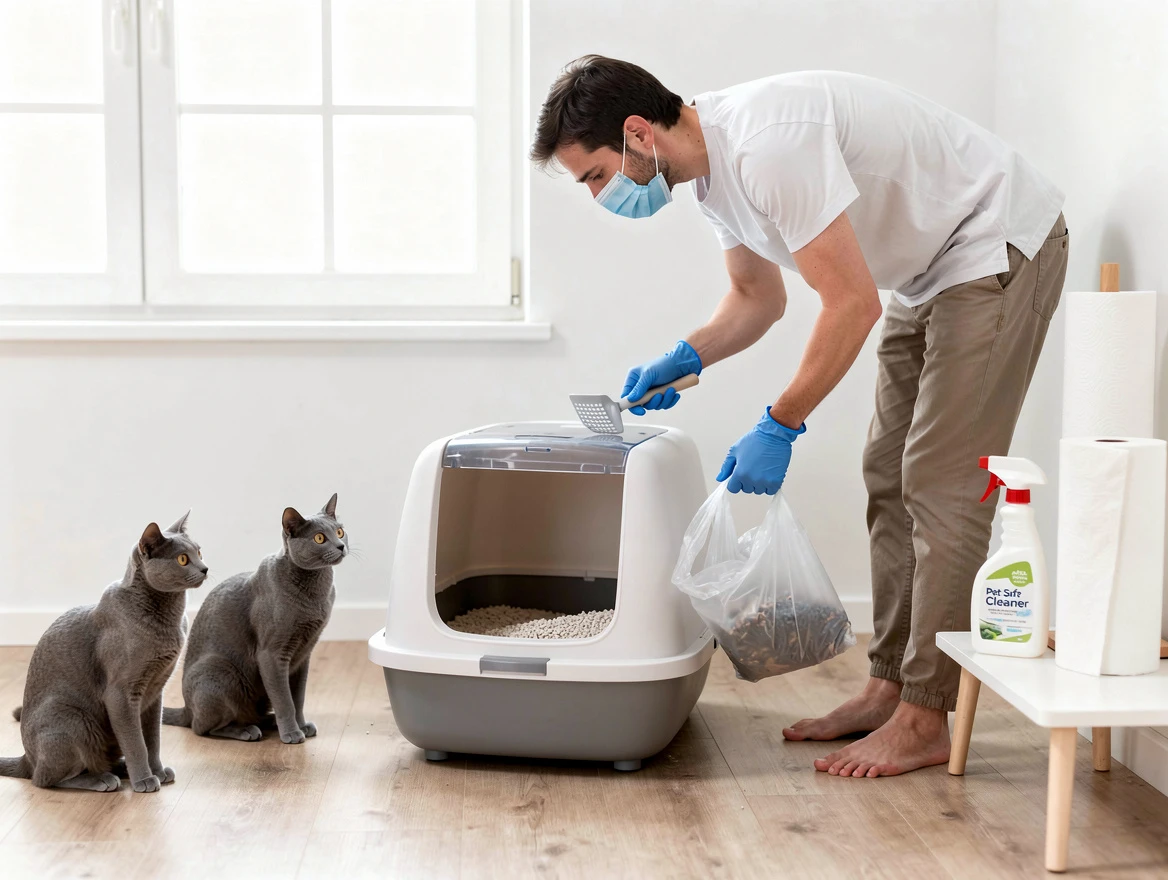
- ✅ Scoop daily during and after treatment, remove fresh eggs before they develop
- ✅ Wear disposable gloves every single time during the treatment period
Step 2 — Wash All Bedding and Fabric at the Right Temperature
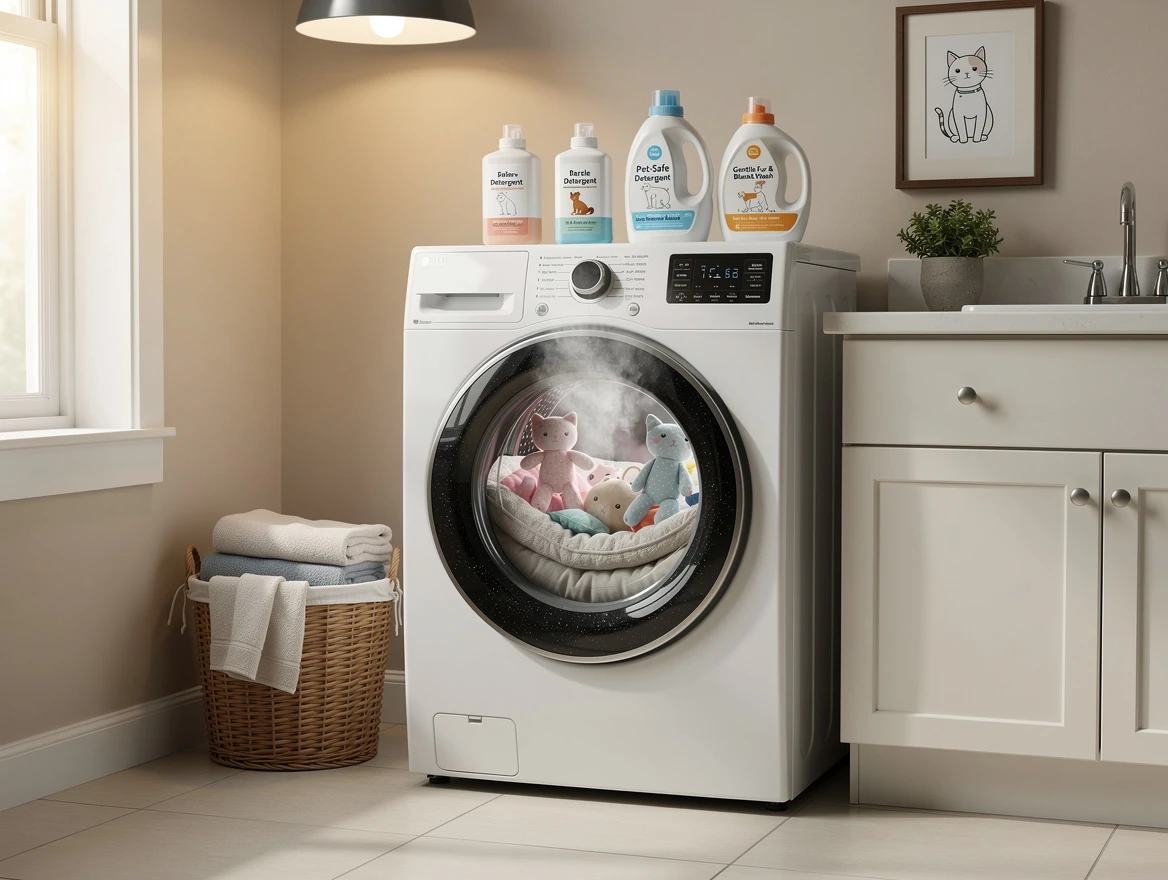
Temperature is everything. Most worm eggs survive cold and warm washes but are killed at 60°C (140°F) or higher.
- ✅ Wash all cat bedding, blankets, and cushion covers at 60°C minimum
- ✅ Wash your own bedding at 60°C if the cat sleeps on your bed
- ✅ Wash any soft toys the cat uses regularly
- ✅ Dry on the highest heat setting the fabric allows, dryer heat also kills eggs
- ✅ Freezing helps against flea life stages (the tapeworm transmission route), but roundworm eggs resist ordinary household freezer temperatures. For items that can’t be washed at 60°C, a hot dryer cycle is more reliable than the freezer.
Step 3 — Floors, Carpets and Hard Surfaces
Worm eggs fall from the cat’s fur and feces onto every surface they walk across. Carpets are the hardest to clean because eggs embed deep in the fibers.
- ✅ Vacuum all carpets, rugs, and upholstered furniture, do this every day for one week
- ✅ Immediately seal and dispose of the vacuum bag outside after each session, eggs survive inside the bag
- ✅ Steam clean all carpets at 60°C or higher, this is the most effective non-chemical method
- ✅ Mop all hard floors with a hot water and bleach solution (1:10 ratio), the hot water does the real work, bleach helps sanitize and lift eggs from the surface
- ✅ Pay extra attention to corners, under furniture, and the area around the litter box
Step 4 — Clean the Living Room and Common Areas
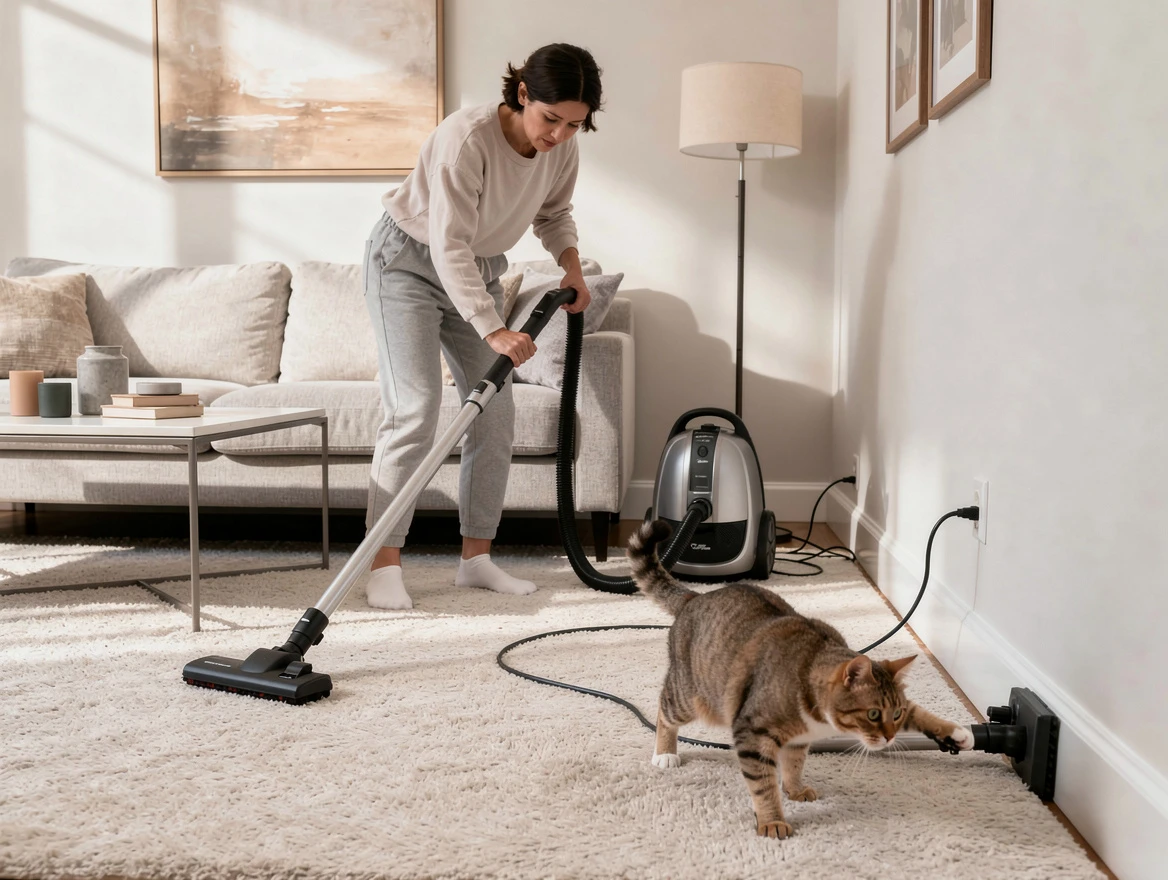
Anywhere the cat rests is a contamination zone, even if there’s no visible mess. Cats shed microscopic eggs onto every surface they sit on.
- ✅ Wipe down all hard surfaces the cat uses with a pet-safe disinfectant spray
- ✅ Steam clean sofa cushions and fabric furniture
- ✅ Wash all throws and blankets the cat uses on the sofa
- ✅ Clean cat trees and scratching posts with hot soapy water and pet-safe disinfectant
- ✅ Wash food and water bowls with hot water and dish soap daily during treatment
Step 5 — Confine Your Cat During Treatment
This step is consistently overlooked and consistently makes the difference between one cleaning round and three. Keep your cat in one easy-to-clean room during treatment, hard floors only, no carpet. This limits egg spread to one area rather than letting it reach every room in the house.
Once treatment is complete and the vet confirms the all-clear, gradually allow access to the rest of the cleaned home. This also makes it easier to monitor your cat’s condition closely during treatment.
Cleaning Solutions — What Actually Kills Worm Eggs
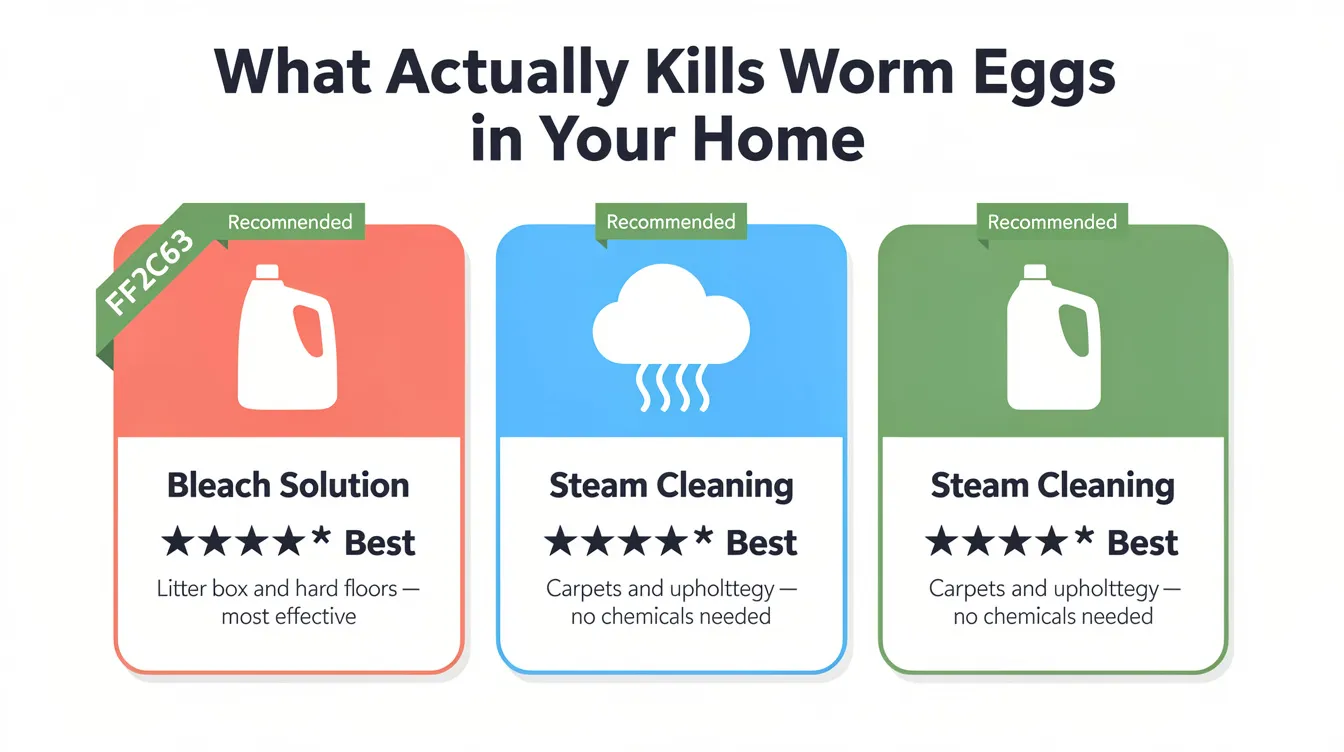
| Solution | Effectiveness | Safe for Cats | Best Used For |
|---|---|---|---|
| Bleach solution (1:10) | Disinfects and strips egg coating — does not kill roundworm eggs outright | Rinse thoroughly after | Litter box, hard floors, surfaces |
| Steam cleaning (60°C+) | Highly effective — actually kills eggs | Completely safe | Carpets, rugs, upholstery |
| Pet-safe disinfectant spray | Effective | Designed for pets | Furniture, toys, soft surfaces |
| White vinegar solution | Mildly effective | Safe | Everyday maintenance cleaning |
| Hot wash + high heat dry | Very effective | Safe | All fabric and bedding |
Cleaning Naturally
For those who prefer to avoid bleach, steam cleaning at 60°C or higher is the most effective natural option, no chemicals, kills eggs on any surface. White vinegar diluted 1:1 with water works on hard surfaces for everyday maintenance cleaning. Food-grade diatomaceous earth sprinkled on carpets, left for a few hours, then vacuumed, is sometimes used against eggs and larvae, though its effectiveness against worm eggs specifically is less well-established than its proven use against fleas. For fabric, a hot wash and high-heat dry cycle remains the safest and most effective natural method.
Do I Need to Treat Myself?
It depends on the worm type. Roundworms and hookworms are zoonotic, they can transfer from cats to humans, especially children. Tapeworms rarely transfer to humans and only through accidental ingestion of an infected flea. If you or anyone in the household has been in close contact with an infected cat, speak to your doctor about whether precautionary treatment is recommended. Always wash hands after handling the cat, cleaning the litter box, or touching surfaces the cat uses.
Can I Get Worms From My Cat Sleeping in My Bed?
Yes, there is a risk, particularly with roundworms and hookworms. If your cat sleeps in your bed and has worms, eggs can transfer to your bedding and skin. Keep the cat out of the bedroom during the treatment period and for at least two weeks after. Wash your bedding at 60°C immediately and again at the two-week mark.
Natural Support Options for Worms
Natural options work best as prevention and support alongside vet treatment, not as the sole treatment for an active infestation. Ground raw pumpkin seeds (¼ tsp in food daily) contain cucurbitacin, an compound with some traditional use against certain worm types, though the evidence for reliably treating an active infestation is limited and anecdotal. Food-grade diatomaceous earth at ⅛ tsp in wet food daily is sometimes used similarly, again with limited rigorous evidence. Rigorous flea control eliminates the primary tapeworm transmission route, this one is well-supported. Always use a vet-prescribed dewormer as your first line of treatment, these supportive measures are not a substitute.
- Severe vomiting or diarrhea alongside worm symptoms
- Significant weight loss in a short period
- Extreme lethargy or collapse
- Visible worms in vomit or around the anus
- Pot-bellied appearance in a kitten, this indicates heavy infestation
Frequently Asked Questions
Start with the litter box on day one, empty it, bleach it, replace all litter. Then wash all bedding at 60°C and vacuum every carpeted surface, disposing of the bag outside. These three actions on day one make the biggest difference.
Yes, every area the cat accesses needs cleaning. Focus most effort on the litter box area, sleeping spots, and all carpeted surfaces. Worm eggs are microscopic and spread further than you expect.
You can, but wash your hands immediately after and avoid letting the cat lick your face or hands. The main risk is touching contaminated fur and then touching your mouth. With basic hand hygiene the risk is low for healthy adults.
The Bottom Line
“My cat has worms, how do I clean my house?” It comes down to three things: heat, sanitizing, and consistency. Treat all pets first, then clean every surface, heat (hot water, steam, high dryer heat) is what actually destroys the eggs, while bleach sanitizes and helps strip them loose so they rinse away. Wash all fabric at 60°C. Vacuum daily for a week and throw away the bag every time. Keep cleaning for at least two weeks after treatment ends.
Done properly alongside vet-prescribed treatment, one thorough cleaning round resolves most infestations completely. The cats that get reinfected are almost always in homes where cleaning stopped too soon. Stay consistent and the cycle breaks.