Signs and Symptoms of Kidney Failure in Cats — Even When Acting Normal
The signs and symptoms of kidney failure in cats are most dangerous when they are invisible. Your cat eats every meal, drinks from the water bowl, plays, and appears completely normal — while inside, kidney function is quietly declining. Understanding the signs and symptoms of kidney failure in cats before they become obvious is the single most important thing you can do to protect a senior cat’s long-term health.
I caught early-stage kidney disease in my 9-year-old tabby Toby through a routine blood panel — before a single visible symptom appeared. Two years later with dietary management he is still doing well. This guide covers all 12 signs and symptoms of kidney failure in cats from the earliest subtle signals to obvious late-stage markers, the 4 IRIS stages explained in plain language, and exactly when to call your vet.
Signs and symptoms of kidney failure in cats include increased thirst, frequent urination, gradual weight loss, and mild lethargy — often appearing while the cat is still eating and acting completely normal. Cat kidney failure symptoms but acting normal is the most dangerous pattern because up to 70% of kidney function may already be lost before any visible sign appears. Catching signs and symptoms of kidney failure in cats at Stage 1 or 2 gives your cat the best chance at long-term comfortable management.
⚠️ Emergency Warning Signs — Go to the Vet Right Now
The signs and symptoms of kidney failure in cats can escalate without warning. If your cat shows any of these, do not wait:
- Vomiting or diarrhea lasting more than 24 hours
- Difficulty breathing or open-mouth breathing
- Pale, white, or yellowish gums
- Seizures or sudden loss of coordination
- Complete collapse or inability to stand
- No urination for more than 24 hours — especially in male cats, life-threatening
- Sudden complete refusal to eat or drink alongside extreme weakness
- Hind leg weakness or dragging — see the back legs section below
- Recent access to lilies or toxins — see our guide on what to do if your cat ate a lily
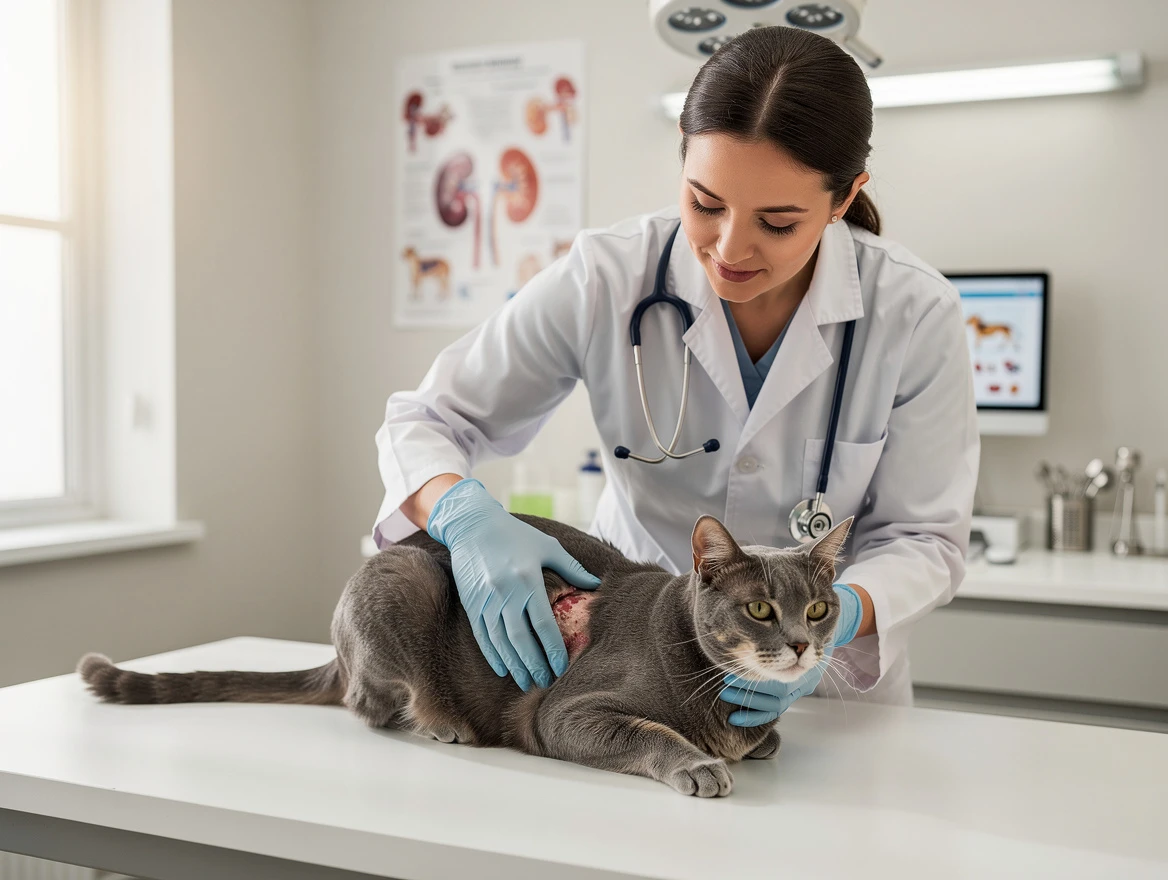
At a Glance: Signs and Symptoms of Kidney Failure in Cats — Early vs Advanced
| Sign | Early Stage (1–2) — Often Acting Normal | Advanced Stage (3–4) | Action |
|---|---|---|---|
| Thirst | Marginally more water — easy to miss | Excessive, constant drinking | Track daily water intake |
| Urination | Slightly larger litter clumps | Frequent trips, accidents outside box | Monitor litter box daily |
| Appetite | Normal or very slight decrease | Significant loss, refusal to eat | Weigh food portions |
| Weight | 200–300g loss over months — barely visible | Visible significant weight loss | Weigh cat monthly |
| Energy | Slightly less playful than baseline | Severe lethargy, hiding, weakness | Note daily activity changes |
| Vomiting | Rare or occasional | Frequent, sometimes with blood | Vet contact same day |
| Breath | Normal | Ammonia-like uremic odor | Emergency vet |
| Back legs | Normal | Weakness, instability, collapse | Emergency vet immediately |
| Gums | Pink and moist | Pale, white, or yellowish | Emergency vet immediately |

What Do the Signs and Symptoms of Kidney Failure in Cats Actually Mean?
Before understanding the signs and symptoms of kidney failure in cats, it helps to know what the kidneys do. Your cat’s kidneys filter waste products from the blood, regulate fluid and electrolyte balance, and produce hormones controlling blood pressure and red blood cell production. When they fail, waste builds up in the blood — and the signs and symptoms of kidney failure in cats emerge from this accumulation.
According to the Cornell Feline Health Center, clinical signs typically do not appear until roughly 70% of kidney function has been lost. This is why early detection of signs and symptoms of kidney failure in cats matters so much more than recognizing the obvious late-stage ones.
Signs of Kidney Failure in Cats But Acting Normal
Signs of kidney failure in cats but acting normal is the most dangerous phase — and the one most other guides skip entirely. This is Stage 1 and early Stage 2, when the cat is eating normally, drinking normally, and appearing completely healthy while kidney function is already declining. Cat kidney failure symptoms but acting normal are almost impossible to spot without specific knowledge of what to look for. The only visible signs and symptoms of kidney failure in cats during this invisible stage are subtle deviations from your cat’s personal baseline:
- Slightly larger litter clumps than usual — the kidneys produce more dilute urine; most owners do not notice without paying close attention
- Marginally more water consumption — not dramatic gulping, just the bowl emptying slightly faster
- Gradual weight loss over months — 200 to 300 grams over three to four months; nearly invisible without a scale
- Slightly less playful than their personal baseline — not obviously lethargic, just mildly less engaged
If your cat is lethargic but still eating and drinking — even mildly — kidney disease belongs on the list of possible causes, especially in cats over 7 years old.

Early Signs and Symptoms of Kidney Failure in Cats (Stage 1 and 2)
Early signs and symptoms of kidney failure in cats require knowing your individual cat’s normal baseline because the deviations are not dramatic — they are small shifts. These are the early signs of kidney failure in cats that every owner of a senior cat should monitor actively:
Increased Thirst and Urination
The earliest and most consistent among the early signs and symptoms of kidney failure in cats is increased water consumption combined with more frequent urination. The kidneys lose their ability to concentrate urine efficiently, so the body compensates by increasing fluid intake. Watch for the water bowl emptying faster and larger, more frequent litter clumps.
Subtle Gradual Weight Loss
Among the early signs of kidney failure in cats, gradual weight loss is the one most consistently missed because it happens so slowly. Kidney dysfunction affects protein and nutrient processing, leading to slow muscle loss over weeks. Weigh your cat monthly — a consistent downward trend of 100 to 200 grams per month over several months is worth mentioning to your vet even if nothing else looks wrong.
Mild Appetite Changes
Early signs and symptoms of kidney failure in cats sometimes include a slight reduction in food enthusiasm — not refusing meals, but showing less urgency or leaving a small amount behind. A persistent pattern of mild appetite reduction over two to three weeks without another obvious cause warrants a vet call.

All 12 Signs and Symptoms of Kidney Failure in Cats
As the signs and symptoms of kidney failure in cats progress from Stage 2 into Stages 3 and 4, they become more visible and varied. Here are all 12 explained in order of typical appearance:
4. Lethargy and Reduced Activity
Toxin buildup in the blood causes genuine fatigue as the signs and symptoms of kidney failure in cats advance. If your cat is lethargic alongside still eating and drinking, kidney disease is one of the most common causes in cats over 7.
5. Vomiting and Nausea
Uremia irritates the stomach lining. Among the signs and symptoms of kidney failure in cats, vomiting often presents as once or twice per week initially. See our guide on why your cat is throwing up to distinguish kidney-related vomiting from other causes.
6. Ammonia-Like Bad Breath
Uremic breath signals advanced progression among the signs and symptoms of kidney failure in cats. The kidneys can no longer filter urea from the blood. If your cat’s breath smells of ammonia, contact your vet the same day.
7. Mouth Ulcers
High toxin levels cause painful ulcers on the gums, tongue, and inner lips. A cat with mouth ulcers drops food while eating, eats more slowly, or paws at their mouth. This is a late-stage sign requiring veterinary management.
8. Poor Coat Condition
A previously glossy coat becoming dull, rough, or greasy is a visible sign among the signs and symptoms of kidney failure in cats in moderate to advanced stages. Malnutrition and dehydration divert resources away from coat maintenance.
9. Dehydration
Despite drinking more water, cats with kidney failure often become chronically dehydrated because they lose fluid faster than they replace it. Dry or tacky gums, skin that tents when pinched, and sunken eyes require IV or subcutaneous fluid therapy.
10. High Blood Pressure
Sudden blindness from retinal detachment is sometimes the first visible sign that hypertension has been present silently for months — one of the more alarming signs and symptoms of kidney failure in cats that owners do not expect. Blood pressure screening at every senior vet visit is the only early detection method.
11. Anemia
As kidney function declines, anemia develops — showing as pale or white gums, extreme fatigue, and rapid breathing. White or very pale gums are always an emergency regardless of whether the cat is eating.
12. Behavioral Changes
Among the signs and symptoms of kidney failure in cats, personality shifts are often the most distressing — increased hiding, unexplained nighttime vocalization, or sudden clinginess in a cat over 7 years old all warrant a blood panel to check kidney and thyroid function.
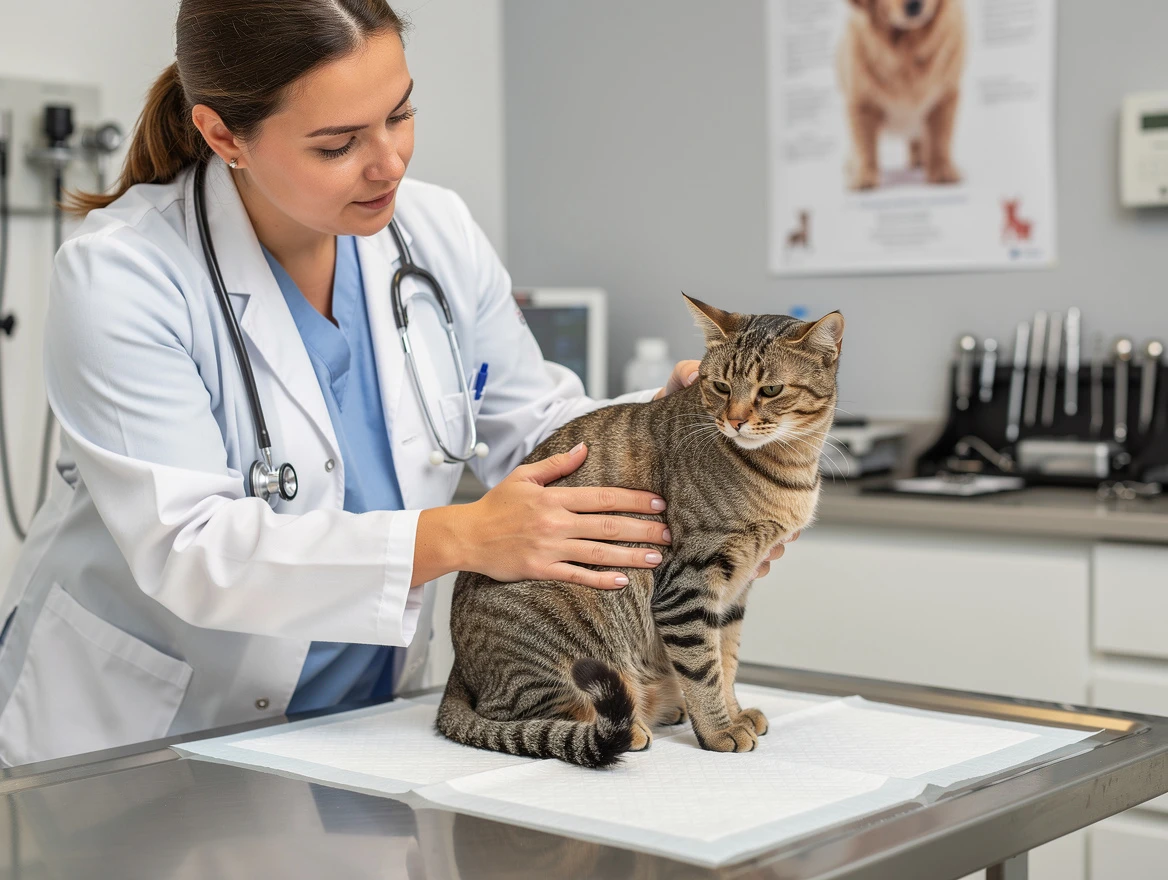
Signs and Symptoms of Kidney Failure in Cats Back Legs
Signs and symptoms of kidney failure in cats back legs are among the least-known but most serious markers of advanced disease. Cat kidney failure back legs weakness is caused by several distinct mechanisms:
Hypokalemia (Low Potassium)
The kidneys lose their ability to retain potassium as kidney failure advances. Severe potassium deficiency causes muscle weakness starting in the hind legs — the classic presentation among the signs and symptoms of kidney failure in cats back legs is a cat walking with their head hanging down and hind legs visibly unstable. This responds well to potassium supplementation when caught early.
Aortic Thromboembolism
Cats with chronic kidney disease have elevated blood clot risk. A saddle thrombus at the aorta causes sudden complete paralysis of both hind legs, cold back paws, and extreme pain. This is an emergency.
Severe Muscle Wasting
Late-stage signs and symptoms of kidney failure in cats include significant muscle loss from malnutrition and chronic illness — making the hind legs visibly thinner and progressively weaker over weeks. Cat kidney failure back legs muscle wasting happens gradually and is distinct from the sudden paralysis of thromboembolism.
- If your cat suddenly cannot use their back legs, is crying in pain, has cold back paws, or is dragging their hind end — go to the emergency vet immediately without waiting.
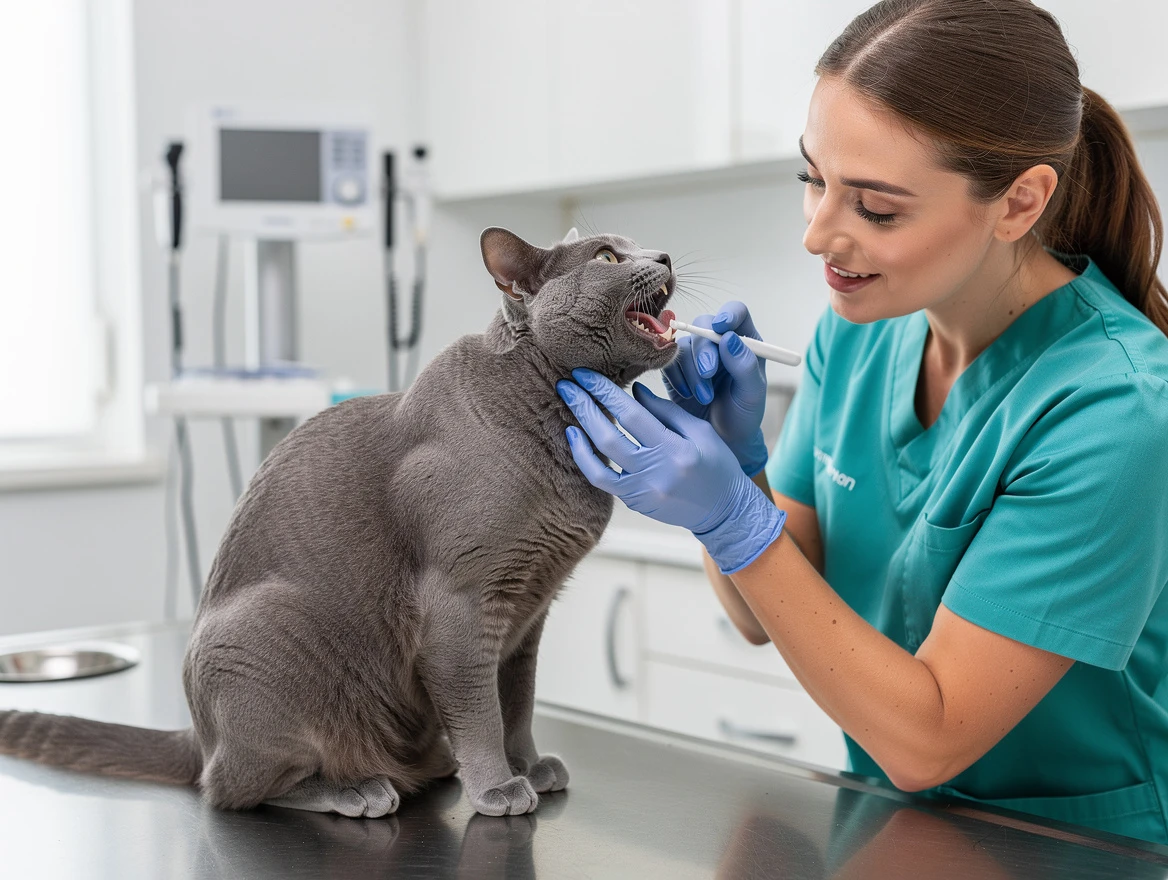
The 4 Stages of Signs and Symptoms of Kidney Failure in Cats — Plain English
The signs and symptoms of kidney failure in cats follow a predictable progression through four IRIS-classified stages based on blood creatinine levels:
Stage 1 — Your Cat Looks Completely Normal
There are no clinical signs and symptoms of kidney failure in cats visible at this stage. The only way to detect it is through bloodwork. Most cats are never diagnosed here — it is caught only in cats that receive regular senior bloodwork. Catching the signs and symptoms of kidney failure in cats at Stage 1 gives the greatest chance of successful long-term management.
What you can do: Annual bloodwork for cats over 7. Dietary changes and increased hydration can slow progression significantly at this stage.
Stage 2 — Subtle Signs, Often Still Acting Normal
Creatinine is mildly elevated. The early signs and symptoms of kidney failure in cats described above may begin to appear — slightly more water consumption, larger litter clumps, very gradual weight loss. Some cats show nothing visible at all. This is where catching the signs and symptoms of kidney failure in cats makes the biggest difference to long-term outcome.
What you can do: Vet-prescribed renal diet, increased wet food for hydration, monitoring every 3 to 6 months. Many cats live comfortably for years at this stage.
Stage 3 — Symptoms Become Clearly Visible
The signs and symptoms of kidney failure in cats now become noticeable — obvious lethargy, weight loss you can feel and see, reduced appetite, occasional vomiting, and clearly increased thirst and urination. This is the stage most owners first bring their cat to the vet. Treatment is still highly effective at managing symptoms and slowing progression.
What you can do: Renal diet, subcutaneous fluids, anti-nausea medication, blood pressure management. Vet visits every 3 months.
Stage 4 — Advanced Failure, Quality of Life Focus
The signs and symptoms of kidney failure in cats at this stage include severe lethargy, refusal to eat, frequent vomiting, ammonia breath, mouth ulcers, and hind leg weakness. The focus shifts from slowing the disease to maintaining comfort. Kidney failure in cats when to euthanize becomes a compassionate and important question to discuss with your vet at this stage based on quality-of-life assessment.
What you can do: Palliative care — pain management, anti-nausea medication, appetite stimulants, subcutaneous fluids for comfort.

Acute vs Chronic — Different Signs and Symptoms of Kidney Failure in Cats
The signs and symptoms of kidney failure in cats differ significantly depending on whether the disease developed suddenly or gradually. Acute kidney failure in cats symptoms include sudden vomiting, collapse, and no urination appearing over hours — a completely different presentation from the slow-developing signs and symptoms of kidney failure in cats in chronic disease that build over months.
| Factor | Acute Kidney Failure | Chronic Kidney Disease |
|---|---|---|
| Onset | Sudden — hours to days | Gradual — months to years |
| Common causes | Toxins (lilies, antifreeze), infection, blockage | Age, genetics, long-term damage |
| Reversibility | Potentially reversible if caught immediately | Irreversible but manageable |
| First signs | Sudden vomiting, collapse, no urination | Subtle changes over months |
| Urgency | Emergency — hours matter | Important — days to weeks to diagnose |
Acute kidney failure in cats symptoms always require emergency treatment. Our guide on my cat ate a lily and nothing happened explains exactly why acting before acute kidney failure in cats symptoms develop is critical for survival.
How to Make a Cat With Kidney Failure Comfortable at Home
Once the signs and symptoms of kidney failure in cats have been confirmed by your vet, here is how to make a cat with kidney failure comfortable between vet visits:
Switch to Wet Food Immediately
Hydration is the single most important factor when learning how to make a cat with kidney failure comfortable at home. Wet food contains 75 to 80% water versus dry food’s 10%. Our guide on how often to feed your cat wet food covers the transition process. Transition gradually over one to two weeks.
Increase Water Access Throughout the Home
Place multiple water bowls in different rooms. Consider a cat water fountain — moving water encourages more drinking. Use wide shallow bowls to reduce whisker discomfort. Change water daily.
Feed a Renal Diet if Prescribed
Veterinary renal diets reduce the kidneys’ workload by limiting phosphorus, sodium, and protein. Do not start a renal diet without vet guidance. Once prescribed, consistency matters — switching back and forth significantly reduces the benefit.
Subcutaneous Fluids at Home
Many cats with Stage 2 or 3 signs and symptoms of kidney failure in cats benefit significantly from regular subcutaneous fluid therapy at home. Your vet will show you the setup. Most cats tolerate it very well — it is one of the highest-impact interventions for improving quality of life.
Monitor and Record Weekly
Keep a weekly log of food eaten, water consumed, litter box output, weight, and energy level. A consistent downward trend warrants a vet call before the next scheduled appointment. This is how you stay ahead of the signs and symptoms of kidney failure in cats progressing rather than reacting to them when it is already too late.
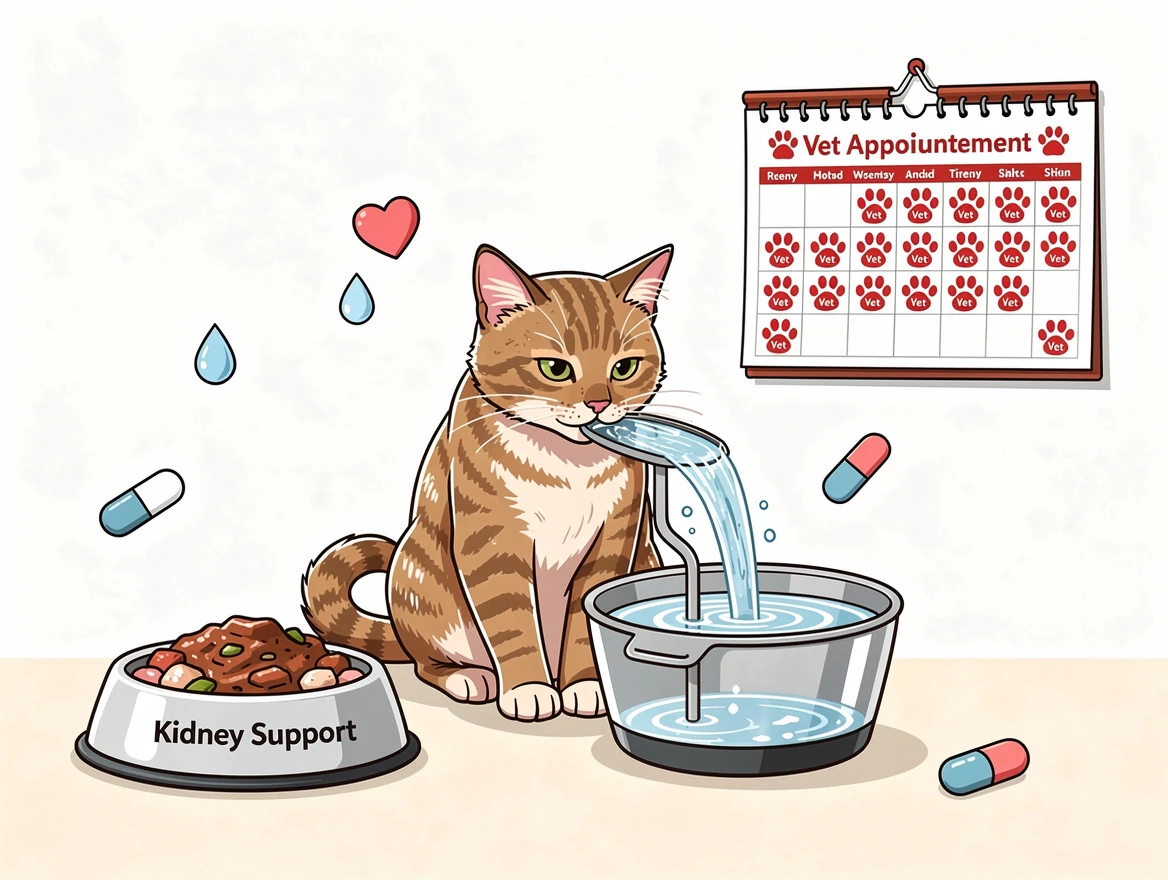
When to Call the Vet — Decision Framework
Use this framework alongside your knowledge of the signs and symptoms of kidney failure in cats to decide how urgently to act:
🩺 Decision Guide
Call your vet today (non-emergency):
- Increased water consumption for more than one week
- Litter clumps consistently larger than usual
- Weight loss over the past month without dietary change
- Mild lethargy persisting more than 48 hours
- Cat over 7 years old with no bloodwork in the past 12 months
- Any two or more early signs appearing together
Call your vet the same day (urgent):
- Vomiting more than once in 24 hours alongside lethargy
- Noticeable appetite reduction lasting more than 24 hours
- Ammonia-like breath odor
- Any sign of mouth pain — dropping food, pawing at mouth, drooling
Go to emergency vet immediately:
- Complete refusal to eat or drink for more than 24 hours
- Sudden hind leg weakness or paralysis
- Pale, white, or yellowish gums
- Seizures or collapse
- No urination in 24 hours
- Toxic ingestion — even if acting normal
Common Mistakes Cat Owners Make With the Signs and Symptoms of Kidney Failure in Cats
- ❌ Attributing early signs to normal aging — gradual weight loss, slightly reduced activity, and drinking more water are signs and symptoms of kidney failure in cats that deserve investigation, not dismissal
- ❌ Waiting for obvious symptoms — by the time vomiting, significant weight loss, and ammonia breath appear, 70% of kidney function is already gone
- ❌ Assuming eating normally means nothing is wrong — cat kidney failure symptoms but acting normal is the most common early presentation; appetite is not a reliable indicator of kidney health
- ❌ Skipping annual senior bloodwork — the only way to detect early signs and symptoms of kidney failure in cats at Stage 1 or 2 is through regular blood panels
- ❌ Stopping the renal diet when the cat seems better — a cat thriving on a renal diet is not cured; the diet is working and stopping it accelerates progression
- ❌ Not mentioning subtle changes to the vet — “she has been drinking a bit more but otherwise fine” is critical information in a senior cat context; the signs and symptoms of kidney failure in cats start exactly like this
Frequently Asked Questions
The very first signs and symptoms of kidney failure in cats are increased water consumption, larger litter clumps from more dilute urine, and very gradual weight loss over months. These appear at Stage 1 and 2 — often while the cat is eating normally and behaving completely normally. Because the signs and symptoms of kidney failure in cats at this stage are so subtle, they are frequently missed without regular monitoring and annual bloodwork in senior cats.
What are the symptoms of a cat dying of kidney failure — the signs and symptoms of kidney failure in cats approaching end of life include complete refusal to eat or drink, profound lethargy with no response to stimulation, ammonia breath, mouth ulcers causing visible pain, severe hind leg weakness, very low body temperature, and loss of bladder and bowel control. If your cat is showing several of these signs together, a compassionate quality-of-life conversation with your vet is the right next step.
Kidney failure in cats when to euthanize is one of the most difficult decisions a cat owner faces. The right time is when your cat has more bad days than good — not eating, unable to be made comfortable despite medication, in visible distress, or unable to perform basic functions with dignity. Your vet can perform a formal quality-of-life assessment to help you make this decision with confidence. Recognizing the end-stage signs and symptoms of kidney failure in cats together with your vet is the most compassionate approach.
How long will a cat live with kidney failure depends heavily on the stage at diagnosis and how well the signs and symptoms of kidney failure in cats are managed. Cats diagnosed at Stage 1 or 2 can live comfortably for several years. Stage 3 cats typically live months to a couple of years with good management. Stage 4 is measured in weeks to months with palliative care. Individual variation is significant across cats.
How to make a cat with kidney failure comfortable centers on hydration — switching to wet food exclusively, providing subcutaneous fluids if prescribed, and ensuring multiple water sources. Anti-nausea medication significantly improves quality of life by managing nausea from toxin buildup. Warm comfortable resting spots, reduced household stress, and routine all contribute to comfort when the signs and symptoms of kidney failure in cats have progressed to visible stages.
Acute kidney failure in cats symptoms appear suddenly over hours to days — sudden vomiting, no urination, extreme weakness, and collapse. These are completely different from the slow-developing signs and symptoms of kidney failure in cats in chronic disease. Acute kidney failure in cats symptoms most commonly result from toxin exposure or urinary obstruction and are always an emergency requiring immediate treatment regardless of how the cat was acting before the episode began.
Yes — this is the central challenge of the signs and symptoms of kidney failure in cats. At Stage 1 and Stage 2, cats almost always act completely normal. By the time a cat stops acting normal, kidney function has typically declined to 30% or less. This is why annual bloodwork is the only reliable early detection tool — the signs and symptoms of kidney failure in cats at the stage where intervention is most effective produce no visible changes without laboratory testing.
Signs of kidney failure in cats and diarrhea can occur together in advanced stages when toxin buildup causes gastrointestinal irritation alongside nausea and vomiting. Diarrhea is not among the primary signs and symptoms of kidney failure in cats, but when it appears alongside other markers — lethargy, reduced appetite, increased thirst — it adds to the clinical picture worth investigating. Diarrhea combined with any other signs and symptoms of kidney failure in cats warrants a same-day vet call.
Annual bloodwork to check for signs and symptoms of kidney failure in cats should begin at age 7 — earlier for breeds with higher genetic risk including Maine Coons, Persians, Ragdolls, Burmese, and Siamese. From age 10 onwards, every 6 months is the recommended interval. Catching signs and symptoms of kidney failure in cats at Stage 1 or 2 — when they are invisible to the naked eye — gives the best long-term outcome available.
The Bottom Line
The signs and symptoms of kidney failure in cats are most often silent in the early stages when treatment is most effective. The subtle changes — slightly more water consumption, slightly larger litter clumps, a few hundred grams of gradual weight loss — are easy to dismiss when your cat is eating normally and acting like themselves. That is exactly what makes the signs and symptoms of kidney failure in cats so challenging to catch early, and why knowing what to look for before it becomes obvious matters so much.
If your cat is over 7 years old and has not had bloodwork in the past year, that appointment is the most valuable thing you can do for their long-term health right now. If your cat is showing even two or three of the early signs and symptoms of kidney failure in cats described here, a vet call this week — not next month — is the right decision. Kidney disease caught early is manageable. The difference between a Stage 1 diagnosis and a Stage 4 emergency almost always comes down to how closely someone was paying attention to the signs and symptoms of kidney failure in cats before they became impossible to ignore.
Related Articles
Lethargy is often the first visible sign of kidney disease.
Lilies cause acute kidney failure even in tiny amounts.
Wet food is essential for kidney disease management.