My Dog Is Limping But Shows No Sign of Pain: What To Do
This guide covers every cause I have found, what our vet recommended, and the exact steps to take at home. I also answer the question every dog owner searches next: why is my dog limping in the first place when they seem completely fine?
My dog is limping but shows no sign of pain most commonly due to mild soft tissue injuries, a foreign object in the paw, early arthritis, or neurological issues that do not yet cause visible discomfort. Monitor the limp for 24 to 48 hours, perform a gentle home check, and contact your vet if it does not improve or worsens.
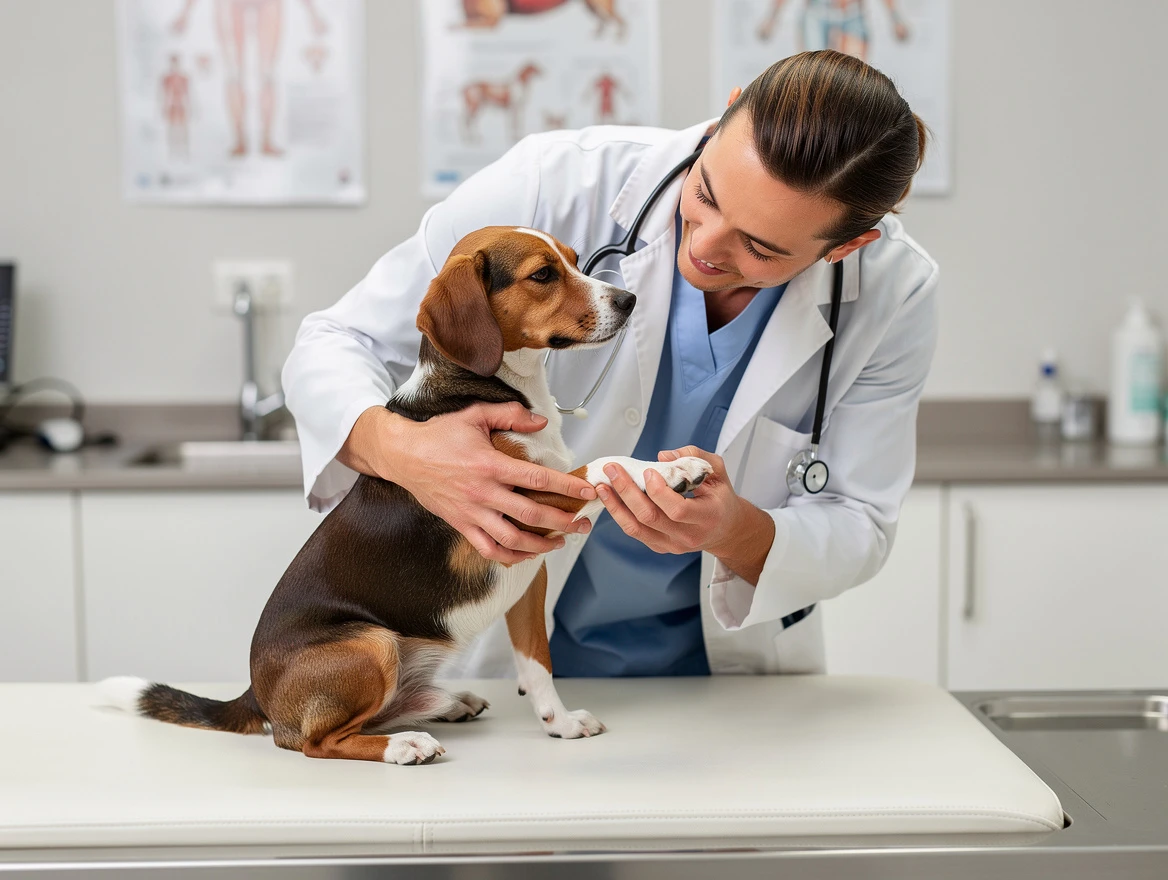
⚠️ When to Seek Immediate Vet Help
My dog is limping but shows no sign of pain most of the time and the situation resolves on its own — but there are specific warning signs that mean you need emergency care right away, not watchful waiting.
- Sudden severe limping with complete refusal to put weight on the leg
- Visible swelling, deformity, or bone showing
- Yelping, whining, or crying when you touch the leg
- Dragging a limb or complete loss of coordination
- Limping alongside vomiting, lethargy, or loss of appetite
- Bleeding that will not stop from the paw or leg
- Puppies limping — growth plate injuries need immediate attention
At a Glance: Common Causes Overview
| Cause | Key Signs | When to See Vet |
|---|---|---|
| Minor Soft Tissue Injury | Mild limp, no yelping, slight swelling | If persists more than 48 hours |
| Foreign Object in Paw | Limping, paw licking, favoring one leg | If object not removable or limp persists |
| Broken or Torn Toenail | Mild limp, paw licking, sometimes bleeding | If bleeding or swelling occurs |
| Early Arthritis or Joint Disease | Morning stiffness, intermittent limping | For diagnosis and treatment plan |
| Neurological Disorders | Uncoordinated gait, weakness | If weakness or balance issues appear |
| Growth Plate Injury | Limp during or after activity in puppies | Immediately if severe or swelling |
| Chronic Conditions like Lyme | Intermittent limping, lethargy | Vet visit for testing |
Why Is My Dog Limping Without Showing Pain?
When my dog is limping but shows no sign of pain, the most confusing part is that they seem completely normal in every other way. Understanding why is my dog limping without visible distress is the first step to treating it correctly rather than either panicking or ignoring something serious.
Dogs are instinctively wired to hide pain — a survival trait from their wild ancestors. A dog that shows weakness in the wild becomes vulnerable, so dogs learn to mask discomfort incredibly well. This means my dog is limping but shows no sign of pain is actually a very common and completely logical situation. The limp is their body compensating for a problem even when the brain is not broadcasting distress signals you can see.
Main Causes of Limping Without Obvious Pain
When my dog is limping but shows no sign of pain, these are the seven most common causes I have encountered personally and through our vet visits:
1. Mild Soft Tissue Injuries
Muscle strains and ligament sprains happen constantly in active dogs without producing loud pain signals. My dog once came back from a hike with a quiet leg favoring — no howling, just subtle limping. These mild injuries cause compensation in gait without triggering obvious distress responses. Rest and cold compresses for 10 to 15 minutes two to three times daily over 48 hours usually resolves mild cases.
2. Foreign Object Stuck in Paw
A thorn, stone, or splinter embedded in a paw pad can cause persistent quiet limping without dramatic pain. My dog once had this exact problem and went into full paw-licking mode without any audible complaint. Check between the toes and on the paw pads carefully. Gently remove any visible debris with tweezers and monitor closely.
3. Broken or Torn Toenail
Cracked or torn nails are one of the sneakiest reasons my dog is limping but shows no sign of pain. The dog licks and favors the paw without vocalizing. Look for bleeding or swelling around the nail. Keep nails trimmed regularly to prevent this and call the vet if swelling develops or bleeding persists.
4. Early Arthritis or Joint Disease
Early stage arthritis and hip dysplasia produce intermittent limping and morning stiffness without the dramatic pain signals owners expect. Older and larger breed dogs are especially prone to this. Our vet recommended gentle daily exercise, joint supplements, and anti-inflammatory support once we identified this in my dog at a routine visit.
5. Neurological Causes
Nerve damage can cause limbs to become weak or uncoordinated in a way that looks like limping but produces no visible pain response. If your dog looks wobbly, uncoordinated, or like their leg is not quite responding correctly, neurological issues may be the cause. This always needs a vet diagnosis rather than home management.
6. Growth Plate Injuries in Puppies
Puppies have vulnerable growth plates in their developing bones. Injuries here can cause quiet limping without the big pain signals you might expect, but ignoring them can create serious long-term problems. Any limping in a puppy warrants prompt vet attention regardless of how fine they seem to be acting.
7. Chronic Conditions Like Lyme Disease
Lyme disease causes joint inflammation that produces intermittent quiet limping in its early stages. A dog can carry Lyme for weeks before showing obvious symptoms. If your dog has had tick exposure and develops unexplained limping, ask your vet to test specifically for tick-borne diseases.
How to Safely Check Your Dog at Home
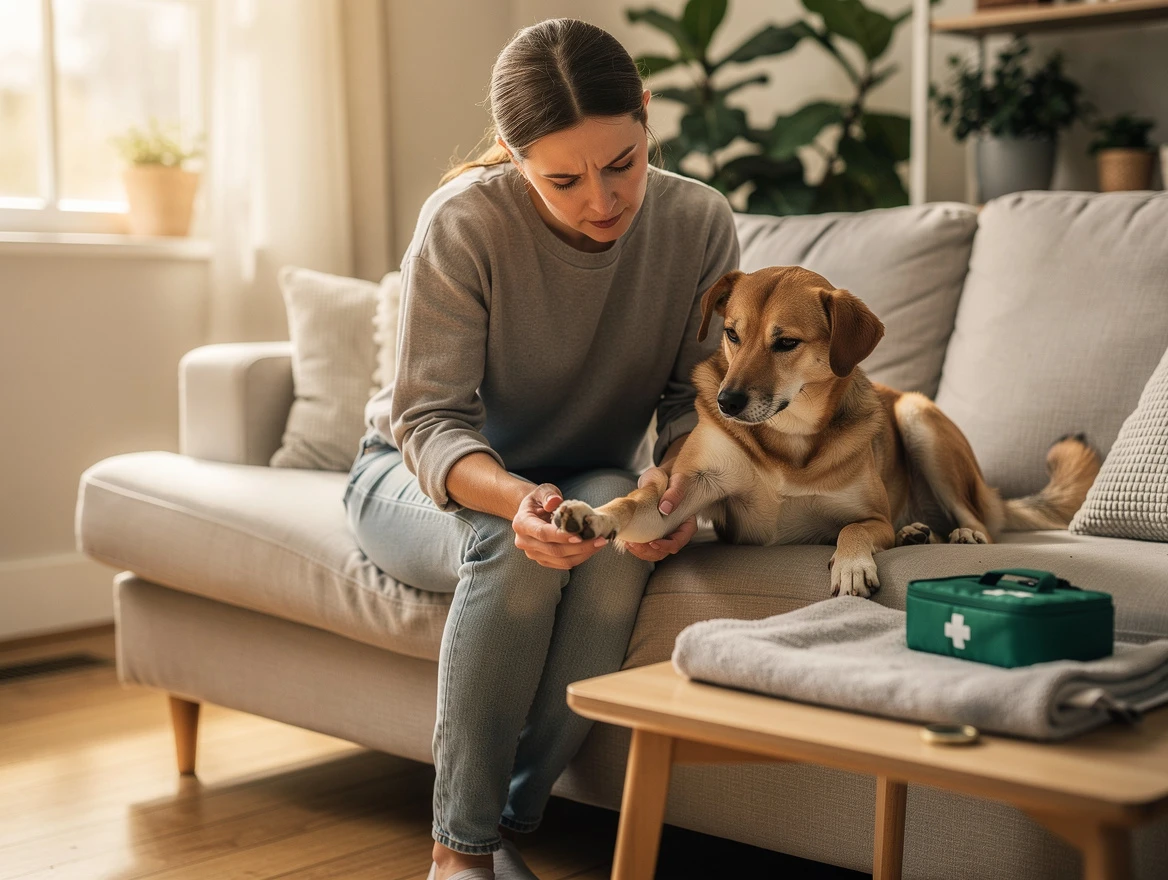
When my dog is limping but shows no sign of pain, this is the exact home inspection process I follow before deciding whether a vet visit is needed:
Inspect Each Paw Thoroughly
Look between every toe and across the entire paw pad for debris, cuts, swelling, or foreign objects. Feel gently for warmth which can indicate inflammation. Check each nail for cracks, tears, or unusual shortness on one nail compared to the others.
Feel Along Each Leg
Run your hands slowly and gently along the entire leg from paw to shoulder or hip. You are feeling for heat, swelling, lumps, or any area where your dog flinches or reacts. Do this calmly and slowly — never force or squeeze.
Watch Your Dog Walk on Different Surfaces
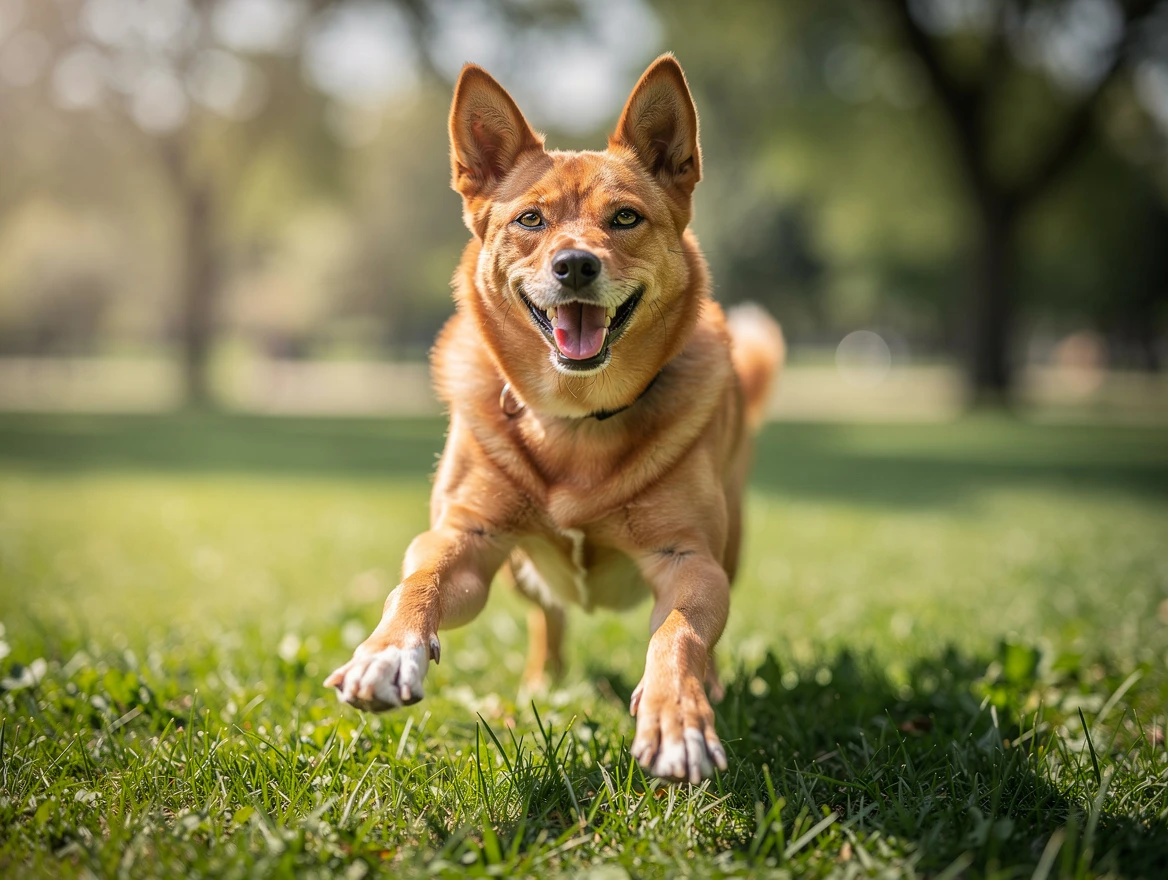
Observe your dog walking on both hard and soft surfaces. Note which leg is favored, whether the limp is consistent or intermittent, and whether it is worse after rest or after exercise. Limping worse after rest suggests arthritis. Limping worse after exercise suggests soft tissue injury.
Monitor for 24 to 48 Hours
Track whether the limp is improving, staying the same, or getting worse. Note any changes in appetite, energy level, or behavior alongside the limp. If no improvement appears after 48 hours of rest and reduced activity, a vet call becomes necessary.
Apply Rest and Cold Compress for Mild Cases
For suspected minor soft tissue injuries, reduce activity completely and apply a cold compress wrapped in a cloth for 10 to 15 minutes two to three times daily. Never apply ice directly to skin. Do not give human pain medications — many are toxic to dogs including ibuprofen and acetaminophen.
When Should You Contact Your Vet?
Even when my dog is limping but shows no sign of pain, there are clear situations that cross from watchful waiting into needing professional help. Here is the decision line I follow based on our vet’s guidance:
- Limp does not improve after 48 hours of rest and home care
- Limp is getting progressively worse rather than better
- Swelling, heat, or odor appears around the affected leg
- Your dog stops eating, becomes lethargic, or develops other symptoms
- The limping is intermittent and keeps returning every few days or weeks
- You cannot identify any obvious cause through home inspection
- Your dog is a puppy — any limping in puppies needs prompt vet attention
Recurring limping that keeps resolving and returning is almost always a sign of an underlying condition like early arthritis, Lyme disease, or a structural issue that will not resolve without targeted diagnosis and treatment.
Common Mistakes Pet Owners Make
I made several of these myself before learning the right approach — especially in the early days when my dog is limping but shows no sign of pain and I assumed that meant everything was fine:
- ❌ Assuming no yelping means no problem — dogs hide pain instinctively and a quiet limp is still a limp that needs attention
- ❌ Waiting too long to call the vet — a small issue caught at 48 hours is far easier to treat than one caught at two weeks
- ❌ Giving human pain medications — ibuprofen, acetaminophen, and aspirin are all dangerous or toxic to dogs
- ❌ Continuing normal exercise — pushing an injured dog to exercise makes soft tissue injuries significantly worse
- ❌ Skipping routine paw inspections — checking paws weekly catches foreign objects and nail problems before they cause limping
- ❌ Ignoring intermittent limping — a limp that comes and goes is often more concerning than a constant one
Limping With vs. Without Pain: Key Differences
| Cause | Limping With Pain | Limping Without Pain | Difference |
|---|---|---|---|
| Soft Tissue Injury | Yelping, obvious flinching | Mild favoring, no yelps | Pain sensitivity varies by severity |
| Foreign Object | Whining, constant licking | Licking but not vocalizing | Depth of object determines pain level |
| Broken Toenail | Bleeding, limping, crying | Mild limp, quiet licking | Sometimes no immediate pain signal |
| Arthritis | Stiffness, difficulty rising | Intermittent limp, morning stiffness | Pain not obvious in early stages |
| Neurological Issues | Weakness, uncoordinated gait | Mild or inconsistent limp | Coordination affected more than pain |
Frequently Asked Questions
It can be. When my dog is limping but shows no sign of pain, the instinct is to assume it is minor — but dogs hide discomfort instinctively so a quiet limp can indicate anything from a small paw irritation to early arthritis or a neurological issue. Monitor carefully for 48 hours and call your vet if there is no improvement.
Why is my dog limping while seeming perfectly fine is one of the most common questions vets hear. The answer is that dogs are evolutionarily wired to mask pain and weakness. They may be compensating for discomfort without broadcasting it through whining or behavior changes. The limp is the only visible signal of a problem that may be quite real.
The standard guideline is 24 to 48 hours for a mild limp with no other symptoms. If the limp is not clearly improving by the 48 hour mark, or if any new symptoms appear like swelling, reduced appetite, or lethargy, call your vet. Puppies should be seen sooner — do not wait 48 hours with a limping puppy.
Yes — early stage arthritis is one of the most common reasons a dog limps silently. The joints are deteriorating but the pain threshold has not yet been crossed in a way the dog expresses. Morning stiffness that improves after moving around is a classic early arthritis sign that owners often miss for months before a vet identifies it.
When my dog is limping but shows no sign of pain, my immediate steps are: stop all exercise and activity, inspect every paw thoroughly for debris or nail damage, feel gently along each leg for heat or swelling, apply a cold compress if soft tissue injury is suspected, and monitor closely for the next 24 hours before deciding whether a vet visit is needed.
Yes — nerve damage can cause a leg to function incorrectly without producing obvious pain signals. Neurological limping often looks slightly different from injury-based limping — the dog may appear uncoordinated, drag a paw slightly, or have a gait that seems more mechanical than painful. If you notice these patterns, see your vet rather than waiting at home.
Do not give human pain medications — ibuprofen, acetaminophen, aspirin, and naproxen are all toxic or dangerous to dogs. The safest home approach is strict rest, reduced activity, and cold compresses for soft tissue injuries. If you believe your dog needs pain management, call your vet before giving anything. They may be able to prescribe something safe over the phone.
When my dog is limping but shows no sign of pain and the limp started suddenly after a walk or time outdoors, a foreign object is the first thing I check. Signs pointing to a foreign object include obsessive paw licking, favoring one specific leg consistently, and visible debris or redness between the toes. A gentle but thorough inspection of the paw pads and between every toe usually reveals the culprit.
The Bottom Line
My dog is limping but shows no sign of pain is one of those situations that requires calm detective work rather than panic or dismissal. In most cases the cause is something manageable — a minor soft tissue strain, a small paw irritant, or early joint stiffness — that responds well to rest and home care within 48 hours. The key is monitoring carefully and acting at the right time rather than too early or too late.
My dog is limping but shows no sign of pain has a straightforward resolution most of the time — but the 48 hour window is your decision point. If things have clearly improved by then, continue rest and monitor. If the limp is unchanged or worsening, your vet is the next call. Your dog is counting on you to notice what they cannot tell you themselves. The limp is their only way of communicating that something needs attention.