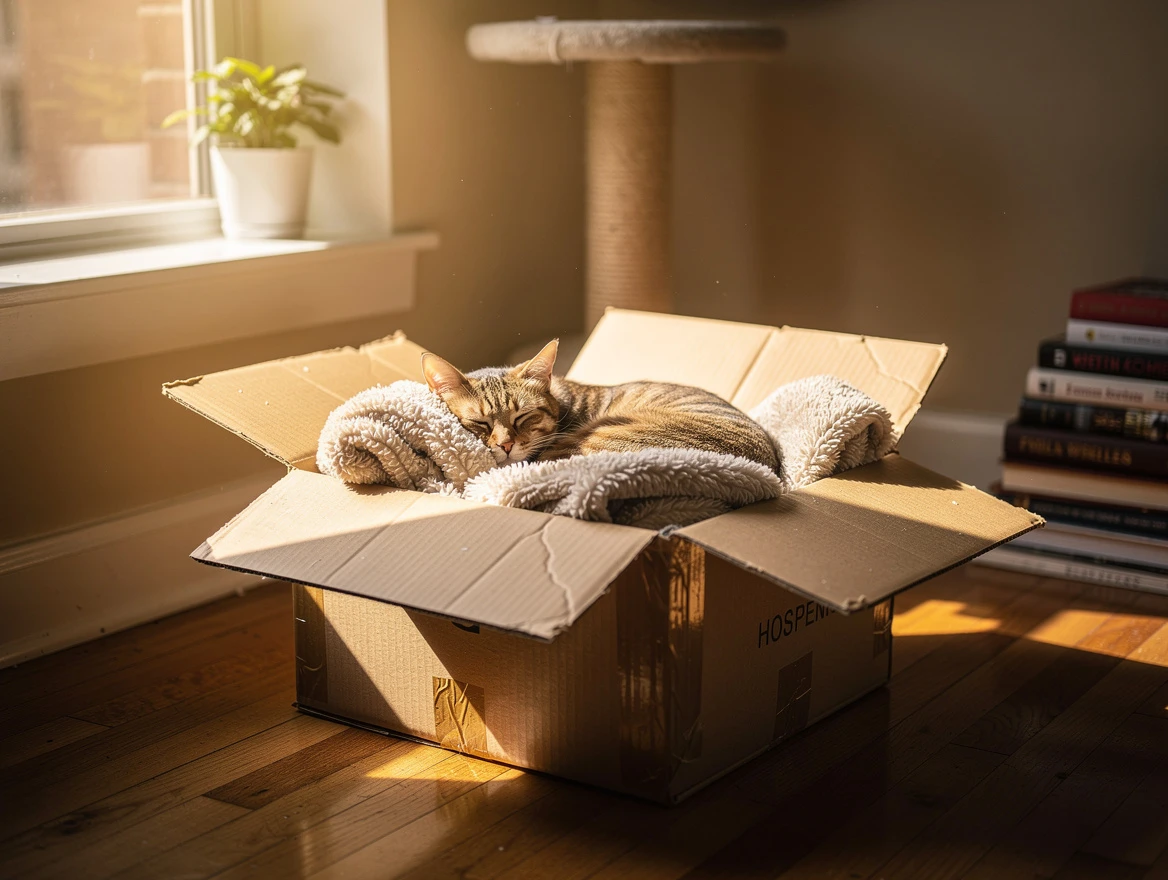
Why do cats love boxes so much? The obsession is real, universal, and actually backed by science. From tiny kittens to big cats in zoos, the behavior is identical: if it fits, I sits. Why would a cat choose a cardboard box over the $80 cat bed you bought them?
I have four cats and I have watched every single one of them ignore expensive cat furniture in favor of a random Amazon delivery box. My oldest cat once spent three consecutive days sleeping in a shoebox that was clearly too small for her. She looked ridiculous. She looked happy. That moment made me research exactly why cats and boxes are so deeply connected — and the answers are more interesting than I expected.
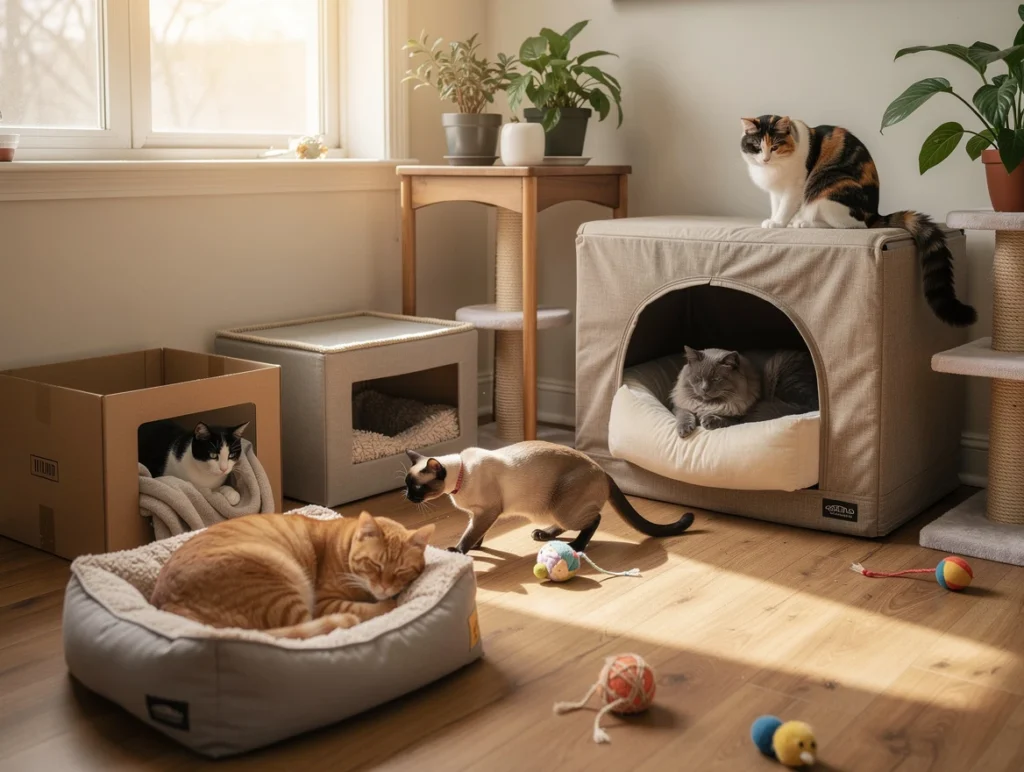
Boxes provide security, warmth, stress relief, and a perfect ambush spot — all of which trigger deep survival instincts. A 2014 University of Utrecht study found that shelter cats given boxes had significantly lower stress levels than cats without them. Boxes are not just fun — they are genuinely good for your cat’s mental health.
Why Do Cats Love Boxes? 7 Reasons
1. Security and Safety
Do cats feel safe inside boxes? Absolutely — this is the number one reason. An enclosed space with walls on all sides means nothing can sneak up on them. In the wild, cats are both predators and prey. A box eliminates the vulnerability of being in the open. The smaller and tighter the box, the safer your cat feels, which is why they squeeze into boxes that look absurdly small.
2. Stress Relief
The University of Utrecht conducted a landmark 2014 study with shelter cats. Cats given hiding boxes adjusted to their new environment significantly faster and showed measurably lower cortisol (stress hormone) levels than cats without boxes. Cats and boxes are not just about fun, boxes are a genuine stress-reduction tool. If your cat seems anxious, a simple cardboard box in a quiet corner can help more than most products. Related: Is My Cat Depressed, environmental enrichment reduces cat anxiety.
3. Warmth and Temperature Regulation
Cats prefer environmental temperatures of 86–97°F (30–36°C), significantly warmer than most homes. Cardboard is an excellent insulator. A box traps body heat and creates a warm microenvironment closer to a cat’s preferred temperature. This is why cats love boxes even in warm weather, and why they especially love them in winter.
4. Ambush Position
A box is the perfect hunting blind. Your cat can observe from inside without being seen, then launch a surprise attack on passing feet, toys, or unsuspecting other cats. This satisfies the predatory instinct that every domestic cat retains from their wild ancestors. If your cat pounces from inside a box, they are not playing, they are practicing.
5. Territory Marking
Part of the appeal is territorial. Cats rub their scent glands on the box walls, scratch the cardboard, and essentially make the box “theirs.” In multi-cat homes, you may notice each cat gravitates to a specific box, that is territory ownership in action.
6. Curiosity and Exploration
Cats are obligate explorers, they must investigate new things in their environment. A new box triggers an irresistible urge to sniff, enter, and assess. The novelty factor is real: a box that has been sitting for weeks becomes boring, but a fresh delivery box gets immediate attention. Part of the appeal is simply that boxes are new and interesting.
7. Comfort and Sleep Quality
The enclosed walls of a box create a den-like sleeping environment. Cats sleep 12–16 hours per day, and the deep sleep they need for health requires feeling safe. A box provides that security, which is why many cats prefer sleeping in a box over an open cat bed. The “walls around me” sensation mimics the dens and burrows their wild ancestors used. Related: My Cat Jumps Out of Sleep Scared, enclosed spaces help cats sleep more peacefully.
The Science Behind Cats and Boxes
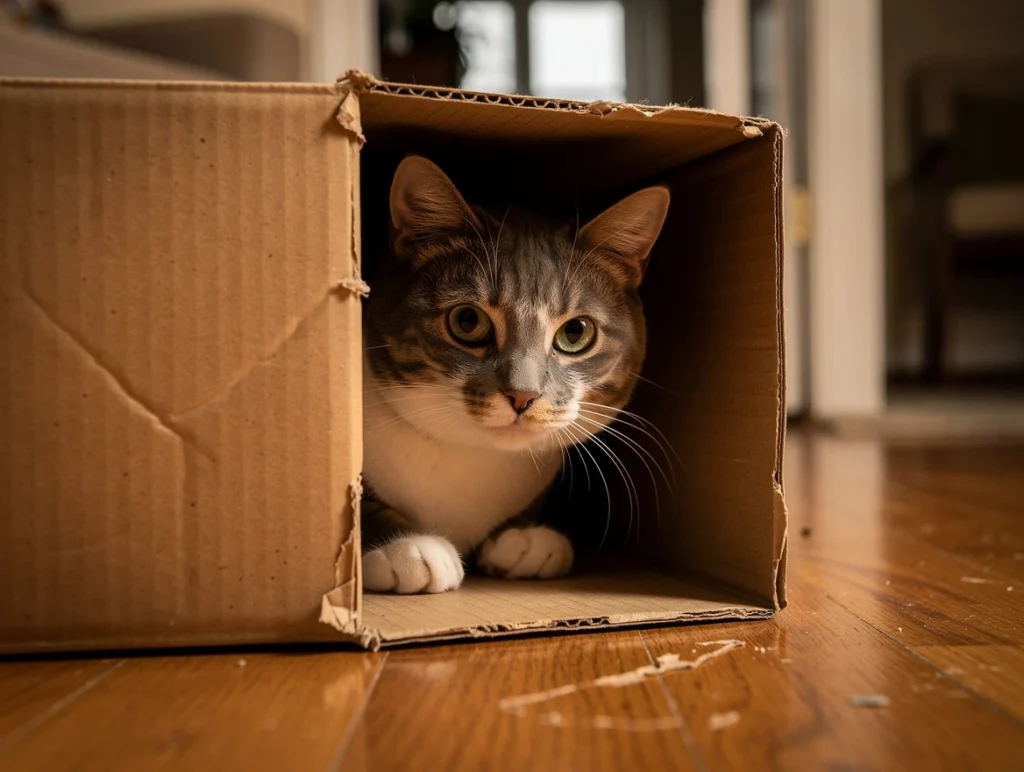
Funny cats and boxes videos go viral constantly, but the science behind the behavior is surprisingly well-studied:
- University of Utrecht (2014) — shelter cats with boxes had lower stress, adapted faster, and were more willing to interact with humans, with measurably lower cortisol and faster recovery from the stress of a new environment
- Thermoregulation research — cats’ thermoneutral zone (86–97°F) is well above typical room temperature. Boxes close that gap.
- Predator-prey instinct — behavioral studies confirm that the “hide and ambush” pattern in domestic cats mirrors wild cat hunting strategies exactly
Best Box Types for Cats
| Box Type | Best For | Notes |
|---|---|---|
| Plain cardboard box | All cats — the universal favorite | Free, replaceable, perfect. Cut a doorway hole for easy access. |
| Covered storage box | Anxious or shy cats | Darker inside = more security. Add a soft blanket. |
| Soft fabric cat box/bed | Senior cats, winter | Warmer, softer on joints. Washable. |
| Multiple small boxes | Multi-cat homes | One box per cat minimum to prevent territory conflicts. |
| Paper bags (handles removed) | Playful cats | Crinkly sound adds enrichment. Remove handles to prevent choking. |
| Box with cut-out holes | Active/playful cats | Multiple entry/exit points for ambush play |
Big Cats and Boxes — Yes, Lions Too
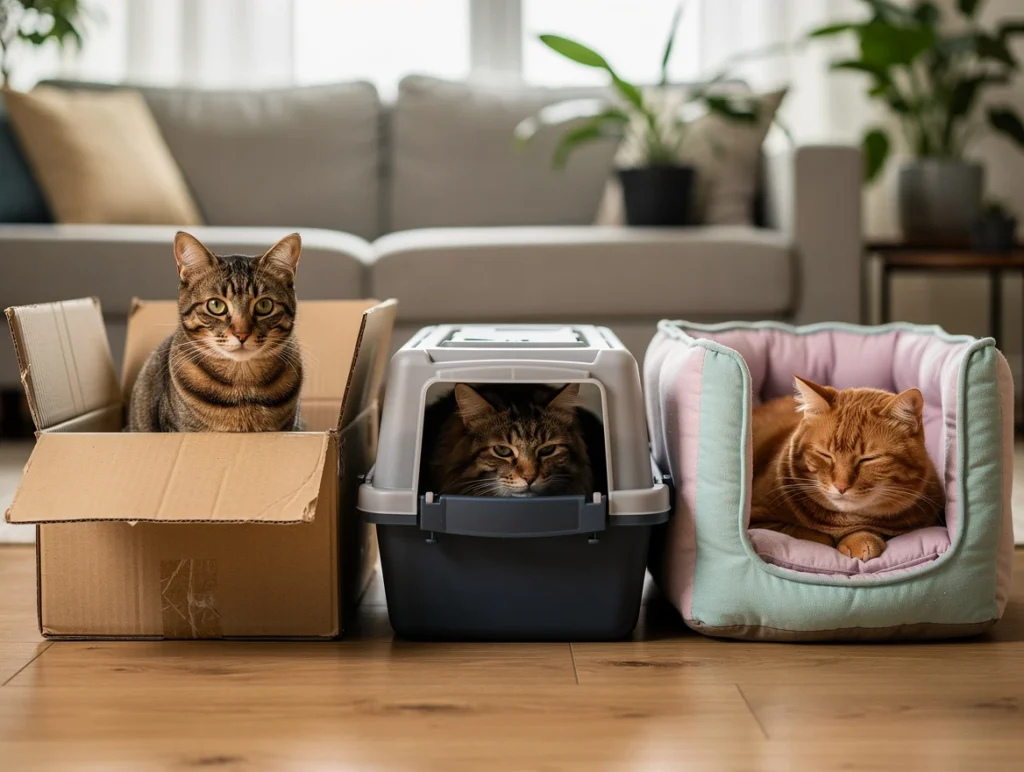
Big cats and boxes are just as funny as house cats and boxes, and it proves the behavior is instinctive, not learned. Zoos worldwide have documented lions, tigers, leopards, and cheetahs climbing into large cardboard boxes with the same enthusiasm as a domestic kitten. The Big Cat Rescue sanctuary regularly shares videos of their rescued big cats playing in oversized boxes, the body language is identical to what your cat does at home.
This matters because it confirms that the cats and boxes connection is deeply embedded in feline DNA, not something your cat picked up from living indoors.
Cats and Boxes in Multi-Cat Homes
In multi-cat homes, boxes are not just enrichment, they are essential for reducing conflict. Each cat needs their own safe space to retreat to. Without boxes or hiding spots, territorial tensions escalate, leading to hissing, fighting, and stress-related illness.
- Rule of thumb: one box per cat, plus one extra, placed in different rooms
- Position boxes in quiet corners, elevated surfaces, and separate from litter boxes and food
- Replace boxes every 2–4 weeks, fresh boxes renew interest and reset scent marking
- If one cat guards all the boxes, add more in locations the dominant cat cannot monitor simultaneously
Related: Why Is My Cat Hissing at Me, boxes reduce the stress and territorial tension that cause hissing.
Why Does My Cat Chew on Boxes
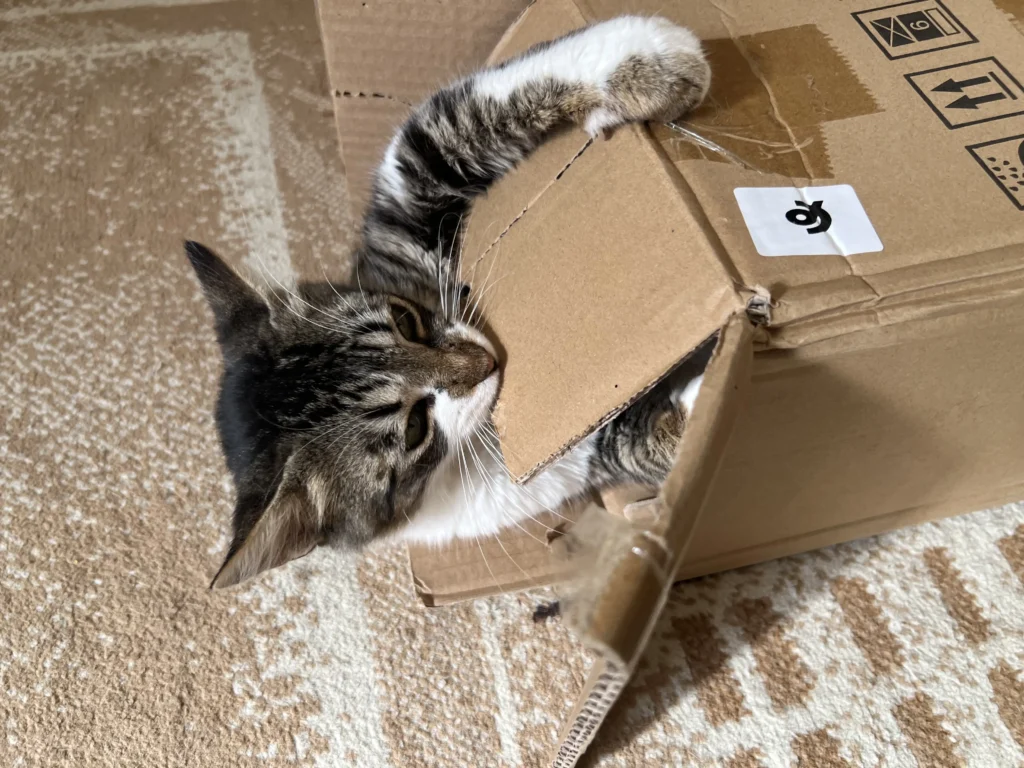
Cats chew on cardboard for several reasons, and it is usually harmless:
- Texture satisfaction — the corrugated texture feels good on teeth and gums
- Teething (kittens) — chewing relieves teething discomfort
- Boredom — a bored cat finds cardboard entertaining
- Stress relief — repetitive chewing is calming for some cats
- Pica — if your cat is eating and swallowing large amounts of cardboard (not just chewing), it may indicate pica, a compulsive disorder. See your vet if your cat actually ingests cardboard regularly.
Box Safety Tips
- Remove all tape, staples, and stickers — cats can ingest adhesive or cut themselves on staples
- Remove handles from bags — cats can get their heads caught in handles
- No treated or printed cardboard — heavily inked or chemically treated boxes may be toxic if chewed. Plain brown cardboard is safest.
- Size matters — the box should be small enough to feel enclosed but large enough for the cat to turn around
- Replace when worn — soggy, torn, or heavily chewed boxes should be replaced
- Keep away from hazards — do not place boxes near heat sources, on unstable surfaces, or near toxic plants. Related: Are Tulips Toxic to Cats.
Frequently Asked Questions
Boxes provide security, warmth, stress relief, ambush opportunities, and territory ownership, all of which satisfy deep survival instincts. Studies confirm that cats with access to boxes are measurably less stressed and adapt faster to new environments.
Yes, enclosed spaces with walls on all sides eliminate the vulnerability of being in the open. Cats are both predators and prey, and a box means nothing can approach without being detected. This triggers a deep sense of security.
It means your cat is seeking security, warmth, rest, or a strategic position. A cat in a box may be sleeping, hiding from stress, claiming territory, or waiting to ambush something. It is completely normal and healthy behavior.
Cat beds are often open and exposed. A box has walls, which is what cats actually want. The $5 cardboard box beats the $80 bed because the walls provide the enclosed security cats need to feel safe enough to sleep deeply.
Light chewing and shredding is normal and harmless. Only worry if your cat is actually swallowing and eating large amounts of cardboard, this may indicate pica and needs a vet evaluation. Use plain brown cardboard without heavy ink or chemicals.
One box per cat, plus one extra. Place them in different rooms and quiet locations. This prevents territorial guarding and gives every cat a safe retreat option.
Tighter spaces feel more secure, the walls press against the body, creating a “hug” sensation similar to swaddling a baby. Cats actively seek the tightest space they can fit into because maximum contact with walls equals maximum perceived safety.
Yes, research supports it. A simple cardboard box in a quiet corner is linked to reduced stress hormones in cats. After a move, a vet visit, a new baby, or any stressful change, giving your cat a box is a simple, low-cost step that can genuinely help.
The Bottom Line
The box obsession isn’t just a funny internet meme, it’s a deeply instinctive behavior that serves security, warmth, stress relief, and hunting practice. Providing boxes for your cat is one of the simplest, cheapest, and most effective things you can do for their mental health. One box per cat, placed in quiet spots, replaced every few weeks. No expensive product will ever replace what a plain cardboard box does for your cat’s wellbeing.
Related: Why Does My Cat Stare at Me, understanding all of your cat’s behaviors strengthens your bond. Also: Why Does My Cat Sleep on Me, cats seek warmth and security from both you and their boxes.