Stomatitis in cats is a severe, painful inflammation of the mouth and gums, far beyond simple bad breath or mild gingivitis. Cats with stomatitis experience intense oral pain that makes eating, grooming, and even closing their mouth comfortably difficult. Catching these symptoms early makes a real difference in how manageable the condition becomes.
One of my cats went from eating dry kibble happily to acting like the bowl contained something dangerous. She was drooling, avoiding grooming, and her gums looked bright red and swollen. A vet visit confirmed stomatitis. That experience taught me just how quickly this condition can change a cat’s quality of life, and how much better things get with proper treatment.
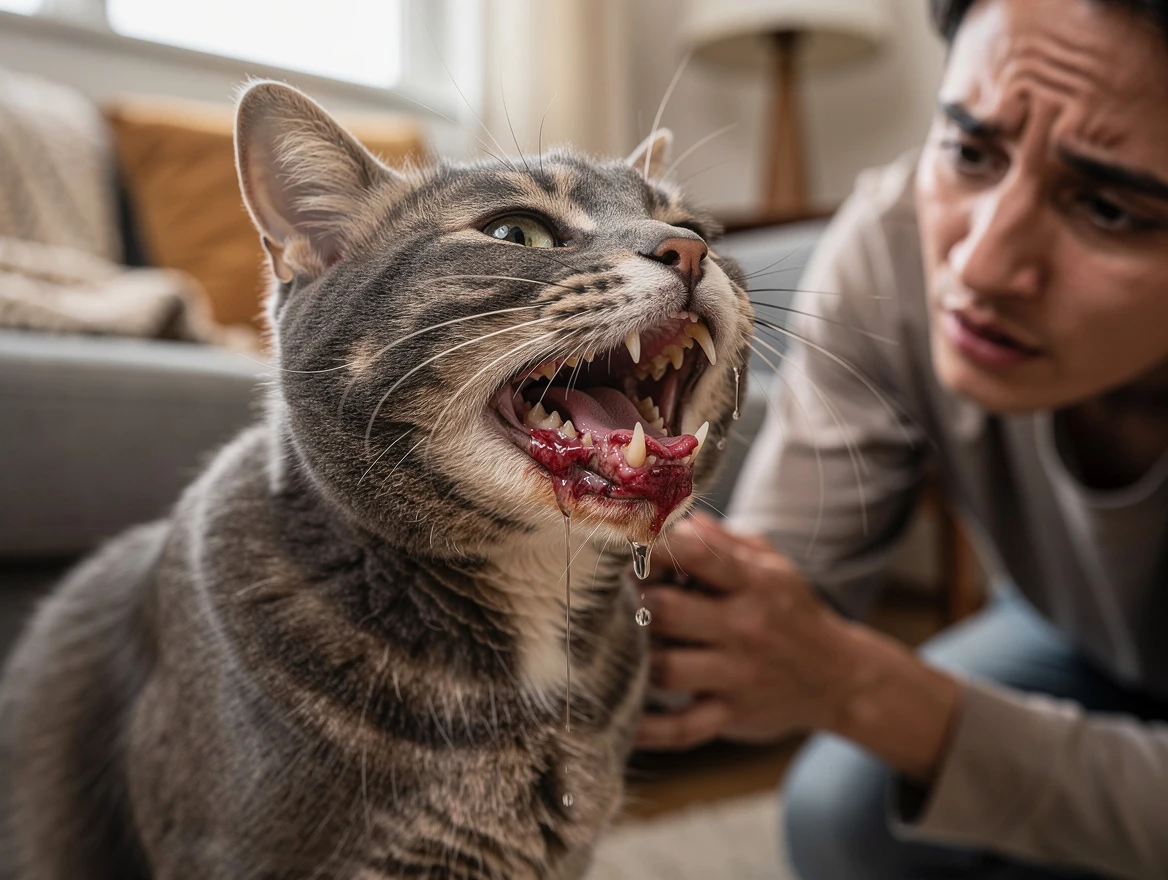
- Excessive drooling combined with complete food refusal
- Bleeding from the mouth
- Difficulty breathing
- Signs of severe pain, crying when trying to eat, hiding
Stomatitis causes intense pain and can lead to dehydration or secondary infection if food and water intake stops. Do not wait.
What Is Stomatitis in Cats
This condition, also called feline chronic gingivostomatitis (FCGS), is a debilitating disease where the immune system overreacts to plaque on the teeth, triggering severe inflammation across the gums, inner cheeks, tongue, and sometimes the throat. Unlike ordinary gingivitis, stomatitis affects the entire mouth, not just the area immediately around the teeth.
Stomatitis is uncommon in the general cat population, but much more frequent in cats with FIV or FeLV, where the compromised immune system makes the overreaction more likely to develop.
8 Symptoms to Watch For
1. Red, swollen, bleeding gums
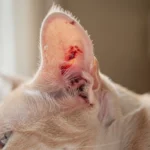
The most visible sign. Gums look inflamed, angry red, and may bleed with minimal contact, even from soft food.
2. Mouth ulcers
Painful sores develop on the gums, inner cheeks, or under the tongue. These ulcers make eating and even closing the mouth uncomfortable.
3. Excessive drooling
Signs often include noticeable drooling, sometimes blood-tinged, as the mouth tries to cope with pain and inflammation.
4. Severe bad breath
Halitosis from stomatitis is distinctly worse than normal cat breath, a strong, unpleasant odor from active inflammation and bacterial involvement. Related: Why Does My Cat’s Breath Smell So Bad.
5. Difficulty eating or food refusal
Affected cats often approach food, then back away or drop it after one bite. Some stop eating entirely due to pain. Related: My Cat Is Not Eating or Drinking and Very Weak.
6. Pawing at the mouth
Cats paw at their face or rub their mouth against furniture trying to relieve the discomfort, a clear behavioral sign something is wrong.
7. Weight loss
As eating becomes progressively more painful, weight loss follows, sometimes rapidly if the cat stops eating almost entirely.
8. Decreased grooming
A normally fastidious groomer suddenly stops, because grooming involves using the painful mouth. An unkempt, greasy coat is often an overlooked sign.
What Causes Stomatitis in Cats
The primary cause is an overactive immune response, the immune system attacks the mouth’s own tissues, triggered by:
- Feline calicivirus and herpesvirus — viral triggers linked closely to stomatitis onset
- Bacterial infection — worsens inflammation once it begins
- Poor dental hygiene — plaque buildup is the primary immune trigger
- FIV or FeLV — immunocompromised cats are significantly more prone to stomatitis
- Genetics — some evidence suggests breed or individual predisposition
Gingivitis vs Stomatitis in Cats
| Feature | Gingivitis | Stomatitis |
|---|---|---|
| Area affected | Gums only, near teeth | Entire mouth, gums, cheeks, tongue, throat |
| Severity | Mild to moderate | Severe, intensely painful |
| Cause | Plaque buildup | Immune overreaction to plaque |
| Treatment | Cleaning, brushing | Medication, often full tooth extraction |
| Reversible with cleaning alone? | Usually yes | Rarely, cleaning alone is not enough |
Gingivitis and stomatitis often appear together, with gingivitis as the early stage that can progress into full stomatitis if the immune trigger continues unchecked.
How Vets Diagnose It
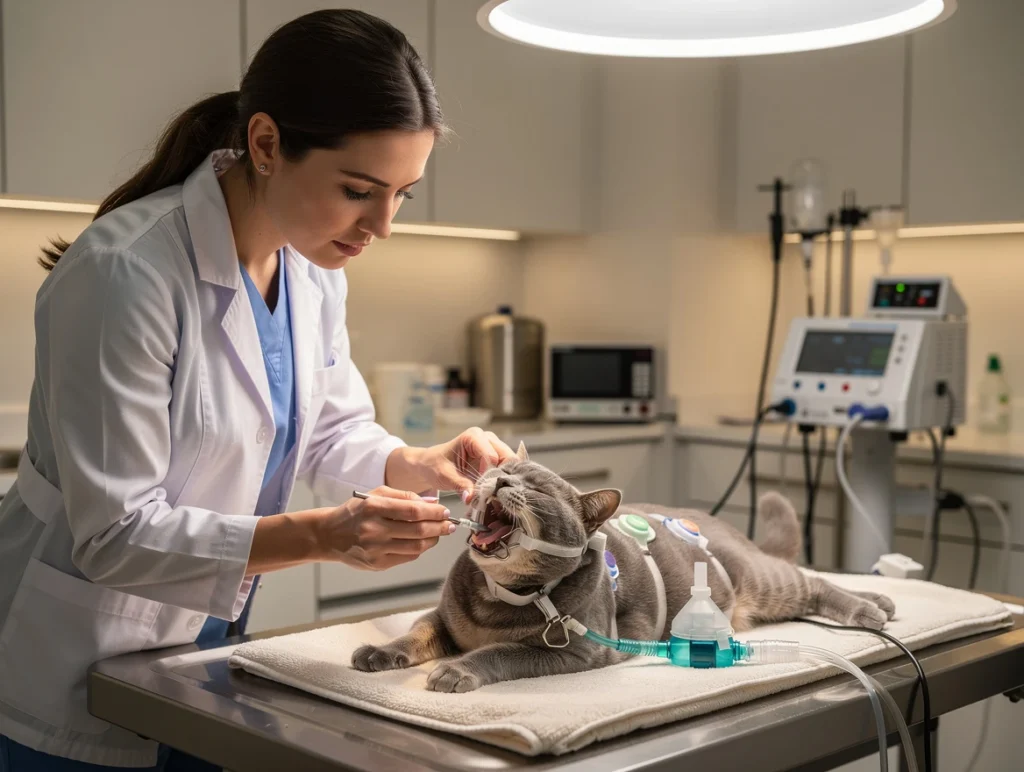
Diagnosis typically requires sedation for a thorough oral exam, since the mouth is too painful for a conscious cat to tolerate close inspection. Your vet may also recommend:
- Dental X-rays to assess tooth and bone involvement
- Blood tests to check for FIV, FeLV, and overall health
- Biopsy in some cases to rule out oral cancer
Treatment for Stomatitis in Cats
| Treatment | Effectiveness | Cost Range | Notes |
|---|---|---|---|
| Medications (steroids, antibiotics) | Moderate | $100–$300 | Often temporary relief only |
| Dental cleaning | Moderate | $200–$500 | Helps mild cases, rarely a full fix |
| Tooth extraction (partial or full) | High | $400–$1,500+ | Best long-term results, most cats improve substantially |
| Immune modulators (cyclosporine) | Variable | $200–$500/month | Newer option, costly, promising results |
| Supportive care (diet, hygiene) | Adjunct only | $20–$100 | Helps manage symptoms alongside main treatment |
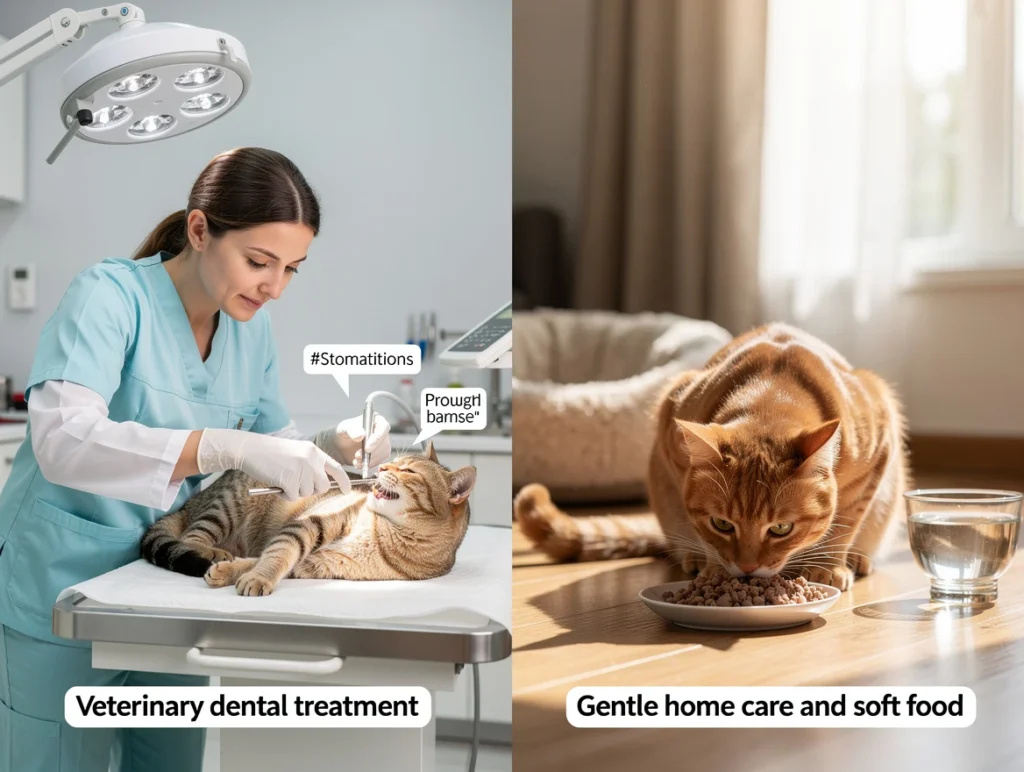
Effective treatment usually means combining approaches, starting with medication to control the acute flare, followed by dental treatment to address the root trigger.
Home Treatment Support
Home treatment supports, but never replaces, veterinary care:
- Switch to soft, wet food — easier and less painful to eat during flare-ups. Related: How Much Wet Food to Feed a Cat.
- Vet-approved oral rinses — reduce bacteria without irritating inflamed tissue
- Gentle at-home monitoring — track appetite, drooling, and weight weekly
- Follow medication schedules exactly — inconsistent dosing worsens flare-ups
- Regular vet check-ins — home treatment only works alongside consistent professional monitoring
After Tooth Extraction
Recovery after tooth extraction typically shows dramatic improvement within 1–4 weeks. Appetite returns, drooling stops, and grooming resumes as pain resolves. Most cats need little to no further medication after full extraction, and those who still need occasional anti-inflammatory support almost universally experience significant relief compared to before surgery.

Life Expectancy
Life expectancy is not directly shortened by the condition itself when properly managed, cats with treated stomatitis live full, normal lifespans. The risk comes from untreated stomatitis: chronic pain, malnutrition from not eating, and secondary infections can seriously affect quality of life and health if left unaddressed.
Does it go away? Full remission is possible, especially with tooth extraction. Can it be cured? While there is no guaranteed permanent cure for every case, most cats achieve long-term comfort and normal function with appropriate treatment.
Is It Contagious
Stomatitis itself is not directly contagious between cats. However, the viral infections that often trigger it, particularly feline calicivirus and herpesvirus, are highly contagious. In multi-cat households, if one cat has stomatitis linked to a viral cause, other cats should be monitored for similar symptoms.
Can humans catch stomatitis from cats? No. Feline stomatitis is not zoonotic and cannot spread from cats to humans.
Common Mistakes
- Dismissing mild drooling or bad breath — early signs deserve attention, not denial
- Delaying the vet visit — waiting allows inflammation and pain to progress significantly
- Assuming it resolves on its own — severe cases rarely improve without treatment
- Stopping oral care after treatment — ongoing hygiene helps prevent flare-ups even after extraction
- Using human dental products — always use vet-approved rinses and toothpaste made for cats
A Few Questions Worth Answering Directly
Leaving it untreated causes worsening pain, progressive weight loss from not eating, secondary bacterial infections, and severely reduced quality of life. Severe untreated cases can also lead to dehydration and malnutrition requiring emergency care.
Severity is generally judged by how extensive the inflammation is (localized versus affecting the whole mouth), whether ulcers are present, how much weight the cat has lost, and how well the cat responds to medication alone. A cat that keeps flaring up despite consistent medication, or one who’s lost significant weight from not eating, is typically considered a severe case, and severe cases tend to move to extraction sooner rather than cycling through repeated medication rounds.
Medications alone start around $100–$300 but often provide only temporary relief. Full dental treatment with extractions ranges from $400–$1,500+, offering the best long-term results and highest chance of resolution.
Stomatitis causes real, significant pain, but it is highly manageable with the right treatment. Watch for red gums, drooling, bad breath, and appetite changes. A prompt vet visit and, when needed, tooth extraction offers the best chance at a pain-free, comfortable life for your cat.