Can cats eat eggs? Yes, and eggs are one of the best high-protein treats you can offer your cat. But only when cooked properly and served plain. Raw eggs carry real risks, and even cooked eggs have limits on how much is safe.
I add a small amount of scrambled egg to my cats’ food about twice a week. They treat it like a five-star meal every single time. Here’s everything you need to know about feeding eggs safely, including 4 simple recipes at the end.
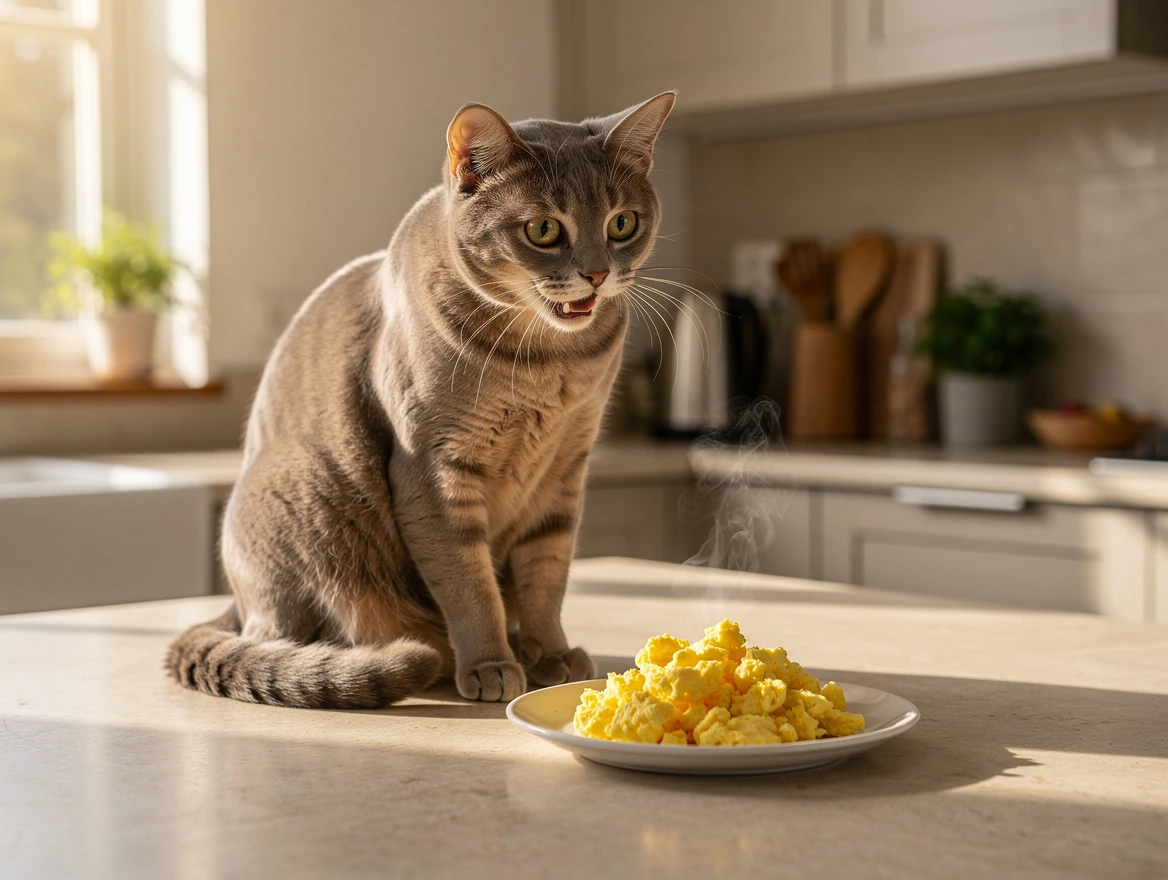
Yes. Cooked eggs (scrambled, boiled, or poached) are safe and nutritious for cats in small amounts. Eggs provide high-quality protein, amino acids, and vitamins. Never feed raw eggs due to salmonella and E. coli risk. Limit to 1–2 small servings per week, eggs are a treat, not a meal replacement.
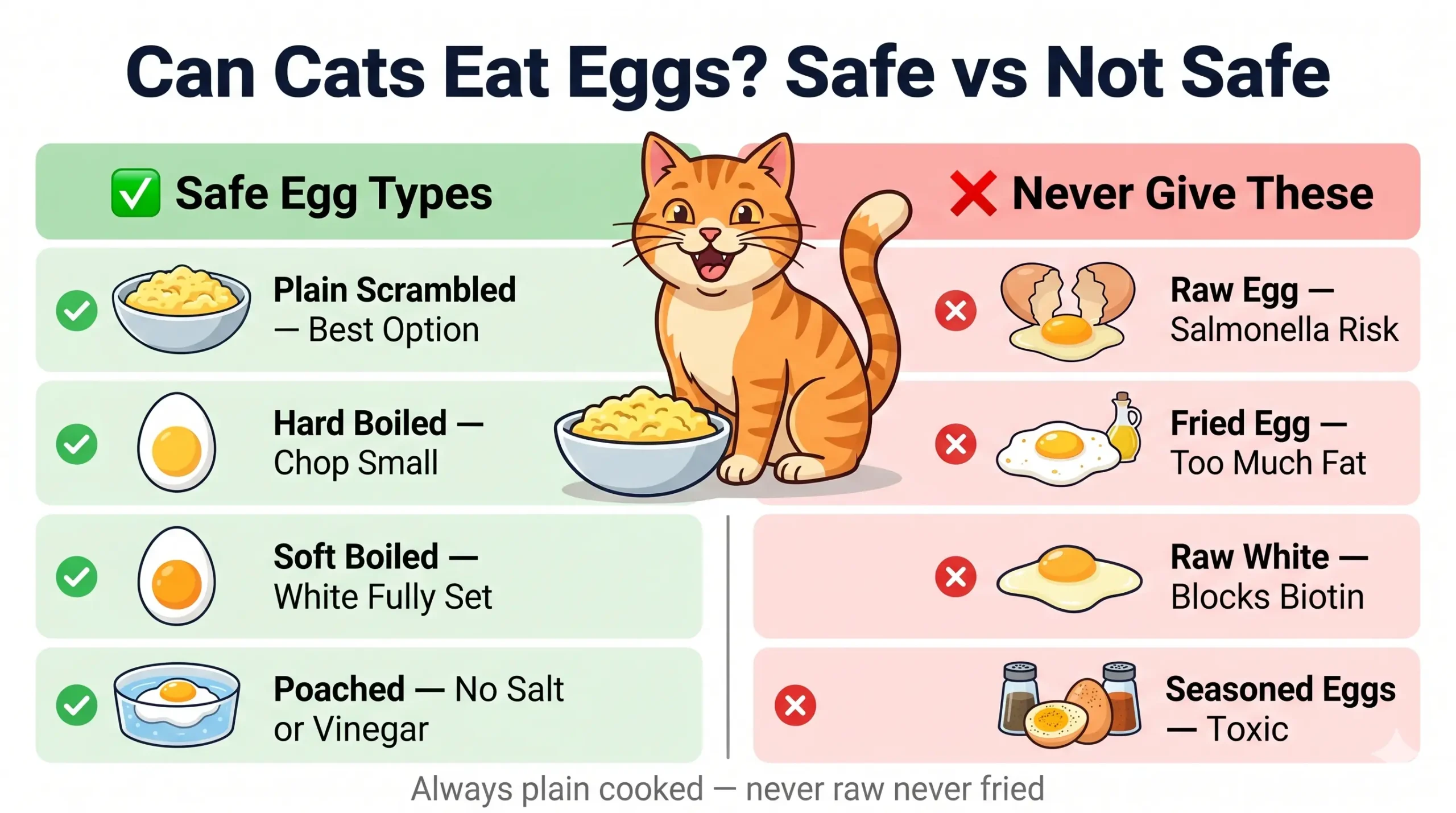
Safe vs Not Safe — At a Glance
| Egg Type | Safe? | Notes |
|---|---|---|
| Scrambled (plain, no oil/butter) | ✅ Yes | Best option — easy to digest, easy to portion |
| Hard boiled | ✅ Yes | Chop into small pieces |
| Soft boiled | ✅ Yes | Ensure white is fully set |
| Poached (plain) | ✅ Yes | No vinegar or salt in water |
| Fried (oil or butter) | ❌ No | Too much fat — causes digestive upset |
| Raw egg | ❌ No | Salmonella and E. coli risk |
| Raw egg white | ❌ No | Contains avidin — blocks biotin absorption |
| Seasoned or spiced eggs | ❌ No | Salt, pepper, garlic, onion all harmful |
Nutritional Benefits
Eggs are one of the most nutrient-dense foods you can offer your cat as a treat. A single cooked egg provides:
- High-quality complete protein — eggs contain all 9 essential amino acids cats need, including taurine which supports heart and eye health
- Vitamin B12 — essential for nervous system function and red blood cell production
- Vitamin D — supports bone health and immune function
- Selenium — a powerful antioxidant that supports thyroid function
- Healthy fats — concentrated in the yolk, these support skin and coat condition
- Iron — supports oxygen transport in the blood
Many veterinarians consider fully cooked eggs one of the safest and most beneficial occasional treats for healthy adult cats, providing cleaner nutrition than most commercial cat treats at a fraction of the cost.
Can Cats Eat Eggs Raw
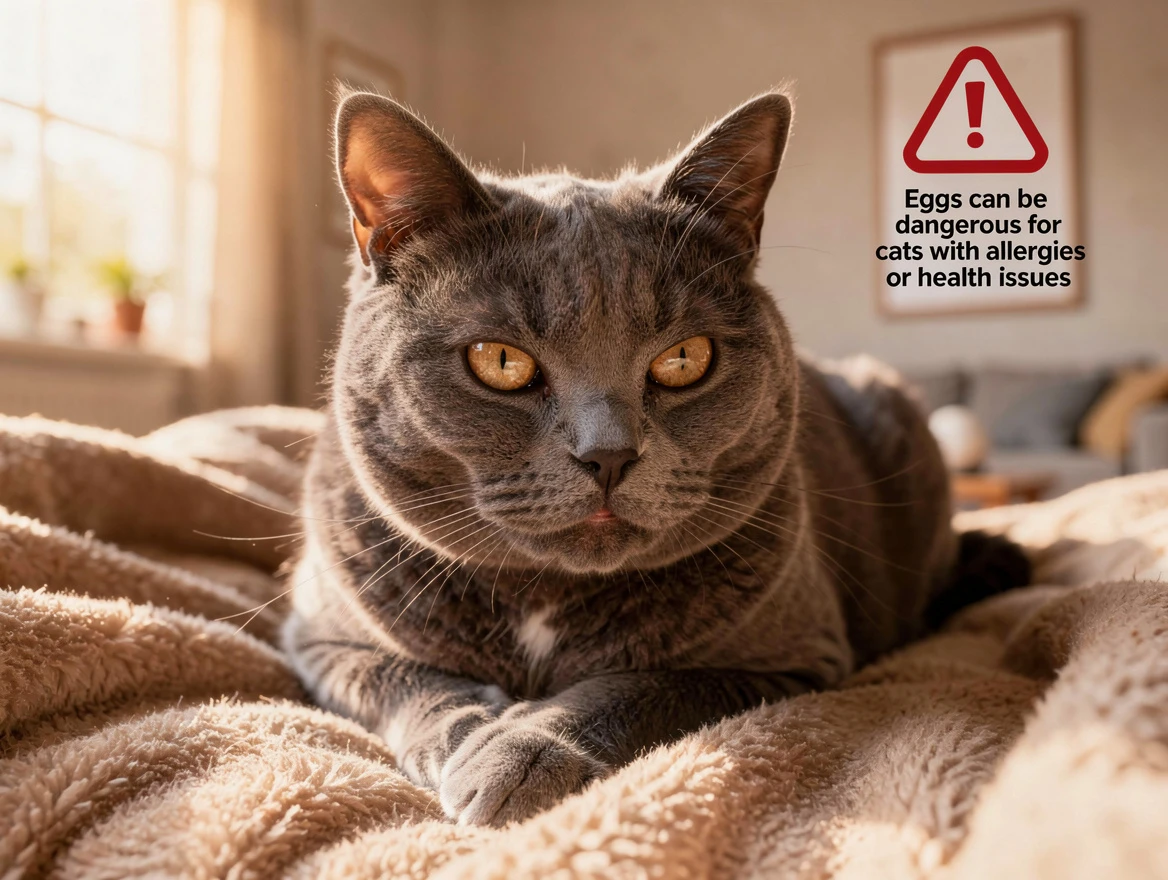
No, raw eggs are not safe for cats. They carry the same salmonella and E. coli risks as they do for humans. Beyond bacteria, raw egg whites contain a protein called avidin that blocks the absorption of biotin (vitamin B7) in your cat’s body. Biotin is essential for healthy skin and coat.
Cooking eggs completely denatures the avidin protein and eliminates bacterial risk. There’s no benefit to feeding raw eggs that cooked eggs don’t provide more safely.
- Salmonella and E. coli contamination risk
- Avidin in raw whites blocks biotin absorption
- No nutritional advantage over cooked eggs
- Risk applies to both raw whites and raw yolks
Can Cats Eat Scrambled Eggs
Yes, plain scrambled eggs are the easiest and safest way to feed eggs to your cat. The key word is plain, no butter, no oil, no milk, no salt, no seasoning. Use a non-stick pan or microwave to scramble without any added fat.
Scrambled eggs are soft and easy for cats to chew, making them ideal for senior cats or cats recovering from illness. Break them into small pieces and mix into regular food or serve as a standalone treat.
Can Cats Eat Fried Eggs
No, fried eggs cooked in oil or butter are not safe for cats. The added fat causes digestive upset and can contribute to pancreatitis with repeated exposure. Even a small amount of cooking oil is significantly more fat than a cat’s digestive system is designed to handle in a single serving.
If you want to cook an egg in a pan, use a non-stick surface with no oil at all. A dry-scrambled egg on a non-stick pan is safe. The moment you add butter, oil, or cooking spray, it becomes unsuitable for your cat.
Can Cats Eat Boiled Eggs
Yes, hard boiled eggs are perfectly safe. Chop them into small pieces or mash with a fork before serving. The texture is firmer than scrambled, so some cats prefer it while others find it harder to eat. Remove the shell before serving, although eggshells are technically safe in very small ground amounts, whole shell pieces are a choking hazard. For details on shell safety, see: Can Cats Eat Egg Shells.
Egg Yolk — Raw or Cooked
Cooked yolk is safe and is actually the most nutrient-dense part of the egg, it contains healthy fats, vitamins A, D, and B12, and iron. Many cats prefer yolk over white because of the richer flavor.
Raw yolk carries bacterial risk just like raw whites and should never be served uncooked. When feeding cooked yolk, keep portions small, the fat content is higher in yolk than in whites, so one yolk per week is sufficient for most cats.
How Much Egg Can I Give a Cat
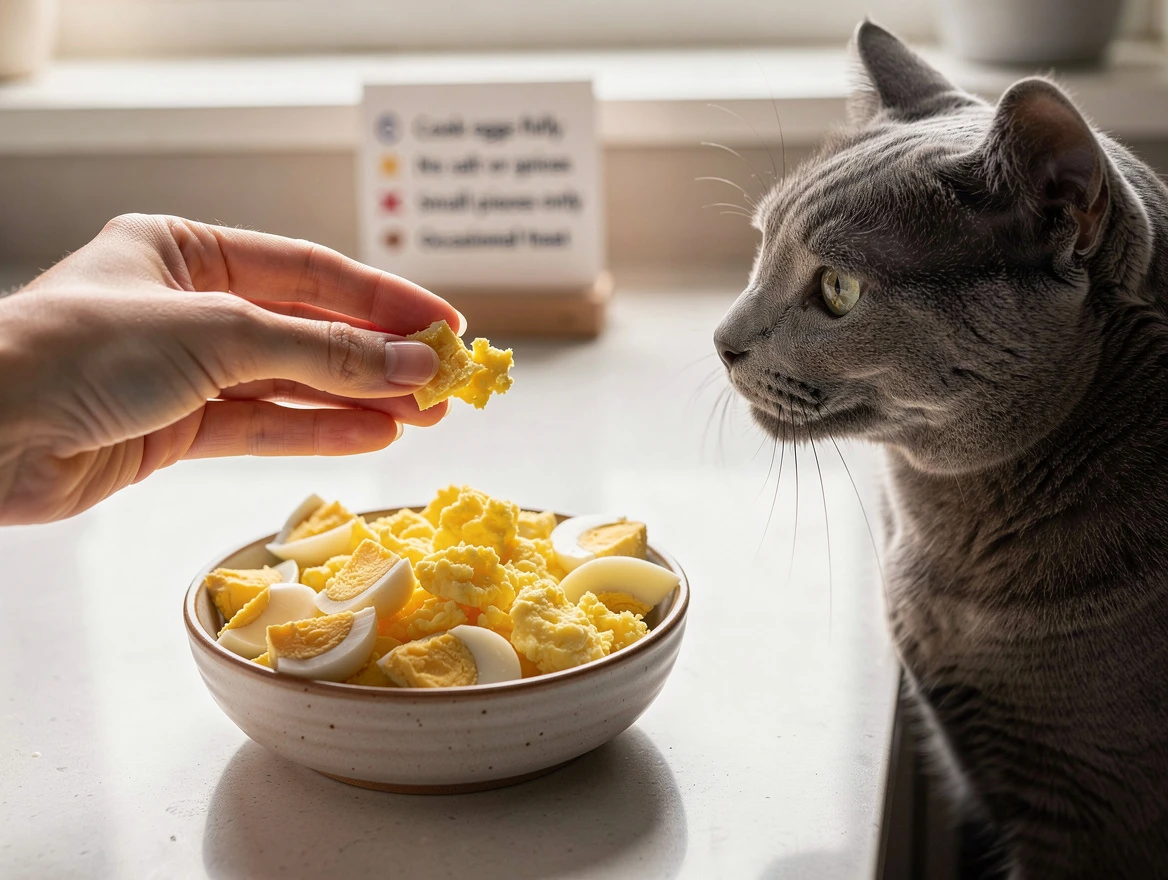
Eggs should make up no more than 10% of your cat’s daily calorie intake. One large egg contains roughly 70 calories, that’s nearly a third of some cats’ entire daily requirement. For most cats, half an egg to one full egg per week is the safe range, split across 2–3 servings.
| Cat Size | Egg Per Serving | Frequency |
|---|---|---|
| Small cat (6–8 lbs) | 1 tablespoon scrambled | 2x per week max |
| Average cat (8–11 lbs) | 2 tablespoons scrambled | 2x per week max |
| Large cat (12+ lbs) | Half a boiled egg | 2–3x per week max |
Always count egg calories as part of the daily total, not on top of it. If you give egg, reduce the regular food portion slightly to compensate. For daily calorie guidelines, see: How Much Wet Food to Feed a Cat.
Can Cats Eat Eggs Everyday
No, eggs every day is too much. The fat and cholesterol content adds up quickly, and daily eggs displace the balanced nutrition in complete cat food. One to two servings per week provides the protein benefit without the risks of overconsumption. Treat eggs as a supplement, not a staple.
How to Cook Eggs for Cats
The safest preparation methods, all without any added fat, salt, or seasoning:
- Microwave scramble — crack into a bowl, stir, microwave 45 seconds, stir, 30 more seconds. No oil needed.
- Non-stick pan scramble — dry scramble on a non-stick pan over low heat. No butter, no oil.
- Hard boiled — boil for 10–12 minutes, cool, peel, chop into small pieces.
- Poached — drop into simmering plain water for 3–4 minutes. No vinegar or salt.
Always let the egg cool to room temperature before serving. Warm is fine, hot is not.
4 Easy Egg Recipes
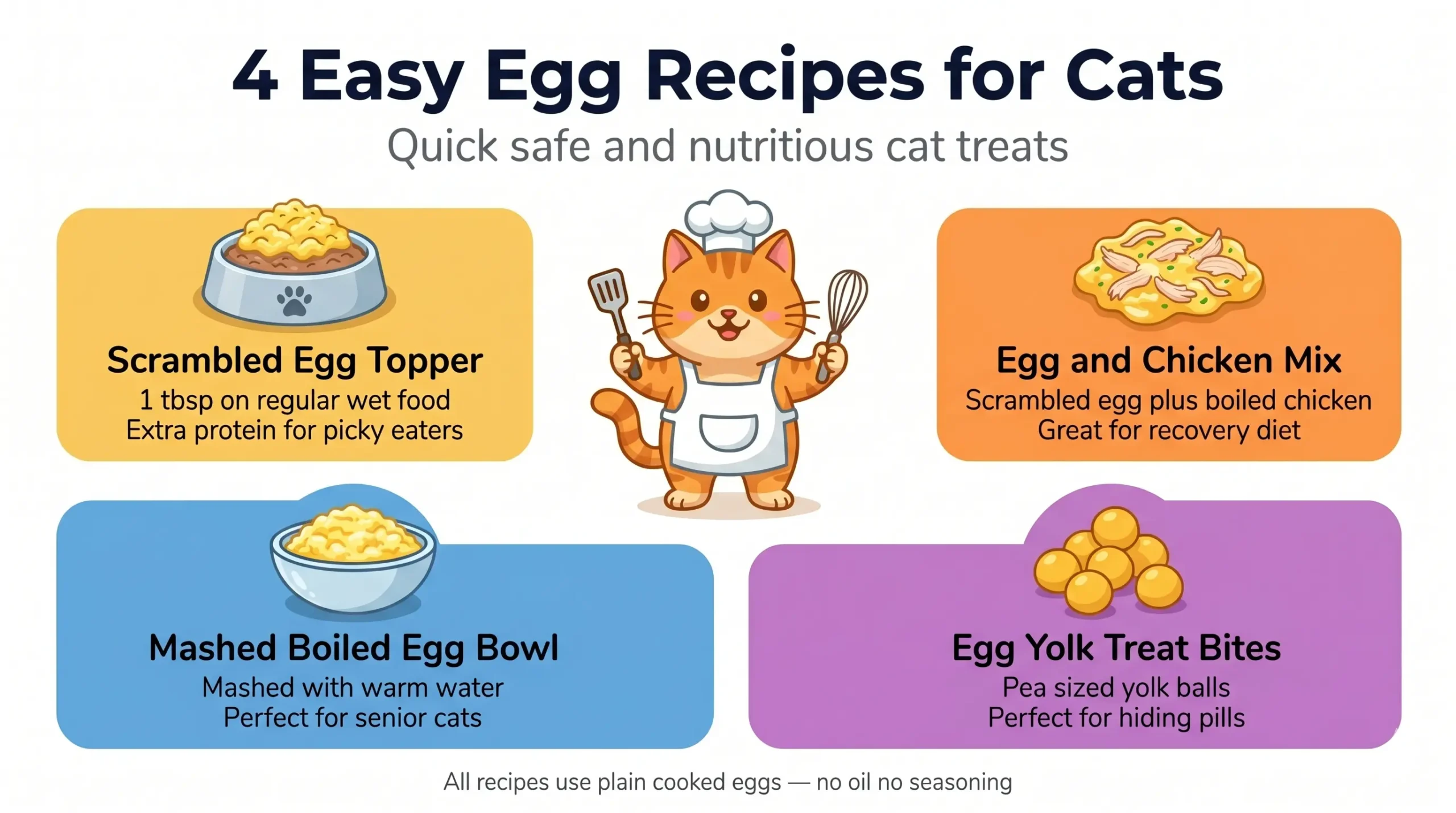
🥚 Recipe 1 — Simple Scrambled Egg Topper
Ingredients: 1 egg
Method: Microwave or dry-scramble with no oil. Break into small pieces. Spoon 1–2 tablespoons on top of your cat’s regular wet food.
Best for: Picky eaters who need extra protein appeal.
🥚 Recipe 2 — Egg and Chicken Mix
Ingredients: 1 egg + 2 tablespoons plain boiled shredded chicken
Method: Scramble the egg plain. Mix with cooled shredded chicken. Serve 2–3 tablespoons per meal.
Best for: Cats recovering from illness or on a bland diet. Pairs well with a small amount of plain rice, see: Can Cats Eat Rice.
🥚 Recipe 3 — Mashed Boiled Egg Bowl
Ingredients: 1 hard boiled egg + 1 teaspoon warm water
Method: Peel and mash the egg with a fork. Add warm water to create a soft, paste-like consistency. Serve half, refrigerate the other half for tomorrow (use within 24 hours).
Best for: Senior cats with dental issues who need soft food.
🥚 Recipe 4 — Egg Yolk Treat Bites
Ingredients: 2 hard boiled egg yolks
Method: Mash yolks with a fork. Roll into small pea-sized balls. Use as training treats or medication hiding, cats love the rich yolk flavor.
Best for: Cats who refuse pills or need positive reinforcement during training.
Eggs vs Other Protein Treats
| Treat | Benefits | Risks | Cost |
|---|---|---|---|
| Cooked eggs | High protein, amino acids, vitamins B12 and D, easy to prepare | Overfeeding, allergy (rare) | $0.10–0.30 per egg |
| Boiled chicken | Lean protein, highly digestible | Bones if not removed, fat from skin | $0.50–1.00 per serving |
| Commercial treats | Balanced, convenient | Fillers, additives, preservatives | $5–15 per pack |
Eggs win on cost, convenience, and nutrient density. A single egg costs a fraction of commercial treats and provides cleaner nutrition with zero additives.
When to Avoid Feeding Eggs
- Pancreatitis — the fat content in egg yolks can worsen this condition
- Known egg allergy — rare in cats but possible. Signs include vomiting, diarrhea, or skin itching after eating
- Overweight cats — eggs add calories quickly. If your cat is on a weight management plan, skip the egg treats or reduce to once per week
- Kittens under 12 weeks — they need all calories from kitten-specific food for proper growth
Frequently Asked Questions
Yes, fully cooked eggs (scrambled, boiled, or poached) are safe and nutritious for cats. Serve plain with no oil, butter, salt, or seasoning. Limit to 1–2 small servings per week.
Kittens under 12 weeks should not eat eggs, they need every calorie from kitten-specific food for growth. Older kittens (3–6 months) can have a very small taste of cooked egg occasionally, but it shouldn’t become a regular treat until they’re fully grown.
Cooked eggs can be part of a bland recovery diet, they provide easily digestible protein. However, if your cat is showing other symptoms alongside appetite changes, see the vet first rather than relying on diet alone to resolve an underlying illness.
The Bottom Line
Can cats eat eggs? Yes, and eggs are one of the healthiest treats you can offer when cooked plain and served in moderation. Scrambled, boiled, or poached, no oil, no butter, no seasoning. Limit to 1–2 servings per week. Never feed raw. Try the 4 recipes above to make egg time a highlight of your cat’s week.