My cat’s tooth is loose can I pull it out? The short answer is no, and attempting it at home will almost certainly make things significantly worse. Cat teeth have long curved roots that are mostly invisible below the gum line. What looks like a simple pull almost always snaps the root and leaves it buried in the jaw, causing infection and more pain.
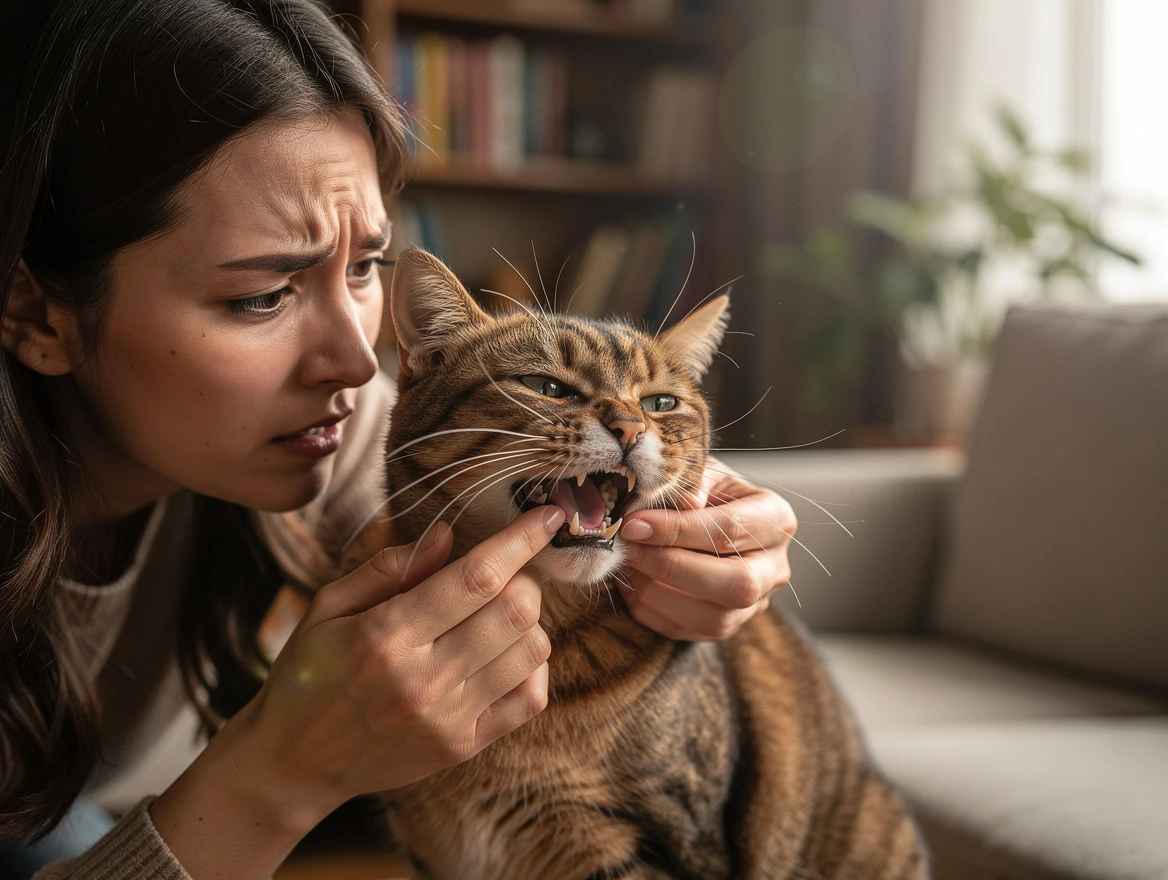
No, never at home. A loose tooth in an adult cat is almost always caused by dental disease, tooth resorption, or trauma. The root must be removed by a vet under anesthesia. Attempting home extraction causes pain, broken roots, and infection.
- Bleeding from the mouth that will not slow
- Swelling on one side of the face
- Complete refusal to eat or drink
- Heavy drooling or drooling with blood
- Visible pus or bad smell from the mouth
- Cat pawing at face constantly
Why Is My Cat’s Tooth Loose
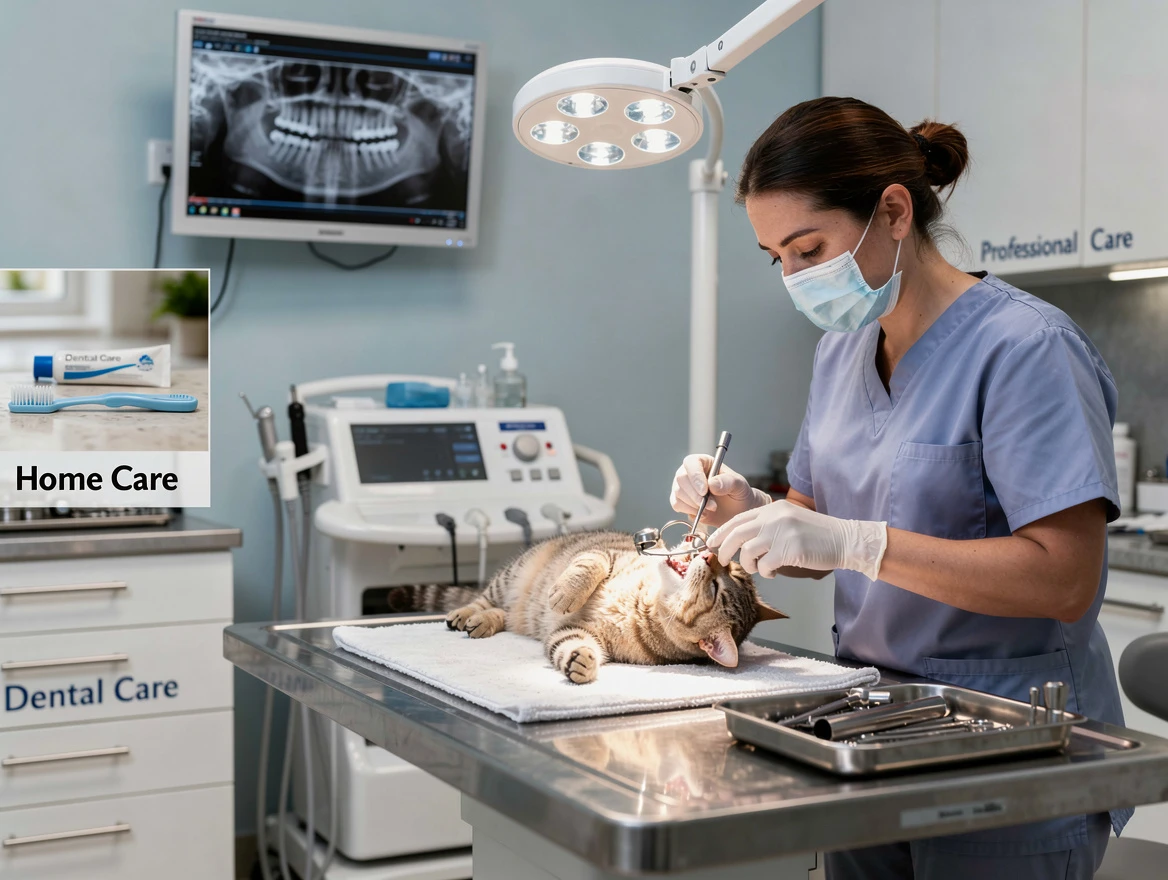 Adult cats do not naturally lose teeth. A loose tooth is always a sign something is wrong. The most common causes:
Tooth Resorption
The body breaks down the tooth from the inside out, the root dissolves and the crown becomes loose and eventually falls off. It’s extremely painful and common in cats over 5 years old. The tooth cannot be saved.
Periodontal Disease
Gum disease destroys the tissue and bone holding the tooth in place. It’s estimated to affect the majority of cats over age 3, though exact figures vary by study. The tooth loosens over months, often with no obvious pain signals because cats hide discomfort so well.
Trauma or Injury
A fall, fight, or biting something hard can crack or loosen a tooth. If the loose tooth is a fang, the situation is more urgent, canine teeth have the longest, most curved roots and the highest risk of complications. Read: My Cat Lost a Fang Tooth.
Dental Abscess
An infection at the root causes bone destruction and eventually loosens the tooth. Left untreated, the bacteria can spread to the jaw, heart, and kidneys. Signs include a tooth appearing to stick out of the mouth, facial swelling, and strong bad breath.
Why You Cannot Pull a Cat’s Tooth at Home
It looks like it’s barely hanging on. One quick pull and done, that’s the logic. Here’s why it always backfires:
- Cat teeth have long curved roots — what you see above the gum is only a fraction of the tooth. The root goes deep and curves in ways you cannot see. Pulling from the crown almost always snaps the root.
- A retained root causes serious infection — a root left behind abscesses, causes ongoing pain, and requires surgical removal that costs more than a straightforward extraction.
- The tooth is not numb — a loose tooth is a painful tooth. The nerve is fully intact. Your cat will be in agony and will never trust you near their mouth again.
- You can fracture the jaw — cat jawbones are delicate. Applying pressure in the wrong direction can crack the jaw, a far more serious and expensive injury.
- You miss the underlying cause — without X-rays, whatever caused the looseness, resorption, gum disease, abscess, continues untreated and destroys other teeth.
Is There a Home Remedy
No, and it’s worth being direct about that rather than offering a workaround that doesn’t exist. There’s no rinse, supplement, or technique that firms a loose tooth back up or safely resolves the underlying cause, resorption, periodontal disease, or an abscess all require professional treatment, not home care.
What you can genuinely do at home isn’t a remedy for the tooth itself, it’s comfort and damage-limitation while you get to the vet: switch to wet food to reduce chewing pressure, avoid touching or wiggling the tooth, and watch for the emergency signs listed above. Trying anything more than that risks doing the tooth’s job for it, breaking it loose yourself, which is the exact outcome this article is warning against.
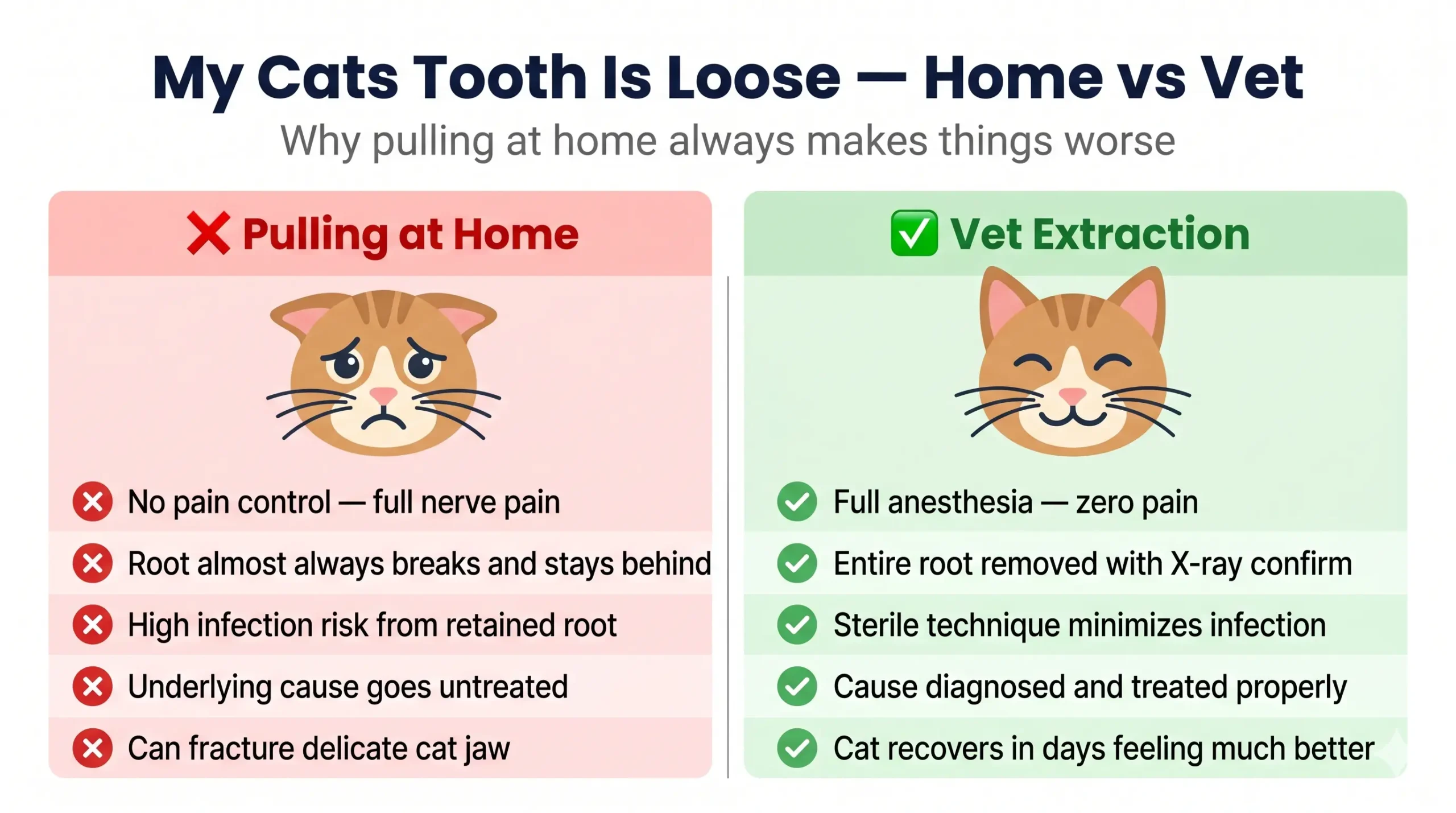
DIY vs Vet Extraction — Side by Side
| Factor | DIY at Home | Vet Extraction |
|---|---|---|
| Pain control | None — full nerve pain | Full anesthesia and pain meds |
| Root fully removed | Rarely — usually breaks | Yes — confirmed with X-ray |
| Infection risk | High | Minimal with sterile technique |
| Underlying cause treated | No | Yes |
| Stress on cat | High — pain and fear | Controlled — sedated and calm |
| Cost | Free now, expensive later | $150–$600 depending on tooth |
Will It Fall Out on Its Own
Sometimes the crown falls off on its own, but the root almost always stays behind. A retained root is still painful and still needs surgical removal. Don’t wait and hope it resolves itself.
A cat with a loose tooth that appears to have “fallen out” may still have significant root material in the jaw causing ongoing infection and pain below the gum line where you cannot see it.
Searches for how to pull a cat’s tooth at home are common, and the answer is always the same. There’s no safe method. The anatomy of a cat tooth makes home extraction impossible without causing harm. Cat teeth have long, curved roots, the fangs are single deep curved roots, while the premolars and molars are multi-rooted, and both types require dental elevators and specialized technique to remove cleanly. The one exception: if the tooth is a baby tooth in a kitten under 6 months and it’s barely hanging on, it may come out naturally with no intervention needed.
Should I Pull It
No. Even if the tooth seems to be hanging by a thread, don’t pull it. Switch your cat to wet food immediately to reduce pressure on the tooth. Book a vet appointment. If your cat is also showing other symptoms alongside the loose tooth, like a changed voice, that’s worth mentioning too. Related: My Cat’s Meow Is Weak and Raspy — dental pain often changes how a cat sounds.
What Happens at the Vet

- Exam and X-rays — the vet checks the full root length and looks for bone loss invisible to the naked eye
- General anesthesia — your cat is completely asleep and feels nothing
- Careful extraction — specialized dental elevators loosen the root before removal to prevent breaking it
- Socket cleaning and suturing — the site is flushed clean and sometimes stitched
- Pain medication to take home — your cat leaves comfortable and continues recovery at home
Most cats recover within a few days. Many owners notice their cat eats better, plays more, and seems generally happier, because the source of chronic pain they had been quietly hiding is finally gone.
Cost and Home Care While You Wait
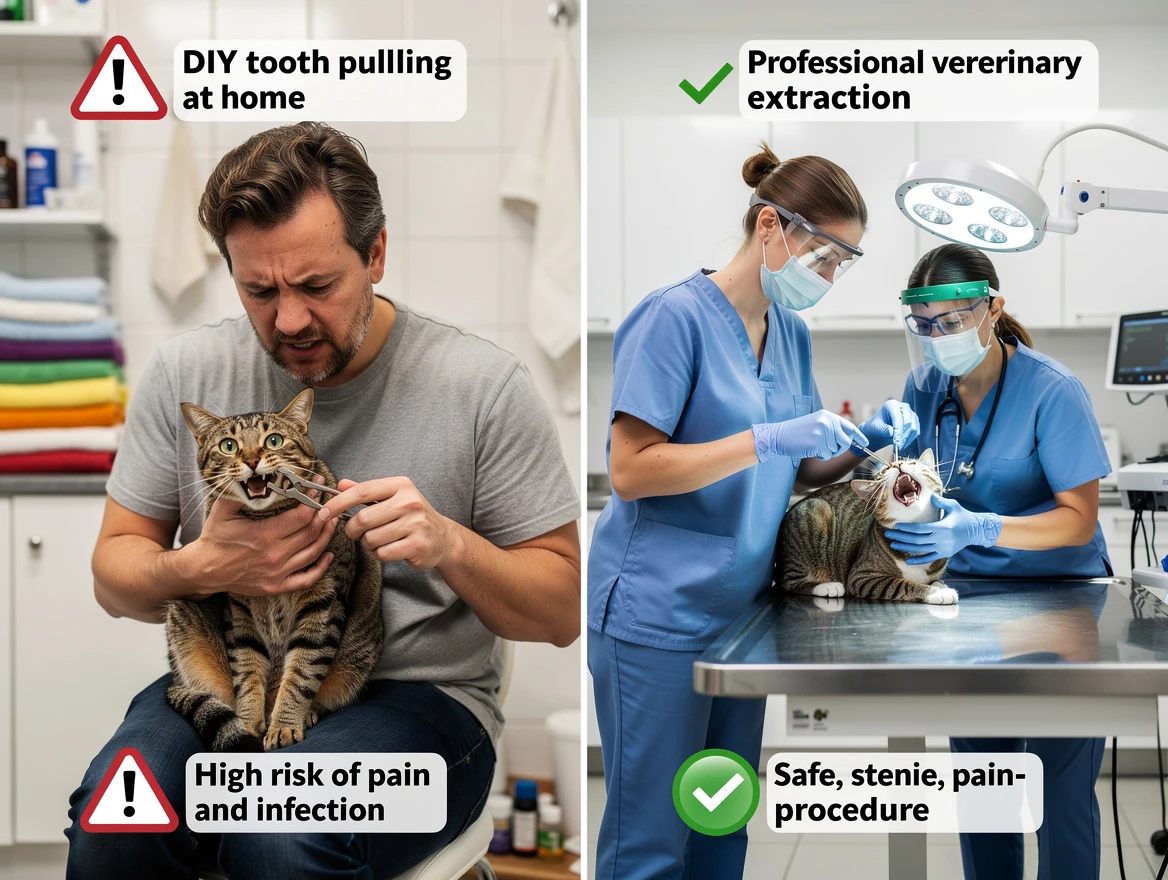
Cat Tooth Removal Cost
Most extractions cost between $150 and $600 depending on location, tooth type, and whether X-rays and bloodwork are included. Fang teeth and molars typically cost more due to complex root systems.
Home Care Before the Appointment
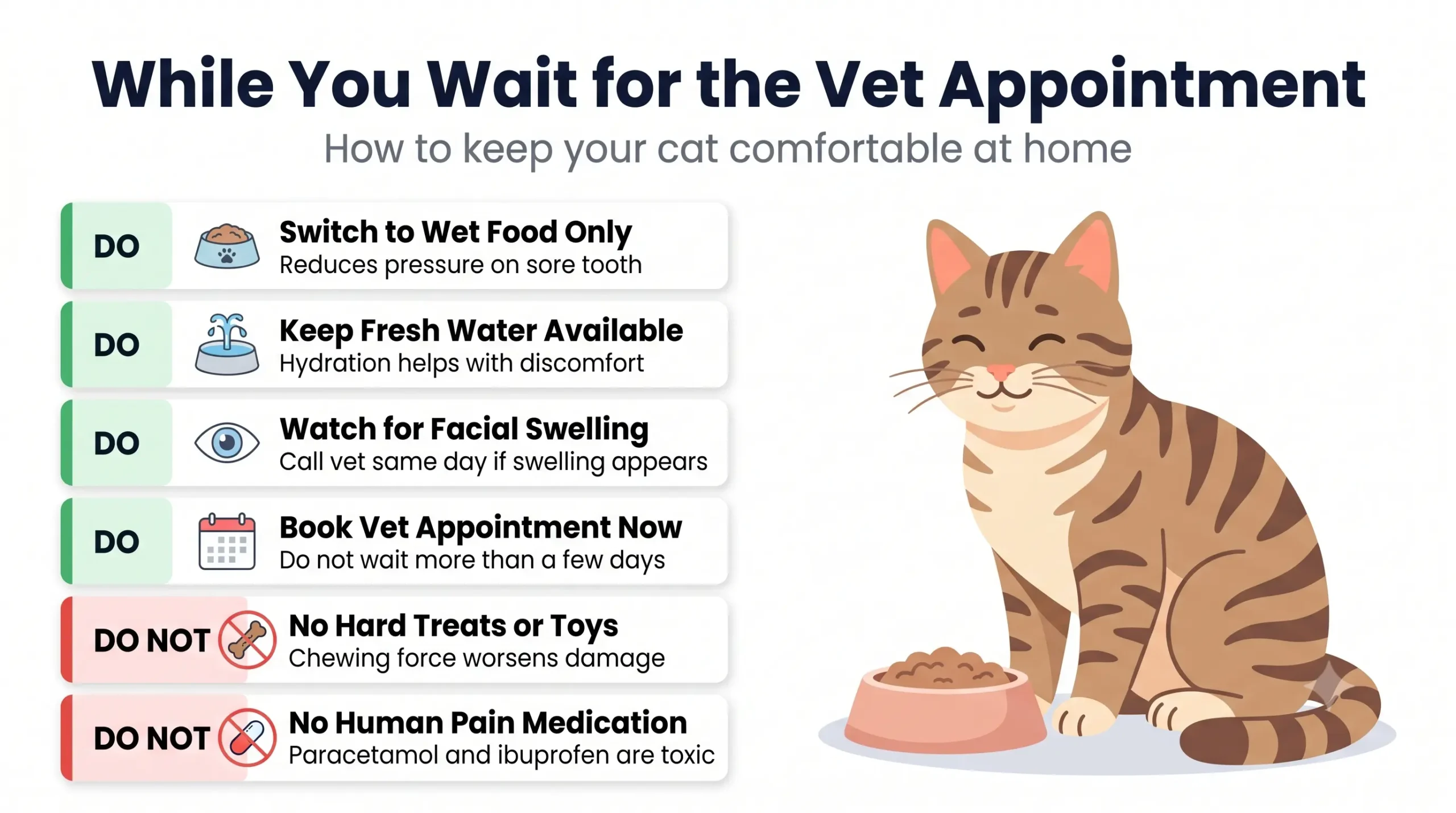
- Switch to wet food only — reduces pressure on the sore tooth
- No hard treats or toys — anything requiring chewing force can worsen damage
- Watch for swelling — if the face swells, don’t wait for the appointment, call the vet that day
- Do not give human pain medication — paracetamol and ibuprofen are toxic to cats even in tiny amounts
Frequently Asked Questions
No. Cat tooth roots are long and curved, home extraction almost always snaps the root and leaves it infected in the jaw. Book a vet appointment and switch to wet food until then.
A tooth that appears to protrude abnormally is usually a sign of tooth resorption, a broken tooth, or a dental abscess pushing tissue. See the vet same day rather than waiting to see if it resolves.
Yes. Untreated dental infections can spread bacteria into the bloodstream and affect the heart, liver, and kidneys over time. What starts as a loose tooth can become a systemic health problem, which is part of why acting quickly matters beyond just the tooth itself.
The Bottom Line
My cat’s tooth is loose, can I pull it out? The answer is always no. The anatomy of a cat tooth makes home extraction dangerous regardless of how loose it looks. A veterinary extraction under anesthesia is the only safe option.
Switch to wet food, watch for swelling, and book the vet appointment. Most cats are noticeably happier within days of a proper extraction, because the chronic pain they had been quietly hiding is finally gone.