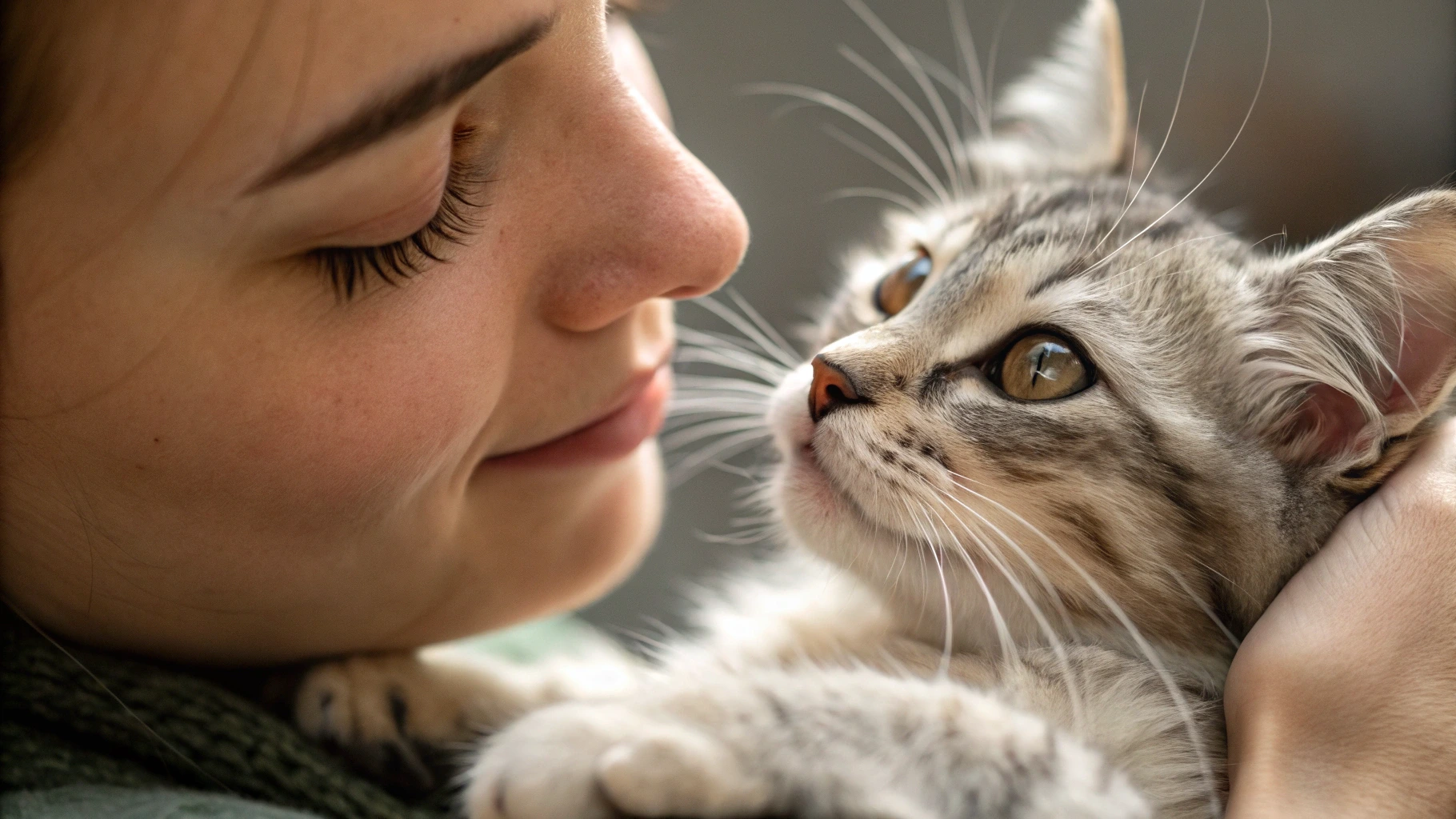
Why does my cat touch my face with their paw — that’s the question I asked myself the first time one of my cats reached out at 6 AM, placed a tiny paw directly on my cheek, and just held it there. I didn’t move. They didn’t move. There’s real science behind that gesture, and once you understand it, you’ll probably start noticing it a lot more.
| Reason | What They’re Communicating |
|---|---|
| Affection | “I love you and I feel safe with you” |
| Scent marking | “You’re mine, I’m claiming you” |
| Attention seeking | “Stop what you’re doing and look at me” |
| Waking you up | “It’s time to get up, I need something” |
| Play initiation | “Let’s interact right now” |
| Vulnerability & trust | “I feel safe enough to touch your face” |
| Communicating a need | “I’m hungry, lonely, or uncomfortable” |
What This Gesture Actually Means
This is one of the deepest forms of feline communication: deliberate, gentle physical contact initiated toward someone a cat trusts completely. Cats only touch the faces of beings they feel safe with, in the wild, exposing the face and neck is an act of vulnerability. A cat choosing to reach out this way is essentially saying you are their safe person.
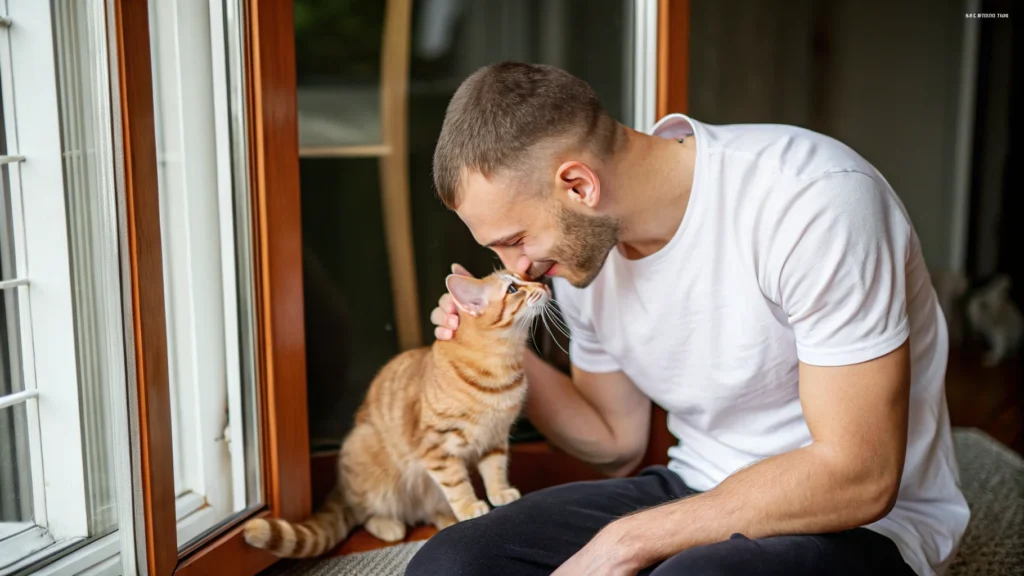
7 Reasons Behind the Gesture
Cats can’t speak. They use their bodies, especially their paws, as one of their primary tools for connection. Here are the seven reasons behind this specific gesture, from most common to most meaningful.
1. Pure Affection
The most common reason, pure, uncomplicated affection. Cats are not naturally demonstrative animals with everyone. Choosing to reach out and make deliberate face contact means you occupy a very special place in their world.
Cats form strong selective attachments to their primary caregivers, expressing affection through gentle touch, proximity, and slow eye contact. A paw placed softly on your face is one of the most direct expressions of that bond.
What to do: Lean into it. Stay still, speak softly, and let them hold that moment.
2. Scent-Marking You
Cats have scent glands in their paw pads. This gesture isn’t just affection, it’s also depositing scent on you. It’s closely related to bunting, when cats rub their cheeks and forehead on objects or people they consider theirs, just a more deliberate, targeted version of the same instinct.
What to do: Let it happen. Being scent-marked by your cat is genuinely an honor in the feline social world.
3. Wanting Attention Right Now
Not every paw-to-face touch is poetic. Sometimes a cat has decided, unilaterally, that whatever you’re currently doing is less important than them.
This version tends to be more insistent, repeated taps, slightly firmer pressure, possibly accompanied by meowing or persistent eye contact. Cats learn quickly that touching your face gets an immediate response.
What to do: If you can, pause and give a few minutes of genuine interaction. Ignoring persistent attention-seeking can increase anxiety in cats who are already emotionally dependent.
4. Waking You Up on Purpose
If this happens while you’re sleeping, congratulations, you’ve been chosen as the preferred alarm system.
Cats are crepuscular, meaning their natural activity peaks at dawn and dusk. If your sleep schedule doesn’t align with those peaks, your cat will take matters into their own hands, literally. The face is targeted specifically because it’s the most responsive part of you.
What to do: If early wake-ups are a problem, an automatic feeder timed to your desired wake time can redirect the morning routine.
5. Initiating Playtime
A quick tap, maybe with slightly extended claws, maybe followed by a rapid retreat, is often a play invitation. This is especially common in younger cats and in cats who don’t have enough daily enrichment.
This version is easy to distinguish from affectionate touching: faster, less sustained, and often part of a sequence that includes dilated pupils, a twitching tail, and crouched posture.
What to do: Redirect immediately to an appropriate toy. Responding with your hands teaches a cat that hands and faces are legitimate play targets, which becomes less charming as claws get sharper.
6. Feeling Safe Enough to Be Vulnerable
In the wild, a cat exposing their face and neck, or touching another creature’s face, is an act of profound vulnerability. A cat reaching out this way is communicating something most cats never express to most people: complete, unconditional trust.
A 2019 Oregon State University study published in Current Biology found that cats form secure attachment bonds with their caregivers, patterns broadly similar to those seen in dogs and human infants. A cat doing this has placed you in that innermost circle of trust.
The most skittish of my four cats, a rescue who spent their first year hiding under the bed, eventually did this for the first time after nearly two years of patient, low-pressure interaction. It genuinely meant something.
What to do: Never pull away suddenly or react with alarm. Slow, calm responses reinforce that the trust is well-placed.
7. Communicating a Specific Need
Sometimes it’s simply practical: a need, communicated the most direct way available. This differs from general attention-seeking because it tends to be more urgent and paired with other signals, heading toward the food bowl afterward, sitting by the door, or vocalizing in a specific pattern.
Pay attention if: it’s out of character, more persistent than usual, or paired with other behavioral changes. Cats who suddenly increase physical contact can sometimes be experiencing early signs of illness, they seek closeness when they feel unwell.
How Do You Know If Your Cat Is Really Attached to You?
Is it love, or just habit? Here are the signs that confirm genuine attachment:
- Follows you from room to room (not just when food is involved)
- Seeks physical contact when already comfortable, not just when wanting something
- Slow blinks at you unprompted
- Brings you objects (hunting behavior directed toward trusted companions)
- Chirps or trills specifically when they see you
- Initiates gentle face contact during calm, unprompted moments
- Returns to you after being startled instead of hiding
The key distinction: A cat who only seeks you out when hungry or stressed is using you. A cat who seeks you out when already comfortable, safe, and with no obvious need, that’s attachment.
According to the Cornell Feline Health Center, genuine feline attachment is characterized by proximity-seeking behavior that isn’t motivated by immediate resource needs.
How Do You Say “I Love You” in Cat Language?
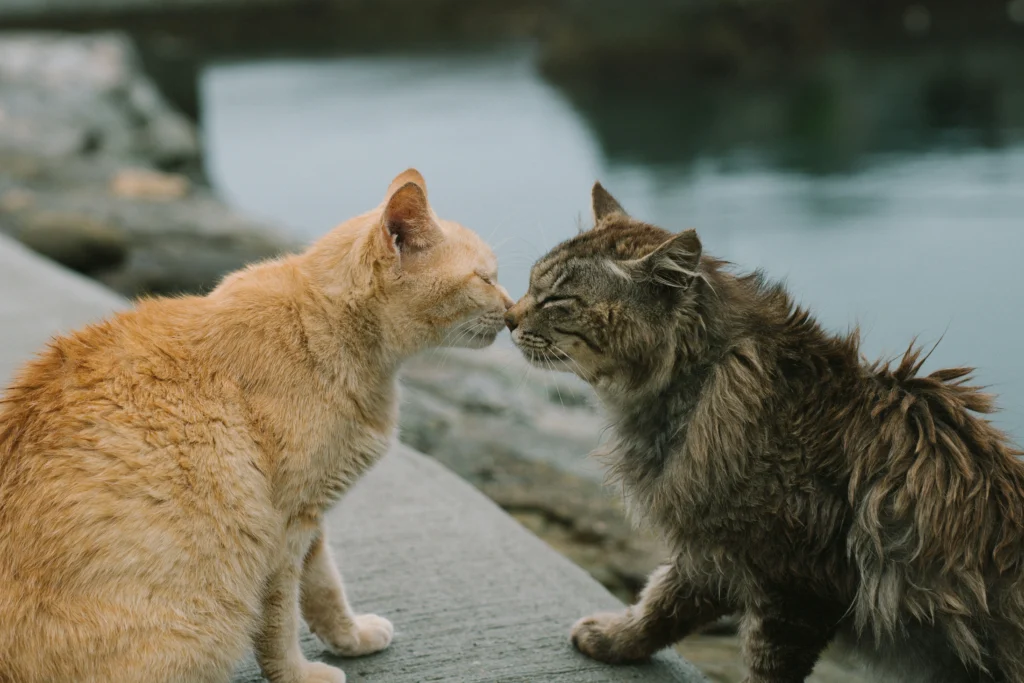
Cats have an entire vocabulary for affection, and learning it changes the relationship. Here’s how to say it back in a language your cat actually understands:
| Gesture | How to Do It |
|---|---|
| The slow blink | Make soft eye contact, slowly close your eyes, then reopen. Cats respond positively and are more likely to approach humans who do this. |
| The head turn | After a slow blink, turn your head slightly to the side, removing direct eye contact, which cats read as non-threatening. |
| The gentle cheek offer | If they seem to want contact, offer your cheek slowly for them to rub. Let them initiate. |
| Mirrored calm | Stay physically relaxed, breathe slowly, speak in a low voice. This communicates safety more reliably than any gesture. |
| Touch reciprocity | Slowly raise one finger toward their nose and let them sniff it, the feline equivalent of a handshake. |
Why Does My Cat Hit Me in the Face With Their Paw?
There’s an important difference between a gentle touch and a hit or swat. The distinction matters:
| Touch Type | What It Means | What to Do |
|---|---|---|
| Soft, slow paw placement | Affection, trust, scent marking | Enjoy it, stay calm |
| Repeated gentle taps | Attention seeking, play invitation | Engage or redirect |
| Firm paw with extended claws | Overstimulation, warning | Back off immediately |
| Swat at face during sleep | Play or wake-up behavior | Redirect to toys |
| Swat with hiss or flattened ears | Fear or pain response | Give space, consult vet |
A cat who hits with claws extended is communicating that they’ve reached a limit, overstimulation, discomfort, or fear. This is never aggression for its own sake. Something triggered it, and identifying that trigger is more useful than punishing the behavior. Related: Why Is My Cat Hissing at Me, the same overstimulation logic applies to both.
How to Tell If a Cat Has Chosen You
In multi-person households, cats often develop a clear primary attachment. You’ve likely been chosen if your cat:
- Sleeps on or directly next to you specifically
- Brings you dead prey or toys (a genuine honor, sharing their hunt with you)
- Grooms your hair or face
- Initiates gentle face contact during calm, relaxed moments
- Seeks you out when frightened rather than hiding or going to someone else
- Sits facing you rather than away from you in shared spaces
- Follows you to the bathroom
Being chosen by a cat, especially a rescue or a naturally independent one, happens slowly and can’t be forced. It’s built through consistent calm presence, respecting boundaries when space is needed, and responding warmly when they initiate contact.
Should You Respond in Kind?
Yes, with technique. How you respond shapes whether it happens again and whether the interaction felt positive to your cat.
| Do | Don’t |
|---|---|
| Move slowly with one extended finger first, letting them sniff | Grab their face or hold their head in place |
| Offer the back of your hand rather than your palm | Make prolonged direct eye contact immediately after, this reads as threatening |
| Touch the areas they rub with their own face, cheeks, chin, forehead | Touch whiskers directly, they’re extremely sensitive |
| Match their energy, calm for calm, playful for playful | React with sudden movement if claws come out |
| Let them pull away whenever they want without following | Continue if they show any tension or discomfort |
Most cats doing this are inviting reciprocal contact, they want the interaction to go both ways. Responding thoughtfully strengthens the bond every time.
When It’s a Sign Something’s Wrong
Most of the time, this is entirely positive. But occasionally, increased or unusual physical contact can signal that something needs attention. Watch for these combinations:
- Paired with weight loss or changes in appetite, could indicate early illness
- Sudden increase in clinginess in a previously independent cat, stress, anxiety, or early illness
- Paired with vocalizing more than usual, pain or discomfort communication
- Combined with elevated breathing rate, worth monitoring. Related: Why Is My Cat Breathing Fast
Changes in any established behavior pattern are worth noting and mentioning to your vet at the next visit, even when those changes seem positive on the surface.
Frequently Asked Questions
Nose touching, also called nose bumping, is a greeting behavior, the cat equivalent of a handshake combined with a hug. Cats greet trusted companions this way.
Generally yes, with normal hygiene practices. Wash your face regularly and keep your cat’s paws clean. If your cat is indoor-only and healthy, this poses minimal risk. If your cat goes outdoors or has been recently ill, a bit more caution is reasonable.
Cats are more emotionally attuned than most people realize. Research increasingly suggests cats can read human emotional states through facial expressions and body language, and may offer contact as a comfort response when they sense distress.
Bottom Line
Why does my cat touch my face with their paw? Usually trust, affection, ownership, or a need they can’t say in words, it’s one of the most deliberate, vulnerable gestures in the feline behavioral repertoire. The next time it happens, stay still and let it happen. You’ve likely been chosen as someone this cat feels genuinely safe with, and that’s worth noticing.