How to Stop a Cat From Scratching Furniture — 7 Methods
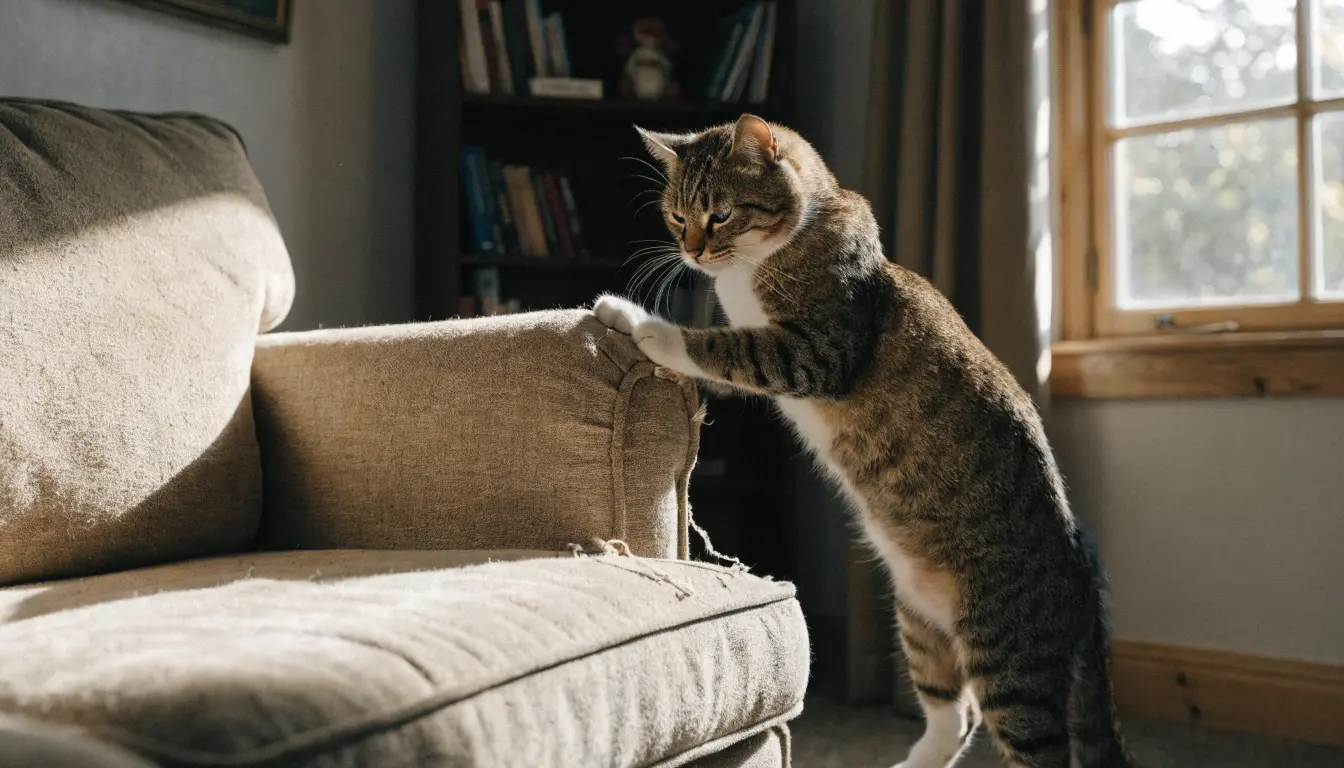
Learning how to stop a cat from scratching furniture starts with understanding one thing: your cat is not doing it to spite you. Scratching is instinctual, physical, and completely normal. You cannot train it away — but you can absolutely redirect it. And redirecting it is exactly how this problem gets solved permanently.
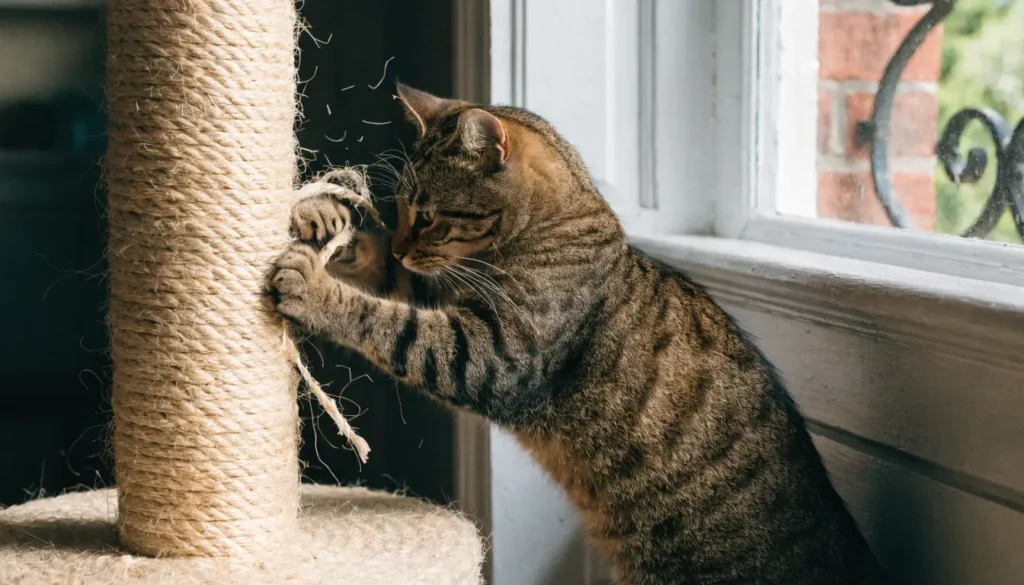
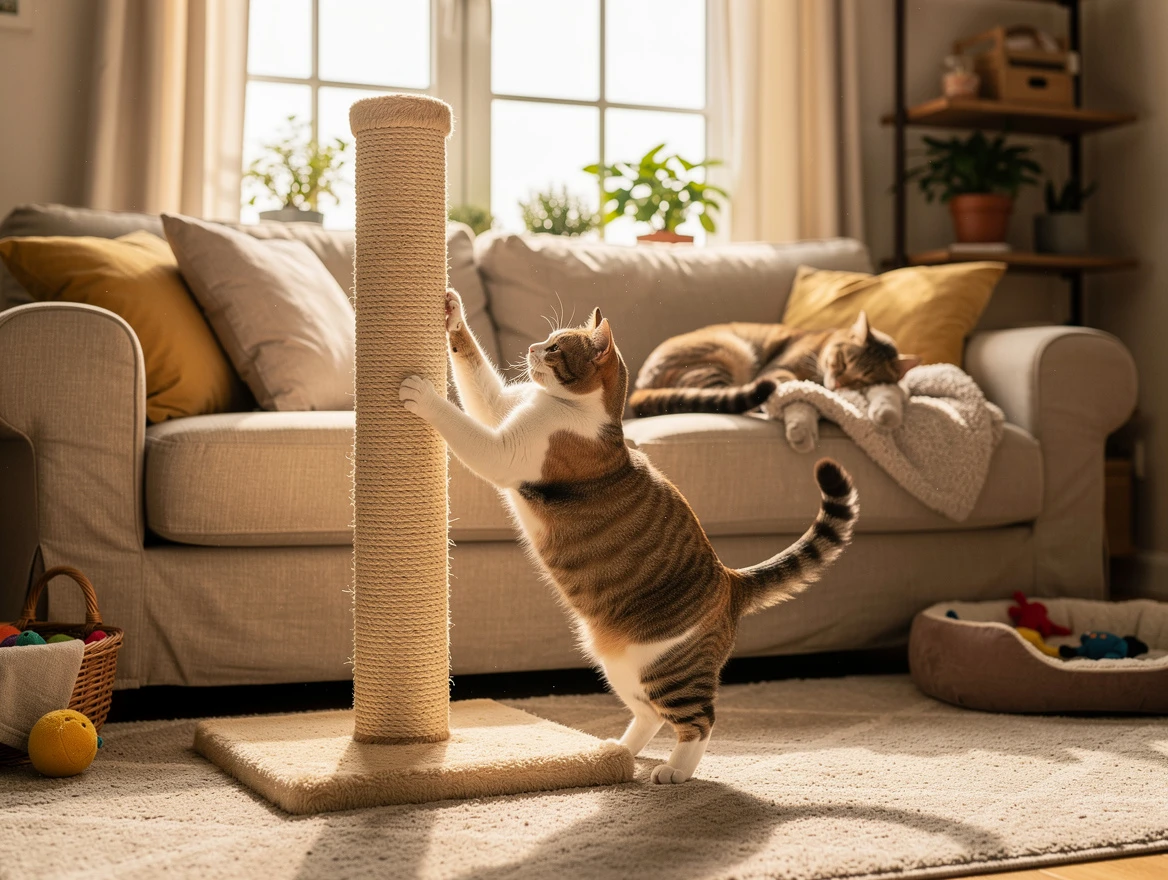
How to stop a cat from scratching furniture — combine two things simultaneously: give your cat a better scratching alternative (tall sisal post placed right next to the furniture) AND make the furniture less appealing (double-sided tape, clear vinyl protectors, or deterrent spray). Do both at once. One without the other gives temporary results at best.
Why Do Cats Scratch Furniture and Carpets
Scratching serves three simultaneous purposes — which is why it is so persistent:
- Claw maintenance — scratching sheds the outer dead layer of claws, revealing sharper ones underneath. Your sofa is functioning as a nail file.
- Full body stretch — cats extend their entire spine, shoulders, and front legs when they scratch. It is essentially yoga, which is why they do it immediately after waking.
- Territorial communication — cats have scent glands in their paw pads. Every scratch leaves both a visual mark and a scent message. This is why cats return to the same spots and why removing a post without replacing it never solves anything.
Understanding this makes the solution obvious: you cannot stop the scratching — you can only change where it happens.
7 Methods That Actually Work
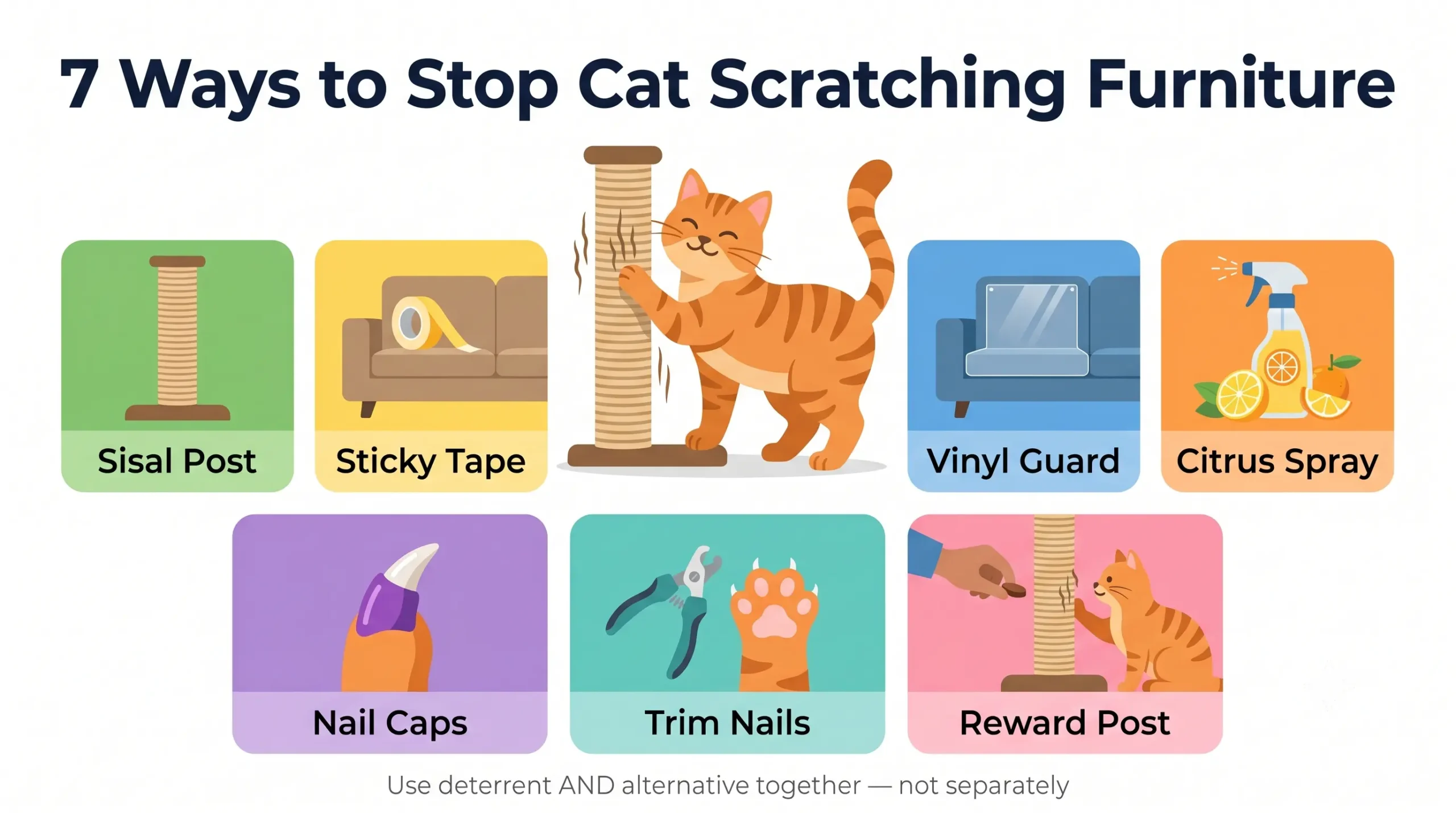
| Method | Best For | Speed |
|---|---|---|
| Tall sisal scratching post | Permanent redirection | Days to weeks |
| Double-sided tape | Immediate deterrence | Immediate |
| Clear vinyl protectors | Protecting sofas and leather | Immediate |
| Deterrent spray | Making surfaces unappealing | Immediate |
| Nail caps | Preventing damage during retraining | Same day |
| Regular nail trimming | Reducing damage significantly | Ongoing |
| Positive reinforcement | Building lasting new habits | 2–4 weeks |
1. Provide the Right Scratching Post
This is the most important step. Most cats ignore scratching posts because they are too short. Your post must be at least 28–32 inches tall — enough for a full body stretch. Sisal rope is the most effective material for most cats. Place it directly beside the furniture being scratched — not across the room. Move it gradually once the habit forms.
2. Apply Double-Sided Tape
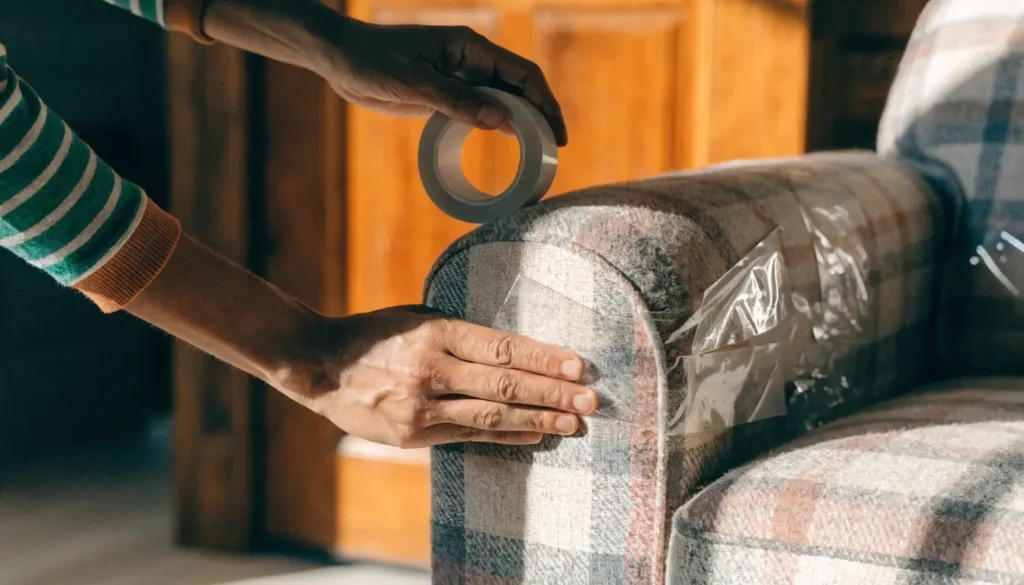
Cats hate sticky textures on their paws. Apply double-sided tape along the scratched areas and most cats avoid those spots immediately. Test a hidden area of fabric first. Remove gradually once the new scratching habit is established.
3. Use Clear Vinyl Furniture Protectors
Transparent plastic panels adhere to the sides and arms of sofas — completely invisible in normal use, highly effective at blocking scratching access. Best used during the active retraining period, then removed once habits shift.
4. Apply Deterrent Spray
Citrus-based and herbal sprays make surfaces unappealing to cats. Apply along scratching zones and reapply every 2–3 days. The homemade version below costs almost nothing and works as well as commercial options for most cats.
5. Use Nail Caps
Soft vinyl caps fit over your cat’s claws using pet-safe adhesive. Completely harmless, they last 4–6 weeks and prevent scratching damage entirely during the retraining period. Your vet can apply the first set and show you the technique.
6. Trim Nails Regularly
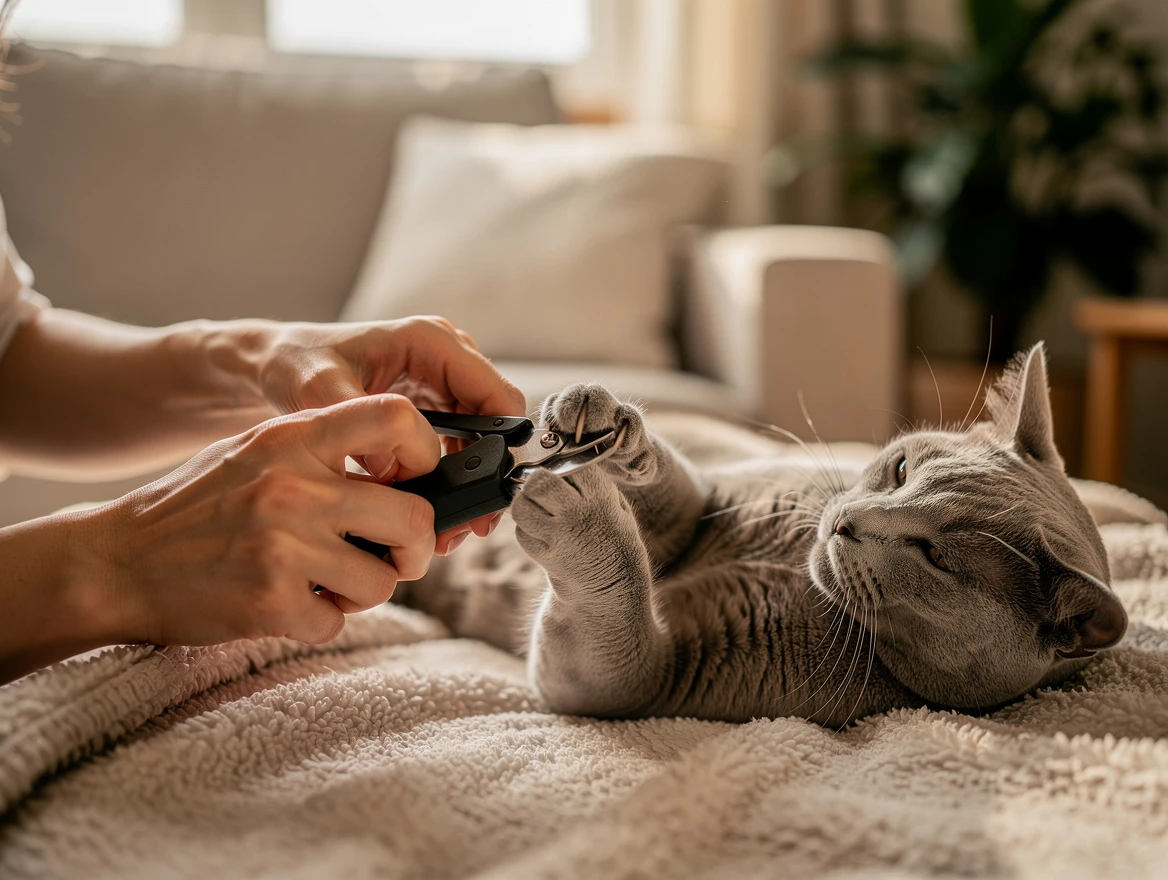
A cat with trimmed nails does significantly less damage even when they do scratch. Every 2–3 weeks is sufficient for most indoor cats. Your vet can show you the correct technique if you are unsure where to cut.
7. Positive Reinforcement
Every time your cat uses the scratching post instead of the furniture — reward immediately with a treat or verbal praise. Never punish scratching on furniture — punishment teaches your cat not to scratch when you are watching, not to stop scratching. Redirection and reward builds permanent habits.
Homemade Spray to Stop Cats From Scratching Furniture
You do not need to buy anything special. This homemade spray stops cats from scratching furniture using ingredients you almost certainly already have:
🍋 Citrus Deterrent Spray
1 cup water · 10–15 drops lemon or orange essential oil · 1 tablespoon white vinegar (optional)
Mix in a spray bottle, shake well, apply lightly to furniture surfaces. Reapply every 2–3 days or after cleaning. Test on a hidden area first to check for staining.
🌿 Rosemary Spray (how to keep cats from scratching furniture vinegar-free)
Boil a handful of fresh rosemary in 2 cups of water for 10 minutes. Cool, strain, pour into spray bottle. Safe for fabric, non-toxic, and most cats strongly dislike the scent.
What Scent Will Deter Cats From Scratching Furniture
Cats have an extremely sensitive sense of smell. The scents they find most repellent are citrus (lemon, orange, grapefruit), rosemary, eucalyptus, and lavender. Commercial cat scratching furniture deterrent sprays use these compounds in concentrated form. The homemade citrus spray above is equally effective and significantly cheaper.
How to Stop a Cat From Scratching Leather Furniture
Leather requires a specific approach because it absorbs scent easily. If your cat has already scratched a leather surface, their scent is embedded there — which draws them back every time. Clean the scratched area thoroughly with a pet-safe leather cleaner first, otherwise you are fighting uphill against their own scent signal.
Then apply clear vinyl scratch guard panels along the edges and corners — the most targeted zones. These adhere directly to leather without damage and are essentially invisible. Add a sisal scratching post placed right beside the sofa — sisal offers similar resistance that satisfies the same urge that leather does.
Cat Scratch Furniture Protectors — What Works
- Clear vinyl panels — adhere to sofa arms and sides, transparent, removable. Best all-around option.
- Corner scratch guards — L-shaped guards for corners, which are the most targeted scratching zones
- Double-sided tape strips — inexpensive, highly effective during training, test for residue first
- Slipcovers — remove the familiar texture entirely during the retraining transition period
How to Train a Cat Not to Scratch
Punishment does not work with cats. Spraying water, clapping, or yelling teaches them not to scratch when you are watching — not to stop scratching. The moment you leave the room, the behavior resumes.
The correct training method:
- Place a tall sisal post directly beside the furniture being scratched
- Rub catnip into the post and place treats on the base
- Every time your cat uses the post — reward immediately
- If you catch scratching furniture — redirect calmly to the post, reward any post interaction
- Apply tape or protectors to furniture during the training period
- Once the post habit is established (usually 2–4 weeks), gradually move it to your preferred location
How to Stop Cats From Scratching Furniture Naturally
The most natural approach: provide appropriate scratching surfaces and use plant-based deterrents. Sisal posts, corrugated cardboard scratchers, and the rosemary or citrus sprays above involve nothing synthetic or harmful. Regular nail trimming is also completely natural and significantly reduces damage.
A sudden increase in scratching can signal stress or anxiety — new pets, new people, or schedule changes. If the behavior escalated without an obvious cause, a vet check is worth considering. Related: My Cat Is Being Bullied by Another Cat Outside — territorial stress is a common trigger for increased indoor scratching.
Why Declawing Is Never the Answer
Declawing is not a nail trim. It is the surgical amputation of the last bone of each toe — equivalent to removing a human finger at the last knuckle. It causes lasting pain, changes the way cats walk, and is strongly linked to increased biting and litter box avoidance. It is banned or restricted across many countries and a growing number of US states.
Every problem owners hope to solve with declawing can be resolved with the methods in this guide. The scratching problem is genuinely solvable without it.
Deterrent Cost and Effectiveness Comparison
| Deterrent | Effectiveness | Cost | Cat Stress |
|---|---|---|---|
| Tall sisal scratching post | ⭐⭐⭐⭐⭐ | $20–$150 | None |
| Positive reinforcement | ⭐⭐⭐⭐⭐ | $0 + treats | None |
| Citrus or vinegar spray | ⭐⭐⭐⭐ | $0–$20 | Low |
| Clear vinyl furniture protectors | ⭐⭐⭐⭐ | $10–$30 | None |
| Regular nail trimming | ⭐⭐⭐⭐ | $0–$30 | Low |
| Double-sided tape | ⭐⭐⭐ | $5–$15 | Low |
| Nail caps | ⭐⭐⭐ | $30–$60 | Moderate |
Environmental Enrichment — Often the Missing Piece

Bored cats scratch more. A cat that has adequate stimulation — climbing trees, window perches, interactive toys, and regular play sessions — redirects physical energy away from furniture naturally.
- Rotate toys every few days to maintain novelty
- Window perches keep indoor cats engaged with the outside world
- Cat trees with sisal-wrapped posts give climbing and scratching in one
- In multi-cat homes — provide at least one scratching surface per cat plus one extra
When to See a Vet About Scratching Behavior
A sudden increase in scratching — especially frantic or focused on new areas — can signal stress, skin problems, allergies, or pain. If scratching escalated without an obvious environmental cause, a vet visit is worth considering.
Flea dermatitis, contact allergies, and anxiety all commonly present as increased scratching behavior. If your cat is also showing other symptoms — appetite changes, lethargy, or hiding — see the vet sooner. Related: My Cat Is Lethargic But Eating and Drinking.
Common Mistakes to Avoid
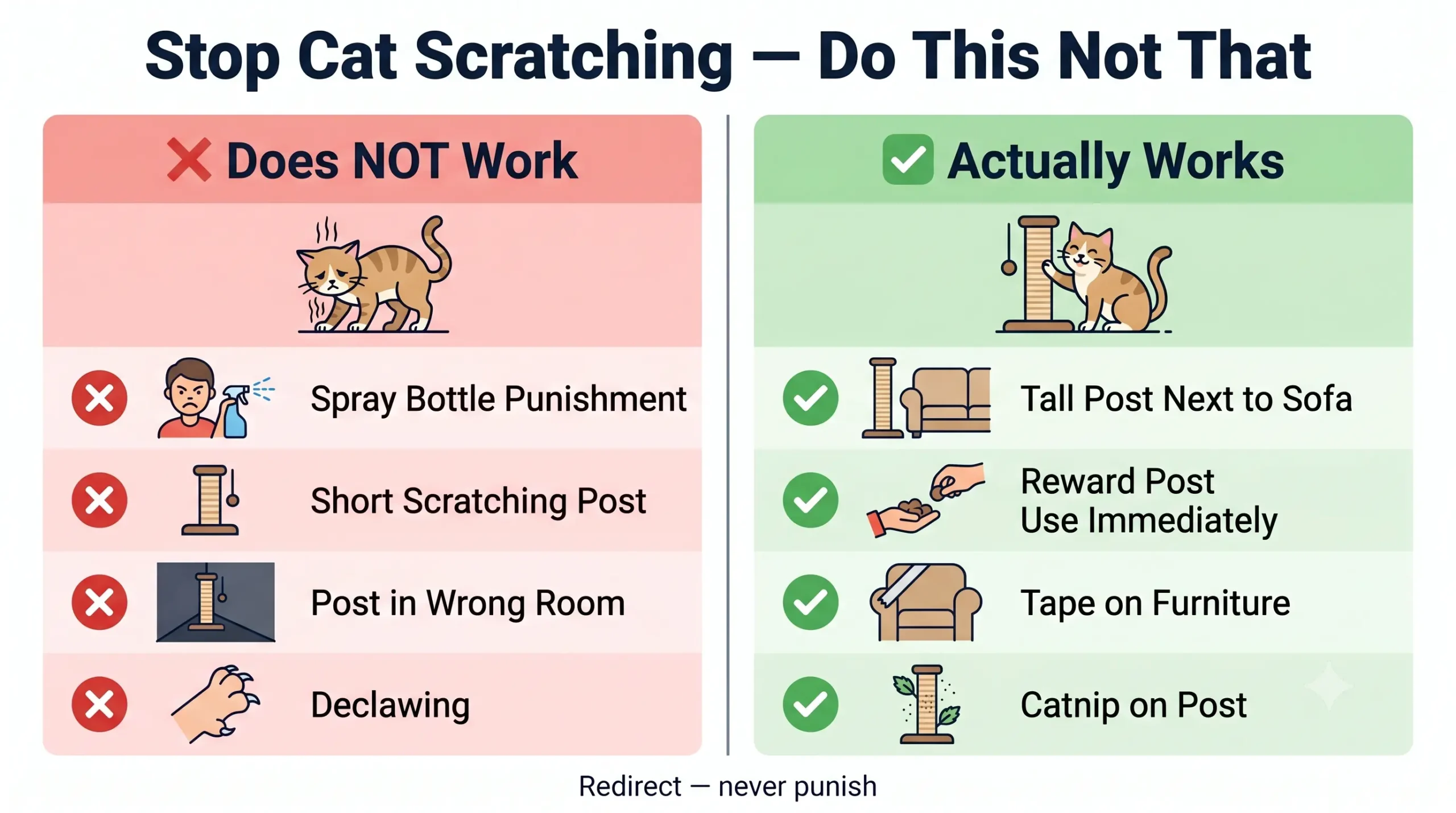
- Buying a short post — the most common reason cats ignore scratching posts. Under 28 inches = not useful
- Wrong placement — a post in the corner of a spare room will be ignored. It must be where your cat already spends time
- Punishing scratching — punishment increases stress and worsens the behavior. Redirect, never punish
- Using deterrents without providing an alternative — deterrents alone never solve the problem permanently
- Giving up too soon — most cats shift habits within 2–4 weeks with consistent application of all methods simultaneously
Place a tall sisal post directly beside the couch. Apply double-sided tape or a clear vinyl protector to the scratched areas. Reward your cat every time they use the post. Most cats shift habits within 2–4 weeks with consistent redirection.
Citrus (lemon, orange), rosemary, eucalyptus, and lavender are the most effective natural deterrents. Mix lemon essential oil with water in a spray bottle and apply to furniture surfaces. Reapply every 2–3 days.
Yes — white vinegar diluted with water is an effective deterrent for many cats. Add it to the citrus spray for extra deterrent power. Test on a hidden fabric area first to check for discoloration.
With consistent redirection, deterrents applied to furniture, and rewards for post use — most cats shift habits within 2–4 weeks. Older cats with deeply ingrained routines may take 6–8 weeks. Consistency across everyone in the household is the most important factor.
Yes — clear vinyl panels and double-sided tape are consistently effective. They work best as part of a complete strategy alongside a good scratching alternative. Use during the retraining period, then remove once new habits are established.
Start deterrents before the cat ever scratches — not after. Apply tape or vinyl protectors to new furniture immediately and ensure a good scratching post is already available nearby. Prevention is always easier than correction.
Sisal is almost always better. It has the right resistance, shreds satisfyingly, and is highly durable. Carpet can confuse cats — if the texture resembles your furniture, it reinforces rather than redirects the scratching habit.
The Bottom Line
How to stop a cat from scratching furniture — the strategy that works every time: give them something better to scratch, make the furniture less appealing, and reward the right behavior consistently. Your cat is not being destructive. They are being a cat. Work with that — not against it.
This article is for educational purposes only.
Related Articles
Stress increases indoor scratching behavior.
Understanding feline communication and instincts.