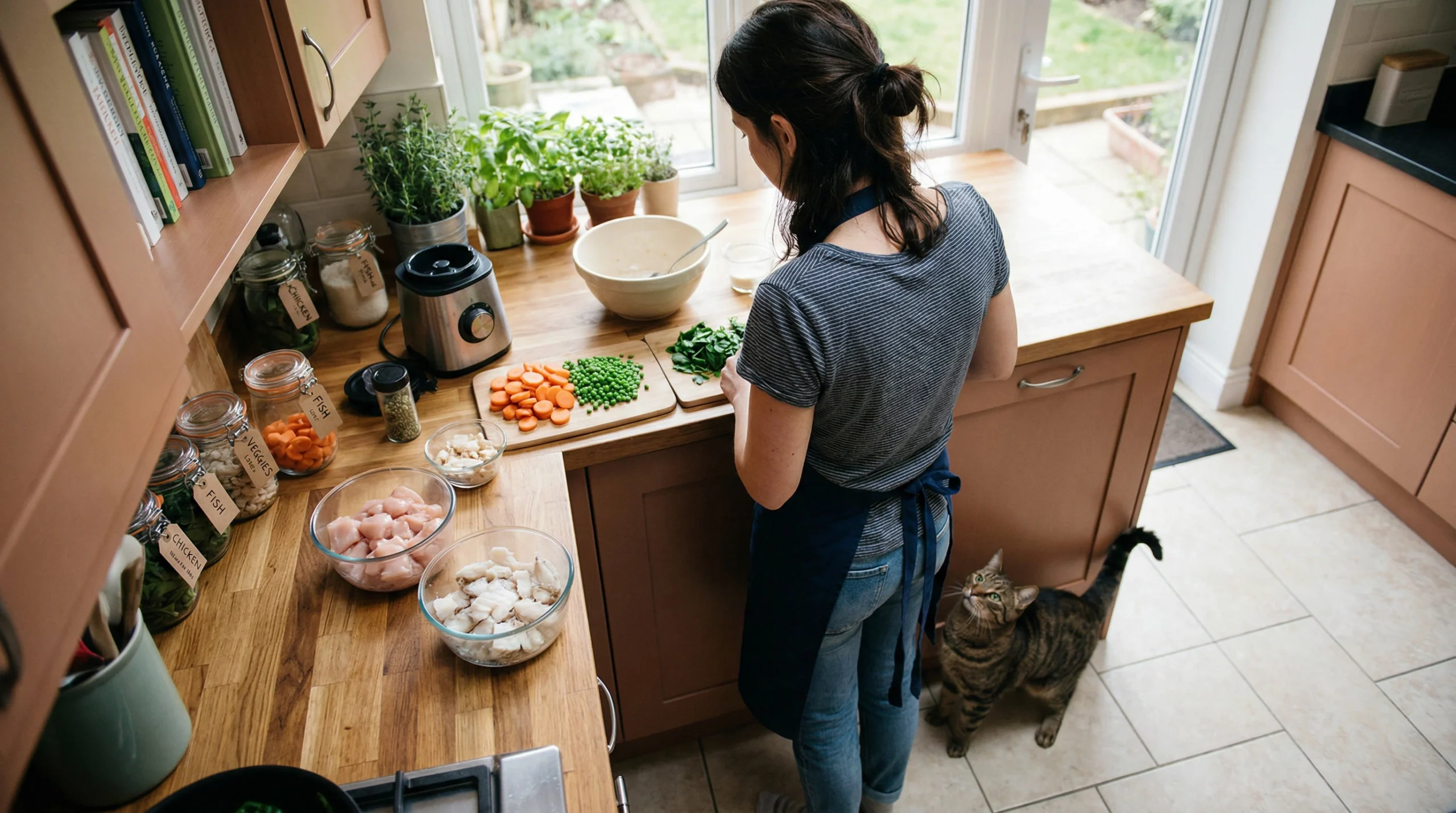
Home cooked cat food recipes give you complete control over what goes into your cat’s bowl — no mystery ingredients, no recalls, no fillers. When done correctly, homemade meals can produce visibly healthier cats with shinier coats, better digestion, and more energy.
The key phrase is “done correctly.” Cats are obligate carnivores with specific nutritional requirements that must be met exactly or serious health problems follow, sometimes without any obvious symptoms until months in. Here is everything you need to know before you start.
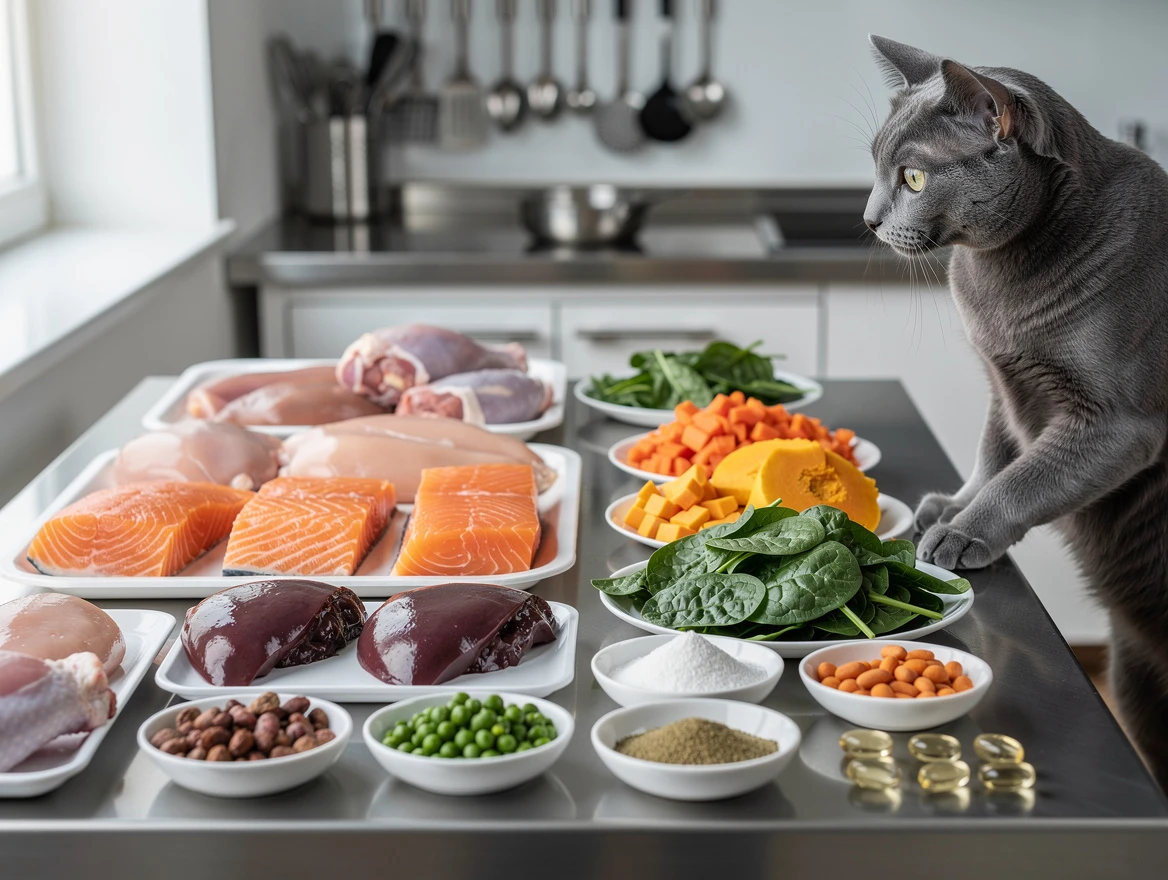
Home cooked cat food recipes need high-quality animal protein, taurine, essential fatty acids, and a complete feline diet balancer — not a generic multivitamin. Never skip taurine — cats can’t produce it themselves, and deficiency causes heart disease and blindness. Before this becomes your cat’s only food, get the recipe checked by your vet or a veterinary nutritionist.
- Never skip taurine — deficiency causes dilated cardiomyopathy and retinal degeneration
- Do not add garlic, onion, grapes, raisins, or any seasoning — all are toxic to cats
- Do not feed homemade food without a complete feline diet balancer (not a generic multivitamin) unless a vet has confirmed the recipe is nutritionally complete on its own
- Talk to your vet before switching — especially for kittens, seniors, or cats with health conditions — and before this becomes your cat’s sole diet, a veterinary nutritionist review is worth the cost
Why Choose Home Cooked Cat Food
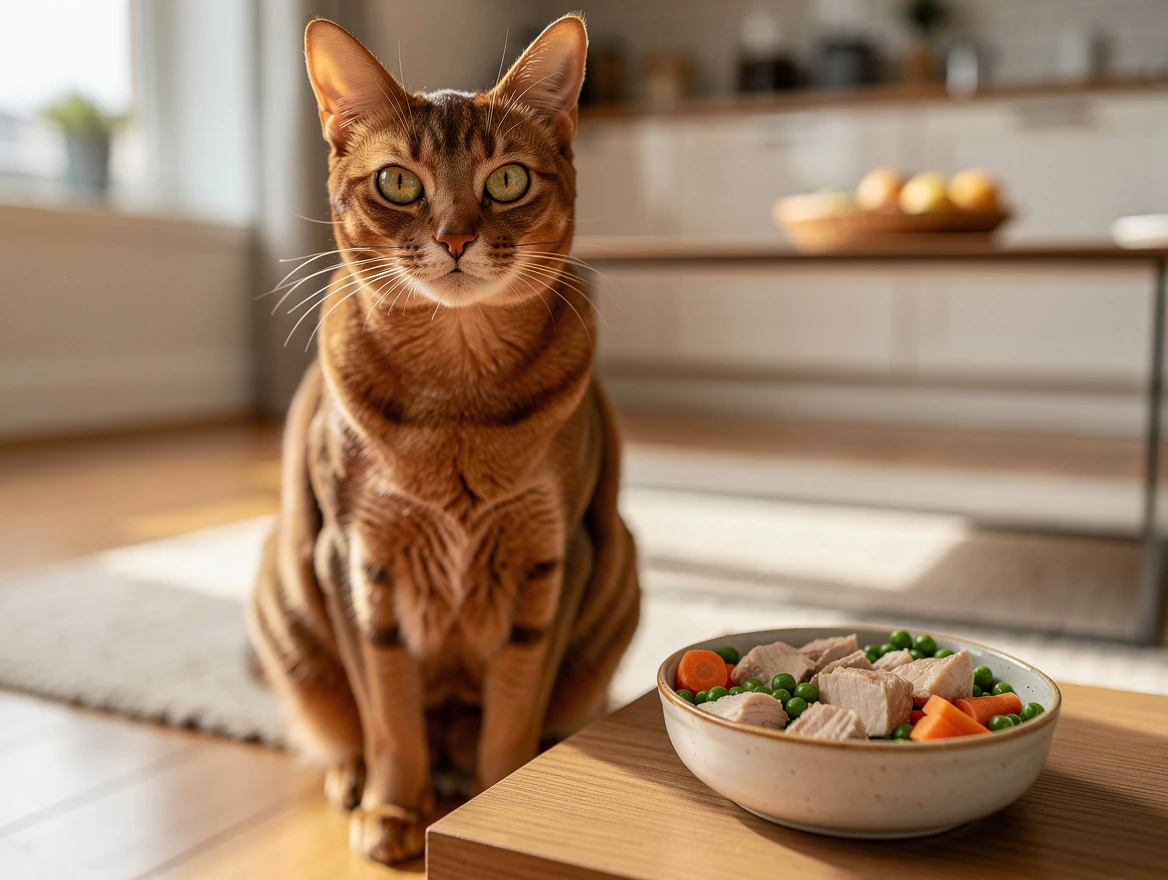
| Benefit | What It Means for Your Cat |
|---|---|
| Complete ingredient control | No fillers, artificial preservatives, or mystery proteins |
| Allergy management | Eliminate specific proteins or additives causing reactions |
| Higher moisture content | Supports urinary and kidney health — genuinely helpful for cats |
| Customizable for age | Adjust for kittens, adults, seniors, or cats with health conditions |
| Cost | Can be cheaper than premium wet food when batch cooked |
Essential Nutrients Your Cat Must Have
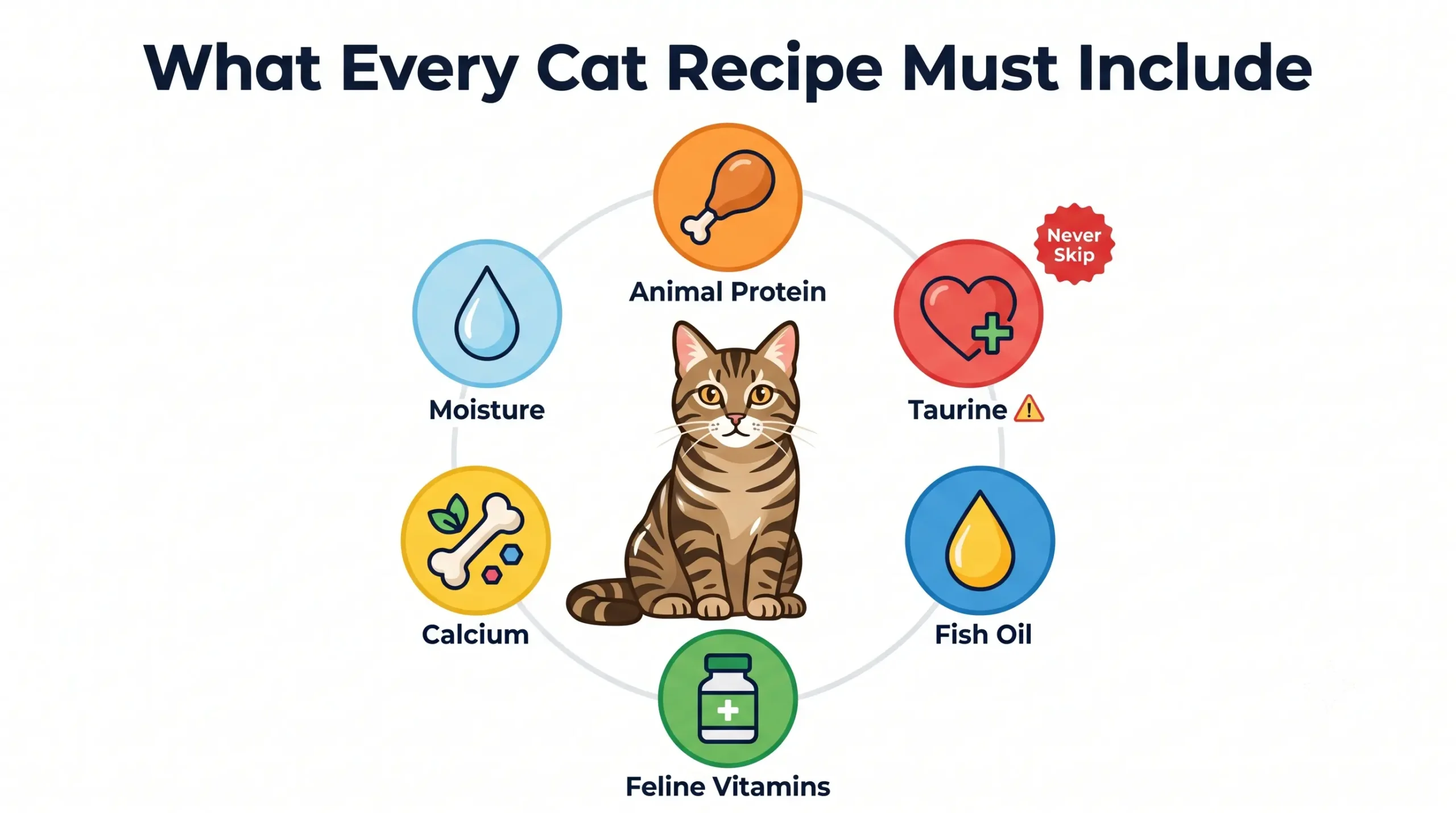
This is where most people go wrong. A homemade diet that isn’t nutritionally complete causes serious problems over months, sometimes with no obvious warning sign until it’s advanced.
- Protein (30–40%) — must come from animal sources: chicken, turkey, fish, rabbit, beef. Cats can’t thrive on plant protein.
- Taurine — cats can’t synthesize taurine from other amino acids. Without supplementation, deficiency causes heart failure and blindness over months to years. Always add taurine powder.
- Essential fatty acids (9–15% fat) — omega-3 and omega-6 from fish oil support skin, coat, brain, and immune health.
- Calcium and phosphorus — the ratio matters as much as the amount, and meat alone is calcium-poor relative to phosphorus. This is the single most common gap in homemade diets — see below.
- Vitamin A — cats can’t convert beta-carotene to vitamin A the way humans can. It has to come from animal liver or a supplement — but more isn’t better; too much liver causes vitamin A toxicity.
- Moisture — cats evolved getting most hydration from food. Wet homemade food is far better than dry for urinary health.
7 Simple Home Cooked Cat Food Recipes
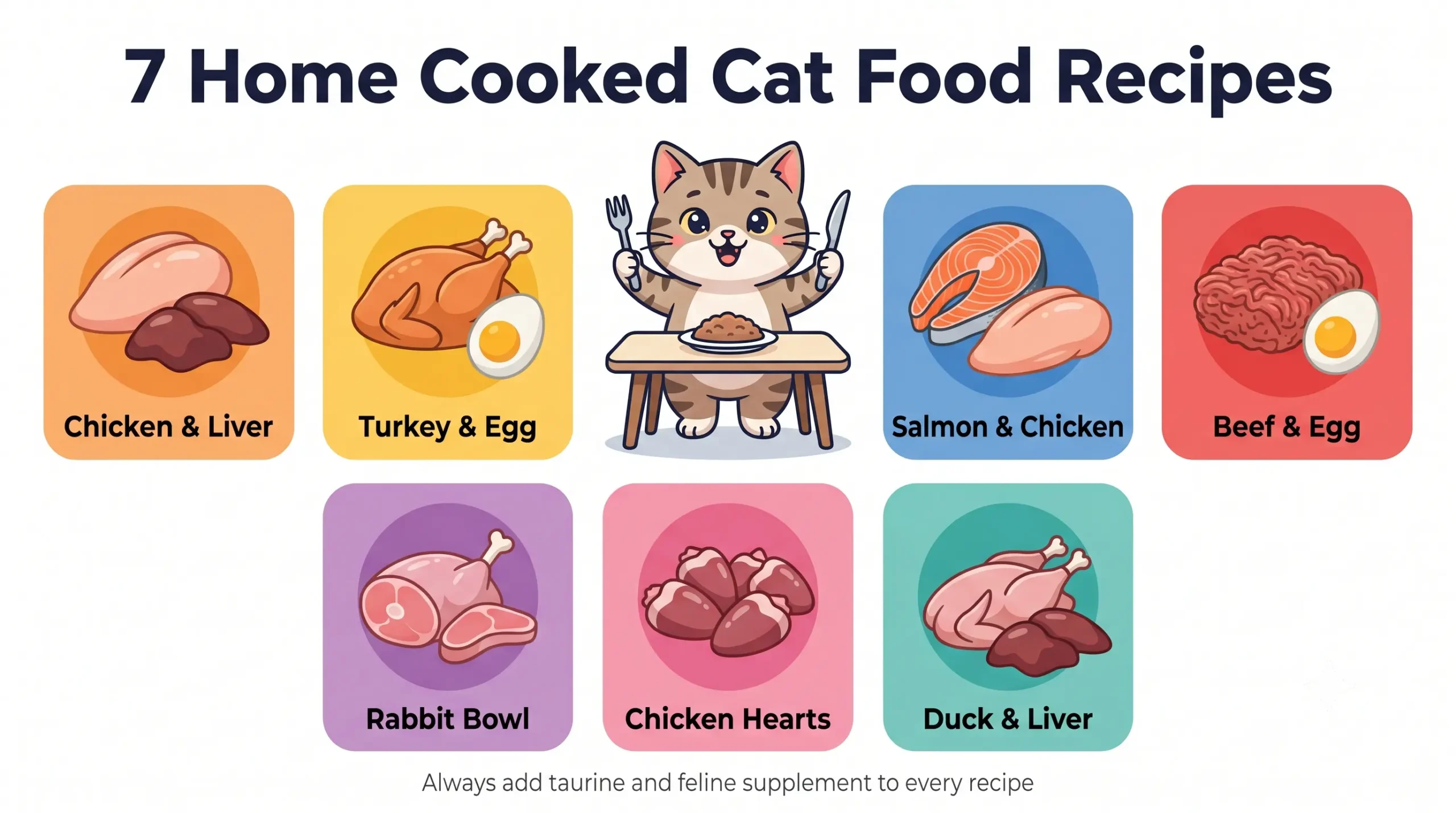
All recipes below follow the same principle: cook the protein gently, add supplements after cooling, add a small amount of low-sodium broth for moisture. Always add taurine and a complete feline diet balancer to every recipe — not a generic multivitamin, for the reason above. Treat the ingredient lists below as the protein base; the balancer supplement is what actually makes the meal complete.
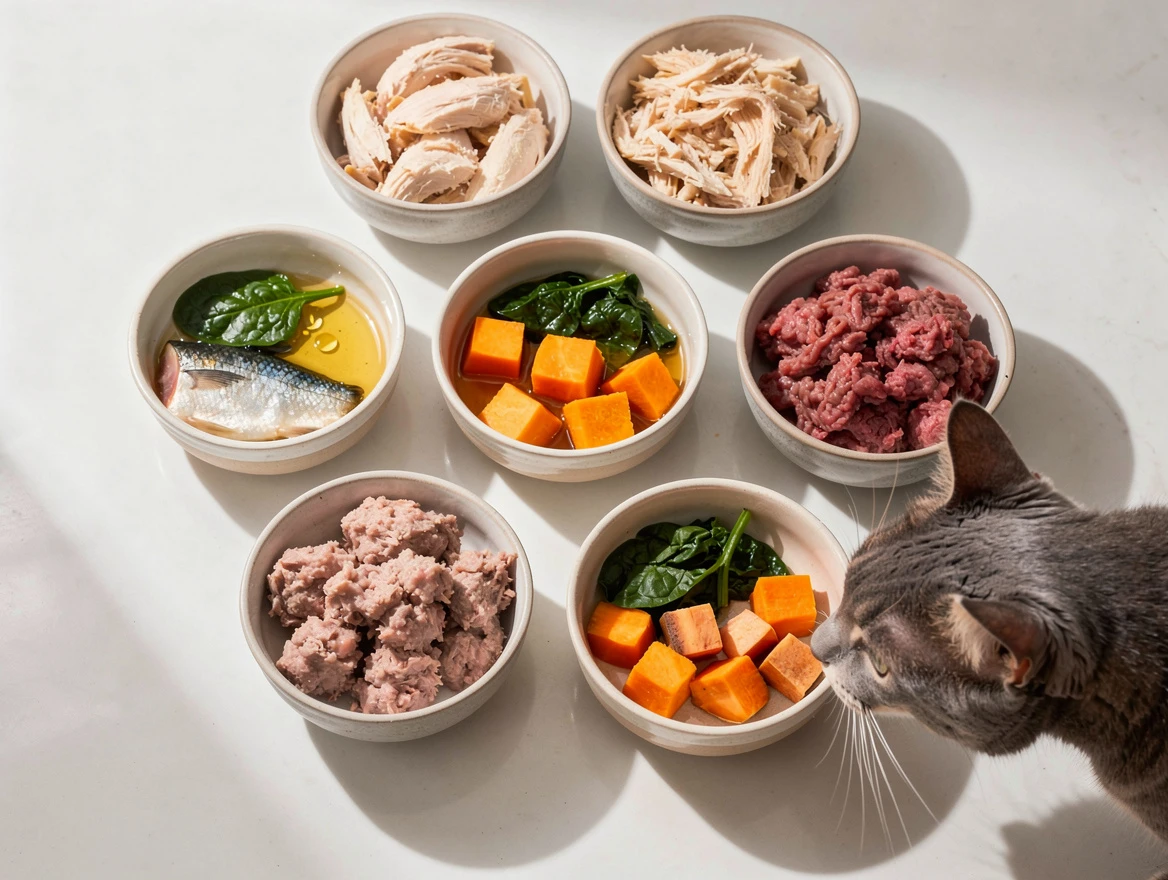
1. Chicken and Liver Feast
½ lb cooked chicken breast · 1 oz cooked chicken liver · ¼ cup cooked pumpkin · 1 tsp fish oil · taurine supplement · complete feline diet balancer
2. Turkey and Egg Mix
½ lb ground turkey (cooked) · 1 hard-boiled egg yolk · 1 tbsp fish oil · taurine supplement · complete feline diet balancer
3. Salmon and Chicken Blend
½ cup steamed boneless salmon · ¼ lb cooked chicken · ⅓ cup low-sodium fish broth · taurine supplement · complete feline diet balancer
4. Beef and Egg Delight
½ lb lean ground beef (cooked) · 1 hard-boiled egg, mashed · 1 tsp fish oil · taurine supplement · complete feline diet balancer
5. Rabbit and Sweet Potato
½ lb cooked rabbit meat · ¼ cup mashed sweet potato · 1 tsp flaxseed oil · taurine supplement · complete feline diet balancer
6. Chicken Heart Power Bowl
¼ lb chicken hearts (cooked) · ¼ lb chicken breast (cooked) · ¼ cup finely chopped carrots · taurine supplement · complete feline diet balancer
Chicken hearts are naturally high in taurine — one of the best ingredients for homemade cat food, though the added taurine supplement still matters.
7. Duck and Liver Special
½ lb cooked duck meat · 1 oz cooked liver · 1 tsp fish oil · taurine supplement · complete feline diet balancer
Two recipes above include 1 oz of liver for vitamin A. Don’t scale that amount up — liver is the one ingredient here where more is actively harmful. Too much liver over time causes vitamin A toxicity, which affects bones and joints. The amount listed is the ceiling, not a suggestion to round up.
Home Cooked Recipes for Indoor Cats
Indoor cats have lower caloric needs than outdoor cats but the same nutritional requirements. Reduce portion sizes by roughly 15–20% compared to an active outdoor cat. Favor the moisture-rich recipes to help compensate for lower activity levels and support urinary health — indoor cats are particularly prone to urinary blockages and kidney issues from inadequate hydration. The chicken liver feast and salmon blend both work well here.
Adding a Homemade Bone Broth
All the recipes above are already wet recipes, but you can increase their moisture further with a homemade bone broth. It’s one of the more useful additions you can make to any homemade meal:
Simple cat bone broth: Simmer 2 lbs of chicken bones in filtered water with 2 tablespoons of apple cider vinegar for 12–24 hours. Strain thoroughly through a fine mesh sieve so no bone fragments remain, then cool and refrigerate. Add 2–4 tablespoons to any recipe above. The long simmer supports mineral extraction and most cats genuinely love the taste.
Commercial vs Homemade — Comparison
| Feature | Commercial Cat Food | Home Cooked Cat Food |
|---|---|---|
| Ingredient control | Limited — varies by brand | Complete control |
| Nutritional balance | Balanced in premium brands, formulated to AAFCO standards | Balanced only with a proper diet balancer, not a general multivitamin |
| Moisture content | Varies (wet vs dry) | Customizable — always high |
| Preparation time | None | 1–2 hours per week batch cooking |
| Cost per month | $150–$400 for premium wet | $100–$250 with smart sourcing |
| Risk of deficiency | Low with premium brands | Meaningful without correct supplementation — this is the main trade-off |
Common Mistakes to Avoid
- Skipping taurine — the single most dangerous mistake. Always add it.
- Using a generic multivitamin instead of a complete diet balancer — meat alone doesn’t provide complete nutrition, and a general multivitamin usually doesn’t correct the calcium:phosphorus imbalance
- Adding seasoning — garlic, onion, salt, and herbs have no place in cat food
- Overcooking protein — destroys taurine and reduces the bioavailability of other amino acids. Cook gently, not aggressively.
- Too much liver — vitamin A toxicity from over-supplementing liver is a real and avoidable risk
- Too many vegetables or grains — cats are carnivores. Keep plant matter minimal.
- Treating “consult your vet” as optional — especially before this becomes a cat’s sole diet, and especially for cats with existing conditions like kidney disease or diabetes
Storage and Feeding Frequency
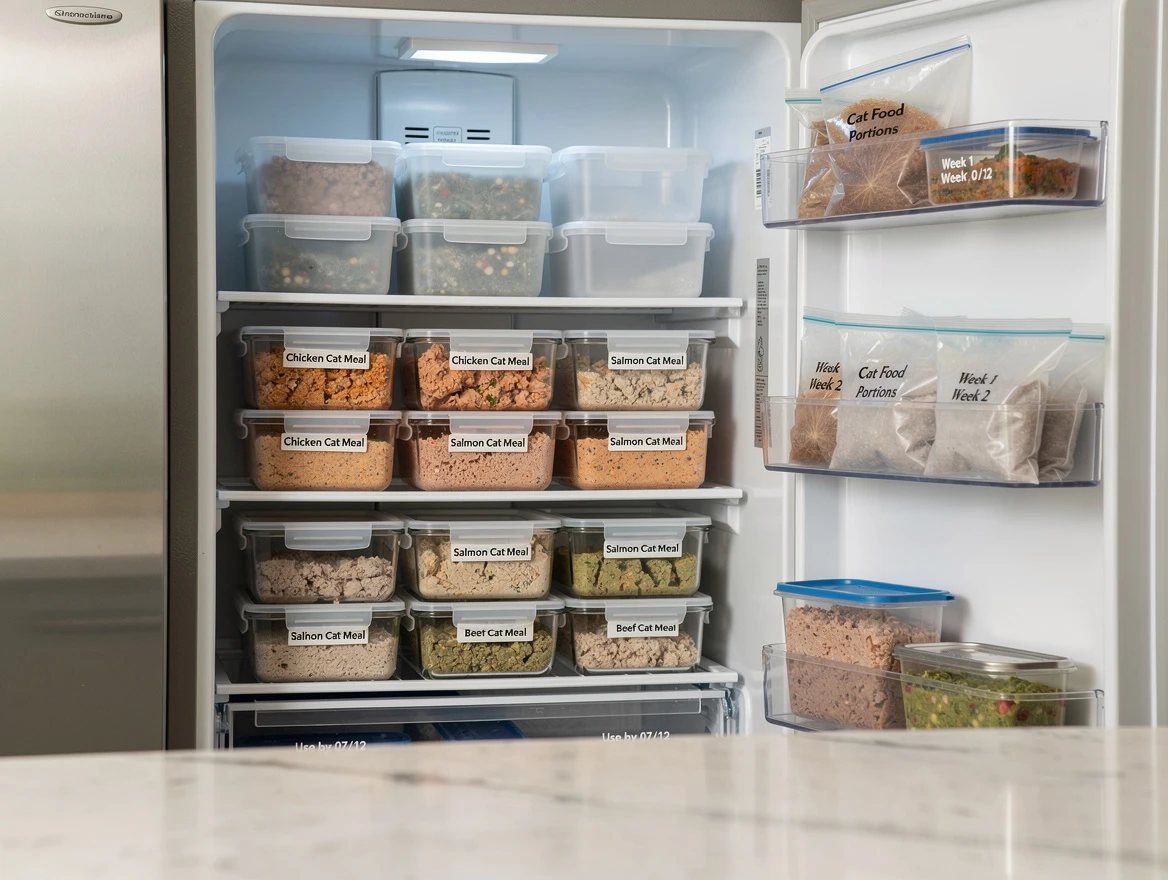
- Refrigerator — up to 3 days maximum in airtight glass containers
- Freezer — up to 1 month (2–3 weeks is better for quality)
- Thawing — always in the refrigerator, never at room temperature
- Serving — warm slightly before serving to release aroma and improve palatability
- Frequency — adult cats generally do well on 2 meals daily. Many owners rotate 2–3 homemade meals a week alongside a quality commercial wet food.
Frequently Asked Questions
Cook a quality protein source (chicken, turkey, fish, beef) gently without seasoning. Add fish oil, taurine powder, and a complete feline diet balancer after cooking — not a generic multivitamin. Add low-sodium broth for moisture. Serve in small portions, refrigerate for up to 3 days.
Chicken, turkey, and salmon-based recipes are the most popular and well-tolerated. Chicken hearts and liver are excellent additions since they’re naturally high in taurine. The best recipe is the one that’s actually nutritionally complete — protein choice matters less than getting the supplementation right.
Yes, when done correctly. The key is quality ingredients, taurine in every batch, a proper diet balancer rather than a generic multivitamin, and confirming with your vet — ideally a veterinary nutritionist — that the recipe meets your specific cat’s needs before it becomes a regular part of their diet.
Gradually mix increasing amounts of homemade food with their current food over 7–10 days. A sudden switch often causes digestive upset. Most cats fully transition within 2 weeks.
Kittens have higher caloric and nutritional needs than adult cats, and the margin for error is smaller. A vet consultation is essential before feeding a kitten a homemade diet — the supplement ratios and protein levels need careful adjustment for growth, and this is a case where professional review matters more, not less.
The Bottom Line
Home cooked cat food can be one of the more caring things you do for your cat — when it’s done with the right knowledge. The recipes above are a starting point, not a finished, vetted diet. The non-negotiables are taurine, a proper diet balancer rather than a generic multivitamin, quality protein, restraint with liver, and a vet’s input before this becomes your cat’s main source of food.