Published: 28 March 2026 | Last Updated: 28 March 2026 | Read Time: 11 minutes
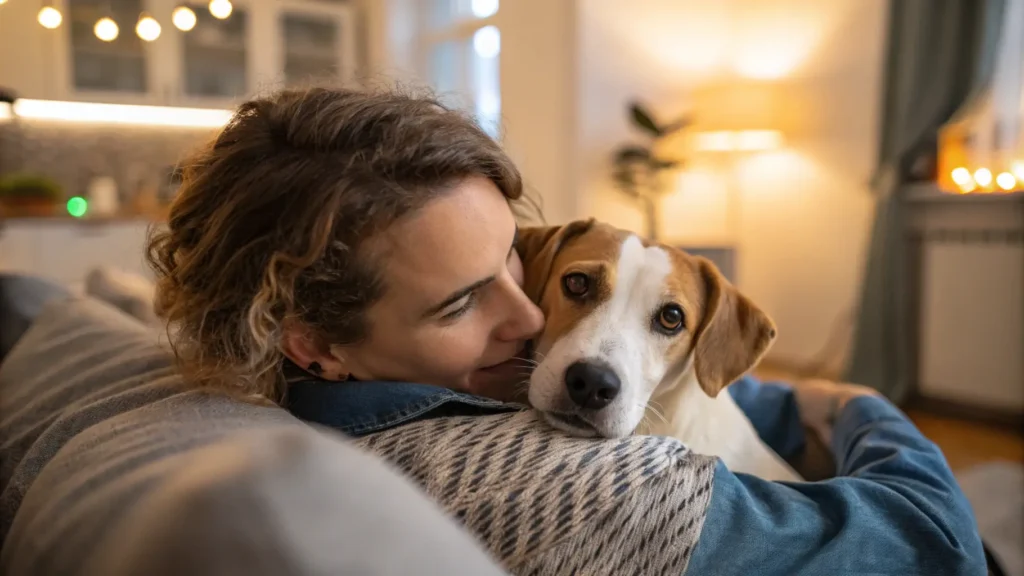
Why is my dog suddenly clingy — that’s the question I hear most often from dog owners who are equal parts touched and concerned. One day your dog is independent and happy napping across the room. The next, they’re glued to your side, following you to the bathroom, pressing against your legs every time you sit down. Sometimes it’s love. Sometimes it’s anxiety. And sometimes — and this is the part that matters — it’s the first sign that something is physically wrong. This guide covers all 9 reasons your dog is suddenly clingy, how to tell them apart, and exactly what to do about each one.Quick Answer: Why Is My Dog Suddenly Clingy?
| Reason | Urgency | What to Do |
|---|---|---|
| Stress or routine change | 🟡 Low | Restore routine, add enrichment |
| Separation anxiety | 🟡 Medium | Training + possible vet consult |
| Fear (storms, fireworks) | 🟡 Low | Safe space, calming aids |
| Illness or pain | 🔴 High | Vet visit within 24–48 hours |
| Hormonal changes (female) | 🟡 Medium | Monitor for pregnancy/heat |
| Aging and cognitive decline | 🟡 Medium | Vet evaluation, management plan |
| New baby or pet | 🟡 Low | Gradual adjustment, reassurance |
| Learned behavior | 🟢 Low | Adjust response pattern |
| Sensing your emotions | 🟢 Low | Normal — your dog loves you |
What Does “Suddenly Clingy” Actually Mean?
When we say a dog is suddenly clingy, we mean a noticeable behavioral shift — a dog who was previously comfortable being alone or in another room is now following you everywhere, demanding constant contact, and showing signs of distress when you move away.
The word “suddenly” is the key signal. Gradual increases in affection are usually benign. A sudden change in clingy behavior — especially if it appeared within hours or over a day or two — is worth paying attention to, because abrupt behavioral changes in dogs frequently have a specific, identifiable cause.
According to the American Veterinary Medical Association, sudden changes in a dog’s behavior, including increased attachment, are among the most common reasons owners seek veterinary consultations — and in roughly 30% of cases, the behavior change is linked to an underlying medical condition.

9 Reasons Why Your Dog Is Suddenly Clingy
🐾 1. Stress From a Routine Change
Dogs are creatures of absolute routine. Their nervous systems are calibrated to expect predictable patterns — the same feeding times, the same walk schedule, the same people coming and going at the same hours. When that pattern breaks, even in ways that seem minor to us, dogs often respond with increased proximity-seeking.
Common triggers: a new work schedule, a family member leaving or arriving, moving to a new home, a new pet, holiday disruptions, construction noise nearby, or even a change in your own stress level.
Why is my dog suddenly clingy after a specific event? Because they’re using you as their anchor point in an environment that no longer feels predictable. This is one of the most benign forms of clinginess — it typically resolves within 1–3 weeks as the new normal establishes itself.
What to do: Maintain as much routine consistency as possible. Feed, walk, and interact at the same times each day. Physical exercise helps enormously — a dog who has had adequate physical and mental stimulation is a dog who can settle.
🐾 2. Separation Anxiety
Separation anxiety is more than clinginess when you’re home — it’s distress when you leave. Dogs with separation anxiety often show clingy behavior as a precursor: following you room to room, becoming anxious as you pick up your keys, positioning themselves near the door.
Why is my dog suddenly clingy and whining? This combination specifically points toward separation anxiety. The whining when you prepare to leave, the frantic greeting when you return, and the destructive or vocal behavior reported by neighbors while you’re out are the classic triad.
According to Cornell University College of Veterinary Medicine, separation anxiety affects an estimated 14–20% of dogs and is one of the most common behavioral conditions treated by veterinary behaviorists. It’s also highly treatable when addressed properly.
What to do: Don’t punish the clingy behavior — it makes anxiety worse. Begin desensitization training: practice leaving for very short periods (30 seconds to start) and gradually increasing. For moderate to severe cases, a consultation with a veterinary behaviorist or a certified dog trainer specializing in anxiety is worth the investment.
📌 Disclosure: Some product links below are affiliate links. I earn a small commission if you buy through them at no extra cost to you. This doesn’t influence my recommendations.
Calming aids that have evidence behind them: Adaptil diffusers (synthetic dog-appeasing pheromone, clinically studied), compression wraps like the Thundershirt, and for severe cases, veterinary-prescribed anti-anxiety medication. These are tools, not replacements for behavioral training.
🐾 3. Fear of Specific Triggers
Why is my dog suddenly clingy during a storm? Because thunderstorms, fireworks, loud machinery, and unfamiliar sounds are among the most common acute fear triggers in dogs. The sudden clinginess during or before these events is your dog seeking the safest resource they know — you.
Some dogs have a remarkable ability to sense barometric pressure changes before a storm arrives, making them clingy before you’ve heard a single rumble of thunder.
What to do: Create a designated safe space — a covered crate or a quiet interior room where your dog can retreat. Don’t force reassurance (excessive soothing can reinforce fear responses), but do allow your dog access to you. Calming aids (see above) can help during predictable fear events like fireworks season.
🐾 4. Illness or Pain — The One You Can’t Ignore
This is the reason that makes sudden clinginess worth taking seriously. Dogs who are in pain or feeling physically unwell very often respond by seeking close contact with their owner — it’s a vulnerability response rooted in the instinct to stay near their social group when compromised.
Why is my dog suddenly clingy and acting weird? If the clinginess is accompanied by ANY of these, call your vet:
- Appetite loss or reduced interest in food
- Lethargy or reduced activity
- Vomiting or diarrhea
- Limping, stiffness, or reluctance to move
- Excessive panting without physical exertion
- Changes in thirst or urination patterns
- Unusual breathing patterns
If your dog is not eating but continuing to drink water alongside the sudden clinginess, our guide on dog not eating but drinking water covers the specific causes and when to act.
What to do: If clinginess appears alongside any physical symptoms, don’t wait more than 24–48 hours to contact your vet. A full physical exam and basic bloodwork can identify most common causes quickly.
🐾 5. Hormonal Changes in Female Dogs
Why is my female dog suddenly clingy? Hormonal fluctuations are the most common cause in unspayed females. The two primary scenarios:
Heat cycle: Unspayed females go into heat approximately every 6 months. During the proestrus and estrus phases, many females become noticeably clingier, more affectionate, and more demanding of attention. This is a direct hormonal effect and resolves when the cycle ends (approximately 2–4 weeks).
Pregnancy: A pregnant dog often becomes clingy in the early stages as her body changes and her instincts shift toward nesting and security-seeking. If your female has had contact with an intact male and is suddenly clingy, pregnancy is worth ruling out. A vet can confirm pregnancy via ultrasound from around day 25.
Why is my female dog suddenly clingy and whining? In females, this combination often indicates either the approach of heat, early pregnancy, or a false pregnancy (pseudopregnancy) — a condition where hormonal changes mimic pregnancy symptoms including nesting and clinginess without actual pregnancy.
What to do: If you’re not planning to breed, spaying eliminates hormonal clinginess permanently and reduces the risk of mammary tumors and pyometra (a life-threatening uterine infection).
🐾 6. Aging and Canine Cognitive Dysfunction
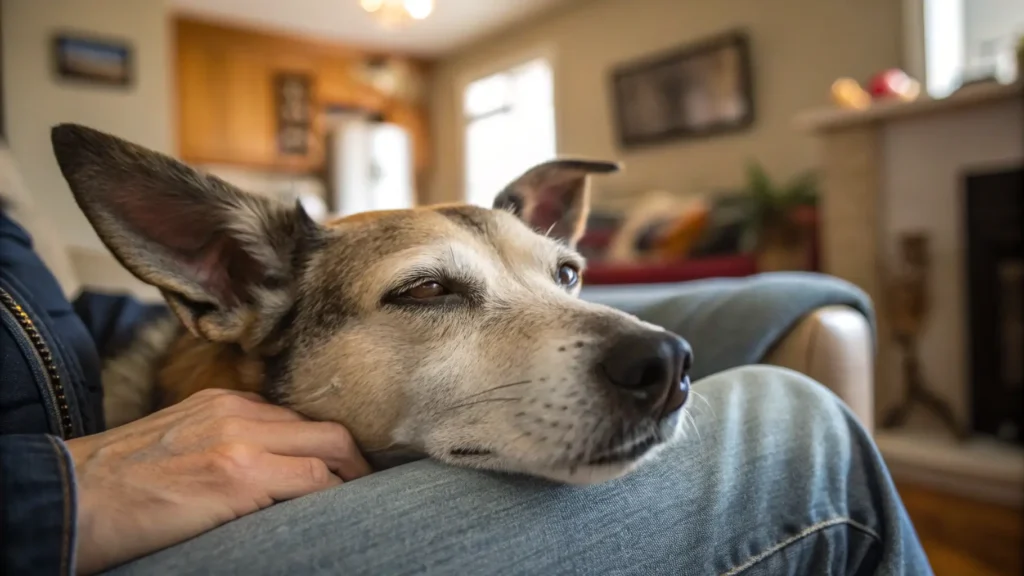
Why is my dog suddenly clingy in their older years? Canine Cognitive Dysfunction (CCD) — the dog equivalent of dementia — is one of the most common and most overlooked causes of sudden clinginess in senior dogs.
Dogs with CCD experience disorientation, memory changes, altered sleep-wake cycles, and increased anxiety. A dog who is confused about their environment naturally gravitates toward their most familiar, comforting anchor — you.
According to the American Animal Hospital Association, CCD affects an estimated 14% of dogs over age 8, rising to over 60% in dogs over 15. It’s significantly underdiagnosed because owners often attribute behavioral changes to “just getting old.”
Signs CCD may be the cause:
- Clinginess that appears worse at night (sundowner syndrome)
- Staring at walls or into space
- Getting “stuck” in corners or behind furniture
- Forgetting previously known commands
- Changes in sleep patterns
- Reduced recognition of familiar people occasionally
What to do: Veterinary evaluation including cognitive assessment. There are medications and supplements that slow cognitive decline — early intervention matters. Environmental management (nightlights, consistent furniture placement, easy access to water) significantly improves quality of life.
🐾 7. A New Baby, Pet, or Family Change
The arrival of a new baby, a new pet, or any significant change in household composition can trigger sudden clinginess in dogs who are adjusting to a shifted social dynamic. Your dog may be seeking reassurance that their place in the family is secure.
This type of clinginess is almost always benign and temporary — it typically resolves within 2–8 weeks as the new normal establishes itself. The dogs who adjust fastest are those whose owners maintain their individual attention and exercise routines despite the household change.
What to do: Don’t reduce one-on-one time with your dog during major household transitions. Even 15 minutes of focused attention and play daily can maintain the bond and reduce anxiety during adjustment periods.
🐾 8. Learned Behavior
Sometimes why your dog is suddenly clingy is simpler than you think: it worked. A dog who received extra attention, treats, or physical affection in response to clingy behavior quickly learns that proximity-seeking gets results. What started as a mild stress response gets reinforced into a persistent pattern.
This is especially common after illness or injury, when owners naturally increase attention — and the dog maintains the clingy behavior long after recovery because the behavior was consistently rewarded.
What to do: Avoid reinforcing clinginess with immediate attention every time it occurs. Instead, reward calm, independent behavior: when your dog settles in their own space, praise them. Teach a “place” command (a designated bed or mat) and reward your dog for going there voluntarily.
🐾 9. Your Dog Is Sensing Your Emotions
Dogs are extraordinarily sensitive to human emotional states. Research from the University of Lincoln found that dogs can distinguish human emotional expressions and respond to them — approaching stressed or upset owners with greater physical closeness than calm ones.
If you’ve been going through a stressful period — work pressure, health concerns, relationship changes — your dog may simply be responding to your emotional state with increased closeness. They’re not reading your mind, but they are reading your body language, voice, and cortisol levels with remarkable accuracy.
This is perhaps the most touching reason why your dog is suddenly clingy. They know something has shifted with you. And they’re staying close.
What to do: Accept it. This is one of the most genuine expressions of the human-dog bond. If your own stress is chronic, ensure your dog is still getting adequate exercise and enrichment — dogs absorb our anxiety and need outlets for it just as we do.
When to See a Veterinarian
Call your vet today if sudden clinginess is combined with:
- Any physical symptoms (appetite loss, vomiting, lethargy, limping)
- Panting without physical exertion
- Disorientation or confusion
- Changes in thirst or urination
- Clinginess that appeared within hours and is severe
- Senior dog with sudden personality shift
Schedule within the week if:
- Clinginess has persisted more than 2 weeks without an obvious cause
- The behavior is significantly disrupting daily life
- You suspect separation anxiety that isn’t improving with basic management
- Your female dog is showing signs of pregnancy or false pregnancy
Emergency vet if:
- Sudden clinginess with labored breathing, blue gums, or collapse
- Clinginess after potential toxin ingestion
- Extreme disorientation combined with seizure activity
Cost of Addressing Sudden Clinginess
| Service | Typical Cost |
|---|---|
| Physical exam + consultation | $50–150 |
| Basic blood panel | $100–250 |
| Urine analysis | $50–100 |
| Thyroid function test | $50–150 |
| Behavioral consultation (specialist) | $150–300 |
| Anxiety medication (monthly) | $30–80 |
| Adaptil diffuser starter kit | $25–40 |
| Certified trainer (anxiety protocol) | $100–200/session |
For conditions requiring ongoing management — like separation anxiety or CCD — having pet insurance in place before diagnosis matters. Lemonade Pet Insurance and Pumpkin Pet Insurance both cover behavioral consultations and medications when enrolled before diagnosis.
Frequently Asked Questions
Why has my dog suddenly become obsessed with me? Sudden obsessive following behavior is most commonly caused by stress, anxiety, illness, or cognitive changes. The key is identifying whether it appeared alongside other behavioral or physical changes. A dog who is obsessively clingy without any other symptoms is likely experiencing stress or anxiety. A dog showing physical symptoms alongside obsessive clinginess needs veterinary evaluation.
Why is my dog suddenly clingy at night? Nighttime clinginess specifically suggests either fear-based responses (storms, unfamiliar sounds), cognitive dysfunction (symptoms often worsen at night — a pattern called sundowner syndrome), or pain that is more noticeable when the dog is still and trying to rest. Senior dogs with nighttime clinginess should be evaluated for CCD.
Why is my female dog suddenly clingy — is she pregnant? Possibly. Pregnancy, heat cycles, and false pregnancy all cause hormonal changes that manifest as increased clinginess in female dogs. If your female has had access to an intact male, a vet can confirm or rule out pregnancy via ultrasound around day 25. If she hasn’t had contact with a male, heat or false pregnancy are the most likely causes.
Why is my dog being extra clingy after I was sick or away? Both situations create disruptions in your dog’s routine and sense of security. After illness, your scent and behavior patterns change — your dog picks up on this. After a period away, dogs often go through a brief re-attachment phase. Both are normal and typically resolve within a few days to a week.
Can dogs sense when something is wrong with their owner? Yes — research consistently supports this. Dogs detect physiological changes in humans including cortisol changes, blood sugar shifts, and even some disease markers through scent. Increased clinginess toward an owner who is ill or distressed is a genuine empathic response, not coincidence.
Why is my dog suddenly clingy and panting? Panting combined with sudden clinginess is a specific combination that warrants prompt veterinary attention. It can indicate pain, anxiety, respiratory issues, cardiac problems, or toxin exposure. Don’t wait to see if this resolves on its own — call your vet the same day.
Bottom Line
Why is my dog suddenly clingy has nine possible answers, and most of them are manageable once you identify the right one. Start by checking for physical symptoms — if they’re present, your vet comes first. If your dog is physically well, look at what changed in the environment or routine in the days before the clinginess started. Most cases resolve with a combination of routine restoration, exercise, and calm reassurance. The ones that don’t — separation anxiety, CCD, learned behavior — respond well to professional guidance when addressed early.
This article is for informational purposes only and does not constitute veterinary or behavioral advice. Always consult a licensed veterinarian or certified animal behaviorist for concerns about your dog’s health or behavior.
Related Articles
- Dog Not Eating But Drinking Water? — Physical symptoms that often accompany sudden behavioral changes.
- How to Treat Cherry Eye in Dogs Without Surgery — Health monitoring that matters alongside behavioral changes.
- Cat Breathing Fast But Otherwise Normal? — How pets communicate health changes through behavior.
- 7 Signs Your Cat Loves You More Than You Think — Understanding how pets express emotion and attachment.