How often should I bathe my cat? Most healthy cats need a bath no more than every 4–6 weeks, and many cats never need one at all. Cats are self-grooming animals, and over-bathing does more harm than good by stripping natural oils and drying out the skin.
I have four cats and I bathe exactly one of them regularly, my long-haired Persian mix who gets mats near her tail if I skip more than 6 weeks. The other three have not had a bath in over a year and their coats are perfectly healthy. The answer depends entirely on coat type, lifestyle, and specific situations like fleas or skin conditions.
Every 4–6 weeks maximum for most cats. Short-haired indoor cats rarely need baths at all. Long-haired cats benefit from a bath every 4–8 weeks. Hairless cats (Sphynx) need bathing every 1–2 weeks. Never bathe more than once every 2 weeks unless your vet specifically recommends it.
How Often Should I Bathe My Cat — By Coat Type
| Cat Type | Bath Frequency | Why |
|---|---|---|
| Short-haired indoor cat | Rarely — only when needed | Self-grooming is sufficient |
| Long-haired cat (Persian, Maine Coon) | Every 4–8 weeks | Prevents mats, removes trapped debris |
| Hairless cat (Sphynx) | Every 1–2 weeks | No fur to absorb skin oils — builds up |
| Outdoor cat | Every 4–6 weeks or when dirty | Picks up dirt, parasites, allergens |
| Senior or overweight cat | Every 4–6 weeks | Cannot reach all areas to groom |
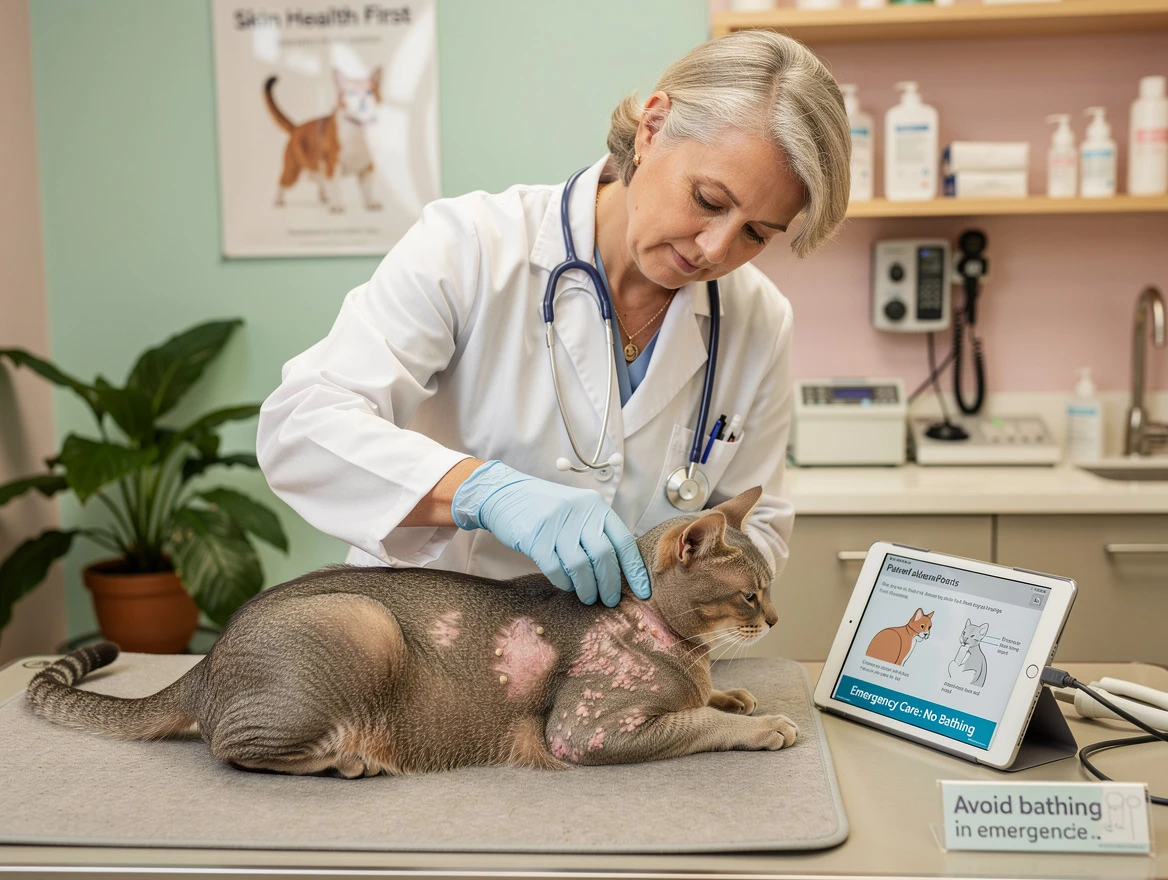
| Cat with skin condition | As directed by vet | Medicated baths on specific schedule |
| Cat with fleas | Initial bath + prevention schedule | Flea shampoo kills active fleas |
Indoor Cats
Rarely, if ever. Indoor cats stay clean through self-grooming and don’t encounter the dirt, parasites, and environmental debris that outdoor cats face. Most indoor cats go their entire lives without needing a bath.
The exceptions are indoor cats who are overweight and can’t groom their lower back, senior cats with reduced mobility, or indoor cats with skin conditions like dandruff. In these cases, a bath every 4–6 weeks with a gentle cat-formulated shampoo helps. Related: How to Treat Dandruff on Cat’s Back Near Tail — dandruff sometimes requires medicated bathing.

Cats With Fleas
One initial flea shampoo bath to kill active fleas, followed by a vet-prescribed flea prevention treatment (topical or oral) for ongoing protection. Repeated flea baths alone do NOT solve a flea problem.
Specifically with flea shampoo, no more than once every 2 weeks. Flea shampoo is harsh and strips skin oils. It kills fleas on contact but has no lasting effect, new fleas jump right back on. That’s why prescription prevention, not repeated baths, is the real solution.
Yes, one bath with cat-safe flea shampoo removes active fleas and flea dirt is worthwhile. Then start monthly prevention and treat your home (wash bedding, vacuum thoroughly). Related: How to Tell If My Cat Has Fleas. Also: My Cat Has Worms How Do I Clean My House — parasites need whole-home treatment.
The takeaway either way is the same: one bath plus prescription prevention. Bathing alone will never eliminate fleas, they live in your carpets, furniture, and bedding, not just on your cat.
Kittens
Only when absolutely necessary, and never before 8 weeks old. Kittens can’t regulate body temperature well and can become hypothermic from a bath. Very young kittens should be cleaned with a warm damp cloth only.
From 8 weeks onward, a bath is safe if needed (visible dirt, fleas, something sticky in their fur), but keep it brief, use lukewarm water, and dry them thoroughly with a warm towel immediately after. Healthy kittens rarely need bathing, their mother and their own grooming usually keep them clean.
When Your Cat Stinks
First, figure out why. A healthy cat should not have a strong odor. If your cat suddenly smells bad, the smell may indicate a health issue rather than poor hygiene:
- Mouth smell — dental disease or infection. Related: My Cat’s Tooth Is Loose Can I Pull It Out
- Ear smell — ear infection or mites. Related: How to Clean Cat Ears
- Rear end smell — anal gland issues, diarrhea, or inability to groom
- Skin smell — infection, abscess, or skin condition. Related: How Can I Soothe My Cat’s Itchy Skin
- Urine smell — urinary issue or grooming difficulty
If the smell is from something your cat got into (rolled in something, walked through something), a bath is appropriate. If the smell comes from your cat’s body with no obvious external cause, see a vet before bathing.
Special Bathing Situations
| Situation | Bathe? | How Often |
|---|---|---|
| Cat with dandruff | ✅ Yes — with moisturizing shampoo | Every 4–6 weeks max |
| Cat with ringworm | ✅ Yes — with antifungal shampoo | As directed by your vet |
| Cat with allergies (owner has allergies) | ✅ Helps reduce dander | Every 4–6 weeks |
| Summer/hot weather | ⚠️ Only if dirty | Same as normal — not more often |
| Cat got into toxic substance | ⚠️ Rinse/bathe promptly — call vet or poison control first if caustic or unknown | One emergency bath |
| Cat with fleas | ✅ One initial bath | Once — then use prevention |
| After surgery | ❌ No — follow vet instructions | Wait until vet approves |
For dandruff specifically, every 4–6 weeks with a moisturizing oatmeal-based cat shampoo works well. Over-bathing makes dandruff worse. Related: How to Treat Dandruff on Cat’s Back Near Tail.
For ringworm, your vet will prescribe a specific antifungal shampoo schedule. Follow their protocol exactly, treatment frequency varies by case and product.
If you have allergies to your cat, every 4–6 weeks helps reduce dander. Combine with daily brushing and HEPA air purifiers for best results.
In summer, no more often than normal unless they’re visibly dirty. Cats don’t need more frequent baths in hot weather.
Is It Cruel to Bathe Cats?
No, but unnecessary or overly frequent bathing IS stressful and harmful. Most cats dislike water, and a bath causes genuine anxiety. If your cat doesn’t need a bath, skipping it entirely is the kindest option.
When a bath IS needed (medical, flea treatment, got into something toxic), it’s not cruel, it’s necessary care. Use lukewarm water, a cat-safe shampoo, work quickly, speak calmly, and dry your cat thoroughly afterward. Related: My Cat Licked Toilet Cleaner — toxic exposure sometimes requires an emergency bath.
Every 2 weeks is only appropriate if your vet specifically recommends it for a medical condition (like ringworm). For healthy cats, every 2 weeks is too frequent and will dry out the skin and strip protective oils.
How to Bathe Your Cat — Quick Guide
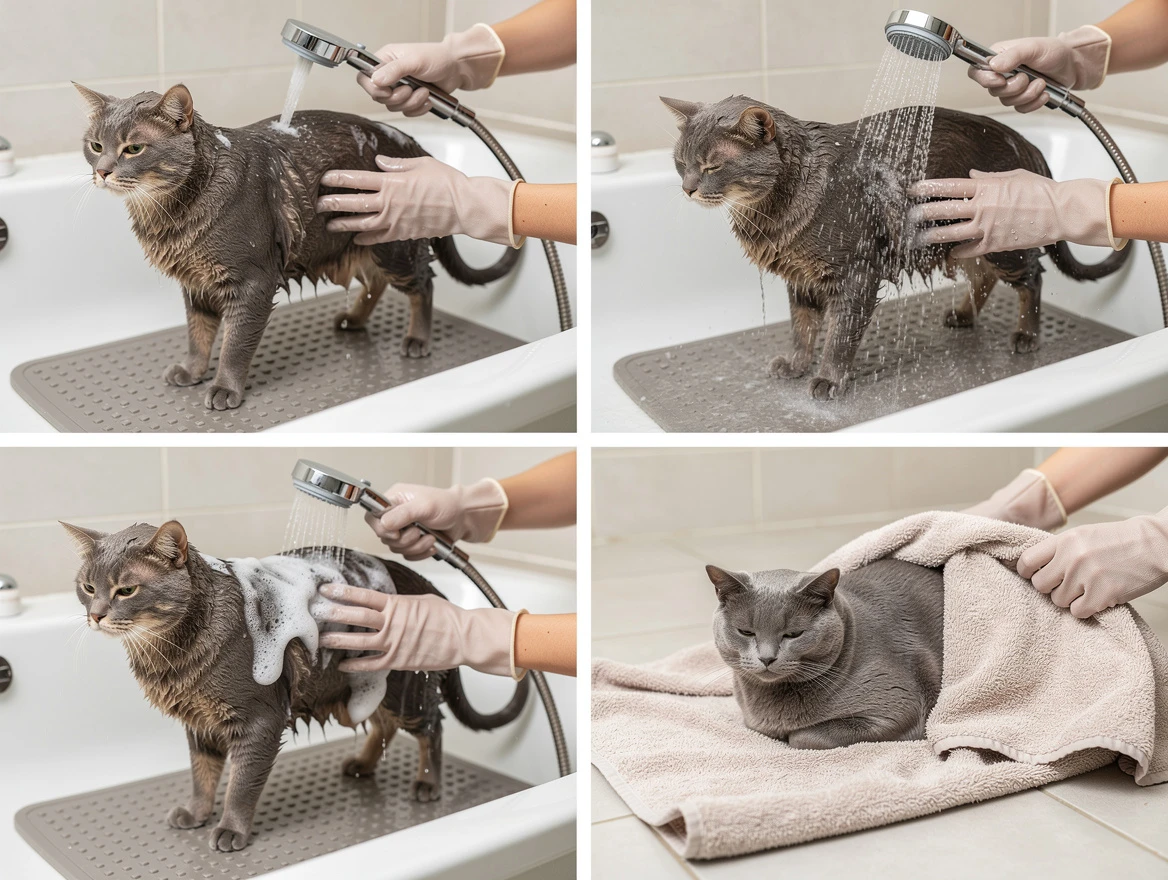
- Brush first — remove loose fur and mats before water touches the coat
- Use lukewarm water only — never hot. Fill a sink or basin a few inches deep.
- Wet fur gently — use a cup or handheld sprayer. Avoid the head and ears.
- Apply cat-safe shampoo sparingly — massage gently, do not scrub aggressively
- Rinse thoroughly — leftover shampoo residue causes irritation and itching
- Wrap in a large towel — dry as much as possible by patting, not rubbing
- Keep warm until fully dry — wet cats lose body heat fast, especially kittens and seniors
- Reward with treats — positive association makes the next bath easier
Bath Alternatives — When Your Cat Hates Water
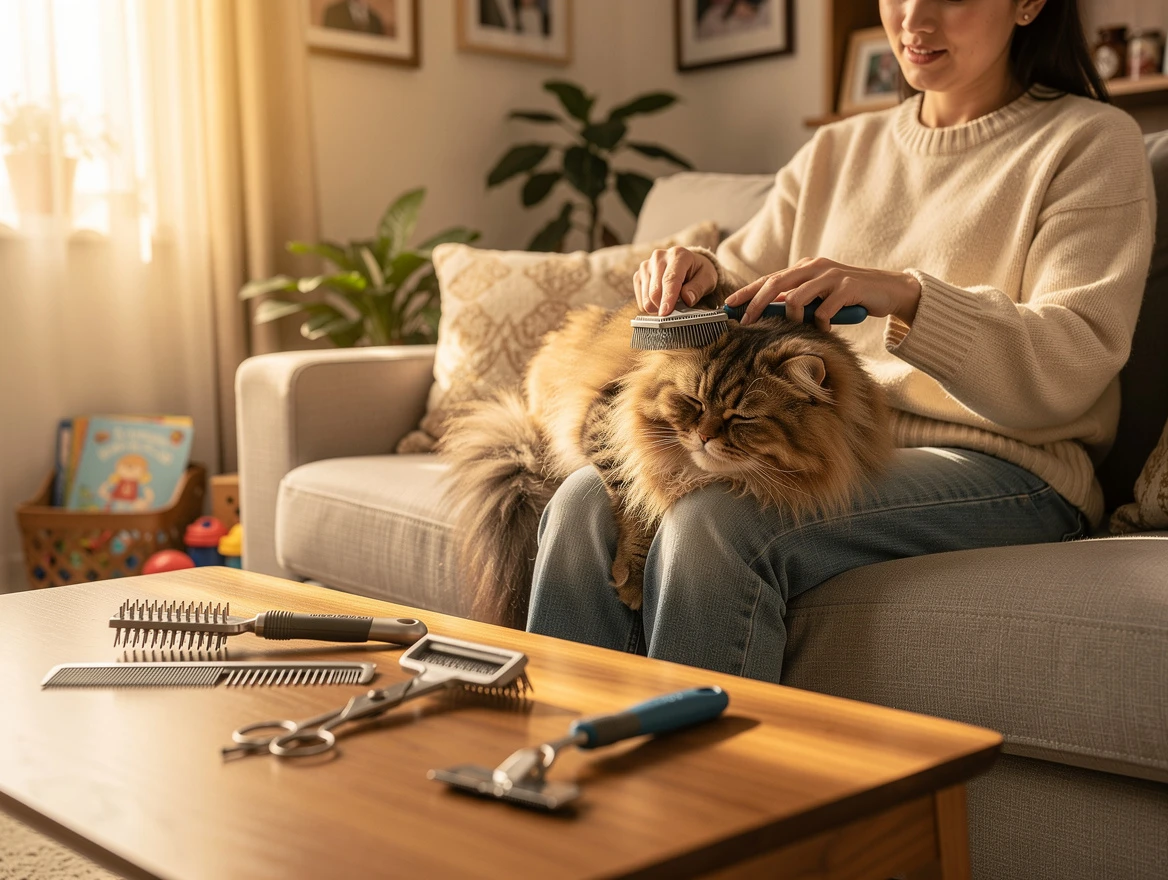
- Daily brushing — removes loose fur, dander, dirt, and allergens. The single best alternative to bathing.
- Pet-safe wipes — hypoallergenic cat wipes for spot-cleaning dirty areas without water
- Warm damp cloth — wipe down the coat to remove dander and mild debris
- Waterless cat shampoo — foam or spray that cleans without rinsing
- Professional grooming — groomers handle difficult cats and have proper equipment
Common Mistakes
- Bathing too often — strips natural oils, causes dry skin and dandruff. Maximum every 4–6 weeks for healthy cats.
- Using human shampoo — wrong pH, contains ingredients toxic to cats. Cat-formulated shampoo only.
- Hot water — use lukewarm only. Hot water dries skin and distresses cats.
- Not drying thoroughly — wet cats lose body heat fast, especially kittens and seniors
- Bathing to “fix” fleas without prevention — baths kill active fleas but new ones jump back on within hours. Prevention is the real solution.
- Forcing a terrified cat into water — use alternatives if your cat panics. A wipe-down is better than a traumatic bath.
Frequently Asked Questions
Signs your cat needs a bath: visible dirt or debris in the coat, greasy or oily feeling fur, matted areas that brushing cannot resolve, foul odor from something they got into, or a vet recommendation for a skin condition. If the coat looks and feels clean, no bath needed.
No, weekly bathing is too frequent for the vast majority of cats and will strip natural oils, dry out the skin, and can trigger dandruff or irritation. Even cats with medical bathing needs are usually on a schedule of every 1-2 weeks at most, and that’s for specific conditions like Sphynx cats or active ringworm treatment, not routine care.
The Bottom Line
How often should I bathe my cat? Every 4–6 weeks maximum for most cats, and many healthy indoor cats never need a bath at all. Over-bathing does more harm than good.
Focus on daily brushing, which removes more dirt and allergens than any bath. Save baths for when they’re genuinely needed, fleas, skin conditions, toxic exposure, or visible dirt. Use cat-safe shampoo, lukewarm water, and dry thoroughly. If your cat hates water, pet wipes and waterless shampoo are perfectly effective alternatives.
Related: How to Treat Dandruff on Cat’s Back Near Tail — bathing is one of several treatments for dandruff. Also: How Can I Soothe My Cat’s Itchy Skin — when to bathe for skin conditions.