Why is my cat’s eye swollen? A swollen eye on your cat is one of those things that looks alarming — and in some cases it genuinely is.
I searched this myself after noticing one of my cats pawing at her face one morning. Sometimes it’s minor. Sometimes it’s the start of something that needs same-day vet attention.
Here’s how to tell the difference, what causes a swollen eye in cats, and what you can do right now.
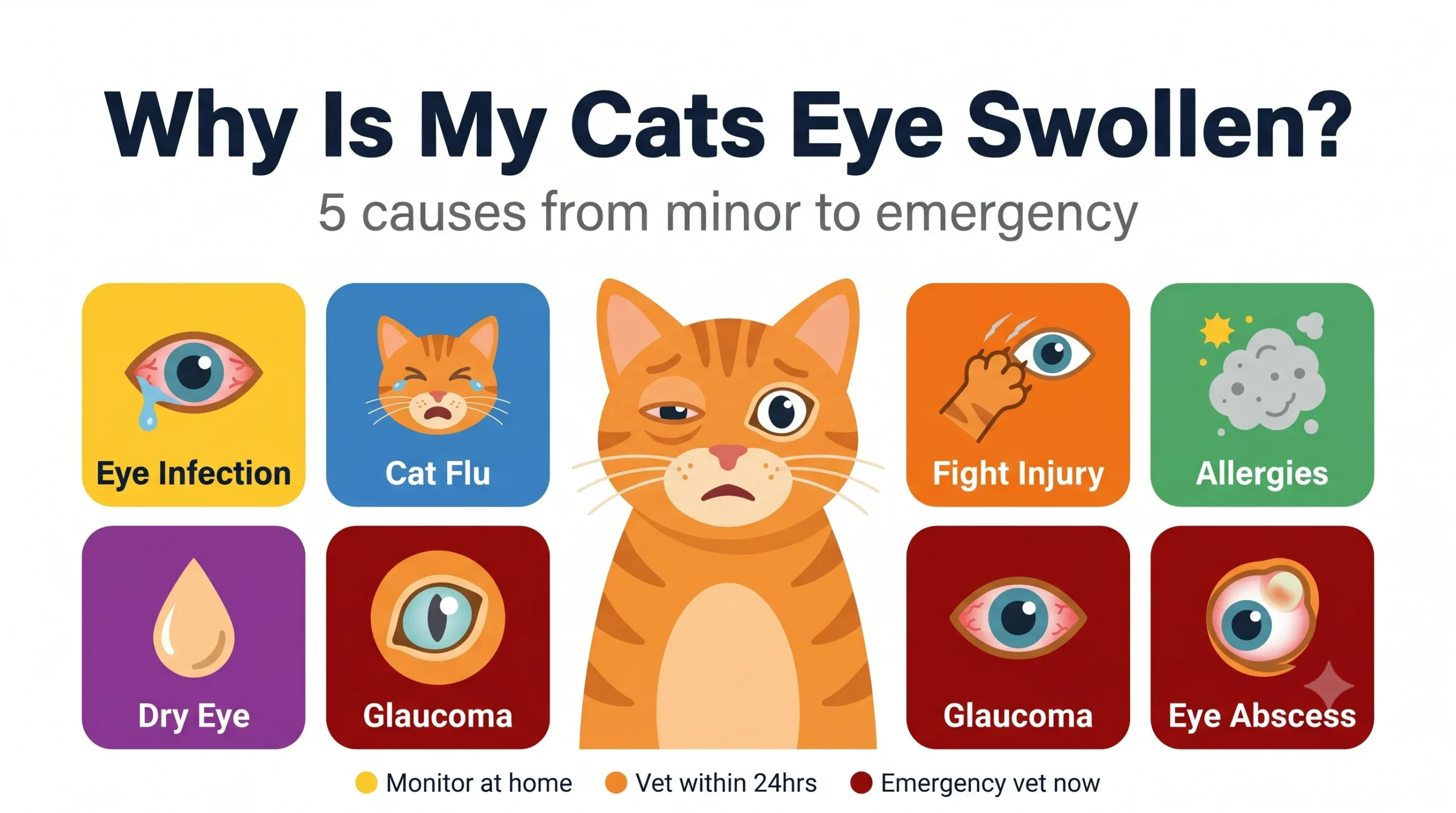
Why is my cat’s eye swollen? The most common causes are conjunctivitis (eye infection), upper respiratory infection, trauma or fight injury, allergies, or a foreign object.
Minor swelling with clear discharge often resolves with home care. Swelling with yellow or green discharge, a closed eye, or visible injury needs a vet visit within 24 hours.
- Eye is completely closed and cat cannot open it
- Yellow or green discharge — thick or smelly
- Visible scratch, wound, or puncture on or near the eye
- Eye appears to be bulging out of the socket
- Cat is also lethargic, not eating, or has a fever
- Third eyelid (inner corner membrane) is visible and covering the eye
- Swelling has not improved at all after 24–48 hours
Why Is My Cat’s Eye Swollen — Normal vs Emergency at a Glance
| What You See | Likely Cause | Action |
|---|---|---|
| Mild swelling, clear watery discharge, cat acting normally | Mild irritation, early conjunctivitis, allergy | Monitor 24 hrs — home care |
| One eye swollen, no discharge, cat rubbing it | Foreign object, minor trauma | Check for debris — vet if persists |
| Yellow or green discharge, eye partially closed | Bacterial infection | Vet within 24 hours |
| Eye completely shut, cat cannot open it | Severe infection or injury | Vet same day |
| Visible scratch or wound near eye | Fight injury | Vet same day |
| Eye bulging or protruding | Abscess, tumor, or trauma | Emergency vet immediately |
| Third eyelid visible across eye | Infection, illness, or stress | Vet within 24 hours |
8 Reasons a Cat’s Eye Swells
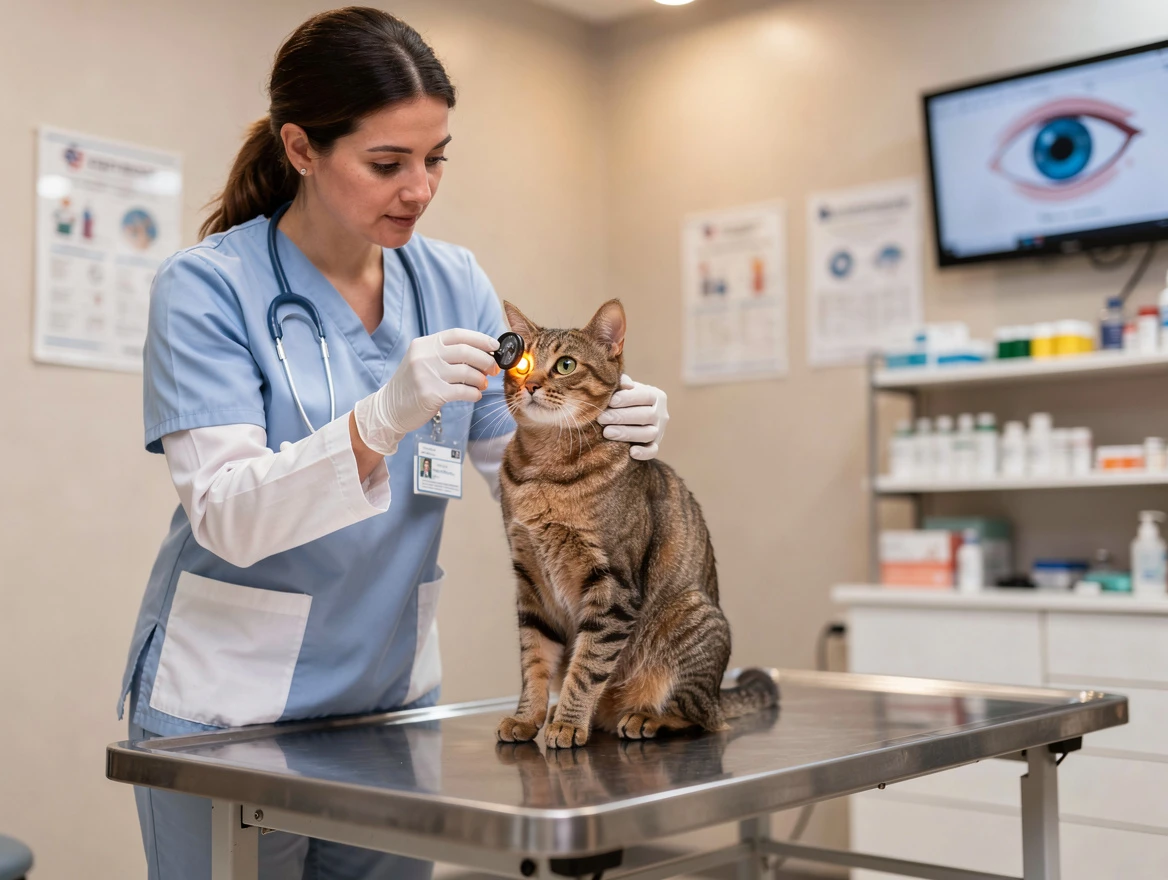
1. Conjunctivitis — Eye Infection
The most common cause of a swollen eye in cats. Conjunctivitis is inflammation of the membrane lining the eyelid and eyeball.
It causes swelling, redness, and discharge — ranging from clear and watery in mild cases to thick yellow or green in bacterial infections. Related: Cat Eye Infection Facts — the complete guide to recognizing and treating feline eye infections.
Conjunctivitis can be viral (often linked to feline herpesvirus or calicivirus), bacterial, or caused by environmental irritants. Viral conjunctivitis often accompanies upper respiratory symptoms — sneezing, nasal discharge, lethargy.
2. Upper Respiratory Infection
Cat flu and feline herpesvirus frequently cause eye involvement alongside nasal and throat symptoms. The eyes become swollen, watery, and red. In kittens especially, upper respiratory infections can cause the eye to swell shut rapidly.
If your cat also has a runny nose, sneezing, or reduced appetite alongside the swollen eye, respiratory infection is the likely cause. If the cat is also not eating, see: My Cat Is Not Eating or Drinking and Very Weak.
3. Trauma — Fight Injury or Foreign Object
Cats who go outdoors or live with other animals are frequently scratched near the eye during fights. Even a minor scratch near the cornea causes significant swelling.
Foreign objects — grass seeds, dust, grit — trapped under the eyelid cause intense inflammation that looks like infection.
Fight injuries to the face often involve puncture wounds that are invisible under fur, while the swelling around the eye is obvious.
These injuries carry a high risk of abscess. Related: My Cat’s Tooth Is Loose — cats who fight often sustain mouth and dental injuries at the same time.
4. Allergies
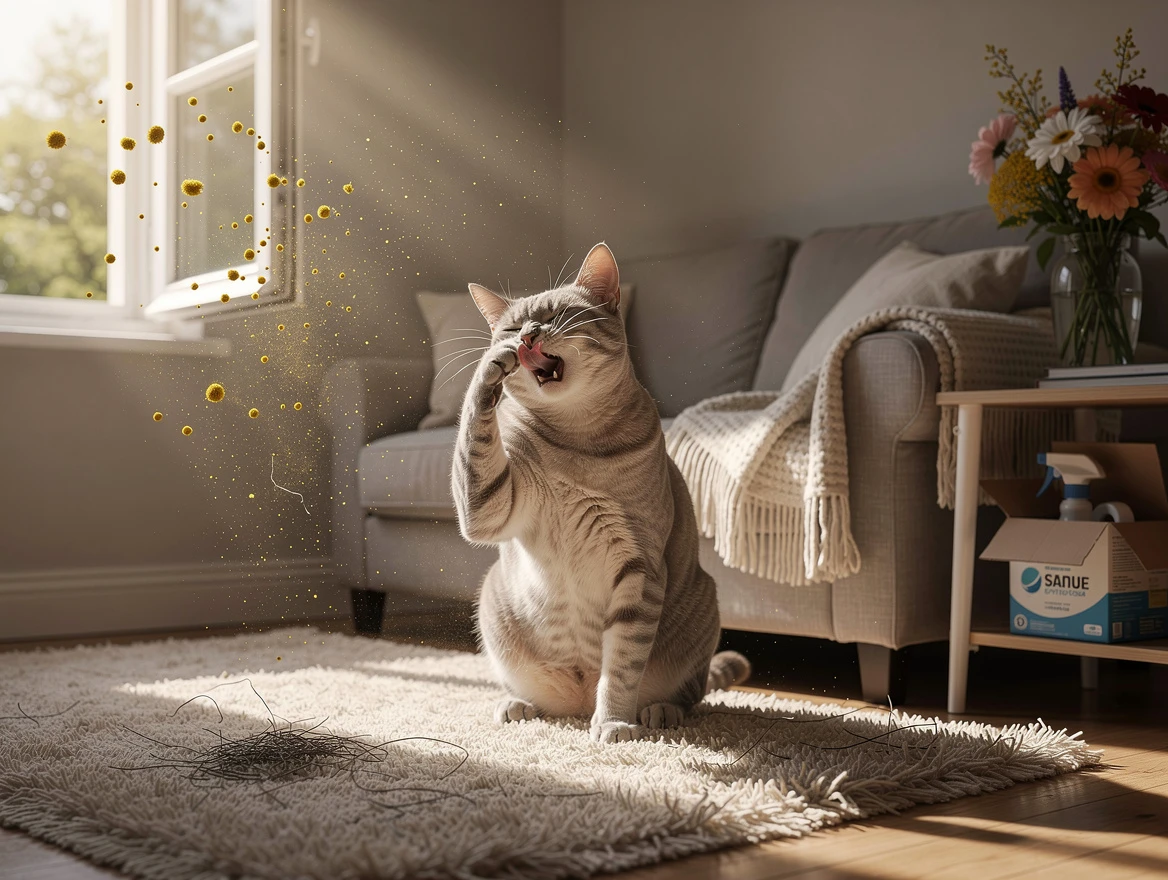
Environmental allergens — pollen, dust mites, mold, certain cleaning products — cause bilateral eye swelling (both eyes) alongside itching, sneezing, and skin irritation.
Allergic eye swelling tends to come and go with seasons or environmental changes. The discharge is usually clear and watery rather than thick or colored.
5. Keratoconjunctivitis — Dry Eye
Insufficient tear production causes the eye surface to become inflamed and irritated. The eye appears swollen, red, and often has a thick sticky discharge.
Dry eye (KCS) is a chronic condition requiring ongoing treatment with prescription eye drops. In cats, it’s most commonly associated with a history of feline herpesvirus infection, which can damage the tear-producing glands.
6. Glaucoma
Glaucoma means dangerously high pressure inside the eye. It causes sudden, significant swelling alongside visible pain — your cat will paw at the eye constantly, avoid light, and may show sudden vision changes. The eye often looks cloudy or enlarged.
This is a genuine emergency. Glaucoma can cause permanent blindness within hours without treatment. If the swelling came on suddenly and the eye looks different in size or cloudy, go to an emergency vet immediately, not tomorrow.
7. Abscess Behind the Eye
A tooth root abscess or puncture wound can cause infection to accumulate behind the eye, pushing it forward and causing severe swelling. The eye appears to bulge outward.
There may be a foul smell and fever alongside the eye swelling. This is a surgical emergency — the abscess needs to be drained and the underlying cause treated with antibiotics.
8. Eyelid Abnormalities — Entropion
Entropion is a condition where the eyelid rolls inward, causing eyelashes to constantly scratch the cornea. This leads to chronic irritation, swelling, and discharge.
Cats with entropion rub their eyes constantly and squint persistently. The cause of the swelling is structural rather than infectious. Treatment requires veterinary correction, often a minor surgical procedure.
Why Only One Eye Is Swollen
One-sided swelling is almost always a localized cause — trauma, foreign object, fight injury, or a localized infection rather than systemic illness. Bilateral swelling (both eyes) points more toward allergies, viral infection, or whole-body illness.
Check the swollen side carefully. Look for visible scratches around the eye, debris in the corner, or any asymmetry in how the eye sits in the socket.
If one eye looks different in size or position compared to the other, that’s an emergency vet situation.
Swollen From a Fight or Scratch
Fight injuries around the eye are common in outdoor cats and multi-cat households. Even indoor cats scratch each other.
The initial swelling from a scratch looks like an infection but usually appears within hours of an altercation rather than gradually over days.
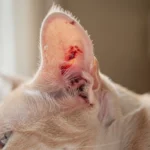
Check carefully for puncture wounds hidden in the fur. Cat teeth and claws introduce bacteria deep into tissue — punctures that look minor on the surface often develop into abscesses within 2–3 days.
A swollen eye from a fight needs a vet visit within 24 hours — antibiotics are almost always required to prevent abscess formation.
Swollen With No Discharge
Swelling without any discharge narrows the cause considerably. Most infections produce some discharge. A swollen eye with no discharge is more likely to be physical trauma, a foreign object, or an allergic reaction.
Monitor for 12–24 hours. If no discharge develops and the swelling improves, home care is appropriate. If swelling persists or increases without discharge, a foreign object or internal injury is possible and worth a vet visit.
Swollen and Watery
Clear watery discharge alongside swelling is the mildest presentation, typically early viral conjunctivitis, mild allergy, or environmental irritation. The eye is flushing itself, which is a good sign.
Keep the area clean, prevent pawing, and monitor. If the discharge becomes colored or thick within 24–48 hours, the situation is escalating and needs veterinary attention.
Kitten Eye Swollen Shut
In kittens under 6 weeks old, a swollen shut eye is often neonatal ophthalmia, an infection that develops before the eyes fully open. This is an emergency.
The eye must be gently opened and cleaned by a vet or experienced foster carer before the infection causes permanent damage.
In older kittens, upper respiratory infections are the most common cause of a swollen shut eye. Kittens deteriorate much faster than adult cats.
If a kitten’s eye is swollen shut and they’re also not eating or active, see the vet the same day.
Swollen Upper Eyelid Specifically
Swelling isolated to just the upper eyelid points toward a slightly different set of causes than a fully swollen eye.
A localized bump or lump on the upper lid can be a stye (an infected eyelash follicle) or a chalazion (a blocked oil gland). Both are typically less urgent, but still worth a vet look if they don’t resolve within a few days.
Upper eyelid swelling can also result from an insect bite or sting, which tends to come on suddenly and affect only that localized spot rather than the whole eye.
What the Third Eyelid Swelling Actually Means
Cats have a third eyelid (the nictitating membrane) tucked in the inner corner of each eye, normally invisible unless your cat is sleepy or unwell.
When it’s visible and covering part of the eye, that’s called “haw’s syndrome” in some contexts, and it’s a signal worth paying attention to rather than a specific diagnosis on its own.
It commonly shows up alongside illness, dehydration, pain anywhere in the body, or intestinal parasites, not just eye-specific problems.
A visible third eyelid alongside eye swelling is one of the clearer signs that something systemic, not just local eye irritation, may be going on.
Related: My Cat Has Worms How Do I Clean My House — intestinal parasites are one of the less obvious causes of a visible third eyelid.
Treatment at Home
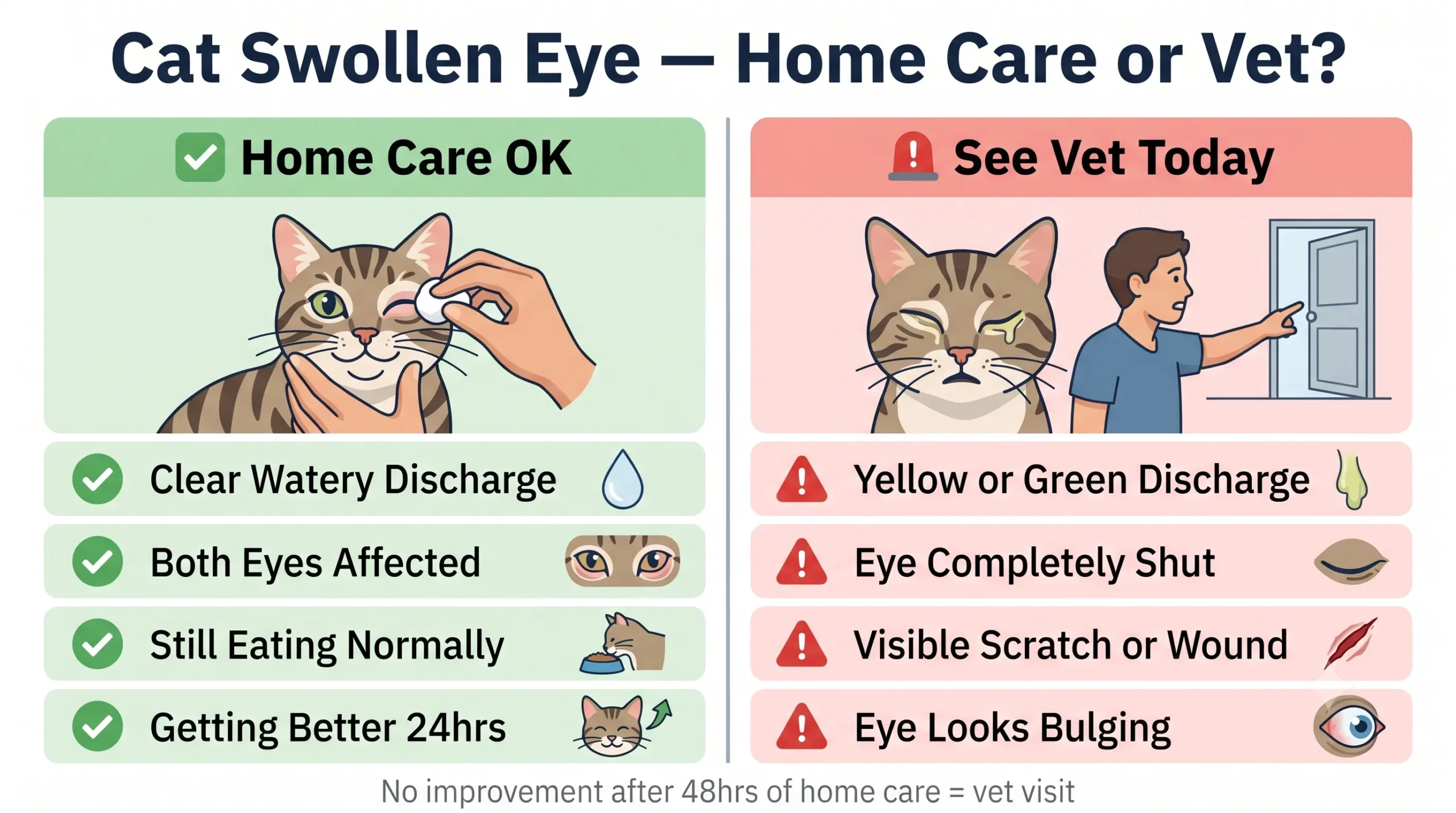
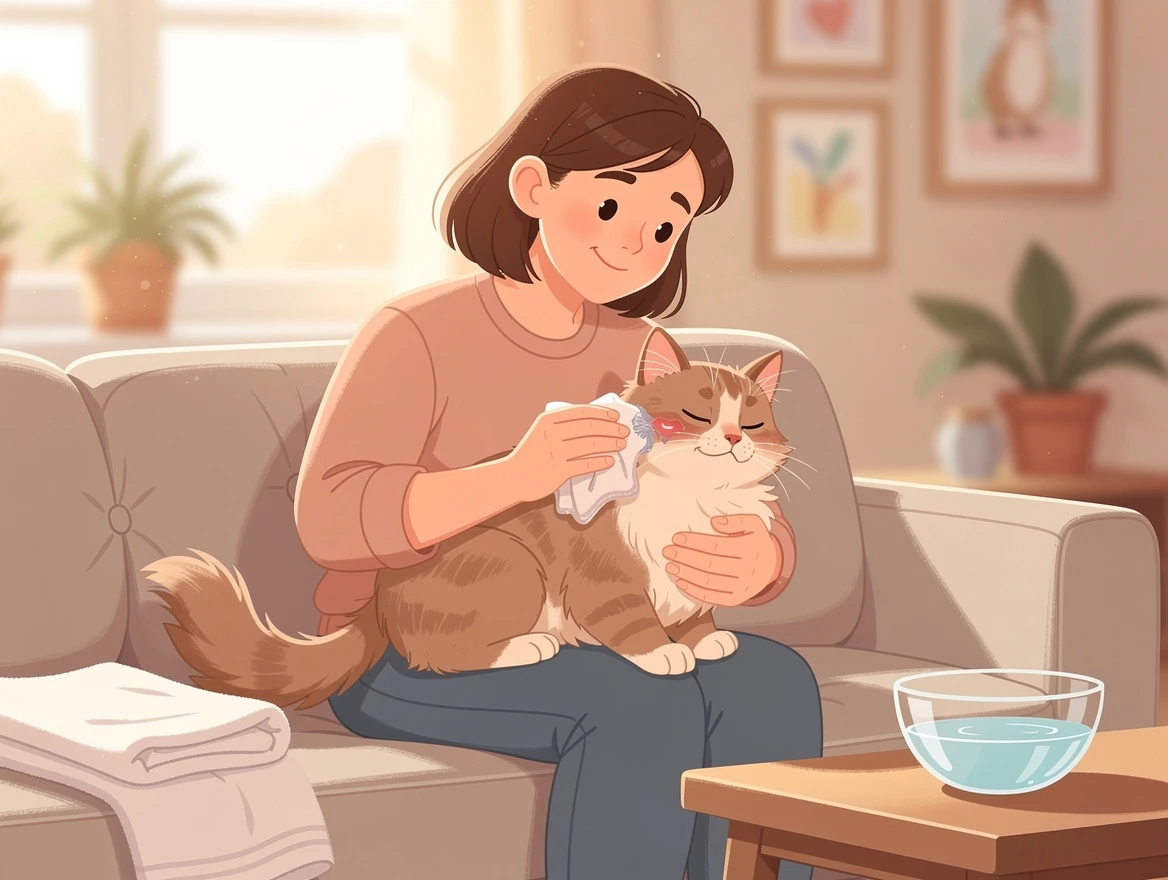 Home care is appropriate only for mild swelling with clear discharge and a cat that’s otherwise acting normally.
- Clean gently — use a clean cotton ball dampened with sterile saline or cooled boiled water. Wipe from the inner corner outward. Use a fresh cotton ball each time — never wipe back toward the eye.
- Prevent pawing — an e-collar (cone) prevents your cat from scratching and worsening the irritation
- Warm compress — a warm (not hot) damp cloth held gently against the closed eye for 1–2 minutes can reduce swelling and loosen discharge
- Keep the area clean and dry — remove any crust that forms around the eye after cleaning
Will It Heal on Its Own?
Mild viral conjunctivitis and minor irritation can resolve without treatment in 7–10 days, similar to a human cold. However bacterial infections, fight injuries, foreign objects, and dry eye will not resolve without treatment and will worsen.
The safe approach: monitor for 24–48 hours with home cleaning. If improving, continue and watch.
If staying the same or worsening, vet visit. A swollen eye that doesn’t improve within 48 hours of home care should always be seen by a vet.
🩺 When to See the Vet
- Eye completely closed or cat cannot open it
- Yellow or green discharge — thick or smelly
- Visible wound or scratch near the eye
- No improvement after 48 hours of home care
- Kitten with swollen eye — always within 24 hours
- Eye appears to bulge or change position
- Third eyelid covering part of the eye
Frequently Asked Questions
The most common causes are conjunctivitis (eye infection), upper respiratory infection, trauma or fight injury, allergies, or a foreign object lodged under the eyelid.
The type and color of discharge, whether one or both eyes are affected, and whether the cat is acting normally all help identify the cause.
It depends on severity. A completely closed eye, yellow or green discharge, visible injury, or a bulging eye are emergencies. Mild swelling with clear discharge and normal behavior can be monitored at home for 24–48 hours first.
Redness alongside swelling indicates inflammation, most commonly conjunctivitis, an allergic reaction, or trauma. Red and swollen without discharge may be allergy. Red, swollen, and with discharge is typically infection and needs vet treatment.
If caused by feline herpesvirus, calicivirus, or bacterial conjunctivitis, yes. Keep the affected cat separated from other cats in the household until the vet gives the all-clear. Wash hands after handling the affected eye area.
The Bottom Line
Why is my cat’s eye swollen? In most cases it’s conjunctivitis, an upper respiratory infection, or a minor injury.
The questions to ask are: is it one eye or both, is there discharge and what color, and is the cat acting normally?
Those three answers tell you whether you’re dealing with something manageable at home or something that needs a vet today.
Related Articles
My Cat Is Not Eating or Drinking and Very Weak
Eye infections often accompany appetite loss.