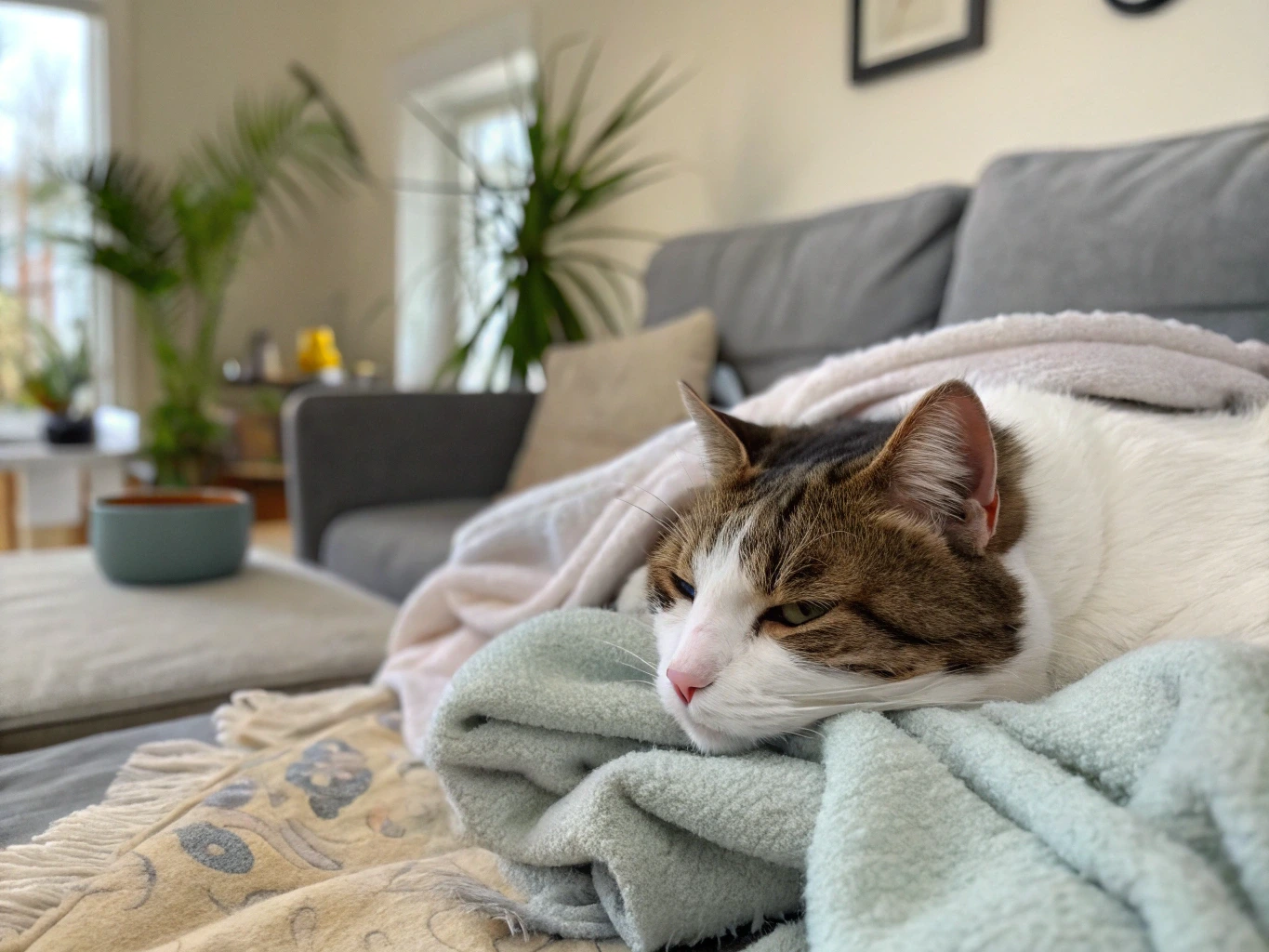
Cat Vomiting White Foam: 7 Critical Causes and What to Do

Cat Vomiting White Foam: 7 Critical Causes and What to Do

Published: March 11, 2026 | Last Updated: March 11, 2026 | Read Time: 12 minutes

Cat vomiting white foam is one of the most common — and most alarming — things cat owners deal with. That white, foamy substance is usually a mix of stomach acid, saliva, and air, and it most often happens when your cat’s stomach has been empty too long. While a single episode is rarely dangerous, repeated cat vomiting white foam can signal something serious — from hairballs to kidney disease.

If you’re wondering why is my cat vomiting white foam, this guide breaks down the 7 most common causes, which ones are emergencies, home remedies that actually work, and exactly when to call your vet.

⚠️ When to Go to the Emergency Vet — Read This First

If your cat vomiting white foam is accompanied by any of these signs, go to the emergency vet immediately:

  • Vomiting every 20-30 minutes without stopping
  • Blood in the vomit (pink, red, or dark brown specks)
  • Collapse, extreme weakness, or inability to stand
  • Known or suspected ingestion of lilies, household chemicals, or medications
  • Swollen or painful abdomen
  • Hasn’t been able to keep water down for 12+ hours
  • Gums are pale, white, or yellowish instead of pink

If your cat vomiting white foam and not eating has been going on for more than 48 hours, that’s also an emergency. Cats can develop a dangerous liver condition called hepatic lipidosis (fatty liver disease) from not eating — and it can become life-threatening within days.

If none of those apply and your cat seems relatively normal after vomiting, keep reading. Most causes are manageable.


What Cat Vomiting White Foam Actually Means

Quick answer: Cat vomiting white foam means your cat is bringing up a mixture of stomach acid, saliva, and air. This happens most often when the stomach is empty — there’s no food to come up, so the irritated stomach lining produces this foamy, sometimes slightly bubbly substance instead. Most single episodes are caused by an empty stomach and resolve on their own.

So what does it mean when a cat vomits white foam? The foam itself isn’t the problem — it’s a symptom. What matters is why the stomach is irritated enough to trigger vomiting in the first place.

One thing worth clarifying: vomiting and regurgitation look different and mean different things.

Vomiting involves visible effort — your cat’s belly heaves, they retch, and they actively expel the contents. You’ll usually see them licking their lips, drooling, or swallowing repeatedly beforehand.

Regurgitation is passive. Food or foam just slides out, often right after eating. No heaving, no drama. The material looks undigested and often has a tube-like shape from the esophagus.

This distinction matters because your vet will ask about it. If you can, take a quick video on your phone when it happens — it helps enormously with diagnosis.


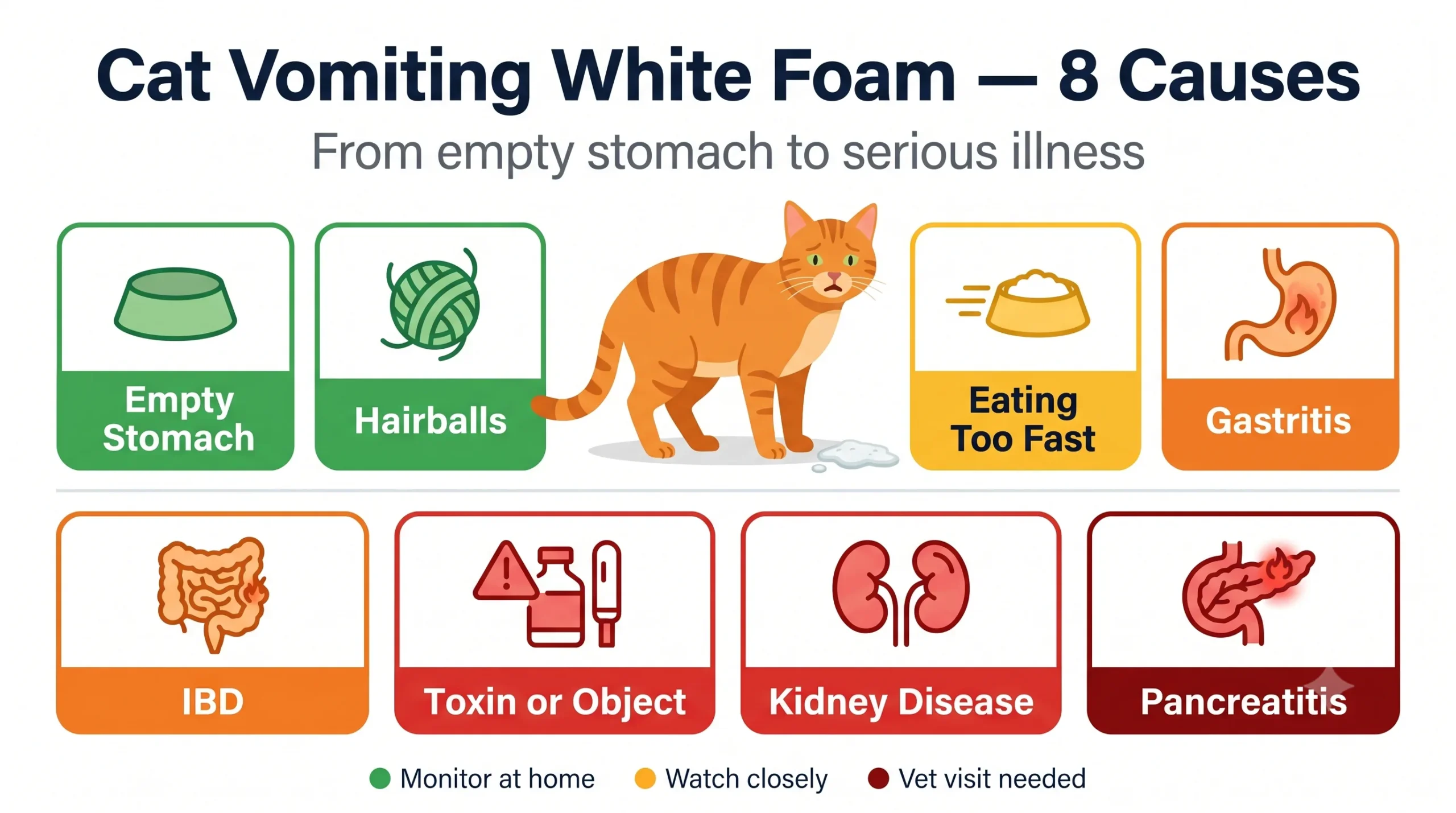
7 Reasons Your Cat Is Throwing Up White Foam

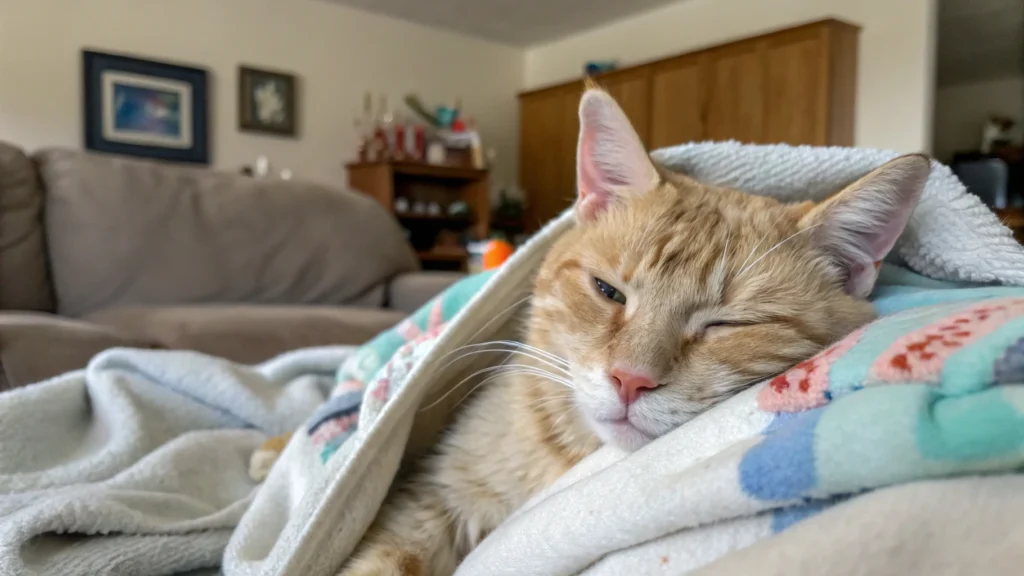
cat throwing up white foam

These are listed from most common (and least scary) to least common (and most urgent).

1. Empty Stomach — Bilious Vomiting Syndrome

Urgency: Low

This is the #1 reason for cat vomiting white foam, and it’s also the easiest to fix.

When your cat’s stomach sits empty for too long — usually overnight or during a long gap between meals — stomach acid builds up and irritates the stomach lining. The body’s response is to vomit up that acid, which comes out as white or sometimes yellowish foam.

You’ll notice a pattern: it almost always happens early in the morning, or right before their scheduled meal. Your cat seems completely fine afterward and eats normally.

I dealt with this with one of my cats for weeks before I figured out what was going on. Every morning around 5 AM — white foam on the kitchen floor, then she’d walk to her bowl and stare at me like nothing happened. My vet told me to add a small late-night snack around 10 PM. The morning vomiting stopped within three days. That was it. No medication, no expensive tests. Just a schedule change.

What to do: Switch from 1-2 large meals to 3-4 smaller meals spread throughout the day. A late-night snack before bed often stops the morning vomiting entirely.

2. Eating Too Fast

Urgency: Low

Some cats inhale their food like someone’s about to steal it. When they gulp food rapidly, they swallow a lot of air along with it. The stomach fills up too fast, gets overwhelmed, and pushes everything back out — sometimes as partially digested food, sometimes as cat vomit white foam if they didn’t eat much.

This is especially common in multi-cat households where cats feel competitive about food. With four cats in my apartment, mealtimes used to look like a race. One of them would practically vacuum his bowl, then try to push the others away from theirs. He was the one who vomited the most. Once I started feeding him in a separate room with a slow feeder bowl, it stopped almost completely.

What to do: A slow feeder bowl solves this for most cats. They’re inexpensive ($8-15) and force your cat to work around ridges or obstacles to get each bite.

3. Hairballs

Urgency: Low to Medium

You’ll sometimes see cat vomiting white foam right before or right after a hairball. The foam is the stomach’s attempt to lubricate and push out the accumulated fur. Long-haired cats are more prone to this, but any cat that grooms heavily can develop hairball issues.

Occasional hairballs (once or twice a month) are normal. But if your cat keeps vomiting white foam weekly from hairballs, or is retching and gagging without producing anything, that could indicate a gastrointestinal motility problem that needs veterinary attention.

What to do: Regular brushing (2-3 times per week minimum) reduces the amount of loose fur your cat swallows. Hairball remedy pastes help move existing fur through the digestive tract. If hairballs are frequent, talk to your vet about a fiber-enriched diet.

4. Dietary Issues

Urgency: Medium

Three common scenarios cause cat vomiting white foam related to diet:

Sudden food change. Switching cat food overnight — even to a better brand — can upset the stomach. Cats’ digestive systems don’t adapt quickly. A proper food transition takes 7-10 days, gradually mixing increasing amounts of new food with the old.

Food intolerance or allergy. Some cats develop sensitivities to specific proteins (chicken, fish, beef). If the vomiting started around the same time as a food change, the food is the first suspect.

Spoiled food. Wet food left out for more than 2-4 hours at room temperature can grow bacteria. If your cat nibbles on food that’s been sitting in the bowl all day, it can cause stomach upset. Refrigerated wet food served cold can also trigger vomiting in some cats — let it sit for 10-15 minutes to take the chill off before serving.

I learned the cold food thing the hard way. I used to pull wet food straight from the fridge and serve it. Two of my cats were fine with it. The other two would throw up within an hour. Once I started letting it warm to room temperature first, the issue disappeared.

What to do: If you recently changed foods, go back to the old food and try transitioning more slowly. Always check expiration dates and discard wet food that’s been out for more than a few hours.

5. Gastritis or Inflammatory Bowel Disease (IBD)

Urgency: Medium to High

Gastritis is inflammation of the stomach lining. It can be triggered by medications (especially NSAIDs — never give your cat human painkillers), stress, infections, or chronic conditions. IBD is a more persistent form of gastrointestinal inflammation where the immune system overreacts in the intestinal wall.

Signs that cat vomiting white foam might be something beyond a simple upset stomach:

  • Vomiting happening multiple times per week
  • Weight loss even though the cat is eating
  • Chronic diarrhea or soft stool
  • Dull, rough coat
  • Decreased energy

What to do: This requires a vet visit. Diagnosis usually involves blood work and potentially an ultrasound. Treatment often includes a prescription diet, anti-nausea medication, and sometimes steroids or other immune-modulating drugs. Many cats with IBD live comfortably with proper management — but it needs to be diagnosed first.

6. Systemic Illness (Kidney Disease, Hyperthyroidism, Pancreatitis, Diabetes)

Urgency: High

Cat vomiting white foam can be a red flag for several serious conditions, especially in cats over 7 years old:

Chronic kidney disease is one of the most common conditions in older cats. According to the Cornell Feline Health Center, it affects approximately 30-40% of cats over the age of 10. Toxins build up in the blood as kidney function declines, causing persistent nausea and vomiting. Other signs include drinking and urinating much more than usual, weight loss, and bad breath.

Hyperthyroidism occurs when the thyroid gland overproduces hormones. The cat may eat ravenously but still lose weight, have a rapid heartbeat, and vomit frequently. This is very treatable once diagnosed.

Pancreatitis — inflammation of the pancreas — causes abdominal pain, vomiting, and loss of appetite. It can be acute (sudden and severe) or chronic (ongoing low-grade episodes).

Diabetes can cause nausea and vomiting when blood sugar isn’t well regulated.

If your cat is vomiting white foam and not eating alongside any of these other symptoms — increased thirst, weight changes, appetite changes, behavioral shifts — schedule a vet appointment right away. A basic blood panel ($100-250) can screen for all of these conditions at once.

7. Foreign Object or Toxin Ingestion

Urgency: EMERGENCY

Cats swallow things they shouldn’t. Hair ties, string, rubber bands, ribbon, small toy parts — these can create partial or complete intestinal blockages. A cat with a blockage may vomit repeatedly, including foam, because food and fluid can’t pass through normally.

Toxin ingestion is even more urgent. Lilies are extremely toxic to cats — every part of the plant, including the pollen, can cause fatal kidney failure within 24-72 hours. Other common household dangers include certain essential oils, human medications (especially acetaminophen/Tylenol, which is deadly to cats), and some cleaning products.

According to the ASPCA Animal Poison Control Center, lilies consistently rank among the most dangerous plants for cats, and even small exposures require immediate emergency treatment.

I have a strict no-lilies rule in my apartment. Someone brought me a bouquet with lilies once and I had to put them outside immediately. With four cats who climb on every surface, the pollen risk alone isn’t worth it. I also had to do a hair-tie sweep of the entire apartment after I caught one of my cats chewing on a hair tie under the couch. Cats are drawn to these things, and they can cause serious intestinal damage.

Signs of an obstruction or poisoning:

  • Repeated vomiting that won’t stop
  • Drooling heavily
  • Hiding and refusing all food and water
  • Straining in the litter box without producing anything
  • Suddenly becoming very quiet or lethargic
  • Swollen, tense, or painful belly

What to do: Emergency vet. Immediately. Bring the suspected plant or substance with you if possible. For blockages, time matters — the longer you wait, the higher the chance of intestinal damage requiring surgery ($2,000-5,000+).

Quick Reference: All 7 Causes at a Glance

CauseWhat Vomit Looks LikeUrgencyWhat to Do
Empty stomachWhite/yellow foam, usually morningLowFeed smaller, more frequent meals
Eating too fastFoam or undigested food within minutes of eatingLowUse a slow feeder bowl
HairballsFoam before/after a fur clumpLow-MediumRegular brushing + hairball remedy
Dietary issuesFoam after food change or spoiled foodMediumGradual food transitions, check freshness
Gastritis/IBDFrequent foam + weight loss + diarrheaMedium-HighVet visit for diagnosis
Systemic illnessFoam + increased thirst + weight changesHighVet visit + blood work
Foreign object/toxinRepeated, unstoppable vomitingEMERGENCYEmergency vet immediately

Home Remedy for Cat Vomiting White Foam

If your cat throwing up white foam is a mild, occasional event and your cat otherwise seems healthy and alert, these home remedies can help. But if vomiting is frequent, severe, or paired with other symptoms, skip the home remedies and call your vet.

📌 Disclosure: Some product links below are affiliate links. I earn a small commission if you buy through them at no extra cost to you. This doesn’t influence my recommendations.

Fix the Feeding Schedule

This is the single best home remedy for cat vomiting white foam. Most cats vomit foam because their stomach is empty too long.

Instead of 1-2 big meals, split daily food into 3-4 smaller portions:

  • 7:00 AM — Small breakfast
  • 12:00 PM — Midday portion
  • 5:30 PM — Dinner
  • 10:00 PM — Small late-night snack (this one prevents the morning vomiting)

The total amount of food stays the same — you’re just spreading it out so the stomach never sits empty for more than 5-6 hours.

If you’re at work during the day, an automatic timed feeder ($25-50) handles the midday meal for you. I use one for my cats and it’s been completely reliable — it goes off at noon every day whether I’m home or not.

Slow Feeder Bowls

If your cat eats too fast, a slow feeder forces them to work for each bite, reducing gulped air and overstuffed stomachs.

Good options to look for:

  • Ridge-style slow feeder bowls — Simple design with raised ridges, dishwasher safe. Around $8-12 on Amazon or Chewy.
  • Lick mats for wet food — You spread wet food across a textured silicone surface. Slows eating significantly and doubles as mental stimulation. Around $10-15.

Bland Diet for Recovery

After an episode of cat vomiting white foam, give the stomach a break:

  1. Wait 2-4 hours after vomiting (offer small amounts of water during this time)
  2. Offer 1-2 tablespoons of plain boiled chicken breast — no seasoning, no skin, no bones
  3. If they keep it down for 2 hours, offer a bit more
  4. Gradually mix in their regular food over the next 24-48 hours

Important: Do NOT withhold food from a cat for more than 12-24 hours. Unlike dogs, cats that don’t eat can develop hepatic lipidosis (fatty liver disease), which is a medical emergency on its own. The old advice of “fast your cat for 24 hours” is outdated and potentially dangerous for cats.

Hairball Remedies

If hairballs are contributing to your cat throwing up white foam:

  • Hairball remedy paste (like Laxatone) — Petroleum-based lubricant that helps fur pass through the digestive tract. Give 1-2 times per week. Around $6-10.
  • Brush your cat 2-3 times per week minimum (daily for long-haired cats)
  • Consider a hairball-formula cat food if the problem is chronic

Hydration

Dehydration makes vomiting worse and recovery slower. Make sure fresh water is always available. Many cats prefer running water — a cat water fountain ($20-35) encourages them to drink more. Two of my cats completely ignored their water bowl for months. The day I set up a fountain, both of them were drinking from it within an hour. Cats are weird about still water.

Quick dehydration check: gently pinch the skin on the back of your cat’s neck and release. If it snaps back quickly, hydration is fine. If it stays tented for more than 1-2 seconds, your cat may be dehydrated and needs veterinary attention.


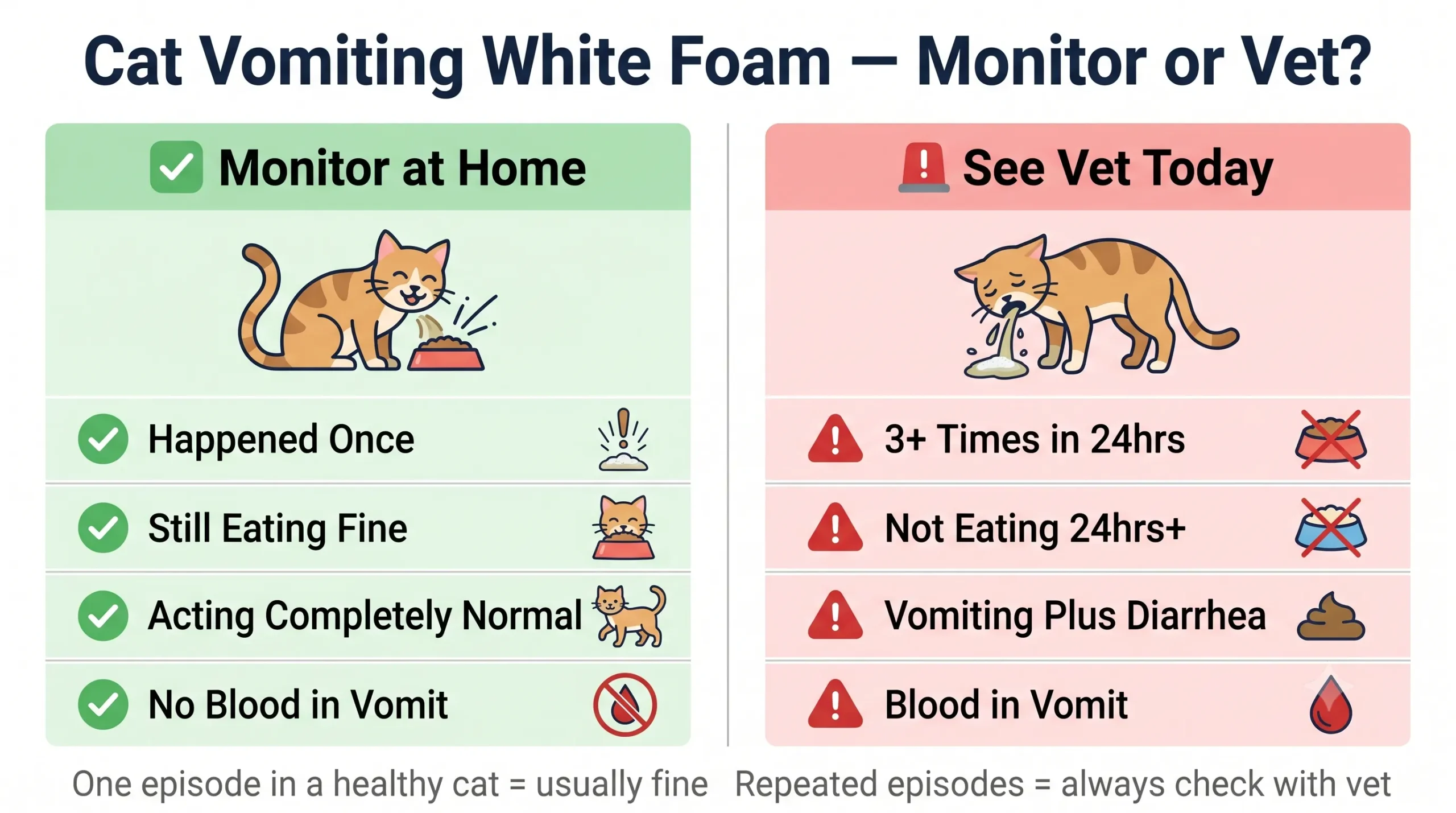
When to Call the Vet — A Clear Decision Guide

Most cases of cat vomiting white foam resolve with simple changes at home. But knowing when to escalate matters. Here’s a clear timeline:

home remedy for cat vomiting white foam

Single episode, cat acts normal afterward: → Monitor at home for 24 hours. Adjust feeding schedule. No vet needed unless it happens again within the week.

Cat keeps vomiting white foam — 2-3 episodes in one day: → Call your vet for phone advice. They may want to see your cat or may give instructions to monitor. Offer small amounts of water frequently and try bland food.

Cat vomiting white foam and not eating for 24 hours: → Schedule a vet appointment within 24 hours. Cats who don’t eat are at risk for liver complications.

Vomiting + lethargy + diarrhea: → Vet visit the same day. This combination suggests something more than a simple stomach upset. If your pet is also dealing with digestive upset, our guide on digestive remedies covers some immediate steps while you wait for the appointment.

Why is my cat vomiting white foam and not eating for 48+ hours: → Urgent vet visit. Hepatic lipidosis risk increases significantly after two days of not eating.

Repeated vomiting every 20-30 minutes, blood, collapse, known toxin: → Emergency vet right now. Do not wait until morning. Do not wait for a callback. Drive to the nearest emergency animal hospital.


What the Vet Visit Looks Like (And What It’ll Cost)

Knowing what to expect when your cat keeps vomiting white foam makes the vet visit less stressful — for you and your cat.

Your vet will ask when the vomiting started, how often it’s happening, what the vomit looks like (that phone video is helpful here), whether your cat is eating and drinking, and whether there are any other symptoms. They’ll do a physical exam checking the abdomen for pain or masses, listening to the heart, checking hydration, and feeling the thyroid gland.

Common diagnostics and costs:

TestWhat It Tells the VetEstimated Cost
Physical examOverall health assessment$50-100
Blood work (CBC + chemistry)Kidney function, liver, thyroid, diabetes, infection$100-250
X-raysForeign objects, blockages, organ size$150-400
Abdominal ultrasoundDetailed organ view, intestinal wall thickness$300-500
Fecal testParasites (roundworms, giardia)$25-75
Anti-nausea injectionImmediate relief$20-50

Total typical costs:

  • Mild case (exam + blood work + medication): $150-400
  • Moderate case (exam + blood work + X-rays + fluids): $400-800
  • Serious case (all diagnostics + hospitalization + IV fluids): $800-2,000+
  • Emergency surgery for obstruction: $2,000-5,000+

These numbers are why pet insurance exists. A policy covering illness and diagnostics typically runs $25-50/month for cats and can save thousands when something serious comes up. If your cat is young and healthy, that’s the best time to enroll — once a condition is diagnosed, it becomes pre-existing and won’t be covered.


How to Prevent Cat Vomiting White Foam

Once you’ve dealt with cat vomiting white foam, you’ll want to make sure it doesn’t keep happening. Most prevention comes down to consistent habits.

Feed on a regular schedule. 3-4 small meals per day, with the last one close to bedtime. Consistency matters more than the specific times — just don’t let the stomach sit empty for 8+ hours.

Slow down fast eaters. Slow feeder bowls, puzzle feeders, or simply spreading wet food on a flat plate all work. In multi-cat homes, feeding cats in separate areas removes the pressure to rush.

Groom regularly. Brushing removes loose fur before your cat swallows it. Short-haired cats need 2-3 sessions per week. Long-haired breeds need daily brushing. My grooming routine is every other evening while watching TV — it’s become part of the routine and all four cats expect it now.

Cat-proof your home for toxins. Remove lilies and other toxic plants entirely — even having them on a high shelf isn’t safe enough, because pollen can fall onto surfaces your cat walks on. The ASPCA maintains a complete list of toxic and non-toxic plants worth checking against every plant in your home.

Keep hair ties, string, ribbon, and small rubber bands locked away. These are among the most common foreign body obstructions vets remove from cats.

Transition foods gradually. When switching cat food, mix 25% new with 75% old for 2-3 days, then 50/50 for 2-3 days, then 75/25 for 2-3 days, then fully switch. This 7-10 day process prevents most diet-related stomach upset.

Annual vet checkups. For cats over 7, annual blood work catches kidney disease, hyperthyroidism, and diabetes early — often before vomiting even starts. Early detection means cheaper and more effective treatment.


Frequently Asked Questions About Cat Vomiting White Foam

Is it normal for cats to throw up white foam?

A single episode where your cat vomits white foam and then acts completely normal — eating, playing, using the litter box as usual — is generally not a cause for alarm. It often happens when the stomach has been empty too long. But “it happened once and was fine” is different from “it happens regularly.” If cat vomiting white foam occurs more than once or twice a month, something underlying is going on that deserves a vet visit, even if your cat seems fine between episodes.

Should I feed my cat after it vomits white foam?

Wait 2-4 hours to let the stomach settle, then offer a small amount of bland food — a tablespoon or two of plain boiled chicken works well. If they keep it down for another couple of hours, offer a bit more, and gradually return to normal food over the next day. Keep offering small amounts of fresh water throughout. The one thing to avoid: don’t withhold food for more than 12-24 hours. Cats that don’t eat are at risk for hepatic lipidosis, a serious liver condition.

Can cat vomiting white foam and died happen — is it that serious?

The foam vomiting itself isn’t fatal, but some underlying causes absolutely can be. Lily ingestion can cause fatal kidney failure within days. An intestinal blockage from a swallowed object can become life-threatening without surgery. Advanced kidney disease and unmanaged diabetes are also serious threats. Sadly, cases of cat vomiting white foam and died do happen when serious conditions like toxin ingestion or intestinal blockages aren’t treated quickly. That’s exactly why repeated vomiting — especially with other symptoms — always warrants a vet visit rather than a “wait and see” approach.

What home remedy can I give my cat for vomiting white foam?

The best home remedy for cat vomiting white foam is adjusting to smaller, more frequent meals (3-4 per day). Beyond that, try bland food for 24-48 hours, keep fresh water available, and use a hairball remedy if your cat is prone to them. A slow feeder bowl prevents vomiting caused by eating too fast. One critical rule: never give human medications to a cat. Pepto-Bismol contains salicylates that are toxic to cats, and acetaminophen (Tylenol) can be fatal. If your cat needs medication, it needs to come from your vet.

Why is my cat vomiting white foam and not eating?

A cat vomiting white foam and not eating could signal several things. The most common reason is nausea — a cat that feels sick won’t want to eat. If this lasts less than 24 hours and your cat starts eating again, it’s usually not serious. But if your cat keeps vomiting white foam and refusing food for more than 24 hours, it could indicate gastritis, pancreatitis, a foreign body obstruction, or systemic illness like kidney disease. Don’t wait more than 48 hours — cats that don’t eat can develop life-threatening liver problems.

When should I worry about my cat throwing up white foam?

Worry if: your cat keeps vomiting white foam more than 2-3 times in a 24-hour period, your cat refuses food for more than 24 hours, there’s blood in the vomit, your cat seems lethargic or painful, vomiting comes with diarrhea, your cat can’t keep water down, or you notice increased thirst, weight loss, or behavior changes alongside the vomiting. A single episode followed by normal behavior is rarely an emergency — but recurring episodes are your cat’s way of telling you something needs attention.


Bottom Line

Cat vomiting white foam usually comes down to one thing: an empty stomach. Fix the feeding schedule — 3-4 smaller meals per day with a late-night snack — and the problem often disappears within a week.

But cat vomiting white foam can also be an early warning sign of something that needs medical attention, from hairball problems to kidney disease. The urgency table above gives you a clear framework: one episode and cat seems fine means monitor at home. Repeated episodes or additional symptoms means call your vet.

When in doubt, call. A $50 phone consultation is always cheaper than waiting until a treatable problem becomes an emergency.


This article is for educational purposes only and does not replace professional veterinary advice. Always consult a licensed veterinarian about your cat’s health. If your cat is vomiting repeatedly, showing signs of distress, or has potentially ingested a toxin, seek immediate veterinary care.


Related articles you might find helpful:

Leave a Comment

Your email address will not be published. Required fields are marked *

Scroll to Top