My cat has an abscess that popped — if that’s the situation you’re in right now, here’s what matters most: you noticed a horrible smell, then your cat’s swollen lump burst open and started leaking pus. It looks terrifying. The good news? A popped abscess is often the beginning of healing. But only if treated correctly, and the next few hours matter.
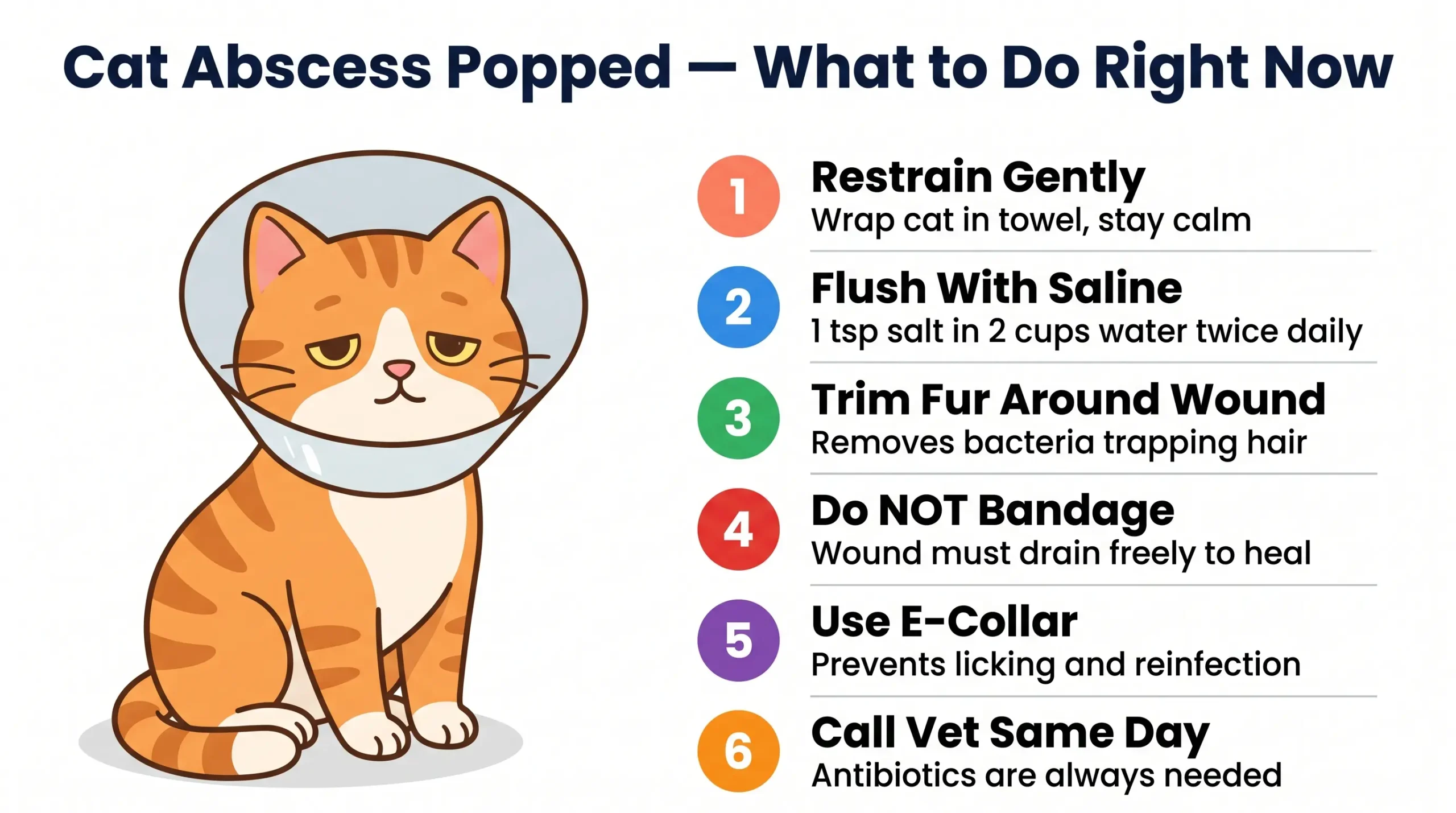
My cat has an abscess that popped, so what now? Clean gently with warm saline, do not close or bandage the wound, apply an E-collar to prevent licking, and call your vet same day. Antibiotics are almost always needed. Do not wait to see if it heals alone.
- Cat is lethargic, not eating, or has a fever
- Wound is near the eye, ear, throat, or on the chest or abdomen
- Discharge is bright red blood rather than pus
- Swelling is increasing rather than reducing after the pop
- Cat is crying or guarding the area aggressively
Cat Abscess at a Glance
| Aspect | Details |
|---|---|
| What it is | Pocket of pus caused by bacterial infection under the skin |
| Most common cause | Bite wound from another cat |
| Common locations | Face, neck, base of tail, limbs |
| When it pops | Pressure forces opening — pus drains, open wound remains |
| Immediate care | Saline flush, E-collar, no bandaging, vet call |
| Vet treatment | Antibiotics, wound flush, drain placement if needed |
| Healing time | 2–4 weeks with proper treatment |
| Untreated risk | Reinfection, spreading infection, sepsis in severe cases |
What Is a Cat Abscess and Why Did It Pop
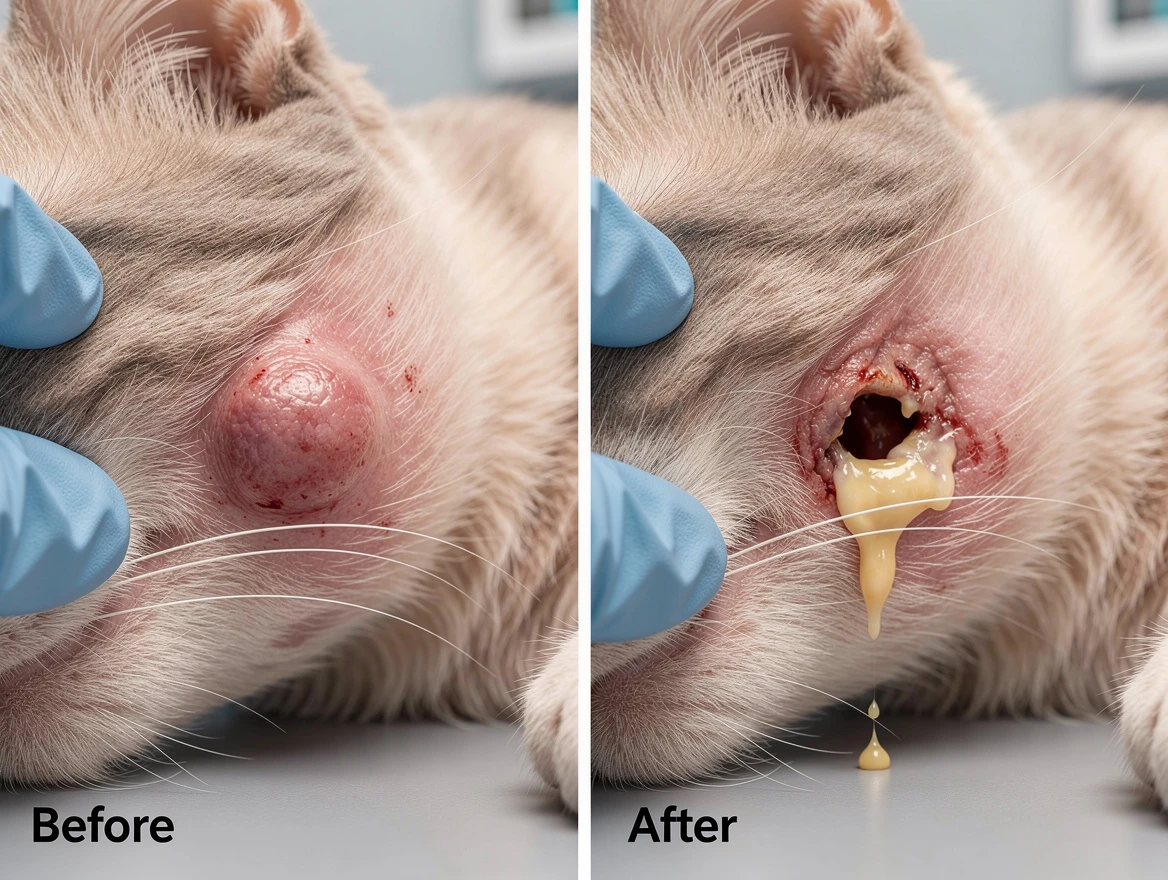 Understanding why the abscess burst starts with what an abscess actually is: bacteria trapped under the skin — most commonly from a bite wound — surrounded by inflamed tissue and filling with pus. When the pressure inside exceeds what the skin can hold, it ruptures outward. This is the body doing exactly what it should. The rupture relieves pressure and starts drainage.
The problem: rupturing does not end the infection. Bacteria remain in the surrounding tissue and the wound track. Without antibiotics, the abscess almost always reforms.
What to Do, Step by Step
Restrain Gently
Wrap the cat in a towel. Do not squeeze or press the abscess area. Have someone help if possible.
Flush With Warm Saline
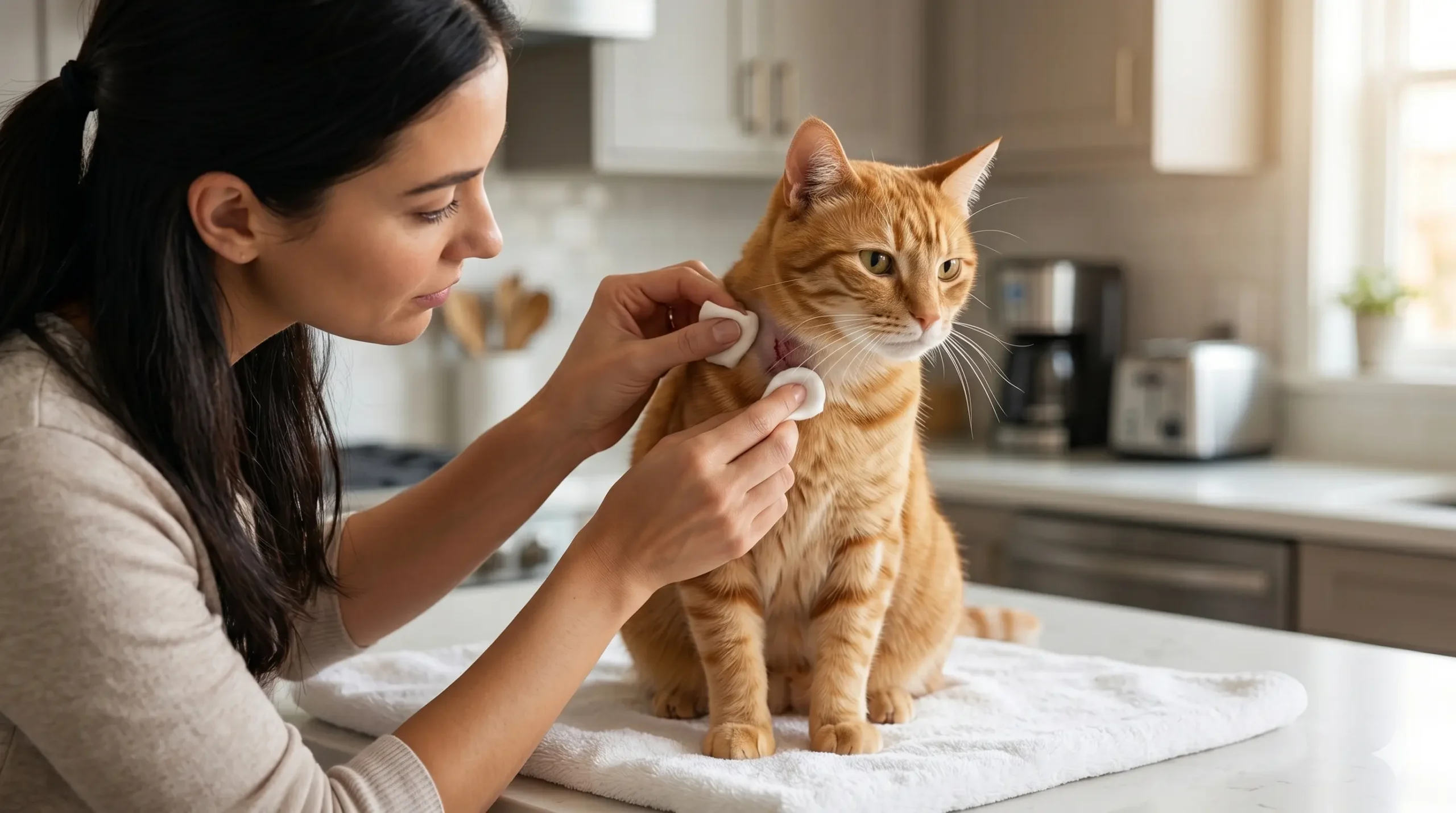
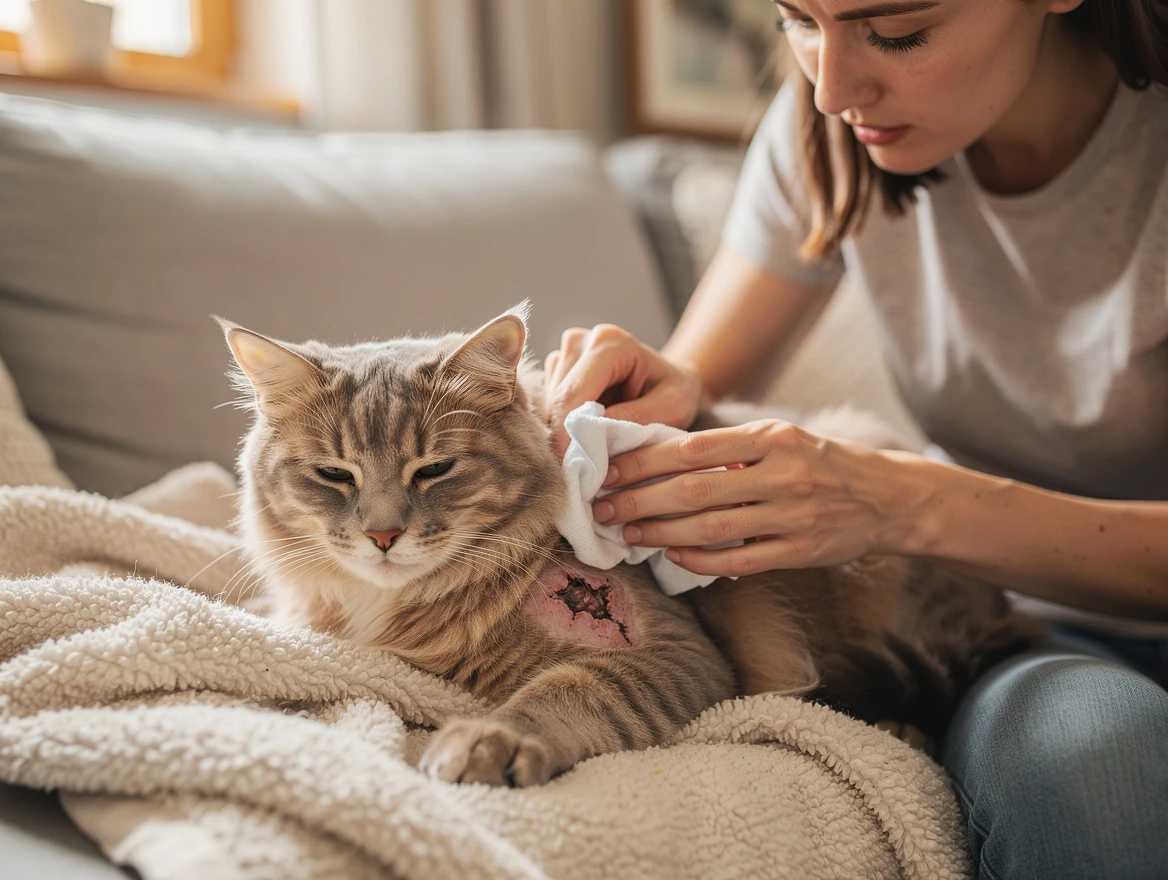
Mix 1 teaspoon of salt in 2 cups of boiled, cooled water. Gently wipe discharge away and flush the wound opening. Do this twice daily.
Trim Fur Around the Opening
Fur matted with discharge traps bacteria and blocks drainage. Keep the area trimmed for the full healing period.
Do NOT Close or Bandage the Wound
An abscess must drain freely to heal. Closing it traps bacteria and causes immediate reinfection. Leave the opening exposed to air.
E-Collar Immediately
Licking reinfects the site instantly — a cat’s mouth contains the same bacteria that caused the abscess. The E-collar stays on until fully healed.
Call the Vet Same Day
A popped abscess needs antibiotics. The vet will also flush the wound more thoroughly and may place a drain to keep drainage clear.
Home Care While Antibiotics Work
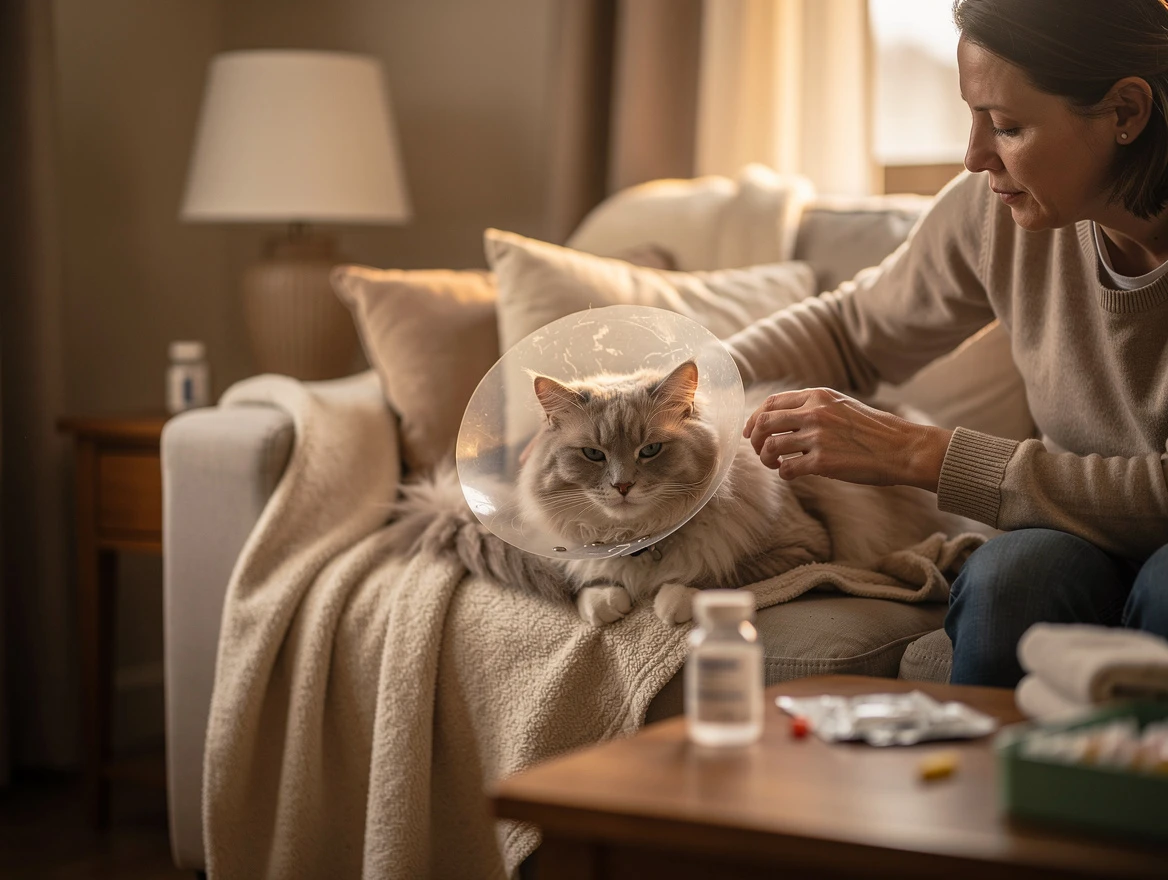 Home treatment keeps the wound clean and prevents reinfection while antibiotics work. It is not a replacement for antibiotics.
- Twice daily warm saline flushes — keep the drainage pathway clear
- Warm compress for 5 minutes twice daily — encourages continued drainage
- E-collar at all times — no exceptions
- Monitor discharge daily — clear or pale yellow is normal, increasing green or thick discharge means worsening infection
- Keep the cat calm and separated from other cats during healing
→ For detailed wound care instructions: How to Heal an Open Wound on a Cat Fast
Natural Support Options
The safest natural options alongside veterinary treatment: warm saline rinse (salt has mild antibacterial properties), warm compresses to encourage drainage, and rest to support the immune system. Manuka honey applied thinly is sometimes recommended by vets for surface wounds. Natural treatment alone almost always leads to relapse — antibiotics are necessary to clear the bacterial infection from the tissue.
Cat Abscess Healing Stages
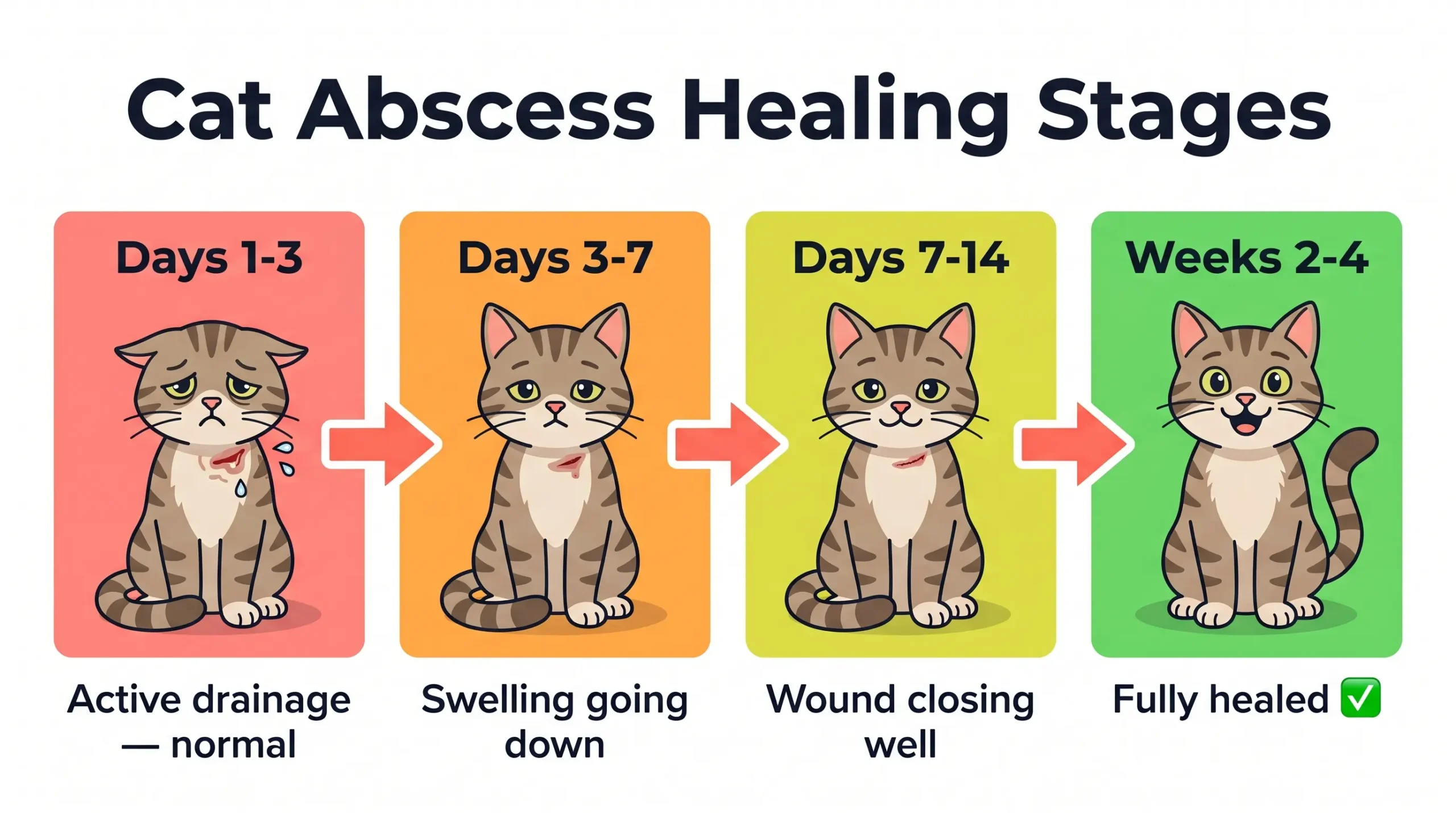
| Stage | Timeline | What You See |
|---|---|---|
| Active drainage | Days 1–3 | Discharge from opening, strong smell, swelling still present |
| Reducing drainage | Days 3–7 | Less discharge, smell fading, swelling going down |
| Wound closing | Days 7–14 | Opening getting smaller, pink healthy tissue visible |
| Full healing | Weeks 2–4 | Wound closed, fur regrowing, no swelling |
Signs It’s Getting Worse
Not every popped abscess heals smoothly. These are the signs the infection is worsening — not improving — and needs immediate veterinary attention:
- Swelling increasing rather than reducing after the first 48 hours
- Discharge turning thicker, darker green, or black
- A smell that is getting stronger rather than fading
- Black or grey tissue visible at the wound edges — this is necrosis
- Cat stops eating or becomes lethargic alongside the wound symptoms
- Fever — ears hot, cat feels warm to touch, hiding
- Red streaking extending outward from the wound
- Wound closes over before fully draining — a lump reforms
Normal Healing vs Warning Signs
| Normal Healing ✅ | Warning Signs ❌ |
|---|---|
| Swelling reducing after day 2 | Swelling increasing after day 2 |
| Discharge pale yellow or clear | Discharge thick, green, or black |
| Smell fading over time | Smell getting stronger |
| Pink healthy tissue visible | Black or grey tissue at wound edges |
| Cat eating and active | Cat lethargic or refusing food |
| Wound opening getting smaller | Wound closes then a new lump forms |
| No fever | Hot ears, hiding, feverish behavior |
On the Back or Hindquarters
Back and hindquarter abscesses are extremely common — cats are often bitten from behind while fleeing. Care is identical to any other location. The back location is harder for you to monitor closely, so check it twice daily by parting the fur around the wound. It is also slightly harder for the cat to lick — but use the E-collar regardless.
Will It Heal on Its Own?
Sometimes a small abscess in a healthy young cat does close up on its own. But without antibiotics, the bacteria in the surrounding tissue remain active, and it usually reforms — sometimes deeper and more serious than the first time. That makes it a bad bet to count on healing without treatment. The reliable approach is always antibiotics plus home care, not waiting and watching.
How Vets Treat It
Even when an abscess has already burst, veterinary treatment goes significantly further than home care alone:
- Professional wound flushing — vets use sterile saline under pressure to flush the wound track completely, reaching areas home cleaning cannot
- Drain placement — for larger abscesses the vet may place a small drain to keep the wound open and draining for 3–5 days. This prevents premature closure and reforming
- Sedation or anaesthesia — for painful or deep wounds the cat may need sedation to allow thorough cleaning without stress or injury
- Antibiotic prescription — typically a 10–14 day course of amoxicillin-clavulanate or clindamycin targeting bite wound bacteria
- Pain medication — buprenorphine or meloxicam to manage pain during healing
- E-collar fitting — the vet will confirm correct size and fitting
Treatment Costs
| Treatment | Cost Range (USD) | Notes |
|---|---|---|
| Home care supplies (saline, E-collar) | $10–$30 | Supportive only — not sufficient alone |
| Vet visit + antibiotics | $50–$150 | Most common treatment path |
| Vet drainage procedure | $150–$400+ | Required for large or recurring abscesses |
| Pain management | $20–$50 | Often included in vet visit |
How to Prevent Cat Abscesses
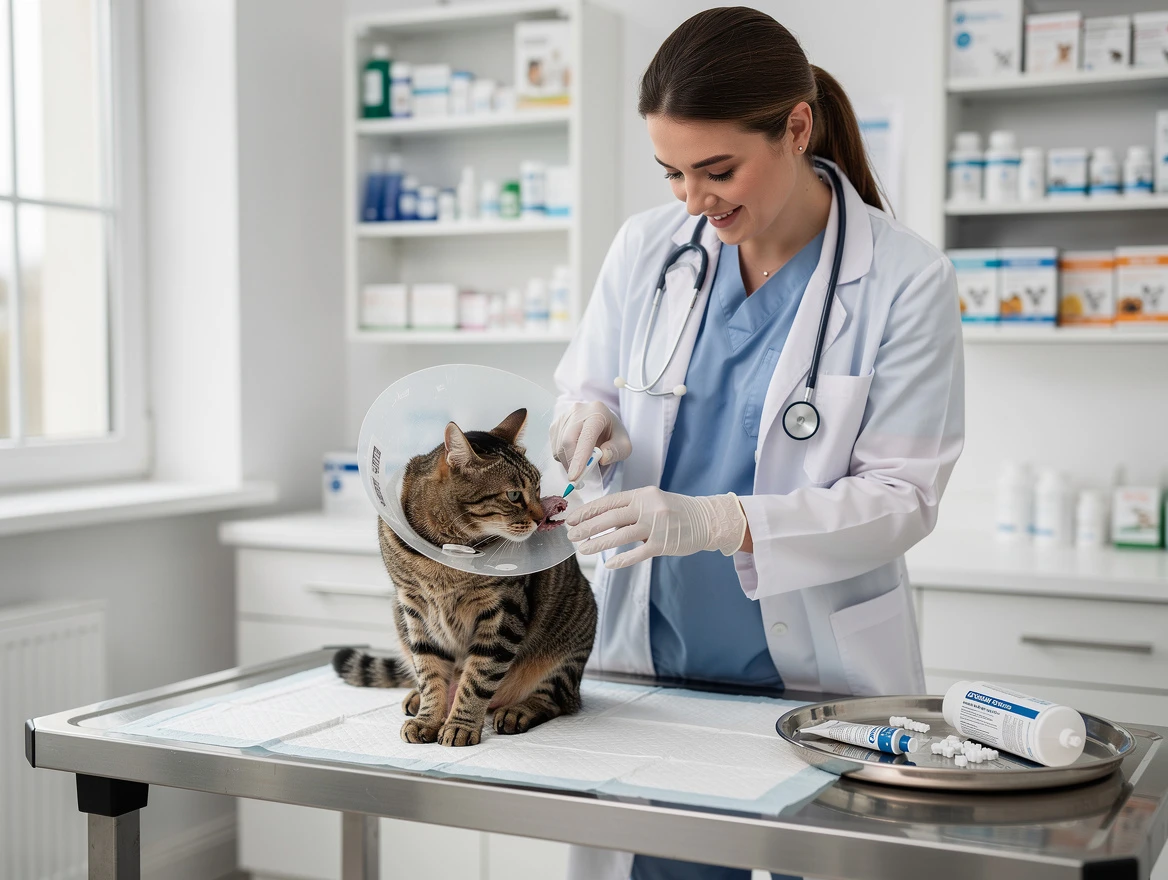
- Keep cats indoors or supervise outdoor time — fewer fights mean fewer bite wounds
- Spay or neuter your cat — reduces territorial fighting significantly
- Check your cat’s skin regularly after any outdoor encounter or indoor fight
- Treat any bite wound or scratch immediately — do not wait for swelling to appear
- Keep vaccinations current — FIV and FeLV spread through bite wounds
Also related — if your cat has been fighting outdoors and you are concerned about what they might bring inside, read: My Cat Has Worms How Do I Clean My House?
🩺 When to See a Vet
- Any popped abscess — same day or next day without exception
- Lethargy, fever, or not eating — go immediately
- Wound not draining or has closed before fully healing
- Discharge increasing after 3 days of home care
- Abscess reforming after apparent healing — needs investigation
Frequently Asked Questions
An open wound with a visible drainage hole, often surrounded by matted or missing fur. Discharge is typically thick and yellowish to tan, sometimes with a strong odor. Fresh ruptures may show some blood mixed in initially, which should clear within a day. Thick green, black, or purely bloody discharge is not normal and warrants a same-day vet call.
Yes — if antibiotics are not given, if the wound closes before fully draining, or if the cat is re-exposed to the same source of infection. Recurring abscesses need veterinary investigation to find the underlying cause.
The Bottom Line
My cat has an abscess that popped — the steps are simple: clean it, keep it open, use the E-collar, and call the vet. The popping is the body doing its job. The antibiotics finish that job by clearing what the drainage alone cannot reach. Most cats recover fully within 2–4 weeks with proper care.