You’re sitting on the couch, scrolling through your phone, when you hear that unmistakable sound—hork, hork, hork. Your heart sinks a little as you glance over to see your beloved kitty hunched over, about to leave you a surprise gift on the carpet.
If you’re a cat parent, this scene probably sounds all too familiar. But here’s the thing: while cat vomiting might seem like just another quirky cat behavior (right up there with knocking things off counters at 3 AM), it’s actually your feline’s way of telling you something’s going on inside their body.
I remember when my tabby, Whiskers, started cat puking more frequently than usual. As someone who’d worked in veterinary clinics for years, I knew this wasn’t something to brush off. That experience taught me that understanding why is my cat throwing up isn’t just about cleaning up messes—it’s about being the best advocate for your furry friend’s health.
Let’s dive into the ten most common reasons behind cat vomiting and, more importantly, how you can help your precious feline feel better.
Understanding the Difference: Is Your Cat Actually Vomiting?
Before we jump into why is my cat vomiting, let’s clear up something that confuses a lot of pet parents. Not all upchuck is created equal. There’s a big difference between true cat vomit and something called regurgitation.
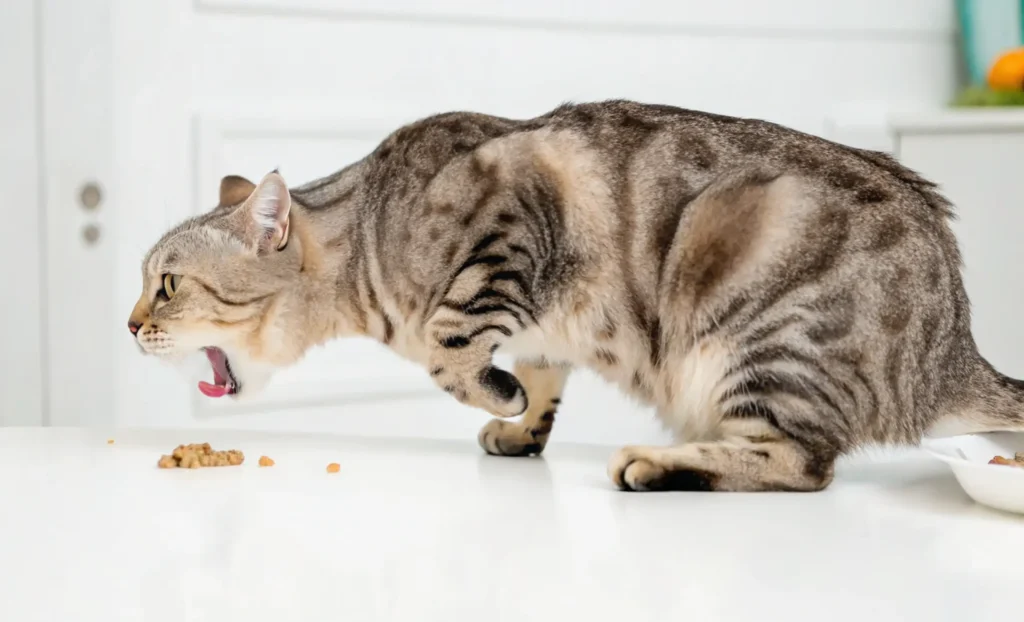
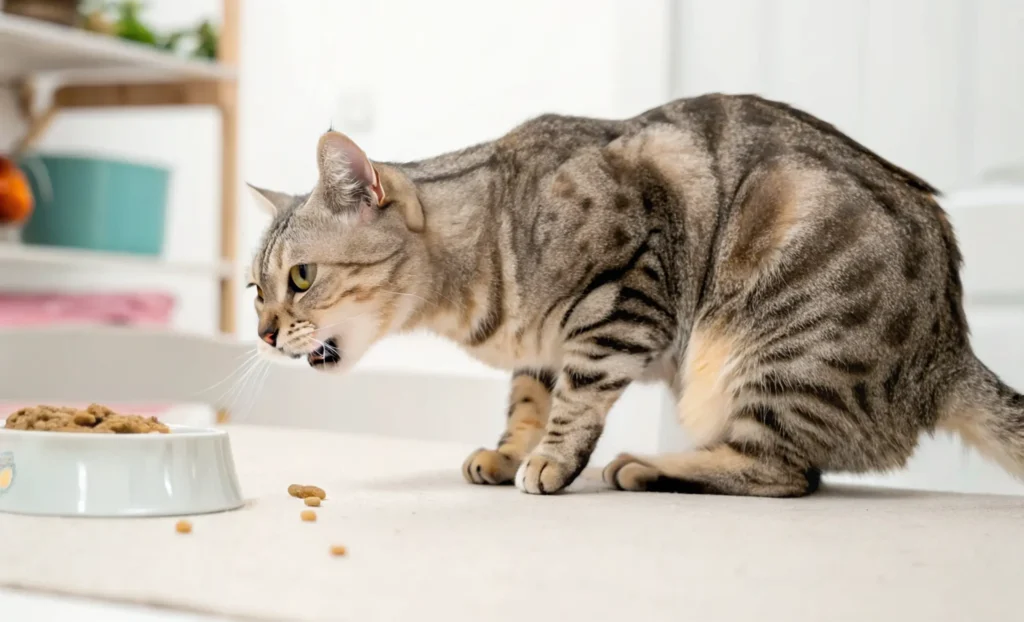
When a cat is really throwing up, you’ll notice their whole body gets involved. Their abdomen contracts, they make those distressing retching sounds, and what comes up looks partially digested—maybe with some liquid or bile mixed in. This is active vomiting, and it means something’s irritating their stomach or digestive system.
Regurgitation, on the other hand, happens passively. Your cat might bring up undigested food that looks almost exactly like it did in their bowl, often in a neat little tube shape. This usually happens right after eating and doesn’t involve the same dramatic heaving.
Why does this matter? Because the cause and treatment for each are different. If you’re wondering why is my cat throwing up, knowing which type you’re dealing with helps you (and your vet) figure out what’s really going on.
Image 1 Prompt: “Split screen comparison image: left side shows a healthy cat eating from a slow-feeder bowl, right side shows various types of cat vomit samples on white background for educational purposes, clean veterinary educational style, well-lit, professional”
1. The Speedy Eater: When Mealtime Is a Race
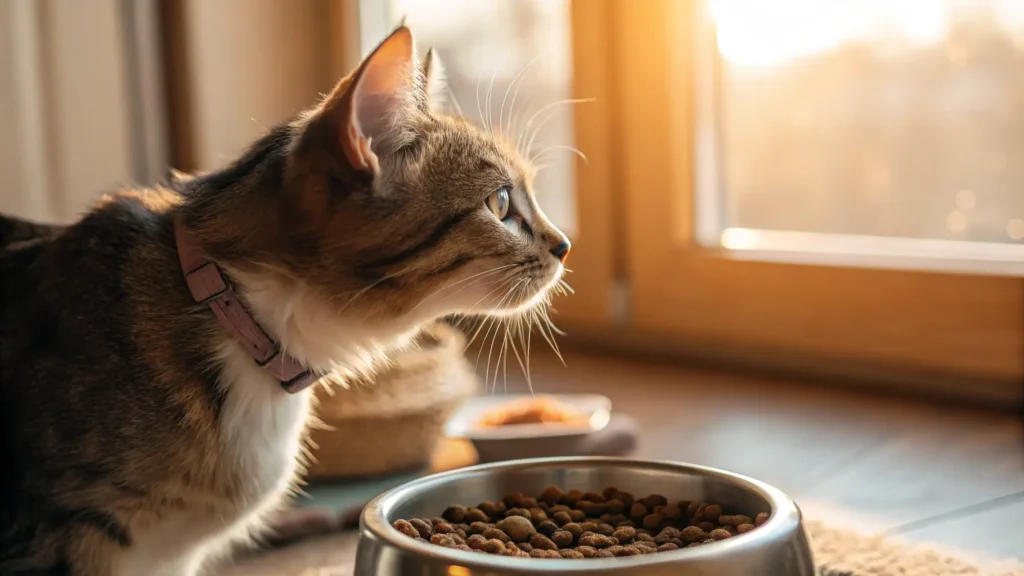
Picture this: You put down your cat’s food, and before you can even turn around, it’s gone. Five minutes later? Right back up on the floor.
Some cats attack their food like it’s about to run away. Maybe they grew up competing with littermates, or perhaps they’re just really, really excited about breakfast. Whatever the reason, eating too fast is one of the most common reasons for cat throwing up.
When cats scarf down their meals, they’re also gulping tons of air. Their stomach gets overwhelmed, and up it all comes—usually still looking pretty much like regular food because it never got a chance to digest.
How to Help Your Speed-Eating Cat
Slow-feeder bowls are game-changers for speed eaters. These clever dishes have raised sections or puzzle elements that force your cat to work around obstacles to get their food. I’ve seen cats go from “vacuum mode” to more civilized eaters in just a few meals. You can also try spreading their food on a flat plate or feeding smaller portions more frequently throughout the day.
2. Hairballs: The Furry Truth
Ah, hairballs—the stuff of feline legend. If you’ve ever heard your cat making those awful hacking sounds followed by the production of a wet, cigar-shaped fur sausage, you’ve witnessed a hairball in action.
Here’s what’s happening: Cats are meticulous groomers, and their tongues have tiny backward-facing barbs that catch loose fur. This hair has to go somewhere, and most of it travels through the digestive system and comes out in the litter box (yes, that’s a thing). But sometimes, hair accumulates in the stomach and forms a mat that’s too big to pass through. The only way out? Up.
While occasional cat puking from hairballs is normal—especially in long-haired breeds—frequent hairball vomiting might signal an underlying problem. Sometimes it’s actually a sign of inflammatory bowel disease or other digestive issues.
How to Help Prevent Hairballs
Regular brushing is your first line of defense. Brushing your cat daily (or even a few times a week) removes loose fur before they can swallow it. There are also special hairball-formula foods and treats that help hair slide through the digestive tract more easily. Some vets recommend a dab of petroleum jelly or specialized hairball gel a few times a week—though my old clinic cat, Marmalade, would only eat it if I hid it in tuna.
Image 2 Prompt: “A caring pet owner brushing a long-haired Persian cat on a couch, with grooming tools visible nearby including slicker brush and comb, warm home interior, natural window lighting, lifestyle pet care photography”
3. Dietary Indiscretion: When Curiosity Gets the Best of Them
Cats might be obligate carnivores, but that doesn’t stop them from being curious about, well, pretty much everything. I once treated a cat who’d eaten a rubber band, a piece of birthday ribbon, and part of a houseplant—all in the same afternoon.
When your cat eats something their system doesn’t agree with—whether it’s table scraps, spoiled food from the trash, or random non-food items—their stomach’s response is often: “Nope, this has to go.” That’s when you get cat vomiting that might look different from their regular food.
How to Help Prevent Dietary Mishaps
Prevention is key here. Keep human food away from curious paws, secure your trash can, and be mindful of what’s within your cat’s reach. Check the ASPCA’s list of toxic plants to ensure your houseplants are safe for cats. If you suspect your cat swallowed something dangerous (especially string, ribbon, or anything small and ingestible), call your vet immediately. Don’t wait to see if they throw it up—some objects can cause serious intestinal blockages.
4. Food Allergies and Sensitivities: The Hidden Culprit
Just like humans can be sensitive to certain foods, cats can develop allergies or intolerances to ingredients in their diet. The most common culprits? Proteins like chicken, beef, or fish, but dairy products and certain grains can cause issues too.
Food allergies in cats often show up as why is my cat throwing up undigested food. But they might also cause other symptoms like itchy skin, ear infections, or changes in their coat quality. I remember a Persian named Fluffy who’d been vomiting intermittently for months. After switching to a limited-ingredient diet with a novel protein source (duck, in her case), the cat vomiting stopped completely.
How to Help Manage Food Sensitivities
If you suspect food sensitivity, talk to your vet about an elimination diet or hypoallergenic food trial. These usually last 8-12 weeks and involve feeding only one protein and one carbohydrate source that your cat has never eaten before. It takes patience, but identifying and removing the problem ingredient can make a world of difference.
5. Inflammatory Bowel Disease: The Chronic Troublemaker
IBD in cats is similar to Crohn’s disease in humans. The lining of the digestive tract becomes chronically inflamed, making it difficult for cats to properly digest food. This leads to ongoing cat vomiting, along with symptoms like diarrhea, weight loss despite a good appetite, and general crankiness.
Why do cats throw up with IBD? The inflammation interferes with normal digestive processes, and their irritated stomach just can’t handle food properly. Some cats will throw up bile or foam, while others bring up partially digested meals.
IBD often develops gradually, which is why many cat parents don’t realize something’s wrong until their cat keeps throwing up regularly. It’s one of those conditions where early intervention makes a huge difference.
How to Help Manage IBD
IBD requires veterinary diagnosis (usually through biopsies) and ongoing management. Treatment typically involves dietary changes—often switching to a prescription diet with novel proteins or hydrolyzed proteins that are easier to digest. Your vet may also prescribe medications like steroids to reduce inflammation. The good news? Many cats with IBD live happy, comfortable lives with proper management.
6. Kidney Disease: A Silent Senior Problem
This one’s close to my heart because my own elderly cat, Shadow, developed kidney disease at age 15. Kidney problems are incredibly common in older cats, and cat vomiting is often one of the first signs pet parents notice.
When kidneys aren’t working properly, toxins build up in the bloodstream. This makes cats feel nauseous, leading to frequent cat puking—often first thing in the morning or late at night. You might also notice your cat drinking more water, urinating more frequently, and gradually losing weight.
Here’s what’s tricky about kidney disease: by the time symptoms appear, about 75% of kidney function is already compromised. That’s why regular senior checkups are so important for cats over seven years old. The Cornell Feline Health Center provides excellent resources on understanding chronic kidney disease in cats.
How to Help Cats With Kidney Disease
If your cat is diagnosed with kidney disease, don’t panic. While it’s not curable, it’s very manageable with the right care. Treatment usually includes prescription kidney diets (lower in protein and phosphorus), medications to control nausea, subcutaneous fluids if needed, and supplements to support kidney function. Many cats with kidney disease continue to live good quality lives for years after diagnosis.
7. Hyperthyroidism: The Metabolism Gone Wild
Imagine your metabolism suddenly shifting into overdrive. That’s essentially what happens when cats develop hyperthyroidism—their thyroid gland produces too much thyroid hormone, ramping up every system in their body.
Hyperthyroid cats are often ravenously hungry yet losing weight. They’re hyperactive, vocal, and yes—prone to cat vomiting. The increased metabolism affects digestion, and their overactive system just can’t process food normally.
I once had a client bring in a 13-year-old cat named Mittens who’d become “a completely different personality,” as she put it. The cat was yowling constantly, eating like there was no tomorrow, and throwing up several times a week. Blood tests revealed raging hyperthyroidism.
How to Help Manage Hyperthyroidism
Hyperthyroidism is diagnosed through blood tests measuring thyroid hormone levels. Treatment options include daily medication (methimazole), radioactive iodine therapy (which is curative), or prescription diets designed to manage thyroid function. Most cats respond beautifully to treatment and return to their normal, chill selves.
8. Pancreatitis: The Painful Inflammation
The pancreas is a small but mighty organ that produces digestive enzymes and hormones. When it becomes inflamed—a condition called pancreatitis—cats experience significant abdominal pain and digestive upset.
Cat vomiting from pancreatitis is usually accompanied by other telltale signs: loss of appetite, lethargy, hunched posture (from abdominal pain), and sometimes diarrhea. Some cats develop acute pancreatitis suddenly, while others have chronic, low-grade inflammation that flares up periodically.
Pancreatitis can be triggered by various factors—fatty foods, infections, trauma, or sometimes for no identifiable reason at all. It’s one of those conditions that can range from mild to life-threatening, which is why prompt veterinary attention matters.
How to Help Cats With Pancreatitis
Pancreatitis requires veterinary diagnosis through blood tests, ultrasound, or both. Treatment typically involves hospitalization with IV fluids, pain medication, anti-nausea drugs, and nutritional support. Once your cat recovers, they may need to stay on a low-fat diet long-term to prevent recurrence.
9. Intestinal Parasites: The Unwelcome Guests
Here’s something gross but important: intestinal parasites like roundworms, hookworms, and tapeworms can all cause cat throwing up. These freeloading creeps irritate the digestive tract, cause inflammation, and sometimes even physically obstruct normal digestion.
Young cats and outdoor cats are most at risk, but indoor cats aren’t immune—especially if they hunt bugs or rodents that sneak inside. Some parasites are visible in cat vomit (roundworms look like spaghetti, which is as unpleasant as it sounds), while others require microscopic examination of stool samples.
How to Help Prevent and Treat Parasites
Prevention is easier than treatment. Keep your cat on regular deworming medication as recommended by your vet. If you suspect parasites, bring a fresh stool sample to your vet appointment—this helps them identify exactly which type of parasite is present so they can prescribe the most effective treatment. Most intestinal parasites clear up quickly with appropriate medication.
10. The Scarier Stuff: Cancer and Other Serious Conditions
I hate to end on a heavy note, but it’s important to know that cat vomiting can sometimes signal serious conditions like cancer, liver disease, or intestinal blockages. These are less common causes, but they’re the reason why persistent or worsening cat puking always deserves veterinary attention.
Intestinal lymphoma, for example, is one of the most common cancers in cats. It causes chronic inflammation, weight loss, and yes—frequent cat vomiting. The good news is that even serious conditions often respond well to treatment when caught early.
How to Help When Serious Conditions Are Suspected
This is where your relationship with your vet becomes crucial. Don’t hesitate to schedule an appointment if your cat’s vomiting seems different, more frequent, or is accompanied by other concerning symptoms. Early diagnosis dramatically improves outcomes for serious conditions.
When Is Cat Vomiting an Emergency?
Now that we’ve covered why do cats throw up, let’s talk about when you need to drop everything and head to the vet. Call your veterinarian or an emergency clinic immediately if your cat:
Image 3 Prompt: “A veterinarian gently examining a sick cat on an examination table, stethoscope visible, modern veterinary clinic setting, professional and caring atmosphere, bright clinical lighting, reassuring scene”
- Vomits repeatedly (more than 2-3 times in a few hours)
- Has blood in their vomit (red or that coffee-ground appearance)
- Shows other symptoms like lethargy, hiding, or difficulty breathing
- Can’t keep water down and might be getting dehydrated
- Has a swollen or painful belly
- Vomited after potentially eating something toxic—the Pet Poison Helpline is available 24/7 at (855) 764-7661
- Seems disoriented or is having seizures
Trust your gut on this one. You know your cat better than anyone. If something feels off, it probably is. I’ve never met a vet who got annoyed at a concerned pet parent—we’d much rather see a cat who turns out to be fine than miss a serious problem.
What to Expect at the Vet
When you bring your cat in for vomiting, your vet will play detective. They’ll ask lots of questions: When did the cat throwing up start? What does the vomit look like? Any changes in appetite, water intake, or litter box habits? Has your cat gotten into anything unusual?
They’ll perform a physical exam, checking for dehydration, abdominal pain, and any obvious abnormalities. Depending on what they find, they might recommend blood work, urinalysis, X-rays, or ultrasound. Sometimes they’ll start with basic diagnostics, then proceed to more advanced testing if needed.
Don’t be surprised if your vet wants to try symptomatic treatment first—especially for acute cat vomiting in an otherwise healthy cat. This might include anti-nausea medication, stomach protectants, and temporary diet changes. If your cat responds well and the vomiting stops, great! If not, more investigation is warranted.
Home Care Tips for a Vomiting Cat
If your vet gives the okay for home management, here’s how to help your cat feel better:
Give their stomach a break: Withhold food for 12 hours (but not water—hydration is crucial). This gives their digestive system time to settle.
Reintroduce food gradually: Start with small amounts of bland food like boiled chicken or prescription digestive diet. Offer just a tablespoon at first, then gradually increase if they keep it down.
Keep fresh water available: Dehydration makes everything worse. If your cat won’t drink from their bowl, try a fountain—many cats prefer running water. You can also offer ice cubes or low-sodium chicken broth.
Monitor closely: Keep notes on when vomiting occurs, what the cat vomit looks like, and any other symptoms. This information is gold for your vet if the problem continues. The American Veterinary Medical Association offers helpful pet health monitoring guides.
Create a calm environment: Stress can worsen digestive upset. Give your cat a quiet, comfortable space to rest and recover.
Preventing Future Episodes
Once you’ve figured out why is my cat throwing up and gotten them back to health, prevention becomes the goal:
- Feed smaller, more frequent meals instead of one or two large ones
- Use slow-feeder bowls for speed eaters
- Brush regularly to minimize hairballs
- Keep dangerous objects and toxic substances out of reach
- Maintain a consistent diet (no sudden changes)
- Schedule regular vet checkups, especially for senior cats—International Cat Care recommends twice-yearly wellness exams for cats over 7 years old
- Consider elevated food bowls, which can help with digestion
- Stay current on parasite prevention
The Bottom Line
Look, cat vomiting is never fun to deal with. But understanding why is my cat vomiting empowers you to be a better advocate for your feline friend. Whether it’s a simple case of eating too fast or something more serious that needs medical attention, you now know what to look for and when to worry.
Remember that occasional cat puking (like once a month or less) might not be cause for alarm, especially if your cat is otherwise acting normal. But cat keeps throwing up regularly? That’s your cat’s way of telling you something needs attention.
Your cat depends on you to recognize when something’s wrong and get them the help they need. Trust your instincts, don’t hesitate to call your vet with concerns, and keep this guide handy for those inevitable middle-of-the-night worry sessions.
After all, that little furball who wakes you up at 5 AM demanding breakfast and knocks your water glass off the nightstand is counting on you. And despite the occasional carpet surprise, they’re totally worth it.
Frequently Asked Questions
Q: How can I tell the difference between cat vomiting and coughing up a hairball?
Great question! Hairballs involve a lot of dramatic hacking and coughing sounds before anything comes up, and what you find is usually a tube-shaped wad of hair and saliva. Regular cat vomit comes up with less warning, involves visible abdominal contractions, and contains stomach contents like food or liquid. If you’re seeing the hairball-hacking behavior more than once a week, or if your cat seems unable to bring anything up despite trying, that’s worth a vet visit.
Q: Is it normal for my cat to throw up bile in the morning?
Some cats do vomit yellow bile occasionally, usually because their stomach is empty after a long night without food. This is sometimes called “bilious vomiting syndrome.” If it’s happening regularly, try offering a small snack before bed or splitting your cat’s daily food into more frequent smaller meals. If the morning cat puking continues despite these changes, check with your vet—it could indicate a digestive issue needing treatment.
Q: When should I worry about my cat throwing up?
Definitely contact your vet if your cat vomits more than once or twice in 24 hours, can’t keep water down, has blood in the vomit, seems lethargic or painful, or if the cat vomiting is accompanied by diarrhea. Also seek help if your cat stops eating, is losing weight, or if you know they ate something potentially toxic. For senior cats or cats with chronic conditions, even a single episode of cat throwing up warrants a call to your vet.
Q: Can stress cause my cat to vomit?
Absolutely! Cats are sensitive creatures, and stress can definitely trigger digestive upset and cat vomiting. Major changes like moving, new pets, renovations, or changes in routine can all stress cats out enough to make them throw up. If you suspect stress is the culprit, try to identify and minimize stressors, provide safe hiding spots, use calming pheromone diffusers, and maintain consistent routines. If stress-related vomiting continues, your vet might recommend anxiety medication.
Q: Should I change my cat’s food if they’re throwing up?
Don’t make sudden diet changes on your own—this can actually make cat vomiting worse! If you and your vet decide a food change is needed, transition slowly over 7-10 days by gradually mixing increasing amounts of the new food with the old. For cats with food sensitivities, your vet might recommend a prescription elimination diet or limited-ingredient formula. Always follow your vet’s guidance on dietary changes for a vomiting cat.
Q: Is cat vomit dangerous for humans to clean up?
While cleaning up cat vomit isn’t exactly pleasant, it’s generally safe if you take basic precautions. Wear gloves, clean the area thoroughly with appropriate disinfectant, and wash your hands well afterward. The main risk comes from potential parasites (like toxoplasmosis) or bacteria in the vomit. Pregnant women should be especially careful and ideally have someone else handle cleanup. If your cat has been diagnosed with an infectious condition, your vet will give you specific safety instructions.
Q: My cat only vomits after drinking water quickly—is this normal?
Some cats are water gulpers, and just like eating too fast, drinking too quickly can lead to immediate cat throwing up. This is usually harmless, though annoying to clean up. Try offering water in a shallow, wide bowl instead of a deep one, or invest in a cat water fountain—many cats drink more slowly from running water. You can also try placing multiple water bowls around the house so your cat doesn’t feel the need to tank up all at once.